
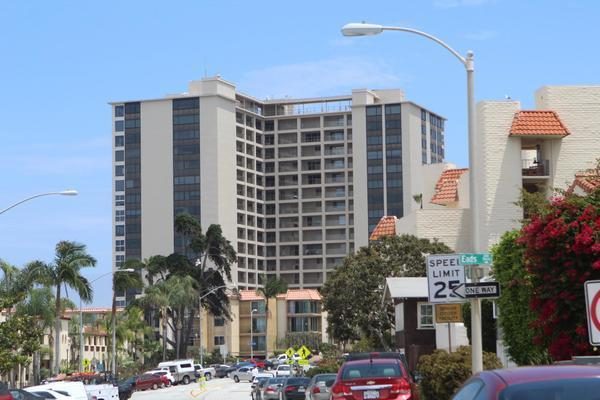
In 1964, a group of Texas investors bought several properties in La Jolla and built a high-rise condominium project at 939 Coast Blvd.
This hint as to the future of the community galvanized La Jollans to organize and take control of that future. Also in 1964, a group of La Jolla business and financial people led principally by Karl Zobell, a prominent attorney, got together and formed La Jollans Inc.
Working with the city of San Diego, the first La Jolla Community Plan was written and adopted by the city in March 1967. This laid the framework for subsequent community planning efforts in La Jolla, particularly in the La Jolla Shores area.
In the 1970s, La Jollans Inc. morphed into the LJ community planning structure that now exists.
In the mid-1960s, the La Jolla Shores Association was formed because of worries that the area would become like Miami Beach, with high-rises and commercial development defining the region. Zobell and John Clark Rose, an artist and movie director for Disney, were prominent in that effort.
There had been periodic height limits applicable to La Jolla Shores, but in one gap between limits, Hotel La Jolla had been rapidly built. Gil Hegamier, a Shores resident and an engineering professor at UC San Diego, showed that the planned structure could collapse in an earthquake. This prompted changes in construction plans. But it was clear that permanent development regulations were required.
The city was also beginning to recognize that certain neighborhoods were special and should be protected by tailored regulations. Old Town was the first, La Jolla Shores was the second. Pete Wilson was the mayor and Kim Moore the city manager. Both were supportive of community involvement in how the city developed.
LJSA was able to establish constructive relationships with our city councilman, Gil Johnson, and the director of the Planning Commission, Jim Goff. So the desire of LJSA to write zoning regulations that were special to The Shores fell on receptive ears.
John Hinrichs and Ed Malone were the president and vice president of the association at the time. A planning committee was established with myself and Althea Brimm (Cochrane) as co-chairs. Larry Milne and Mike Stepner from the city Planning Department were assigned to work with the committee and guide the effort.
The goals of the association were fourfold:
• Establish a height limit.
• Keep the commercial area compact.
• Maintain the character of the area (size, density, etc.).
• Don’t allow the area to become a parking lot.
The first step of the planning effort was to write a Precise Plan to define what a new zoning ordinance should do. The Precise Plan was adopted by the City Council in November 1972.
The next step was to write an implementing ordinance. The La Jolla Shores Planned District Ordinance was adopted by the City Council in May 1974. It contained new zoning rules and regulations for The Shores.
A La Jolla Shores Design Manual was also written and adopted in 1974, giving guidelines and illustrations on how development could occur within the PDO.
Political considerations
Johnson was the District 1 councilman and was very supportive of what LJSA was trying to do. But the association was also on good terms with other members of the City Council and the important planning organizations of the city. Council members were elected citywide and the association was able to visit three members in their offices and make the case for a La Jolla Shores PDO.
Issues that were encountered and resolved:
• Support of local architects: There was a concern that the architects in LJ would mount an effort to defeat the PDO because of the limits it might put on what could be built. That was resolved when Milne and Stepner suggested that flexibility in items such as setbacks and floor area ratios be put in the PDO. That was done, and the architects were generally supportive.
• La Jolla Beach & Tennis Club: The zoning proposed for the Beach & Tennis Club was lower than allowed in the then-existing zoning and there was concern that the club would oppose the PDO. That worry proved unfounded. Bill Kellogg and his brother, Bob, later became presidents of the association.
• Review committee or advisory committee? The initial draft of the PDO had a project review committee with essentially the power of the San Diego Planning Commission. When the PDO was up for approval before the City Council, LJSA was told that if it insisted on a review committee instead of an advisory committee, the PDO would be voted down. An advisory committee was agreed on, with members appointed by the mayor.
During the PDO effort,
• Pottery Canyon was declared a city park in 1973.
• A gas station proposed by Gulf Oil Co. for the area where the fire station is now located was defeated at a City Council meeting.
• A proposal to connect La Jolla Scenic Drives North and South with a bridge over La Jolla Parkway was defeated.
Have the original goals motivating the PDO been realized? The answer is yes. However, a lot of big houses have been built on smallish lots. It was probably a mistake not to have included a floor area ratio limit in the original ordinance. It was later added.
Richard Dahlberg is a departing board member of the La Jolla Shores Association. ♦