
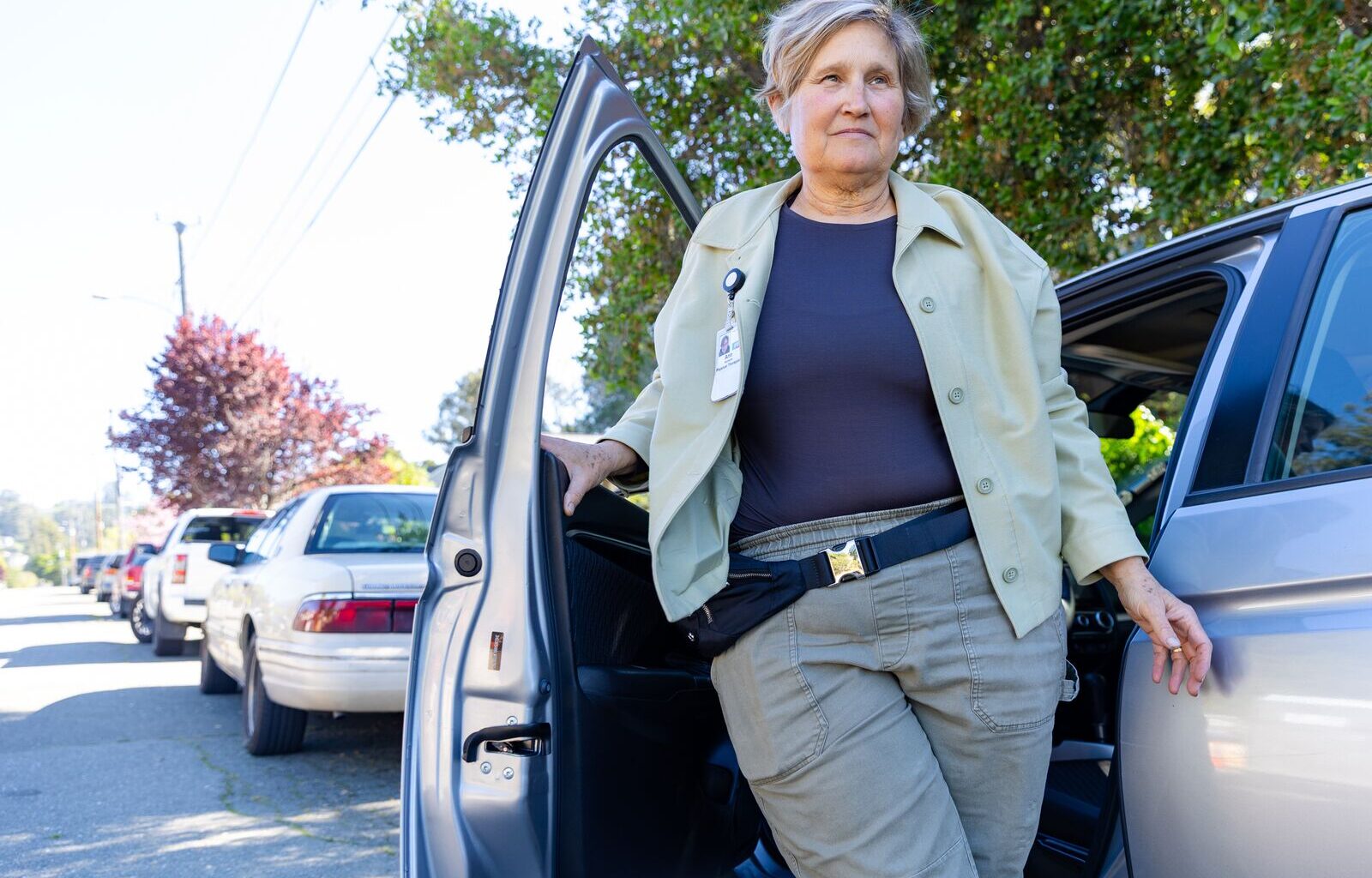
Ann Nomura was driving to work at a nursing home in Hayward on March 4 when an Alameda County Sheriff’s patrol car appeared in her review mirror, lights lit.
She pulled over near the Hayward City Hall, annoyed that she might be late.
But irritation turned to confusion when several more deputies parked behind her car and one of them used his vehicle’s speaker to order her to exit the car with her hands up. She stepped out slowly, holding her registration in one hand.
The deputies quickly discovered the 62-year-old Oakland mother of two wasn’t the person they were looking for.
They’d pulled Nomura over because a license plate reader surveillance camera had scanned the plates on her silver Honda Fit somewhere between her home and Hayward, allowing the deputies to locate her and swoop in. The plates belonged to a car that had been used in a “serious crime,” the deputies explained to her.
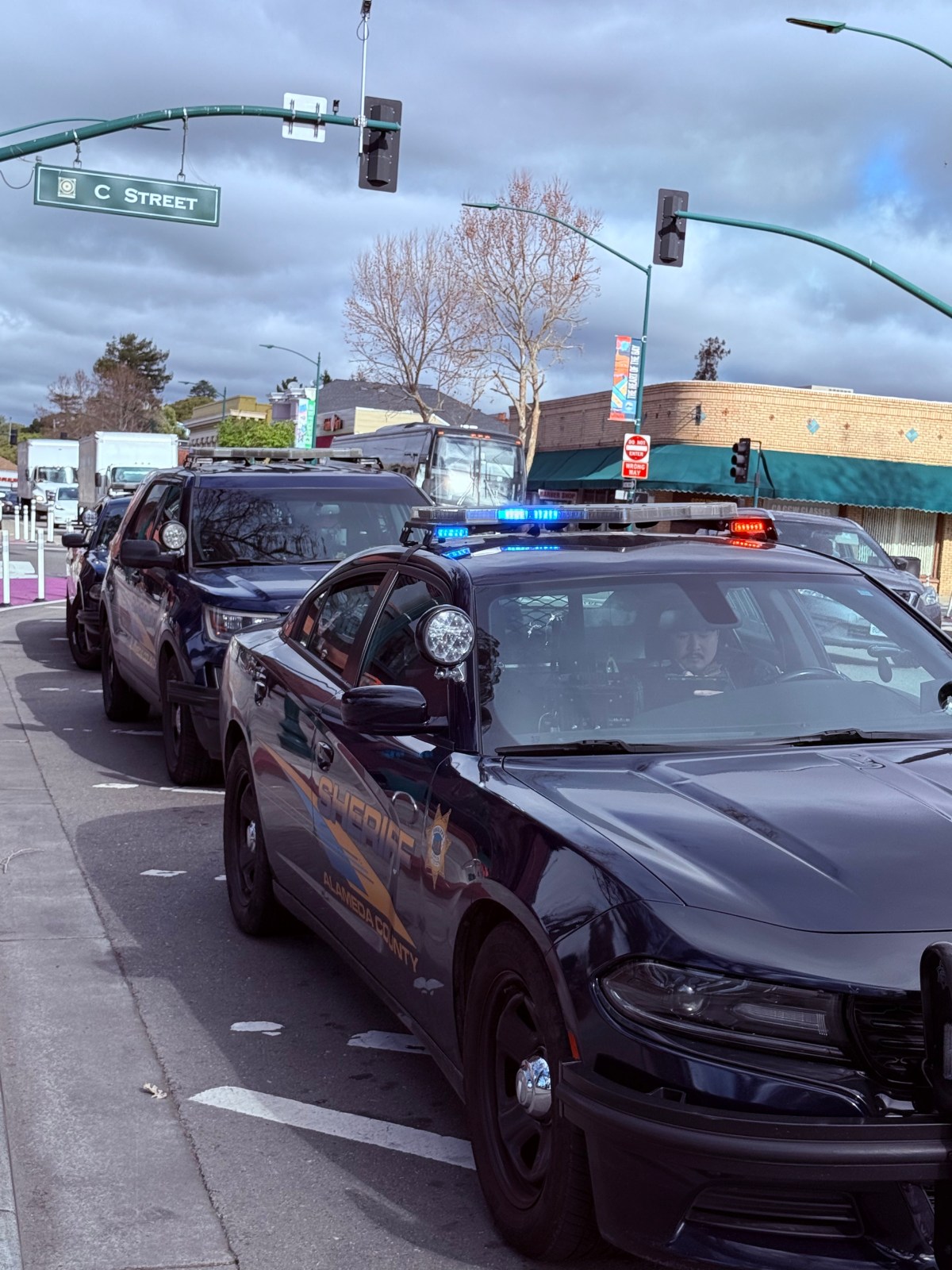 Alameda County Sheriff deputies parked behind Ann Nomura’s car in Hayward on March 4, 2026. Credit: courtesy of Ann Nomura.
But that car wasn’t hers — unbeknownst to Nomura, someone had recently stolen her license plates and replaced them with the ones associated with the crime. Nomura said the deputies told her that the plate on her car came from a black Honda Civic.
Nomura said she wasn’t scared in the moment, but when the deputies insisted on calling her husband, whose name is also on the vehicle registration, the gravity of the situation suddenly dawned on her.
“That is when it sort of hit me that I was being treated as a potential criminal and could have been hurt.”
The switcheroo has created a host of problems for Nomura and her family, more than just the roadside stop. It also illustrates a problem facing the region: As license plate readers proliferate on public roads, thieves are confusing the vast surveillance network by stealing and swapping plates. The tactic allows lawbreakers to pass under the watchful eyes of hundreds of cameras without suspicion while unsuspecting victims are pulled over
License plate readers are powerful surveillance cameras that automatically capture a digital “fingerprint” of passing vehicles. If a license plate is wanted in connection with a crime, the system automatically sends an alert to local law enforcement. In recent years, hundreds of cameras — mostly manufactured by the Georgia-based vendor Flock Safety — have been installed around the East Bay in a push to crack down on crime.
It’s unclear how many other East Bay residents have ended up in a predicament like Nomura’s. Sgt. Roberto Morales, a public information officer for the Alameda County Sheriff’s Office, told The Oaklandside they have received reports about swapped stolen license plates for many years.
“It’s a tactic that’s been going on for a long time, but I think it’s coming more into light now that we have these license plate readers,” Morales said.
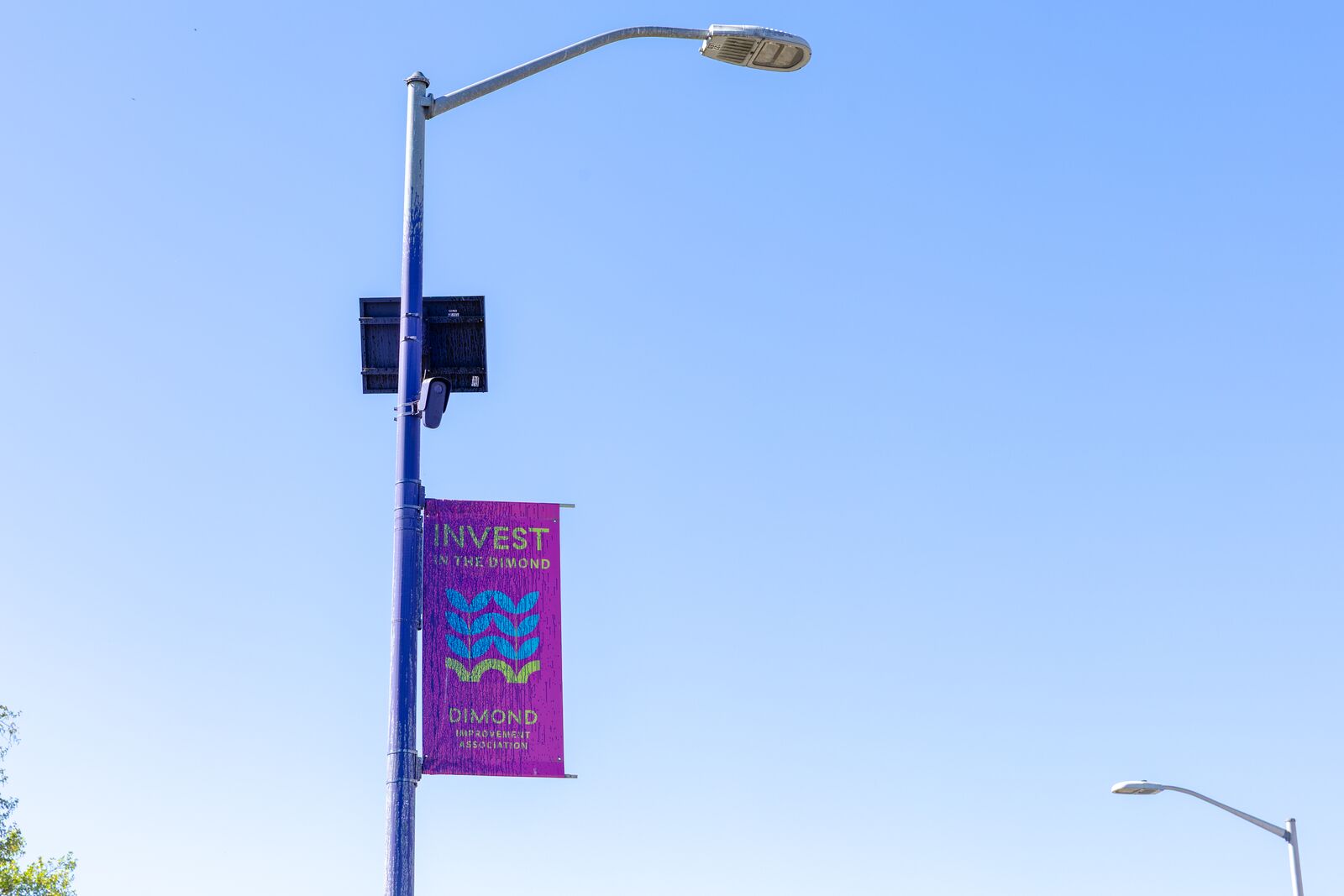 An automated license plate reader camera hangs on a street light on Fruitvale Avenue on Thursday March 19, 2026. Credit: Estefany Gonzalez for The Oaklandside.
There isn’t any easily accessible public data on how many plates are stolen each year, which would provide a hint at whether demand for clean plates surged after the recent installation of fixed ALPRs. The Oaklandside sought this information from OPD and the sheriff. Both told us to file public records requests.
“If you don’t know how often license plates are stolen in Oakland, you don’t know how often this is going to happen,” Nomura said.
One of Nomura’s concerns is that stolen plates photographed committing traffic violations could result in crime victims getting ticketed. Oakland activated speed enforcement cameras around the city in January, and recently, the city reported sending tens of thousands of warning letters to vehicle owners.
OPD and the Alameda County Sheriff credit their license plate reader cameras — both purchased from Flock Safety — with helping officers arrest scores of suspects. Alameda County installed its system in 2023 and Oakland in 2024.
Sheriff Yesenia Sanchez said the cameras have been used to arrest violent criminals, recover stolen vehicles, and have led to a “significant” decrease in overall crime.
Critics of the cameras worry that data could be shared with or somehow obtained by federal law enforcement agencies, who, under President Donald Trump, have aggressively prosecuted undocumented immigrants and people seeking reproductive healthcare. California’s law, SB34, is supposed to forbid local police from sharing license plate data with agencies outside of the state. But in July 2024, the San Francisco Standard revealed that several neighboring law enforcement agencies had shared data from Oakland’s ALPR system with federal agencies.
Brian Hofer, a former member of Oakland’s Privacy Advisory Commission, is currently suing Oakland for allegedly violating SB34. In a recent interview, he told The Oaklandside that he believes what happened to Nomura is the result of law enforcement not following policies that require them to check other evidence before conducting a stop.
Hofer has personal experience with what he calls license plate reader “data hygiene errors.” In 2019, he and his brother were driving on I-80 when they were pulled over and held at gunpoint by Contra Costa sheriff’s deputies. It turned out that the rental car Hofer was driving had been stolen from San Jose the previous month. The vehicle was recovered, but law enforcement officials apparently failed to update the “hot list” of wanted vehicles that license plate reader cameras automatically run plates against.
Flock’s cameras don’t just scan license plates, they also capture information like the make and model of the car, its color, and other details. Local police, confronted with a plate hit, should check these other details before conducting a stop, Hofer said.
“OPD could run the plate, and the image will pop up, and they should have some sort of visual confirmation to be like, ‘wait a minute, this license plate was on a silver Corona, now it’s on a red Ford 150,’” Hofer said.
In Nomura’s case, no guns were drawn, and she said the deputies treated her professionally and politely after they realized she wasn’t the suspect they were searching for.
But the fallout from the incident has been a headache.
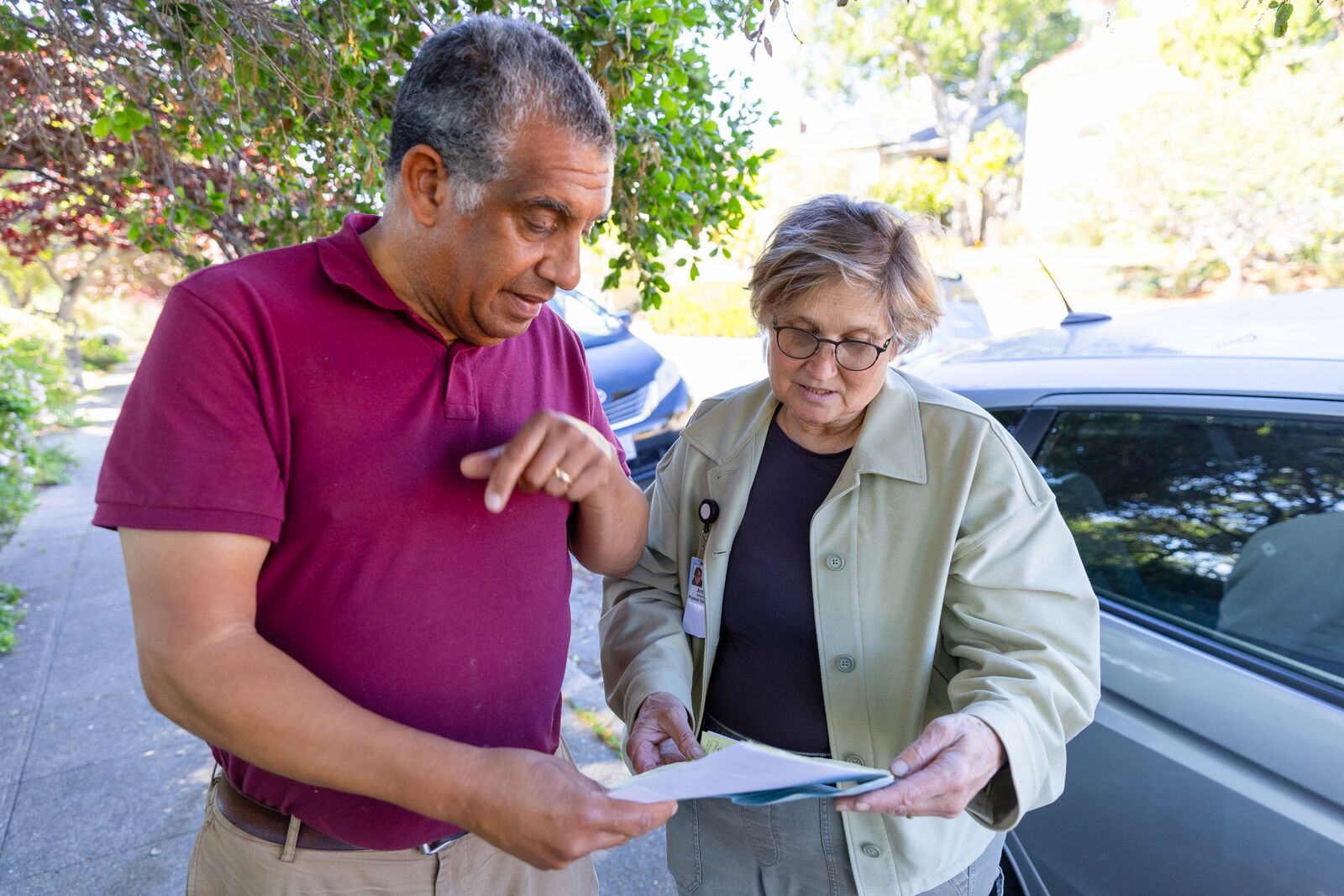 Oakland resident Ann Nomura, right, and her husband Mitsu Fisher look over a police report from the day she was pulled over. Credit: Estefany Gonzalez for The Oaklandside.
Deputies confiscated the stolen plate, and Nomura couldn’t drive her car until she replaced it, which required going to the DMV. To expedite the process, she paid a third-party service $109 to get plates quickly, which allowed her to drive to work.
Days later, her husband received a call from a San Rafael police officer who claimed that their car had been used in an attempted robbery. Her husband explained that their license plate had been stolen, she said, and that Alameda County sheriffs had already verified that their car was not involved in a crime.
“At this point, we are concerned that our old plate may not have been reported as stolen by the Alameda County Sheriff,” Nomura’s husband wrote in a memo documenting the events. Nomura learned she had to file a stolen plate report with OPD, which can only be done in person.
Nomura said she doesn’t want this to ever happen to anyone, but especially teenagers. She said the incident was upsetting and keeps her up at night.
“They were threatening to me and my family,” Nomura said in a text message. “It was stupid, dangerous, mean, and unnecessary. They are chasing license plates instead of criminals.”
“*” indicates required fields