
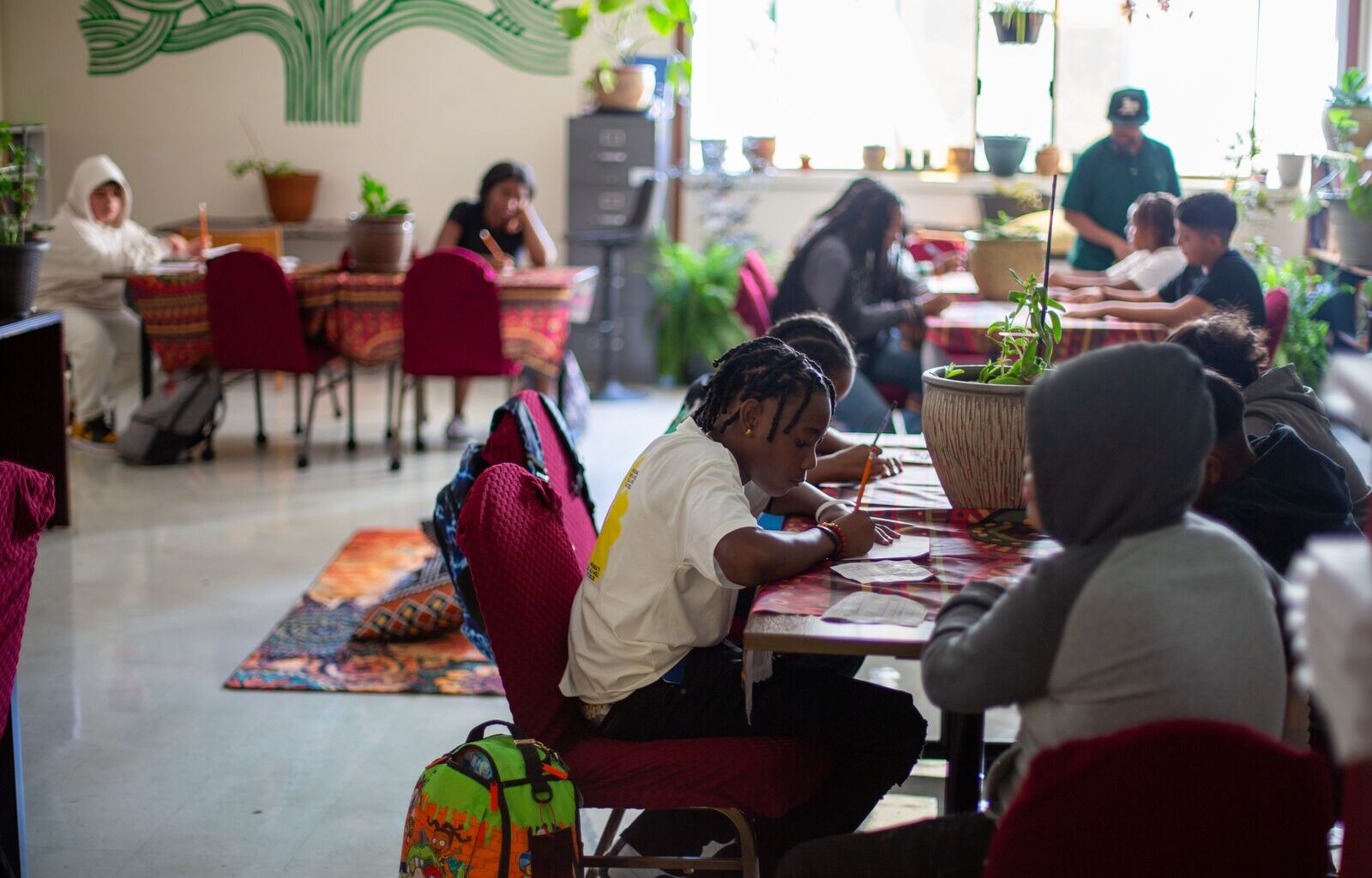
Several times a year, a heat wave rolls through the East Bay, leaving hundreds of Oakland classrooms sweltering.
In aging buildings, which mostly lack adequate cooling systems, teachers have tried all sorts of creative ways to keep their students and their classrooms cool. At Sequoia Elementary School, Susan Chiodo once dipped bandanas in icy water for her third graders to put on their foreheads and necks. Minutes later, they all had droplets of colored water, leaching dye from the bandanas, running down their faces. Kindergarten teacher Natasha Saleski keeps a spray bottle to mist students who get overheated on toasty days at Manzanita SEED Elementary School.
Some teachers have purchased blackout curtains, some crack their windows overnight, and others keep popsicles stocked to help students cool off. But those fixes have a limited effect on what is a districtwide infrastructure problem. More than 75% of schools’ indoor space — roughly 2,100 classrooms — lack cooling systems.
Saleski has been at Manzanita SEED for 13 years, and hot temperatures have been an issue since she started, she said. She can see how the heat affects her students’ ability to learn on warm days.
“On days when it’s really hot, I stop trying to teach because I see my students really uncomfortable,” she told The Oaklandside. “All we can do is try to take our mind off our discomfort. Kids get sick, they’ll get a headache, nausea, they’ll feel really tired.”
Research shows that heat makes it harder for children to learn. A Harvard white paper from January 2024 noted that the ideal temperature for concentration is 72 degrees, and lowering classroom temperatures from 86 to 68 degrees can improve academic performance by 20%.
Many parents and teachers hope that last week’s heat wave will galvanize Oakland Unified School District officials to address the problem as soon as this summer — and they have ideas. Community members representing 25 schools from across the district showed up at last week’s OUSD facilities committee meeting to urge leaders to address the issue immediately.
At Sequoia Elementary, the PTA bought Bluetooth thermometers to monitor classroom temperatures this year. Classrooms frequently measure five to 15 degrees hotter than the outdoors, said Rachael Kirk-Cortez, parent of a kindergartener. Last week, indoor temperatures reached 82 to 84 degrees in some rooms, according to data she provided to The Oaklandside.
“It’s not a safe space for children to be learning or really even be in,” she said.
Sequoia parents fundraised to buy UV window films and portable air conditioning units for the classrooms and measured temperatures drop by at least five degrees after they installed them. Now they’re pushing the district to install similar cooling strategies this summer, including window films, portable AC units, and ceiling fans, in the 2,100 classrooms across OUSD that lack central air.
“Heat is an equity issue,” Kirk-Cortez said. “We realized we can’t be doing this in isolation and asking for only our school to be solved.”
‘Student fatigue and health risks’
This month OUSD published a new facilities master plan, the first in six years, a 157-page document detailing all the maintenance needs at every property in the district. The report calls out the need for cooler buildings — and HVAC upgrades — as a top concern.
“Excessive heat contributes to student fatigue and health risks, reduces instructional effectiveness, and may lead to schedule changes or lost learning time,” the report said. “Modernizing HVAC systems and expanding cooling capacity is therefore critical to education adequacy, operational continuity, and long-term climate resilience across OUSD facilities.”
OUSD received about $8 million in the latest draw down of the 2020 facilities bond, Measure Y, allocated to districtwide ventilation and air quality improvements. Those funds haven’t yet been allocated to specific projects, said Preston Thomas, OUSD’s chief systems and services officer.
Beyond that, major school renovation projects funded by Measure Y, including projects at McClymonds High School, Roosevelt Middle School, and Garfield Elementary School, all include heat mitigation infrastructure, district officials said.
“Most of our buildings were constructed before climate change became such a pronounced issue in our lives, and our area heated up the way it has,” OUSD said in a press statement. “When the weather warms up like it has this week, we make sure our school staff is taking steps to reduce heat such as keeping blinds closed, running fans and purifiers to move air, and not using heat-producing equipment. Likewise, we remind students to dress in layers and stay well-hydrated.”
Playground renovations involving philanthropies such as Eat. Learn. Play. and the Trust For Public Land have also prioritized creating green schoolyards, the statement said, planting trees and plants to “reduce the heat island effects at schools.”
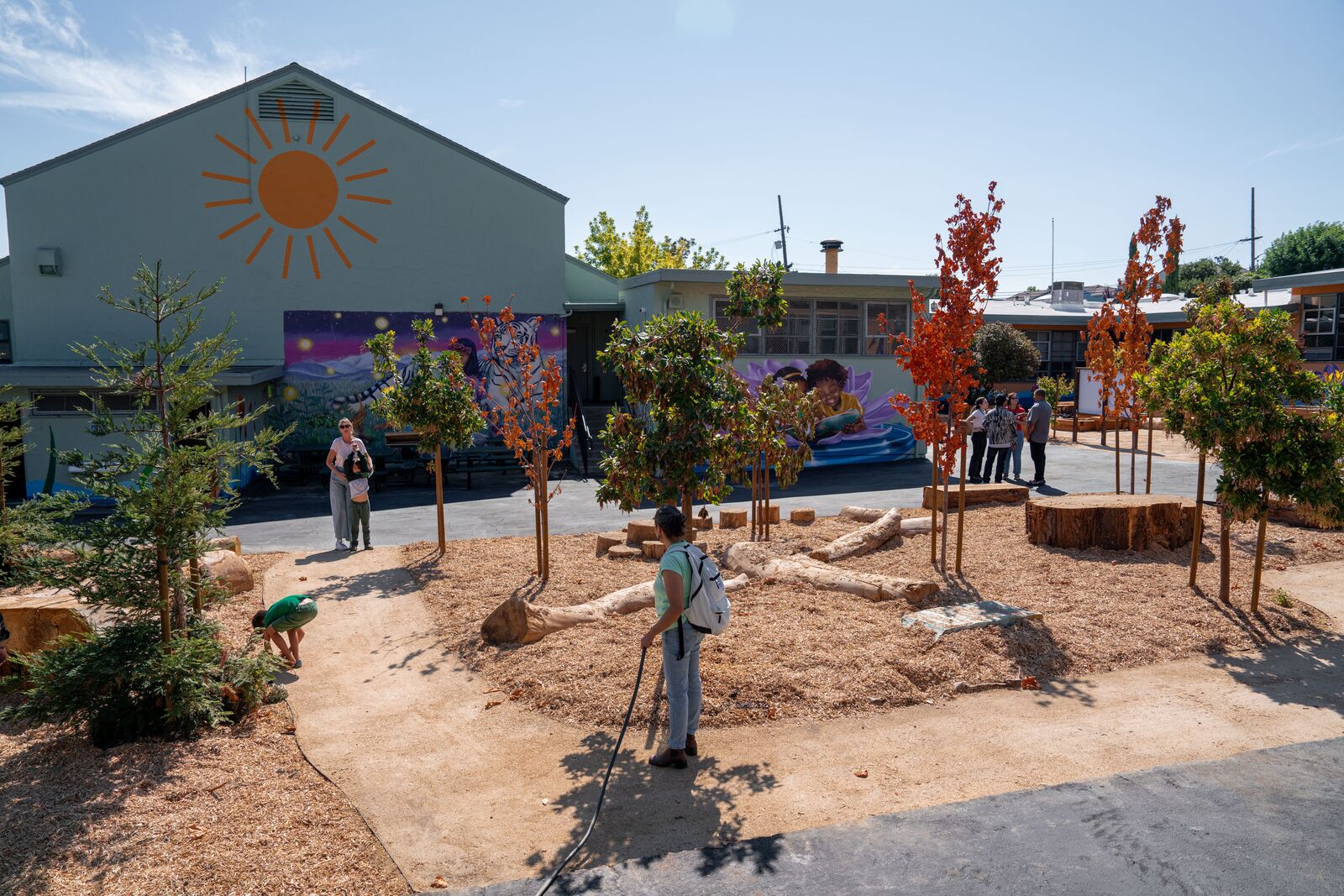 In 2024, OUSD unveiled the new schoolyard at Melrose Leadership Academy, which includes more shaded areas and greenery. Credit: Katie Rodriguez for The Oaklandside
Reid Williamson, a parent of two students at Sequoia, helped to acquire and install the PTA-funded portable air conditioning units in the school’s classrooms. He wants to see the district be more proactive in addressing building issues.
“We need to do a better job of maintaining our aging infrastructure rather than waiting for a big, new, shiny building to solve everything,” he told The Oaklandside. Those larger renovations could be many years away for most schools, he said.
It’s a point that also comes up in the facilities report as well, which says, “relying solely on full modernizations to resolve cooling gaps will leave many students in vulnerable conditions for years to come.” The report is not prescriptive, and instead provides recommendations to help school board directors to prioritize investments. The Measure Y spending plan, approved in 2020, allocates funds to broad categories, allowing the school board to direct more specific investments. The board can also ask district staff for more specialized suggestions within those categories on how to spend the funds. The school board, ultimately, has the authority over how bond project funding is spent.
“The board ultimately approves capital spending priorities and specific projects,” Thomas said in an email to The Oaklandside. “Staff are currently installing temperature and ventilation sensors in classrooms across the district so we can develop an equitable, data-driven plan.”
Patrice Berry, the school board director for District 5, acknowledged that the upgrades that come with major schoolyard and building renovation projects include heat mitigating infrastructures, but she would like to see what can be done in time for the start of the school year, in the heat of August.
“The gap that I think parents and educators and me as a board member are advocating for them to address is the more near-term, immediate work that needs to be done,” Berry said. “It should be unacceptable to all of us that kids are going home ill. And that educators, on top of everything else they have to manage, that they also have to manage this.”
“It’s not about one school or the other, it’s about all schools and the community receiving answers about how the money will be spent, what the strategy is and what the timeframe is for that strategy,” said Megan Parker, a parent at Manzanita SEED.
Beyond that, Sequoia parents are hoping to share their approach with teachers and parents at other schools to help them implement their own DIY cooling strategies until building renovations happen. Parker said families at Manzanita SEED are currently trying to replicate the work done at Sequoia.
For Chiodo, the third grade teacher at Sequoia, the temperatures are tough to deal with in the classroom, and may also represent a broader undervaluing of public education.
“It’s kind of a general feeling of, we’re not that important,” she told The Oaklandside. “If we could make schools that are the most pristine and beautiful and safest places for children to go, I think it would help not just the people working there, but the children to feel valued and important.”
“*” indicates required fields