
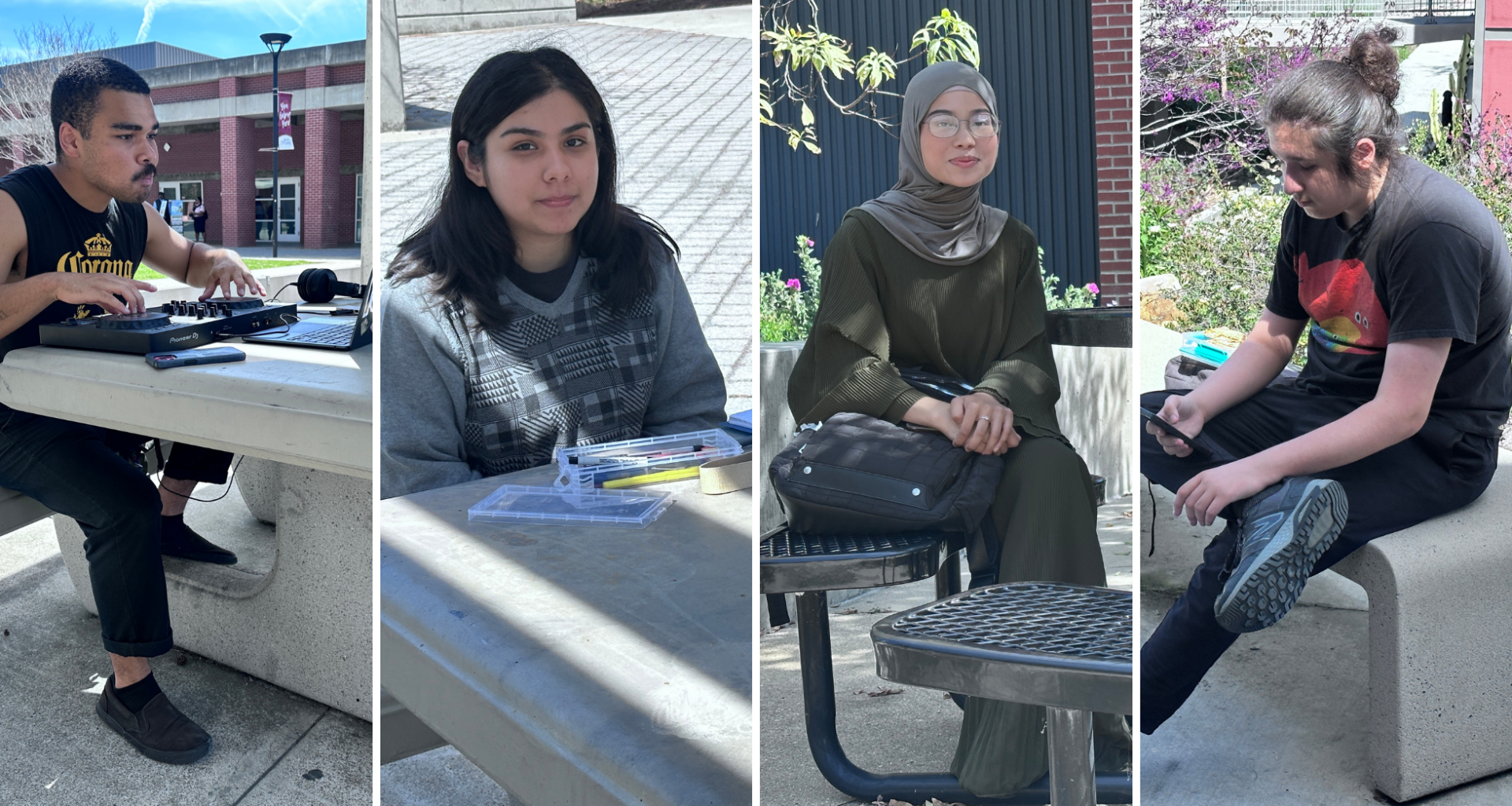
With public transit fare increases being considered and gas prices rising nationwide, City Times Media spoke with students around San Diego City College to see how much students are spending on transportation.
As of March 16, the national average price of unleaded gas rose from $2.98 to $3.72 — more than a 70-cent change since Feb. 28.
Diesel fuel also rose from $3.76 to $4.99, an increase of $1.23.
California’s current average cost for gas is currently $5.56. San Diego sits above this average at $5.64.
Story continues below advertisement
The San Diego Metropolitan Transit System is offering a new commute cost calculator. The online tool allows commuters to compare the cost of driving alone versus taking transit. Check it out in English or Spanish.
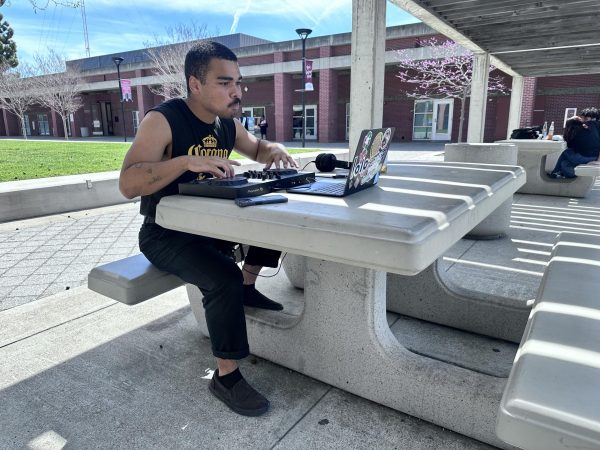 Music production and technology Isiah Woods mixes beats on his mixing table at Curran Plaza, Tuesday, March 17, 2025. Photo by Tresean Osgood/City Times Media
Music production and technology student Isiah Woods lives 10 minutes away from campus and finds free parking around San Diego instead of paying.
“I live, like, 10 minutes away from campus, so I usually fill up my tank every, like, other week. So, maybe, 60 bucks every two weeks,” Woods said. “I just kind of thug it out with street parking, you know, sometimes there’s a close-up spot. Sometimes I gotta park up that hill and just take a nice little walk to here.”
If you don’t like the option of “thugging it out” like Woods, apps like ParkMobile allow you to pay for temporary parking at student parking structures around campus.
City College also offers virtual parking passes that students can purchase through their student portal under the finance tab.
English student Dejay Judge, who lives in Oceanside, shared his strategy for saving gas — driving combined with public transit.
“I commute from the trolley station, I park my car, save me a little gas, and then I beat that morning traffic,” Judge said. “So roughly, I probably spend about 15 bucks on gas a week. Rather than driving back and forth from Oceanside, I’d be probably spending about, probably $100 a week on gas.”
A basic needs report from the 2023-24 school year found that 12% of students missed class or work due to transportation issues.
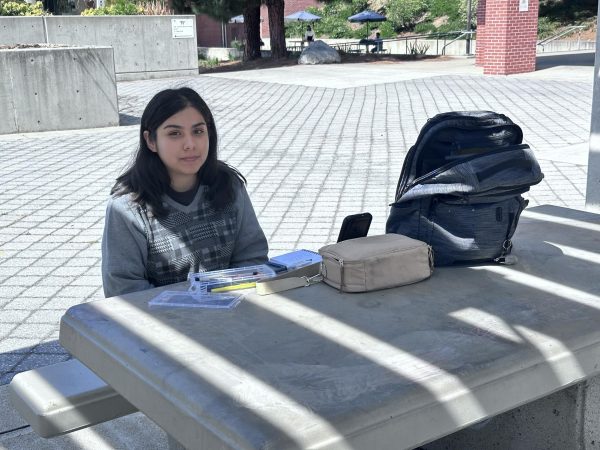 Graphic design student Kaitlyn Gonzalez sits at Curran Plaza studying, Tuesday, March 17, 2025. Photo by Tresean Osgood/City Times Media
Some students, like graphic design student Kaitlyn Gonzalez, get dropped off by family to attend classes.
“I commute by car,” Gonzalez said. “I’m not actually sure (about the cost of gas) because my parents take me. Actually (I) have no idea how much my dad spent.”
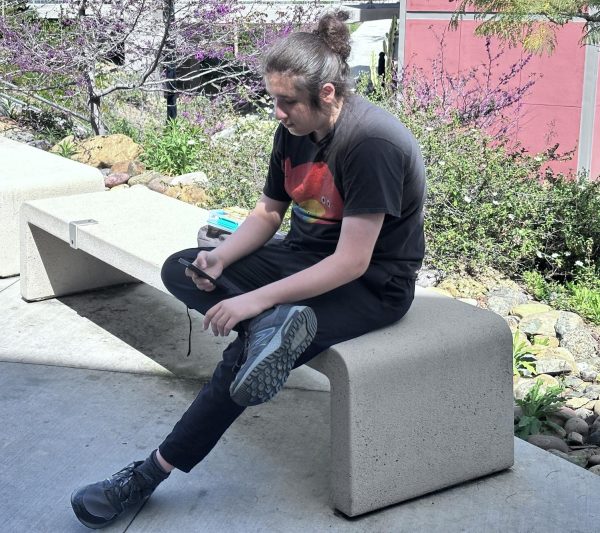 Truman Stevens-Luzich sits near Schwartz Square while eating lunch, Tuesday, March 17, 2025. Photo by Tresean Osgood/City Times Media
Undeclared student Truman Stevens-Lazich borrows his parents’ car to commute.
“I don’t pay for gas myself because I don’t actually have a car,” Stevens-Lazich said. “I use my parents’ car, so I would have to ask them. But it can’t be that much because it’s a very short drive.”
92% of those students did not access public transportation.
Extended Opportunities Programs & Services (EOPS) liberal arts and language student Victoria Obradovic takes advantage of the free public transit service offered by the program.
“I get the EOPS bus pass,” Obradovic said. “It’s provided through EOPS.”
EOPS offers services and accommodations based on your disability to help you pursue your academic goals.
Click the link to visit the EOPS site for more information.
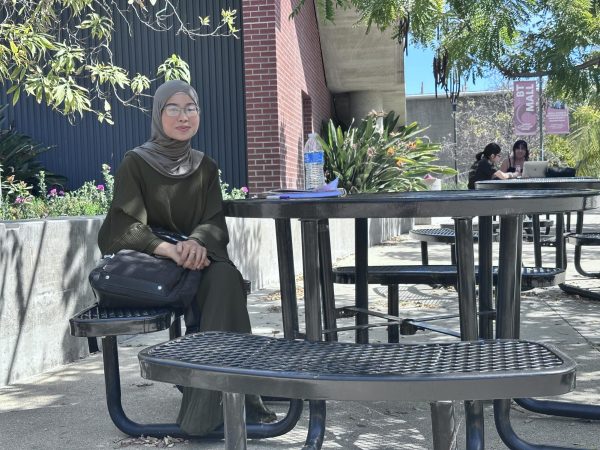 Allied health student Pree Bee studies outside the BT building, Tuesday, March 17, 2025. Photo by Tresean Osgood/City Times Media
Allied health student Pree Bee pays to take the bus from City Heights to campus.
“It’s around, like five to $6,” Bee said. “I live in City Heights, so I would say it’s pretty far. And sometimes it’ll take a while to get here.”
This story was edited by Rosemary Archer and Itzel Martinez.