
FRESNO COUNTY – Following the passage of the One Big, Beautiful Bill Act last July, Fresno County has a clearer understanding of how the changes to federal public health insurance and nutrition assistance programs will impact the county budget — though the future is still somewhat murky.
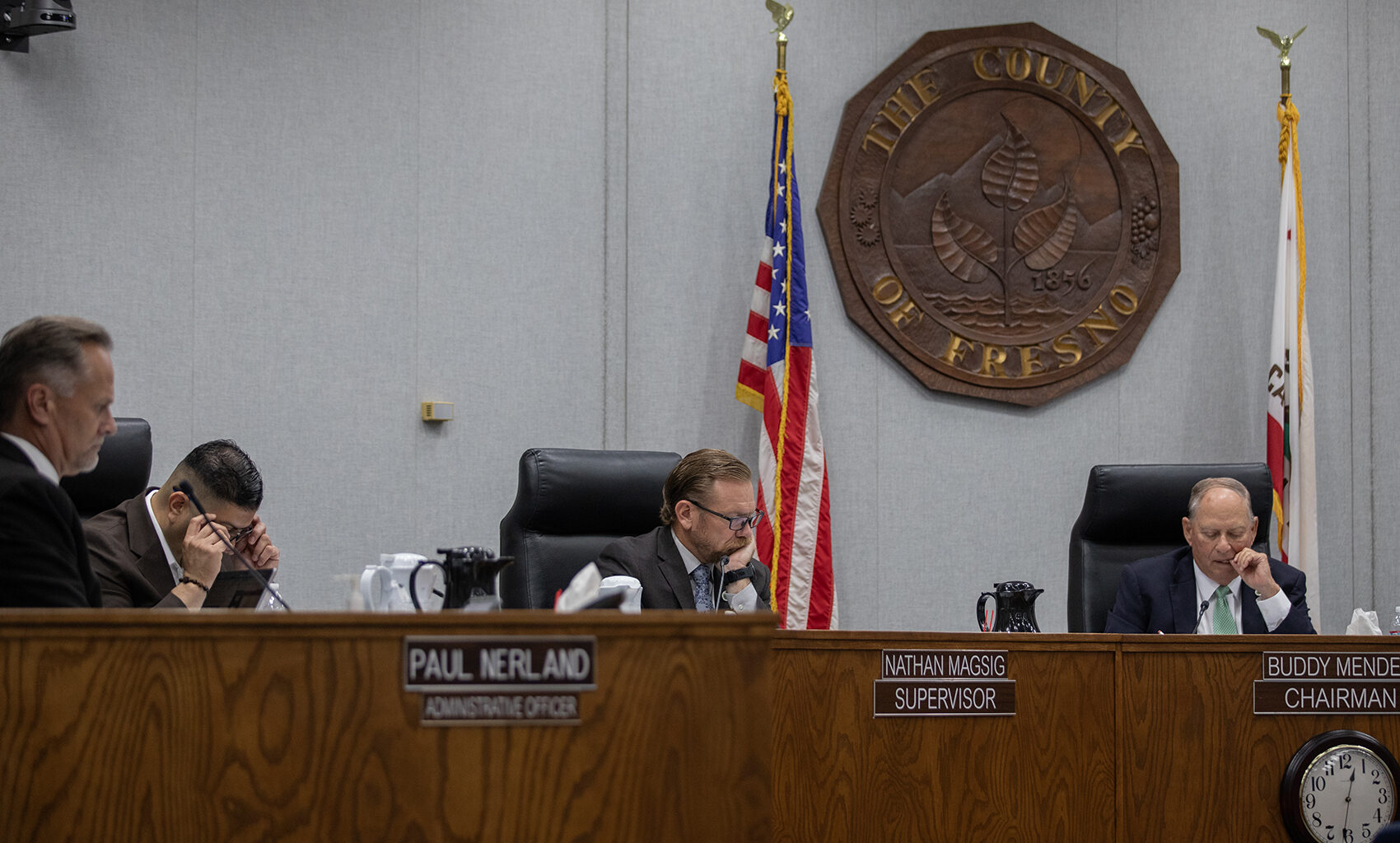
As county staff have started analyzing the budget outlook for fiscal year 2026-27, three key department directors presented their estimated financial impacts of the bill to the Fresno County Board of Supervisors on March 17. Where previous discussions could not put any specific number to the annual potential impact, county staff now have one, albeit at a variable range of $68.5 million to $294.5 million.
County Administrative Officer Paul Nerland said most of the impact will be felt in the Department of Public Health and its indigent care program, with Fresno County estimating a budgetary impact of $41 million to $241.1 million. The impact is expected to be around $20 million in the behavioral health department and between $7.5 million and $33.4 million in the social services department.
“That’s a wide range, … but I want to note the low end of $41 million is staggering for our county budget,” Nerland said.
Public health variables
Due to new eligibility requirements for Medicaid/Medi-Cal in the bill, also referred to as House Resolution (HR) 1, counties in California anticipate they will have to provide indigent health care to individuals who lose health insurance coverage.
Indigent care provides services to low-income residents who have a medical need but no source of health coverage and no way to pay for medical care. Counties are required to provide this care under state law but receive no funding from the state for it.
Public Health Director Joe Prado said this is because the state redirected the funding it used to provide to counties for indigent care in 2013, after the passage of the Affordable Care Act.
“For the last two fiscal years, we’ve had zero expenses in our program because everybody is utilizing the Affordable Care Act; there’s other avenues for health care,” Prado said. “That will not be the case moving forward.”
To get the $41 million to $241.1 million figure, Prado said county staff looked at the costs per patient for Medi-Cal managed care plans and how much it cost the county to provide indigent care to patients in 2010 before the ACA was passed.
Staff also took into account projections that 11,000 to 30,000 of the approximate 520,000 residents in the county currently on Medi-Cal will lose eligibility.
On the low end, $41 million comes from the cost of Medi-Cal managed care plans for 11,000 residents that could become eligible for indigent care. However, the actual cost incurred by the county for indigent care could be higher. This is because Prado said the cost per patient on the Medi-Cal managed care level is about $4,000, but indigent care provided on the county level costs approximately $8,000 per patient.
Using the per-patient cost for indigent care services in 2010 and multiplying that by a yearly inflation factor, Prado said it could cost the county $89 million to provide indigent care for 11,000 individuals and up to $241 million for 30,000 individuals.
Prado said one way to mitigate costs would be for the state to remove the unfunded indigent care mandate and provide that medical care using the Medi-Cal managed care plan fee structure due to its lower cost. In the meantime, Fresno County may have to evaluate its eligibility guidelines for indigent care services to save money.
Increased administrative burden
Additional impacts in the behavioral health and social services departments will primarily come from increased administrative requirements and costs shifted from the federal government onto the state and county governments.
Department of Behavioral Health Director Susan Holt told the board of supervisors that the $20 million annual impact of HR 1 is a conservative estimate, based on $15 million in lost revenue from individuals who lose Medi-Cal coverage and $5 million in increased costs as individuals need higher levels of care.
“When folks lose their Medi-Cal and lose the treatment that they’re receiving for a mild or moderate impairment, their impairment will escalate and they will hit our system completely unfunded,” Holt said.
Within the Department of Social Services, Director Sonja Bugay said HR 1 will result in an unfunded increased eligibility workload, as the bill adds new requirements for Medi-Cal and Supplemental Nutrition Assistance Program, or CalFresh, eligibility and increases how often that eligibility must be evaluated.
“The feds are not changing the dollars we’re getting to administer Medi-Cal; the state isn’t either,” Bugay said. “What they gave us is a whole lot more work to do.”
Further, the bill shifts how much the state has to pay for SNAP benefits and how much the federal government pays, from 50% to 25%. On top of that, the bill increases how much the state has to pay for SNAP benefits if the state’s payment error rate is between a certain amount.
Bugay said the most recent error rate available for the state of California was 11%, making the state’s share of SNAP benefits increase by about $2 billion. Certain counties in the state, including Fresno County, are penalized when the error rate is too high as well.
Fresno County’s error rate at the end of fiscal year 2024-25 was just 4.5%, but a year prior had been as high as 14%, Bugay said. She also said she could guarantee that the county would have a high error rate for fiscal year 2025-26 just because of HR 1.
Bugay said some of the new eligibility rules in HR 1 went into effect when it was signed into law on July 4, 2025, but Fresno County waited to implement pieces of the legislation until it received more federal and state direction.
“That is not within county control, and yet we would be subject to some of these error rates,” Bugay said.
Error rates include fraud, though that is minimal, inadvertent household errors and administrative errors made by eligibility workers, which makes up the bulk of the error rate, Bugay said. As the requirements for eligibility checks increase, administrative errors are likely to rise as well.
Fresno County will be able to better estimate the impacts of HR 1 once more eligibility rules take effect and the number of people who lose eligibility for Medi-Cal and CalFresh programs becomes clearer.
For now, Nerland said the board of supervisors will need to consider indigent care eligibility rules, evaluate the county’s administrative capacity for determining eligibility, continue advocacy for policy changes at the state level and keep an eye on how cost shifts will impact the county’s general fund.