
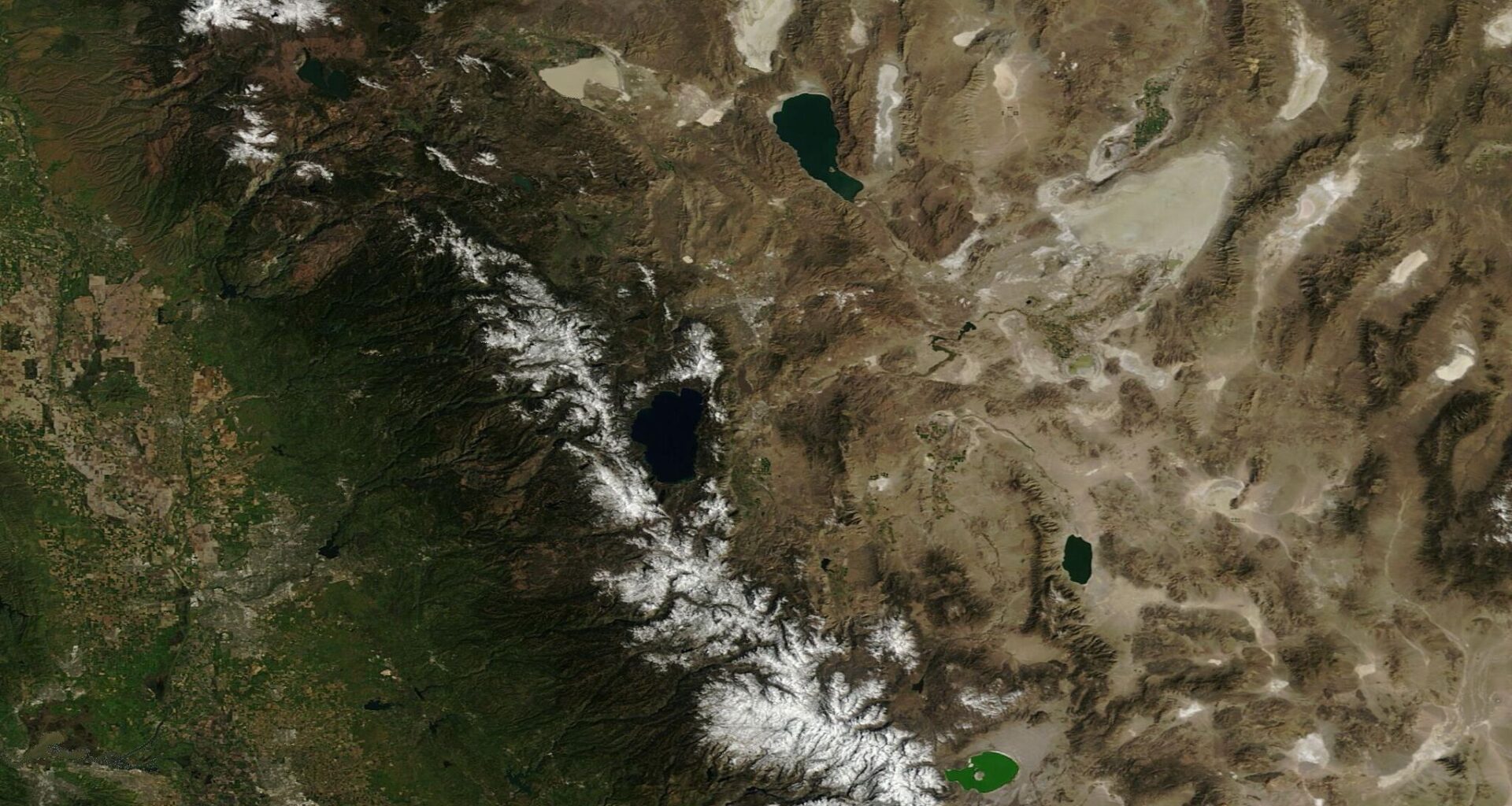
California’s snowpack is plummeting toward record low levels as a “snow-eater heat wave” rapidly melts what little remains.
Record-shattering March temperatures in the 60s and 70s forced early closures of some Sierra Nevada ski resorts. Nearly every snow-measuring station in the Sierra has lost more than a foot of snow in the 10 days since the heat wave kicked into full gear.
An even more important measurement, snow water equivalent, has dropped faster than ever measured in March, said Mike Hittle, a hydrologist at the National Weather Service’s California-Nevada River Forecast Center. It’s a key measure for how much liquid is stored in the snowpack, if melted completely.
“A melt of this rate is a big deal any time, but in March it’s unheard of,” Hittle said during an interagency drought webinar Monday.
The UC Berkeley Central Sierra Snow Lab, located near Donner Summit, lost nearly 1 inch of snow water equivalent per day from March 14 to 24.
It’s an “exceptionally low snowpack currently,” said David Simeral, a climate scientist at the Desert Research Institute. “We should normally be at about peak conditions in terms of snow water equivalent at this time of year.”
Peak snowmelt is happening nearly two months earlier than normal in most of California, Hittle said. That water is flowing into creeks, streams and rivers, which are running fast and cold, posing danger to recreationists.
With record-setting temperatures forecast through the end of this week, the April 1 snowpack could rival 2015 as the lowest ever in many locations, Hittle said. April 1 marks a key date officials use to assess the state’s water supply and drought conditions.
It’s a huge change from Feb. 24, when a massive snowstorm pushed the statewide snowpack to three-quarters of normal for the date and 61% of April 1 normal. But a warm late-February Pineapple Express began the melt, which continued during a warm spell and accelerated further by a heat wave that scientists dubbed as a “snow eater.”
The late March and early April forecast provides at least a glimmer of hope, but a complete recovery of the snowpack is statistically impossible.
“A pattern change is forecast over the West next week,” National Weather Service meteorologist Brad Pugh wrote in an update Tuesday. “Much cooler temperatures with high-elevation snow is expected.”
The Climate Prediction Center branch of the weather service posted a slight risk of heavy snow in the Sierra Nevada from April 1 to 2.
“That storm may actually show up right as we’re getting close to (zero), so a lot will depend on when the storm moves in and the melt over the next several days,” said Andrew Schwartz, director of the Berkeley snow lab.