
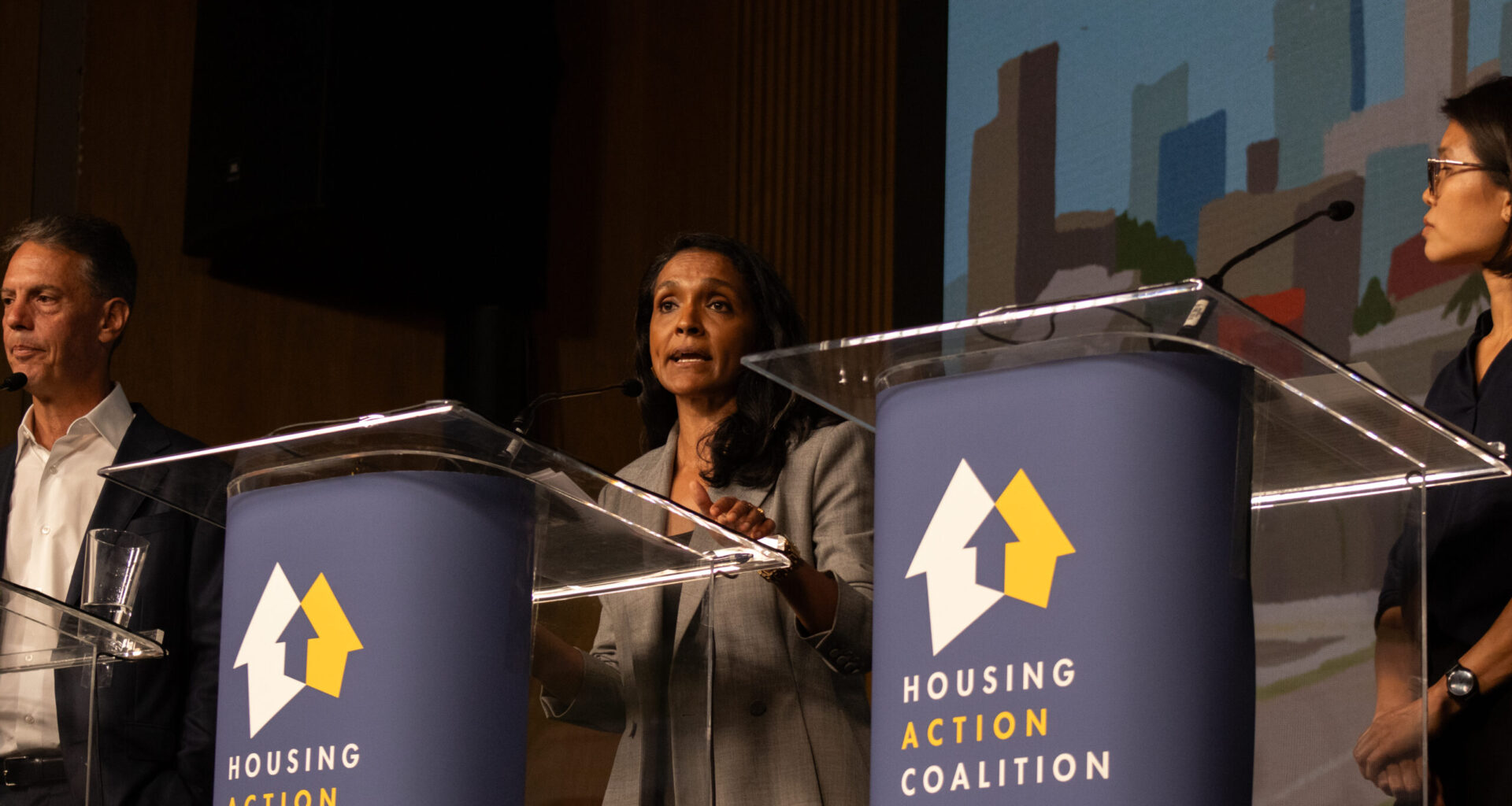
Three mayoral candidates took the stage Monday night to debate solutions for issues impacting the city they seek to serve
In the first mayoral debate of the year, three leading candidates — all with divergent backgrounds — took the stage to discuss homelessness, housing and Los Angeles infrastructure.
Nithya Raman brought her perspective as the 4th District Los Angeles City Council member, emphasizing her experience with policy and navigating bureaucratic processes. By contrast, Rae Huang said her work as a community organizer makes her the ideal candidate.
“I’ve been in our streets, I’ve been in our neighborhoods, and I’ve been on the doorsteps of Los Angeles organizing on the ground for over 10 years,” Huang said.
Coming from a business background, Adam Miller told attendees he has a long history of “leading from the front lines,” having co-founded the nonprofit Better Angels to combat homelessness in the city.
Notably absent from the debate was Karen Bass, who is running for a second term and is leading in recent polls. Reality TV personality Spencer Pratt also declined the invitation.
The debate was organized by Streets For All and Housing Action Coalition. Streets For All founder Michael Schneider and Housing Action Coalition Southern California Director Jesse Zwick moderated the event.
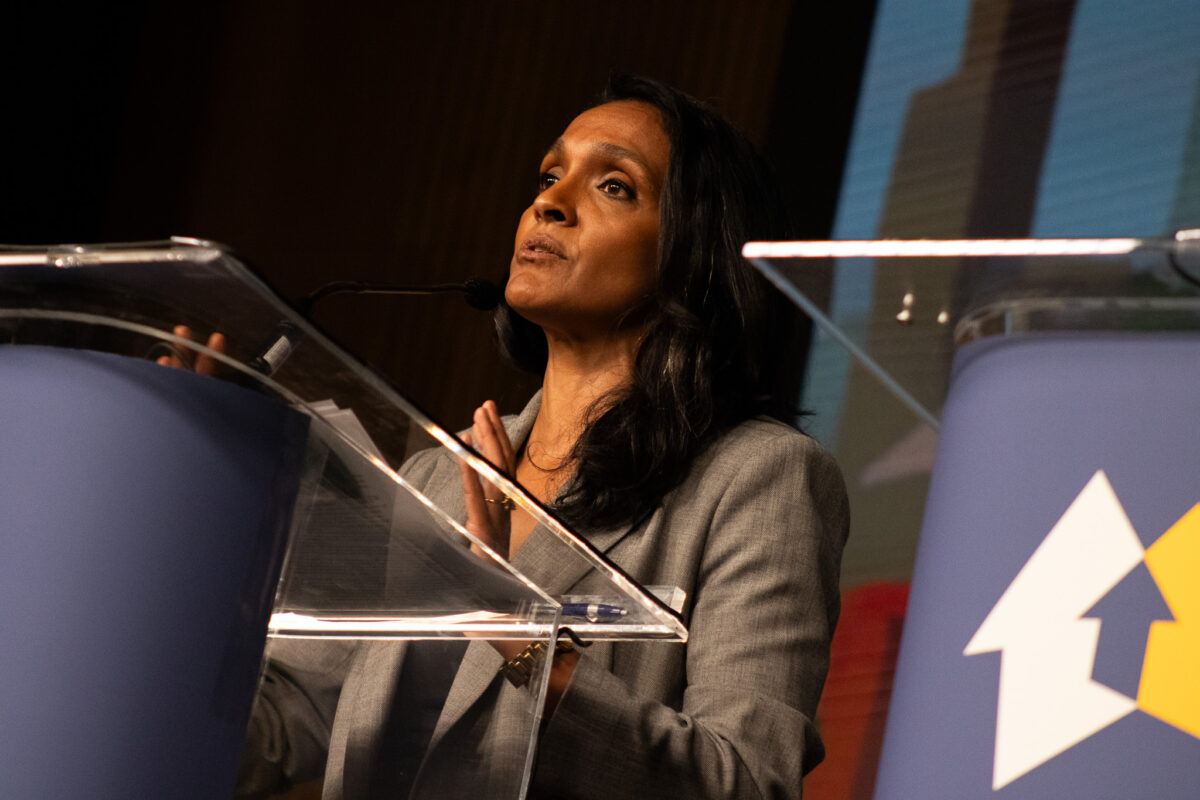 Nithya RamanCredit: Taylor Parise
Housing, Housing, Housing
One issue all candidates agreed on was that Los Angeles needs to build more homes.
Scroll to continue reading
“We’re making it more expensive to build the thing we’re saying we need the most in L.A.,” Raman said.
Raman, who chairs the City Council’s Housing and Homelessness Committee, proposed several reforms. To reduce bureaucracy, she suggested implementing a “shot clock,” or deadline, for project approvals to streamline development. She also said fees for new housing projects must be lowered and the appeals process improved.
Huang pointed to what she described as a dysfunctional system within City Hall as the root cause, vowing to create an office called “Housing for All.” The office, she said, would work alongside government agencies to ensure housing projects increase and remain on budget.
“L.A. has completely failed at building,” Miller said, adding that the city’s housing crisis cannot be solved by a single organization. He did not propose a specific plan but said he would take a “holistic” approach.
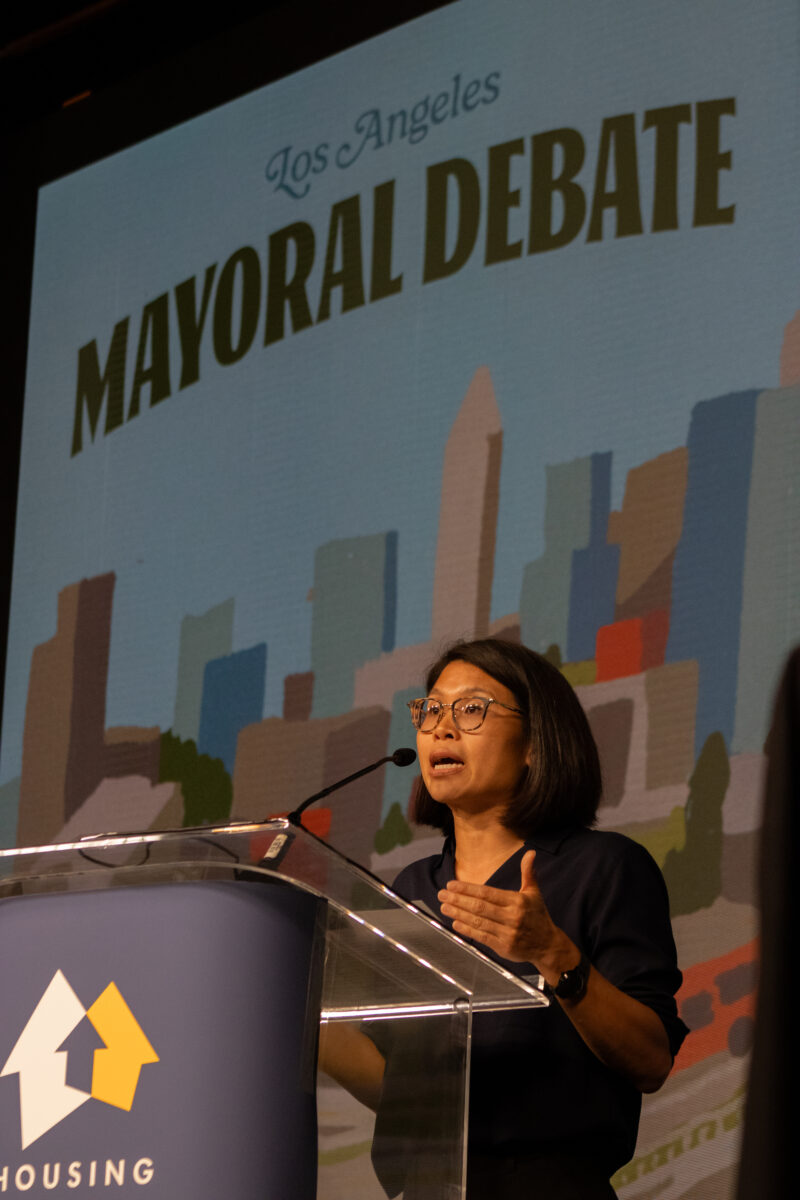 Rae HuangCredit: Taylor Parise
Street Safety
Los Angeles has seen a recent drop in traffic fatalities, with a 6% decrease reported in 2025.
However, traffic safety remained a point of contention at Monday’s debate, with 290 deaths reported last year.
Moderators asked the candidates whether they would support reinstating red-light cameras, which automatically issue tickets to drivers who run red lights and were removed in 2011.
The question appeared to catch Huang off guard. She asked for clarification and ultimately said she does not support what she described as community surveillance.
Both Raman and Miller disagreed, saying the city should reinstate the program to improve street safety.
“Speeding kills, and automated enforcement is one tool in our toolkit to address this,” Raman said. “I would make sure that any automated enforcement tool we’re using does not share data and does not add to surveillance, but instead increases safety, and that’s possible to do.”
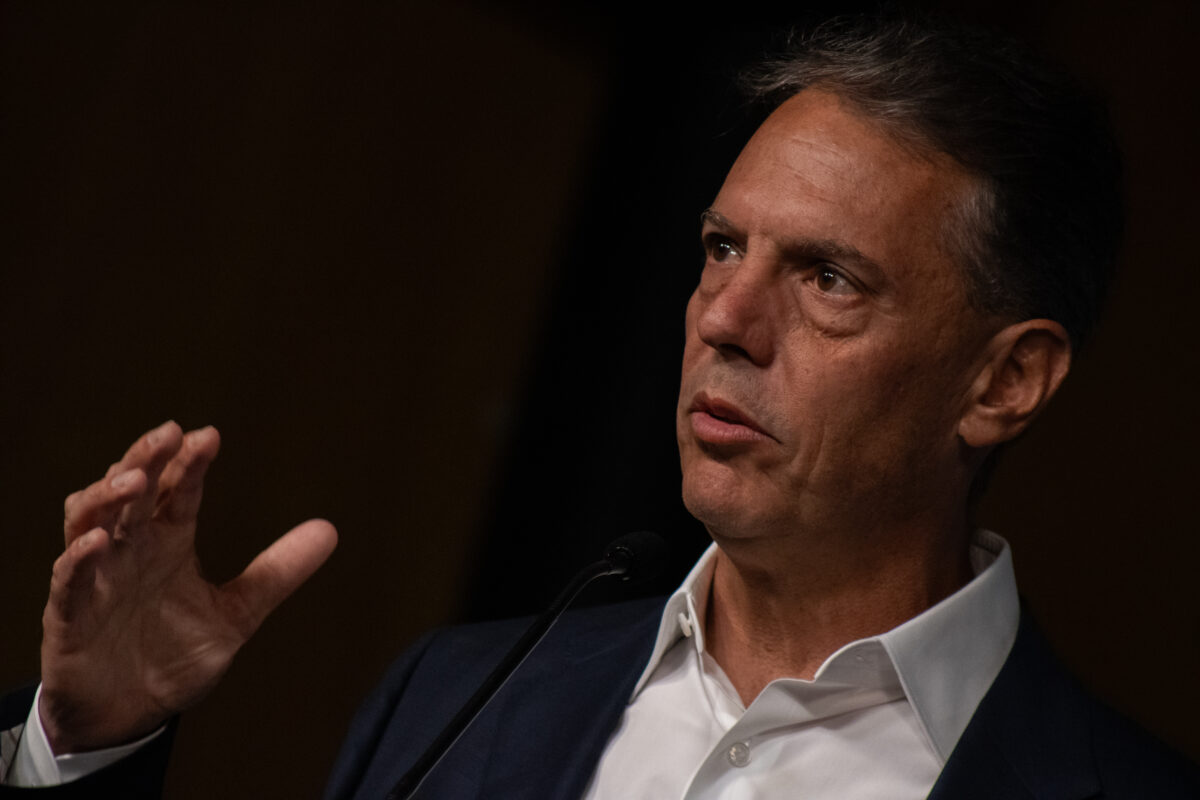 Adam MillerCredit: Taylor Parise
Mayor Karen Bass’s Inside Safe
Inside Safe is a program launched by Bass that relocates unhoused individuals from encampments to hotel rooms as they transition toward permanent housing.
According to the mayor’s office, 5,808 people have been served by the program and 1,431 have been placed in permanent housing.
Moderators said approximately $323 million has been spent on the program, which candidates affirmed is disproportionate to the number of people permanently housed.
Raman said a single hotel room through Inside Safe costs about $80,000 per year. She argued that offering time-limited assistance and additional interventions could lead to better outcomes.
Huang called Inside Safe a “band-aid” solution and said accountability is critical in addressing homelessness. She said that in speaking with a program participant, the individual reported not receiving social services or additional support while in temporary housing.
While Los Angeles has seen a decline in homelessness over the past two years, including a 3.4% decrease reported in 2025, Miller said the job is far from complete.
“It’s absurd that we are treating reductions in homelessness as an accomplishment when we have 44,000 unhoused individuals in this city,” he said, adding that funding from Inside Safe should be redirected toward prevention and housing development.