
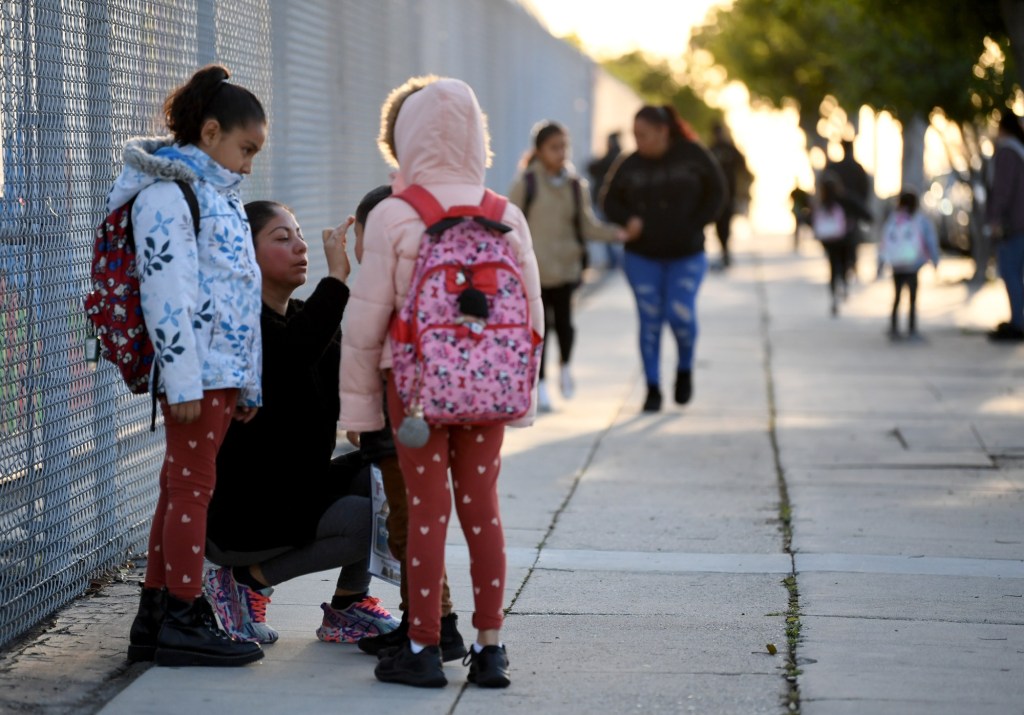
The future of Los Angeles is sitting in Los Angeles Unified School District classrooms today. Those students will become our region’s workforce and civic leaders. Los Angeles will depend on this generation to solve some of our most complex challenges.
Yet the educators preparing them for that future are on the verge of a strike. Three labor groups — United Teachers Los Angeles, Service Employees International Union Local 99, and the Associated Administrators of Los Angeles — just announced plans for teachers to walk out on April 14 if a new contract agreement with the district is not reached. If those negotiations collapse, we know who will lose: LAUSD students will face yet another disruption to their learning.
This threat comes at an especially fragile moment for the district. In recent days, Superintendent Alberto Carvalho was placed on administrative leave following a federal investigation that included FBI searches of his home and district office. Regardless of the investigation’s outcome, the sudden leadership vacuum has heightened uncertainty across the system and created an even greater need for stability in classrooms.
Now, with labor negotiations intensifying and district leadership in transition, Los Angeles faces the risk of compounding instability at precisely the moment when students most need consistency.
LAUSD joins a growing number of California districts facing contentious labor disputes. West Contra Costa educators walked out in December for the first time in district history, San Francisco teachers followed with a four-day strike in February, and Dublin and Sacramento teachers launched strikes in March. While some districts, including San Diego Unified and Oakland Unified, have narrowly averted strikes with last-minute agreements, the momentum behind teacher walkouts continues to build.
Under the banner of the California Teachers Association’s We Can’t Wait campaign, local union chapters in 32 districts serving approximately one million students across the state joined together last year to highlight the urgent need for better funding, pay, and working conditions. By coordinating bargaining, they created a rare alignment of expiring contracts, amplifying their call for systemic change and setting the stage for a wave of strikes.
LAUSD has been here before. In January 2019, teachers went on strike for six days. A kindergartener that year would have been just five years old. Today, that student is in middle school.
In the seven years since, that child and hundreds of thousands of others have experienced a gauntlet of disruption: an 18-month pandemic that forced schools online, a three-day strike in 2023, devastating wildfires in early 2025 that displaced thousands of students, immigration raids that shook communities, and most recently the superintendent being placed on administrative leave. Now, the possibility of another strike looms.
For many, education remains the most reliable pathway out of generational poverty. While the district has made notable academic gains in recent years, too many students are still not reading or doing math at grade level, graduating prepared for college or careers, or accessing internships and technical certifications. When classrooms close – even temporarily – gaps widen and consequences compound.
To be clear, teachers, classroom aides, and service employees play an essential role in children’s lives. They deserve respect, professional dignity, and strong compensation. Every day, our city’s school staff show up for students navigating poverty, trauma, housing instability, and language barriers. Their work matters, but so does continuity for the students they serve.
LAUSD and Los Angeles labor leaders have the power to prevent a strike and they also have the responsibility to protect students from further instability. Labor negotiations are complex, but one truth should remain clear: students cannot continue to bear the brunt of adult disputes.
District leaders must make a good-faith effort to recognize the essential role teachers play in students’ lives while protecting the district’s long-term fiscal health. At the same time, union leaders must weigh their demands against the district’s real fiscal constraints. Enrollment has declined, pandemic relief funds have expired, and California’s school funding remains tied to an uncertain state economy. Agreements that cannot be sustained over time can lead to layoffs, larger class sizes, and fewer student supports, undermining the very stability educators and families seek.
California’s largest school district—and the hundreds of thousands of students who depend on it—cannot afford another disruption.
Given the stakes, outside leadership may now be necessary. Governor Gavin Newsom and Mayor Karen Bass should bring district leaders and union representatives together to broker a resolution before classrooms close again.
The kindergartener who entered school in 2019 has already lost months, even years, of in-person learning and repeatedly adapted to forces beyond their control.
Los Angeles students have shown remarkable resilience.
We should not ask them to endure another interrupted year.
Ana Ponce is the CEO of Great Public Schools Now (GPSN). Yolie Flores is CEO of Families in Schools and a former LAUSD School Board Member.