
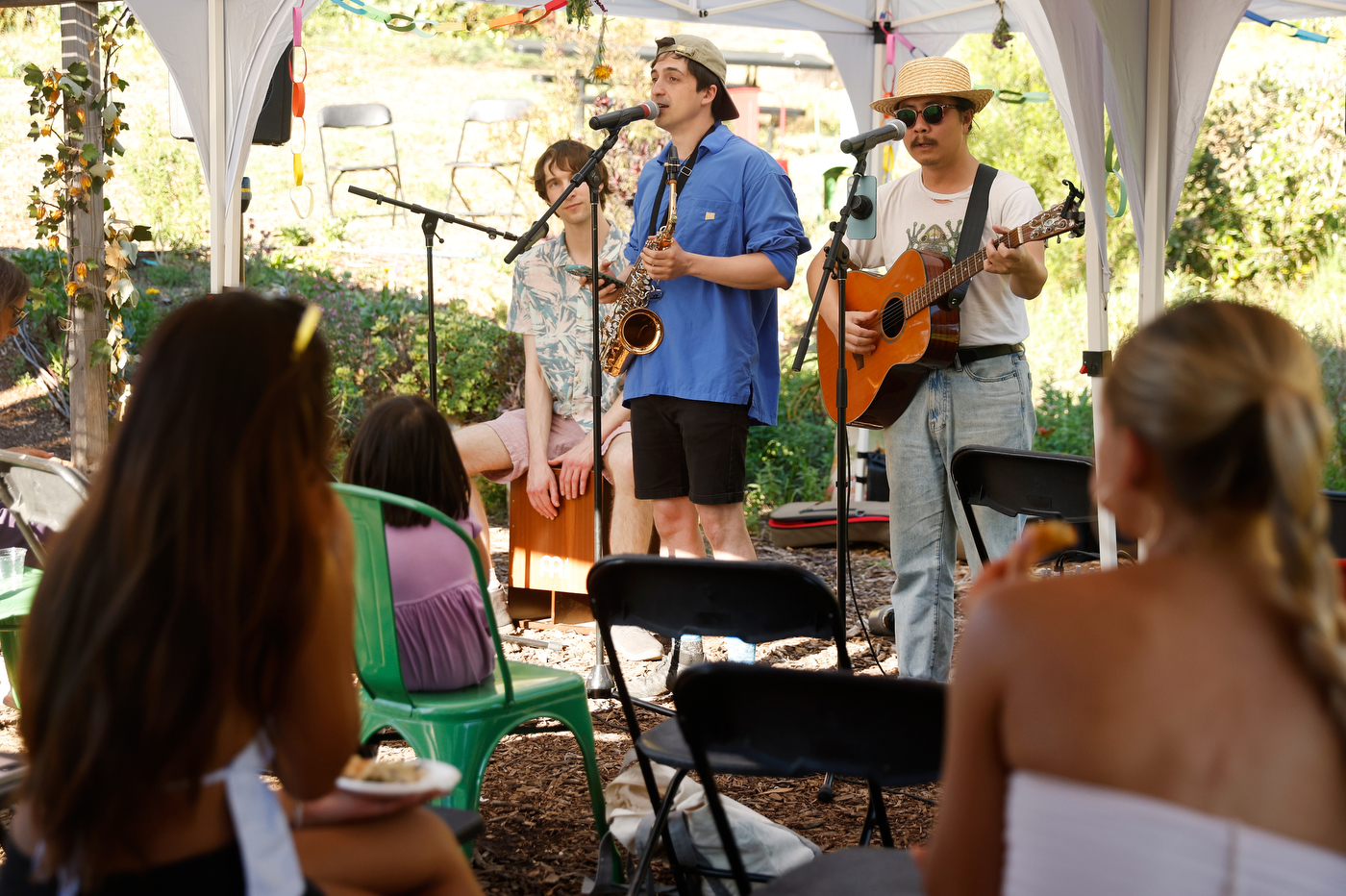
OAKLAND – Northeastern University students sipped ice-cold lavender lemonade blended with garden-grown citrus and herbs, visited the many display booths and found shade under the majestic canopy of trees as a heat wave washed over the Northeastern Oakland campus.
The biannual Oakland Farm Festival celebrates the campus farm’s spring harvest. The event held on Friday highlights the university as both a teaching space and a community gathering point.
Students, staff and Oakland area residents explored the 2.5-acre farm, sampled seasonal produce and participated in hands-on activities centered on sustainable urban agriculture.
The community farm, cared for by students since 2010, remains the centerpiece of the festival and a rare shared green space embedded within a university campus. The farm produces a steady bounty of herbs, vegetables and fruit aligned with the Bay Area’s unique March and October harvest seasons, including apples, oranges, broccoli, lavender, and more.
“We’re lucky here in California, we can grow pretty much anything: vegetables, tomatoes, beans, lettuce, you name it,” Julia Dashe, the garden’s director, told Northeastern Global News.
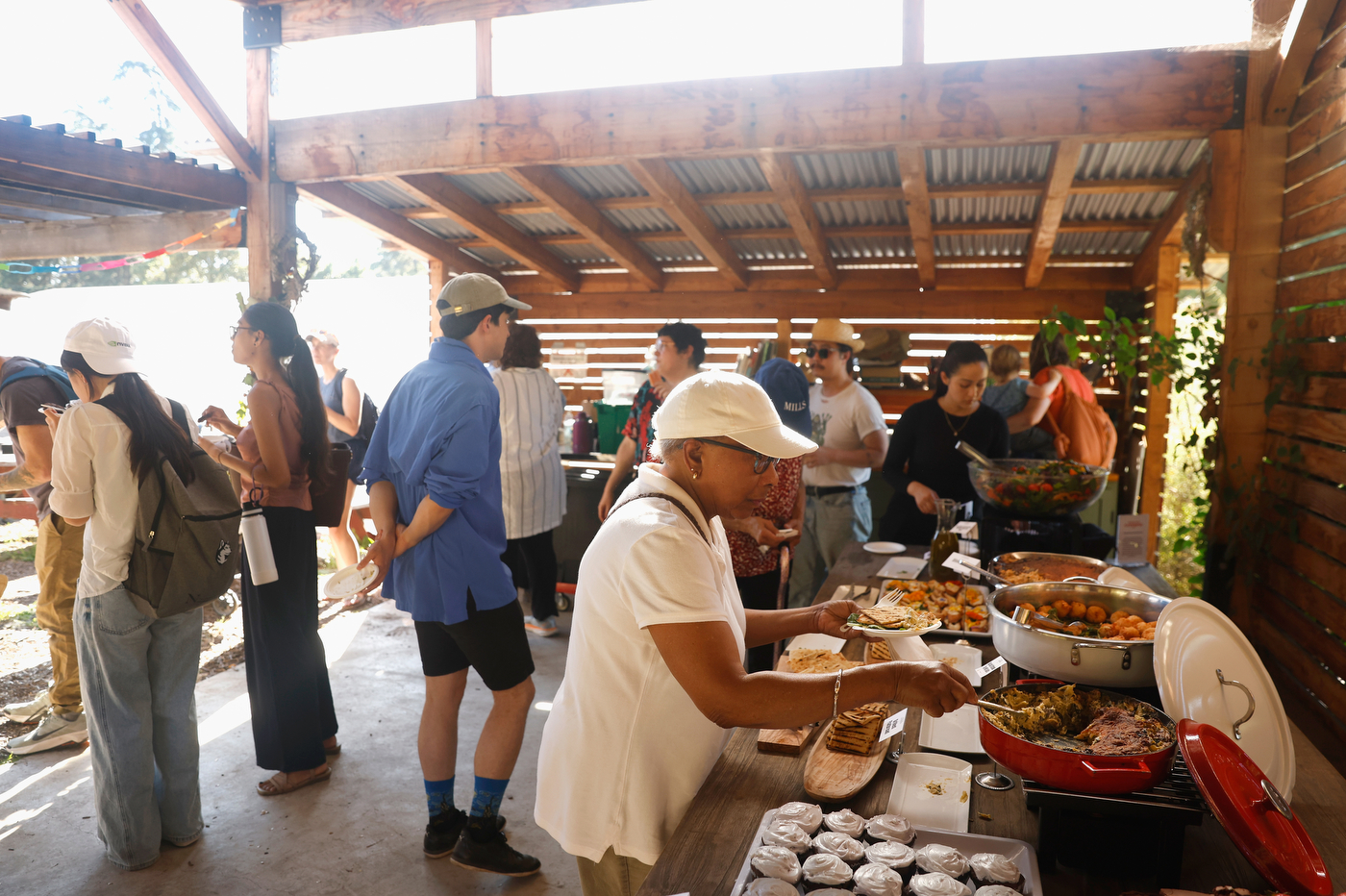 03/20/26 – OAKLAND, CA. – Scenes during the Oakland Spring Farm Festival on Northeastern’s Oakland campus on March 20, 2026. Photo by Lachlan Cunningham for Northeastern University
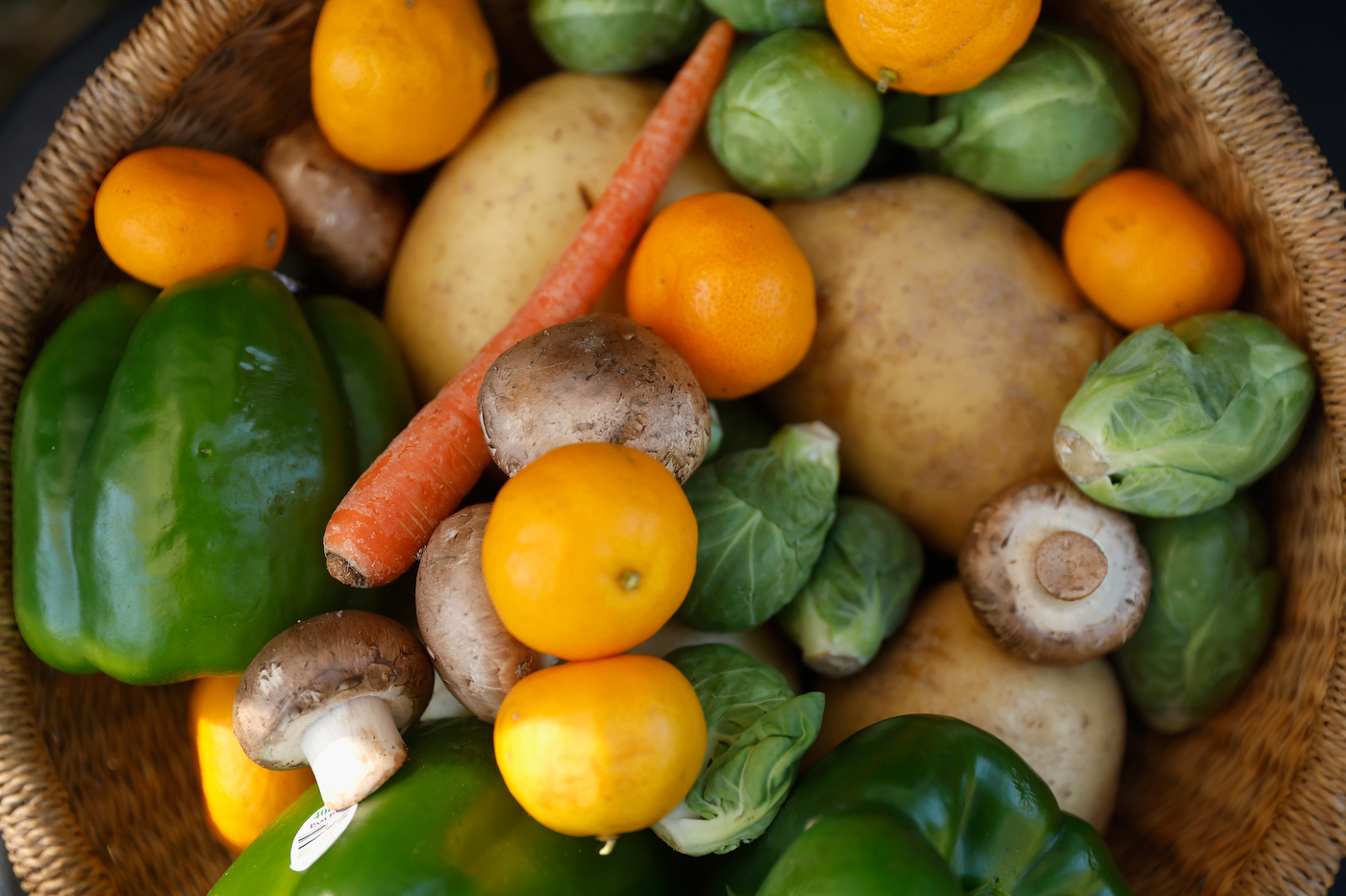 03/20/26 – OAKLAND, CA. – Scenes during the Oakland Spring Farm Festival on Northeastern’s Oakland campus on March 20, 2026. Photo by Lachlan Cunningham for Northeastern University
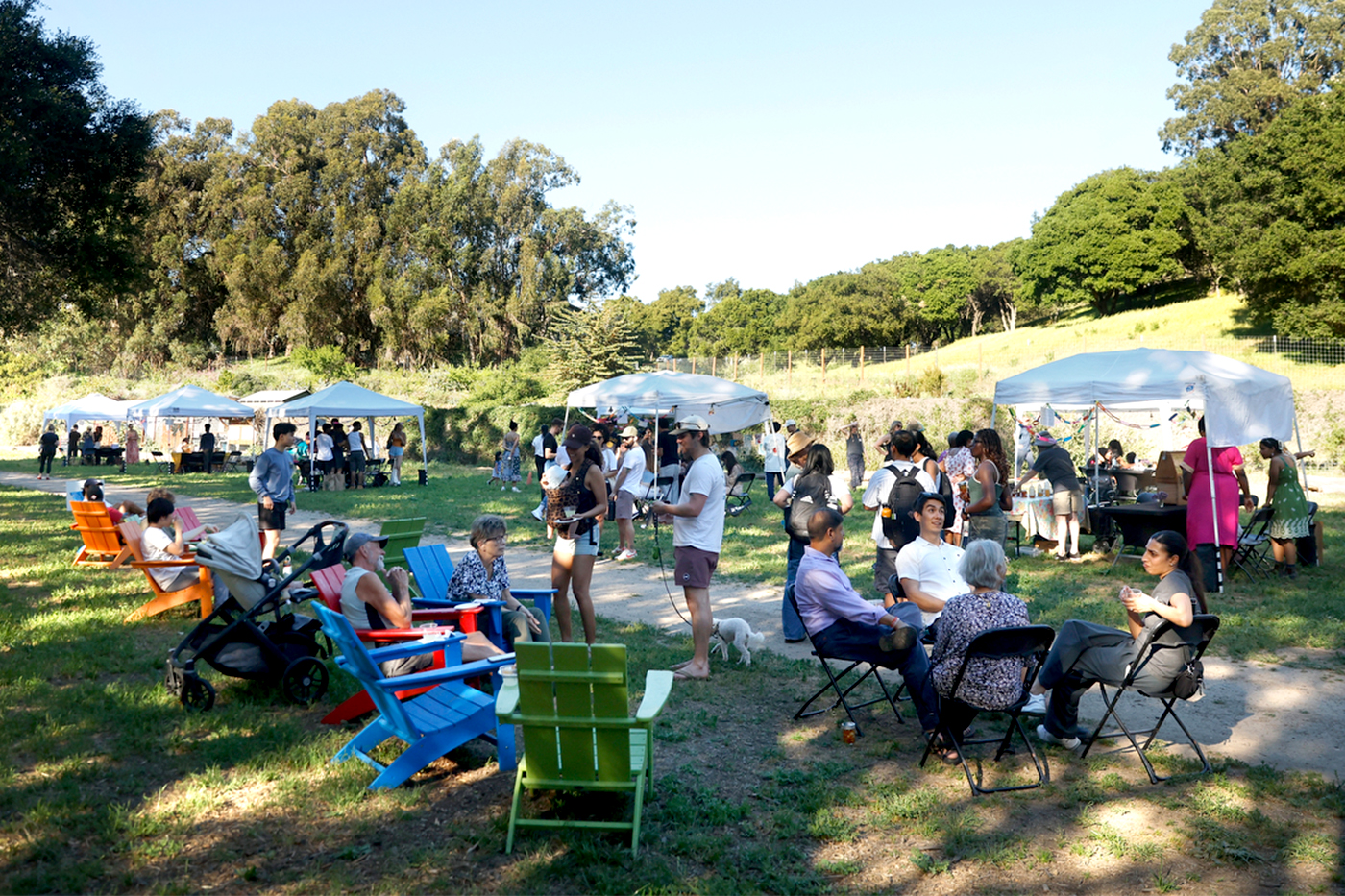 03/20/26 – OAKLAND, CA. – Scenes during the Oakland Spring Farm Festival on Northeastern’s Oakland campus on March 20, 2026. Photo by Lachlan Cunningham for Northeastern University
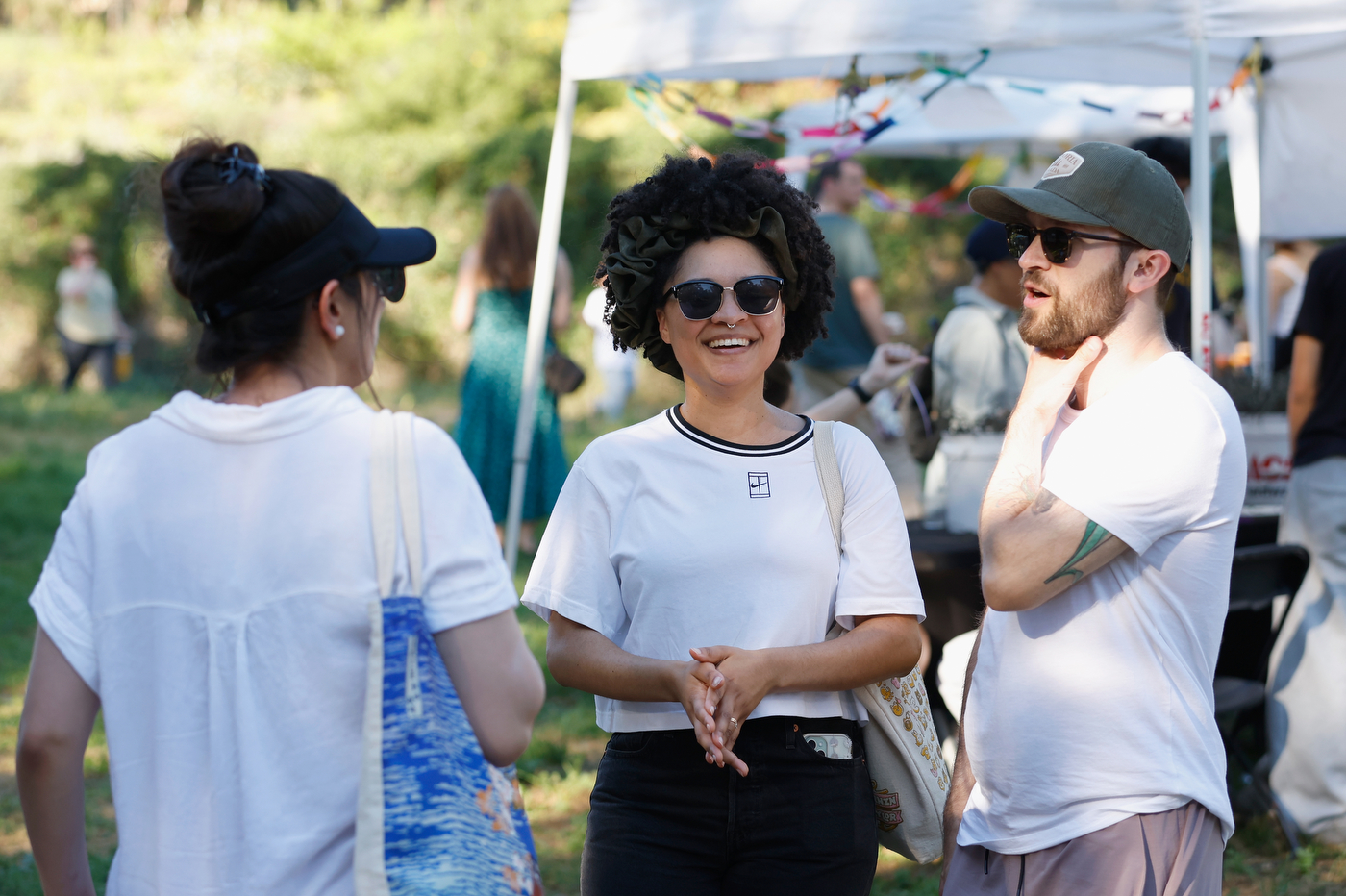 03/20/26 – OAKLAND, CA. – Scenes during the Oakland Spring Farm Festival on Northeastern’s Oakland campus on March 20, 2026. Photo by Lachlan Cunningham for Northeastern University
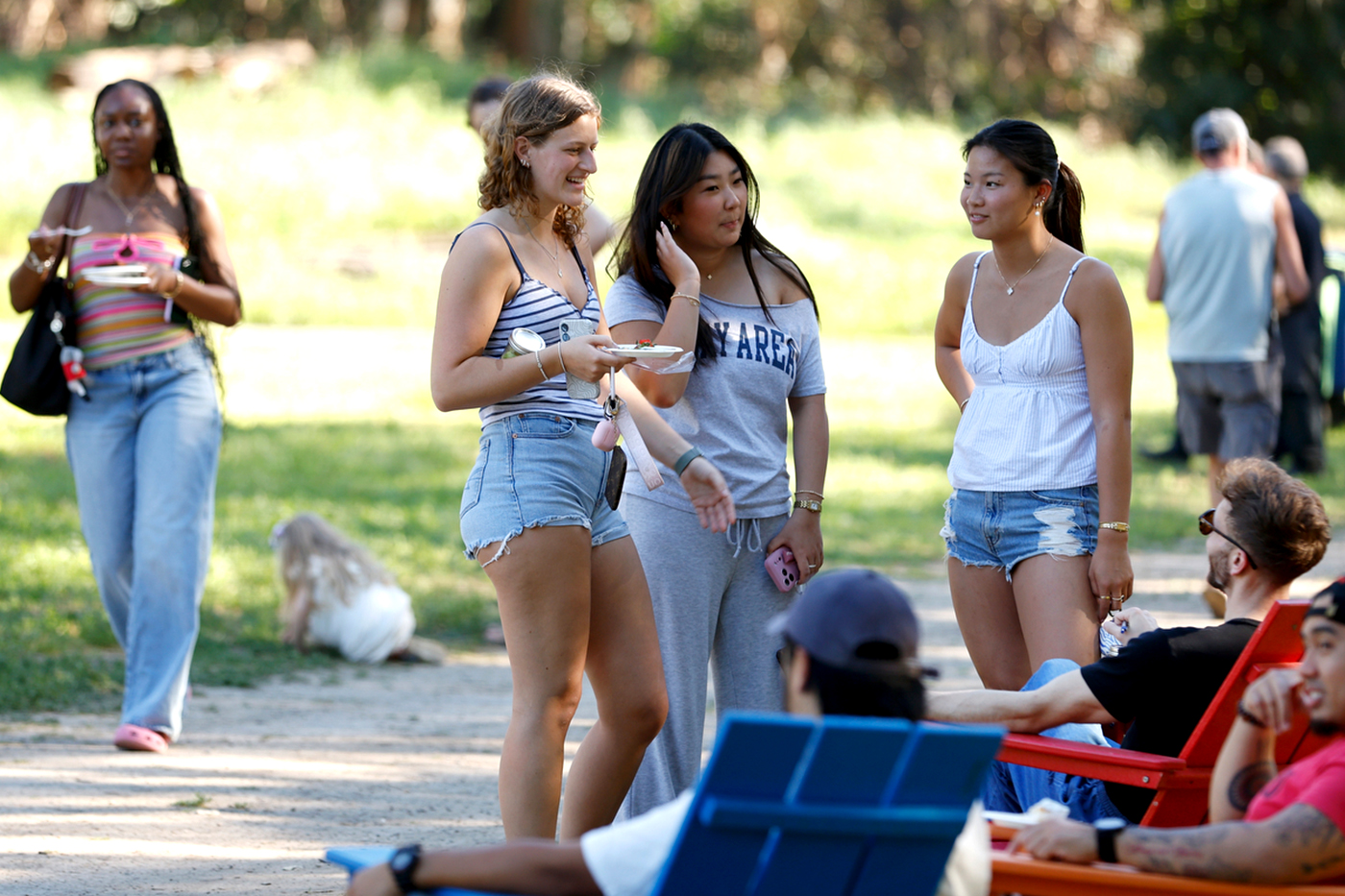 03/20/26 – OAKLAND, CA. – Scenes during the Oakland Spring Farm Festival on Northeastern’s Oakland campus on March 20, 2026. Photo by Lachlan Cunningham for Northeastern University
Students, faculty and neighbors attended the Oakland Farm Festival on Northeastern University’s Oakland campus. Photos by Lachlan Cunningham for Northeastern University
Citrus from more than 60 fruit trees helped showcase the spring harvest in chilled pitchers of lavender lemonade as temperatures climbed into the high 80s.
The heat wave did not disrupt the event on th farm, which has endured many unusual weather patterns over the years, from atmospheric rivers to wildfire-orange skies.
“We just adapt,” Dashe said. “That’s true for all farmers, including [in urban] farming. So much about farming is having a plan, and an alternative plan.”
Student eco reps helped make the festival possible, setting up the farm, staffing booths and managing cleanup throughout the event.
The student workers also support sustainability efforts on campus year-round, including staffing the campus reuse depot, a zero-cost thrift store near Mills Hall, and assisting with end-of-semester move-out donations.
“They’re definitely the body of the event,” Morgan Billington, sustainability program coordinator at Northeastern Oakland, told Northeastern Global News, adding that students from across disciplines help shape the event each year.
“Sustainability is so multidisciplinary and intersectional,” she said. “We see all majors, everything across the board.”
Diego Reyes greeted attendees as they arrived, directing them to informational booths and activity tables throughout the event. Reyes, a freshman engineering major and eco rep volunteer, said he joined the program as a way to better understand sustainability and how students can apply it in everyday life.
“I thought joining would be the best way to learn more about what I can do as a student. Coming from Texas, sustainability wasn’t talked about in the same way,” he said, adding that programs like eco reps weren’t accessible to him as a high school student there.
From the registration booth, Reyes described a larger turnout than the October festival, which he also helped set up.
“There were tons of families with kids, but lots of students and faculty came by toward the end, which was nice,” he said.
One of the primary goals for this year’s event was to “increase attendance and welcome as many folks as we can as possible to the farm,” Billington said.
“We just really want the event to be open to everyone.”
That growth was visible in the festival’s expanded layout, which now stretches beyond the farm into a nearby meadow, creating room for additional food stations and shaded seating for visitors from campus and the broader Oakland community.
This year’s festival featured returning favorites such as a fermentation station, where attendees learned kimchi-making techniques, alongside fruit and vegetable printing, face painting and lavender wand-making using lavender grown on the farm.
Volunteers from Northeastern Oakland Makerspaces helped families with young children dip fruit and vegetable scraps into paint to create organic stamp art, while California Climate Action Corps Fellows passed out mini “zines,” or miniature magazines, to accompany take-home pollinator seed packets.
Esther Duong, a Climate Action Corps Fellow and festival volunteer, poured two cups of seeds into packets for attendees to plant at home. The selection included native flora like Phacelia campanularia (Desert Bluebells) and Eschscholzia Californica (California poppies).
The pollinator station proved to be a popular stop for families and students, featuring an observational hive hosted by local beekeeper Pamela Weimar who sold honey produced by bees in Piedmont, the Oakland hills and the community farm.
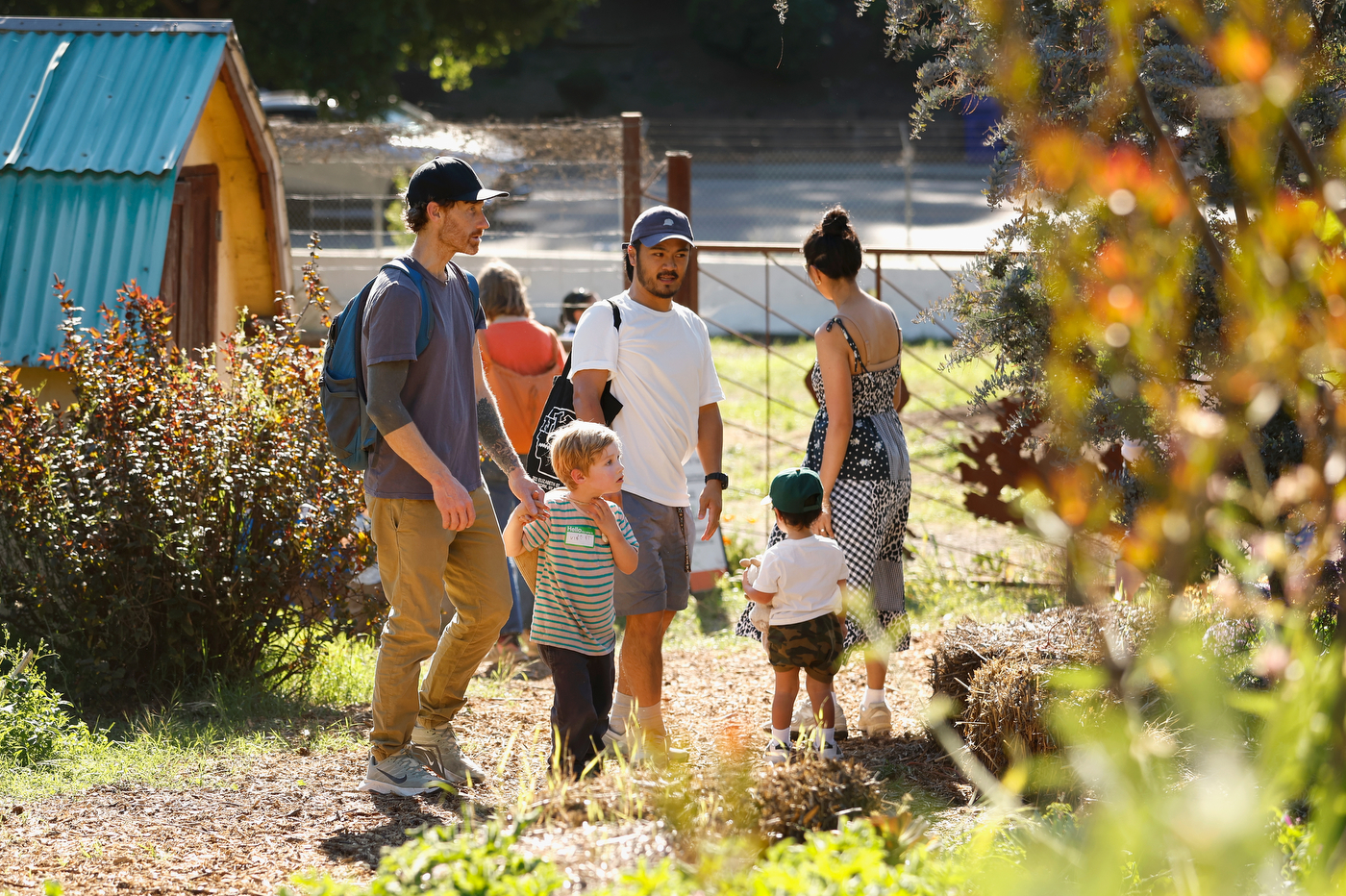 03/20/26 – OAKLAND, CA. – Scenes during the Oakland Spring Farm Festival on Northeastern’s Oakland campus on March 20, 2026. Photo by Lachlan Cunningham for Northeastern University
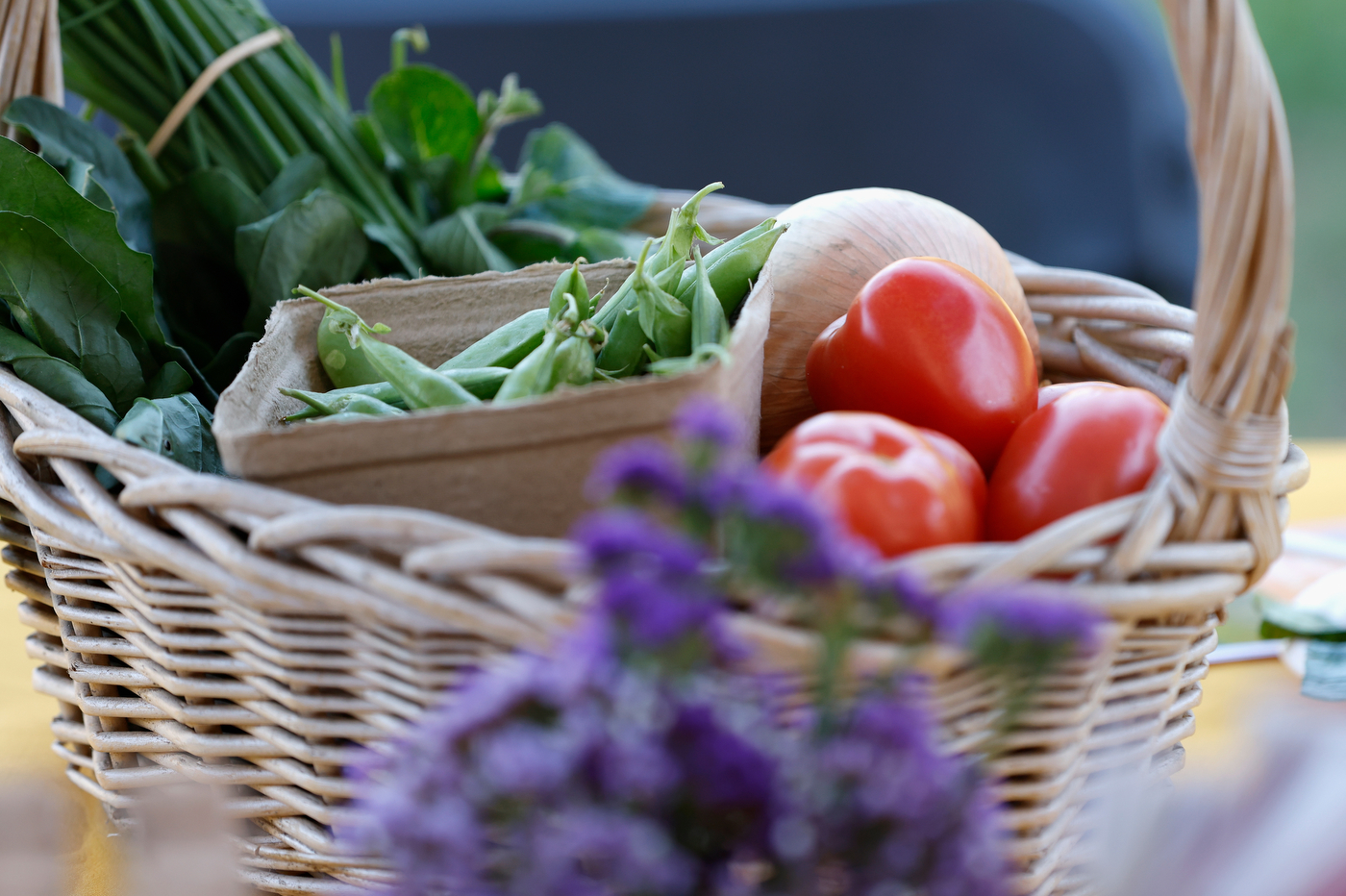 03/20/26 – OAKLAND, CA. – Scenes during the Oakland Spring Farm Festival on Northeastern’s Oakland campus on March 20, 2026. Photo by Lachlan Cunningham for Northeastern University
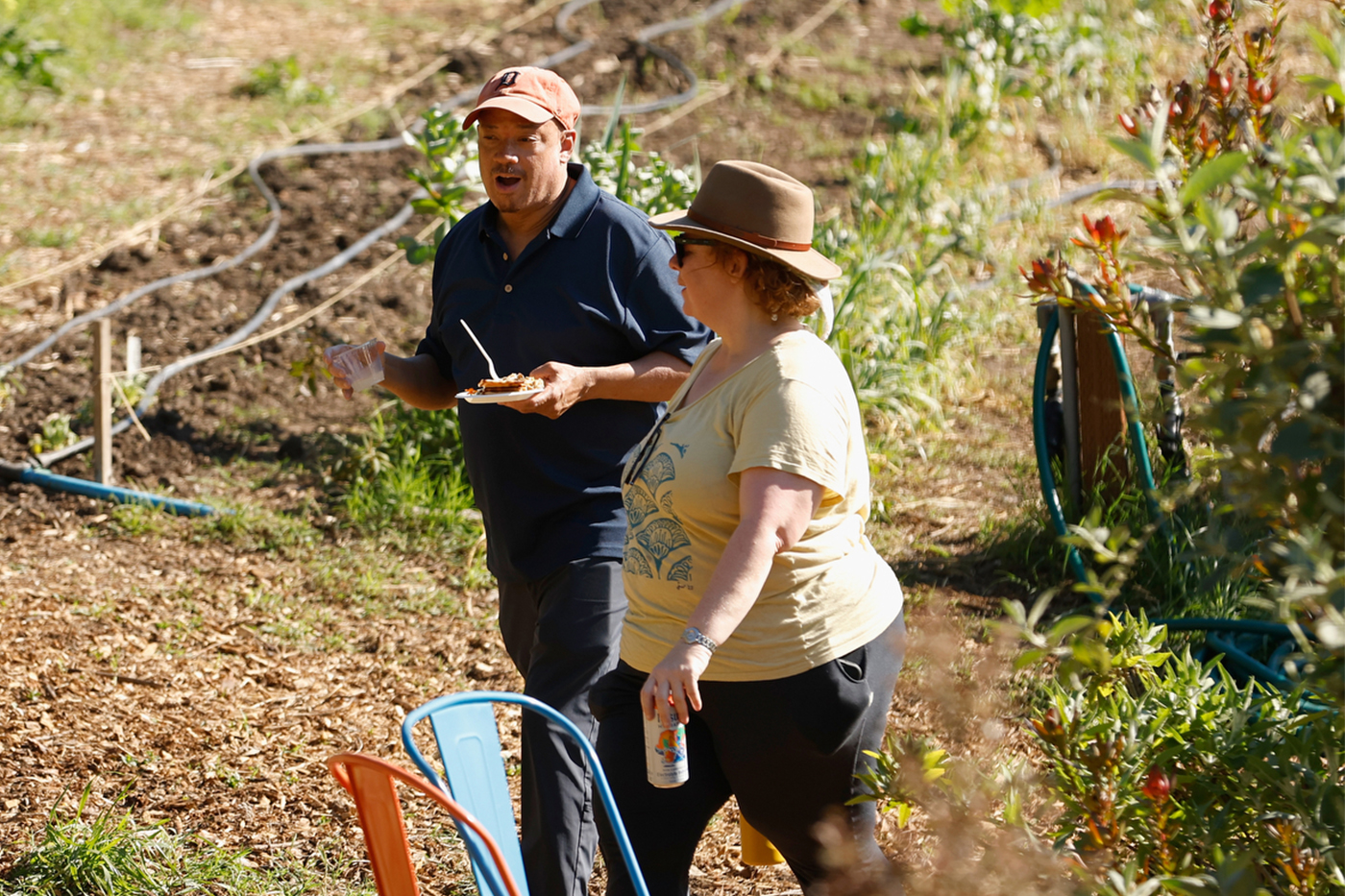 03/20/26 – OAKLAND, CA. – Scenes during the Oakland Spring Farm Festival on Northeastern’s Oakland campus on March 20, 2026. Photo by Lachlan Cunningham for Northeastern University
Festical-goers explored the 2.5-acre farm, sampled seasonal produce and participated in hands-on activities centered on sustainable urban agriculture. Photos by Lachlan Cunningham for Northeastern University
Weimar said she stepped in to create an apiary at the foot of Northeastern Oakland’s community farm when their resident beekeeper left last year. She said “the rich, amber-colored honey” was the most popular sample offered at the festival.
“The time of year, what’s being harvested, the plants, produce and location all [contribute] to the taste and color,” she told the crowd of attendees, who had lined up to sample the product. An added benefit to eating local honey — she told them — is that it can help ease seasonal allergy symptoms.
For newcomers, Farm Festival also offers a glimpse into the rhythms of year-round student farming. Gardeners often follow the “70/30 rule”: about 70% of the garden is planted with reliable crops known to thrive locally, while the remaining 30% is reserved for experimentation — a philosophy that mirrors college life and the garden’s student-led beginnings.
“It was conceptualized by an alumnus and started in 2010, a time when a lot of people were thinking about urban agriculture and growing more food in the city,” Dashe said.
Students secured campus support, grant funding and presidential approval for what was initially a five-year pilot project. More than 15 years later, the farm has become a fixture in the Oakland foothills and the foundation for one of the campus’s most attended community events.
Passed down from one generation of Oakland students to the next, the garden reflects a deep sense of community connection, and the biannual festival extends that spirit beyond campus and celebrates the literal fruits of more than a decade of care.
“People tell us it’s one of the most memorable events on campus,” Dashe said. “Everyone gets excited about it. It’s a great way to share the farm with students who may not have made it down here during the semester.”
Reyes, who is transferring to the Boston campus next year, said the festival gave him a better understanding of offerings on Northeastern’s Oakland campus.
“I’m sad I won’t be able to help with the festival [again next year], but I’m glad I was able to experience it while here,” he said.