
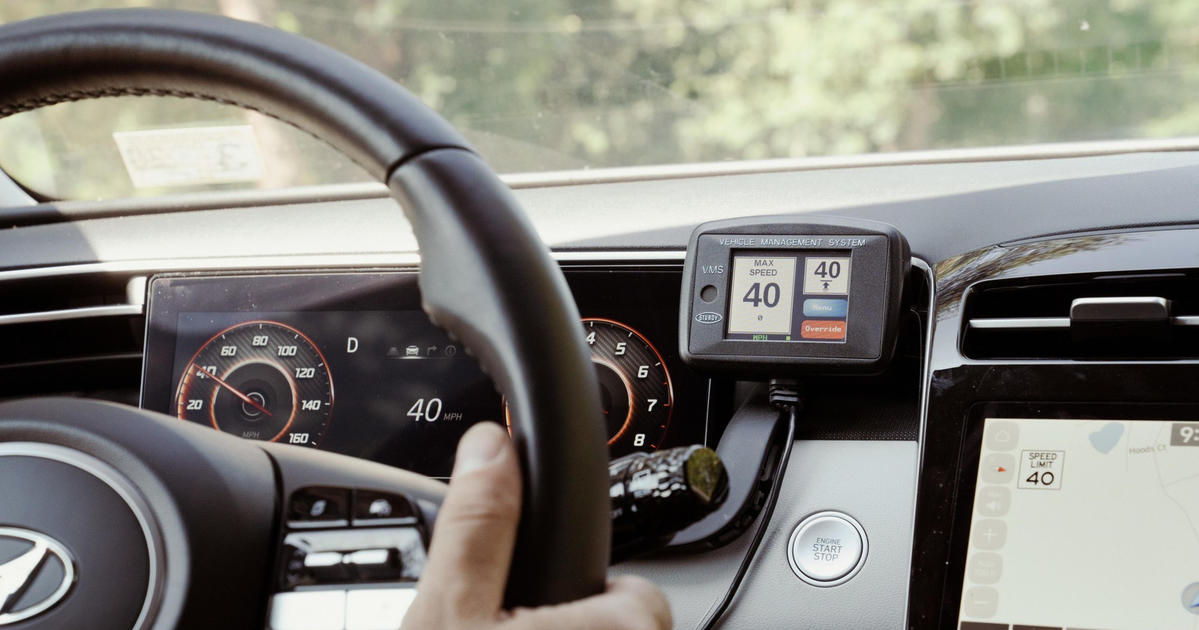
In the old days, cops would chase down speeding drivers and issue tickets. Then, with the advent of speed cameras capable of reading license plates, drivers were notified by mail that they’d been busted. Now, a lawmaker is pushing to monitor recidivist speeders by GPS and install technology that makes it impossible for them to drive too quickly.
Under the state bill, introduced in February, some motorists who have been convicted of excessive speed and reckless driving offenses would be required to install a device that tracks their car’s location and prevents them from exceeding the speed limit.
The legislation is being considered at a time when many in San Francisco are upset over last week’s sentencing of a speeding motorist who killed a family of four last year in West Portal. The driver, Mary Lau, was sentenced to probation and the temporary loss of her license.
Assemblymember Esmeralda Soria, who introduced the legislation, described speeding-related deaths as an “epidemic” and said the bill has bipartisan support.
“The state has a responsibility to step up when you know the data continues to tell us that there is an issue in our community,” said Soria, a Democrat whose Central Valley district spans from Coalinga to Merced. “We should use every tool that we have.”
A 2025 report (opens in new tab) from UC Berkeley’s Safe Transportation Research and Education Center shows that there were slightly more speeding-related traffic fatalities in 2023 statewide than in 2019, but deaths have remained relatively flat between 2019 and 2023, the latest data from the report.
Cameras that record the license plates of speeders and issue tickets went into effect a year ago in San Francisco. But speeding remains a top concern.
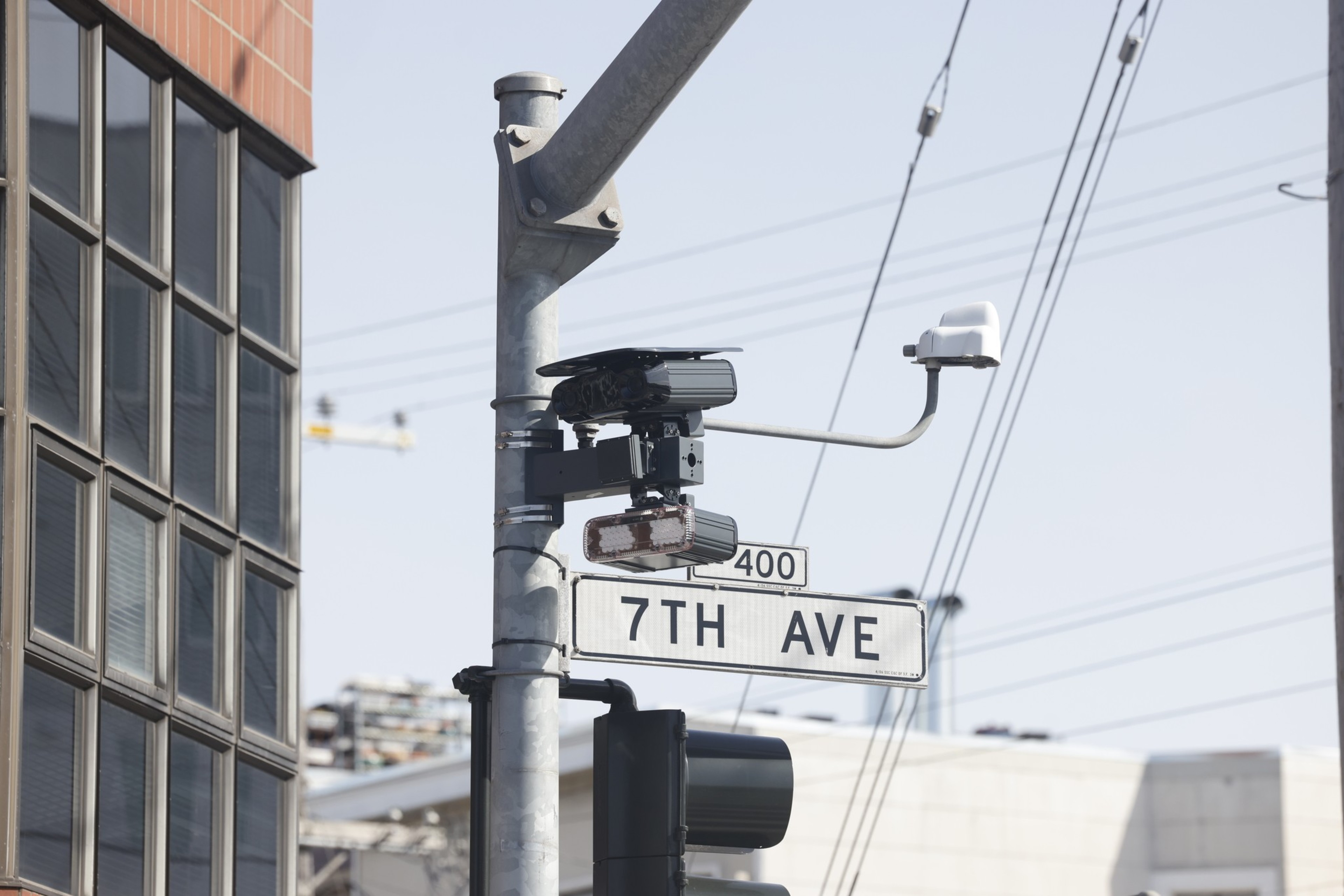 San Francisco has had more than 50 speed cameras deployed for over a year, but a new law would add another weapon to the arsenal in the war against speeders. | Source: Lea Suzuki/San Francisco Chronicle via Getty Images
A 2025 Calmatters investigation found that dangerous drivers are often allowed to keep their licenses, even after killing people (opens in new tab).
State Sen. Scott Wiener proposed similar legislation in 2024 that Gov. Gavin Newsom vetoed (opens in new tab). Wiener’s measure would have required new cars sold in California, starting with 2030 models, to passively monitor speed and alert drivers when they travel more than 10 mph above the limit.
Under Soria’s bill, judges would have the discretion to require intelligent speed assistance (opens in new tab), or ISA, for first-time convictions of reckless driving, racing, or driving at more than 100 mph. The technology would be mandatory in cases where someone was injured.
The speed-blocking technology would be installed for six months, and offenders would be barred from operating any vehicle not equipped with the device. Repeat offenders could be forced into the program for one to four years, depending on the number of prior convictions.
Drivers would partially pay for the cost of installing the device, which cuts the vehicle’s power when it detects speeding.
If passed by both houses, the bill could reach Newsom’s desk by July or August at the earliest, Soria said. The law would take effect in 2027 for five years.
The technology is widely used in other states and countries, but this would be the first time it’s deployed in California by the government, Soria said. Washington, D.C. (opens in new tab), and Virginia (opens in new tab) have similar statewide ISA programs, New York City has installed them on hundreds of government vehicles, and the devices are required on all new cars sold in the European Union.
ISA has proved to be effective. A 2024 report (opens in new tab) on New York’s pilot program found that the device reduced speeding by nearly two-thirds across the 500 cars that had them installed.
Deployment of speed cameras is costly and, civil liberties advocates say, overly broad, as it monitors all drivers, not just the ones most likely to speed.
“I think it’s a nice way of targeting the worst offenders,” said Julia Griswold of the Safe Transportation Research and Education Center at UC Berkeley. “You can’t count on perfect behavior from everyone, so what are the tools that will help people comply with the law without thinking about it?”