
Real journalists wrote and edited this (not AI)—independent, community-driven journalism survives because you back it. Donate to sustain Prism’s mission and the humans behind it.
Last July, the California Department of Corrections and Rehabilitation (CDCR) held a series of town halls inside Mule Creek State Prison intended to be run-of-the-mill information sessions on colon cancer. Incarcerated attendees packed the hall on the prison’s E yard with other health concerns in mind: Two months earlier, an investigation by The Appeal circulated through the facility about a severe environmental and infrastructural breakdown at Mule Creek, which incarcerated people believed had poisoned their water and impacted their health.
Many had questions pertaining to serious medical conditions, frustrations regarding care provided, the status of the water, and what appeared to be an increase in the number of people suffering from thyroid and kidney ailments.
“Why not zone in on cancers that people are getting?” some attendees asked. CDCR officials didn’t have an answer.
What the incarcerated attendees didn’t know was that similar meetings had been unfolding in the surrounding town of Ione, whose City Hall was located just three miles from the prison. Increasingly, Ione residents had been attending monthly City Council meetings to demand answers about their own health issues that they believed to be linked to the prison, from thyroid cancer to leukemia to elevated childhood cancer rates.
These frustrations reached a fever pitch during a session in November. “This city needs to provide a true and accurate diagram of what is going on out there,” one local said.
“I want these issues looked into; we need answers,” said another.
“The city needs to grow a pair and take care of this problem,” said another resident, “because it will get worse.”
“The water in our sink is orange or black”
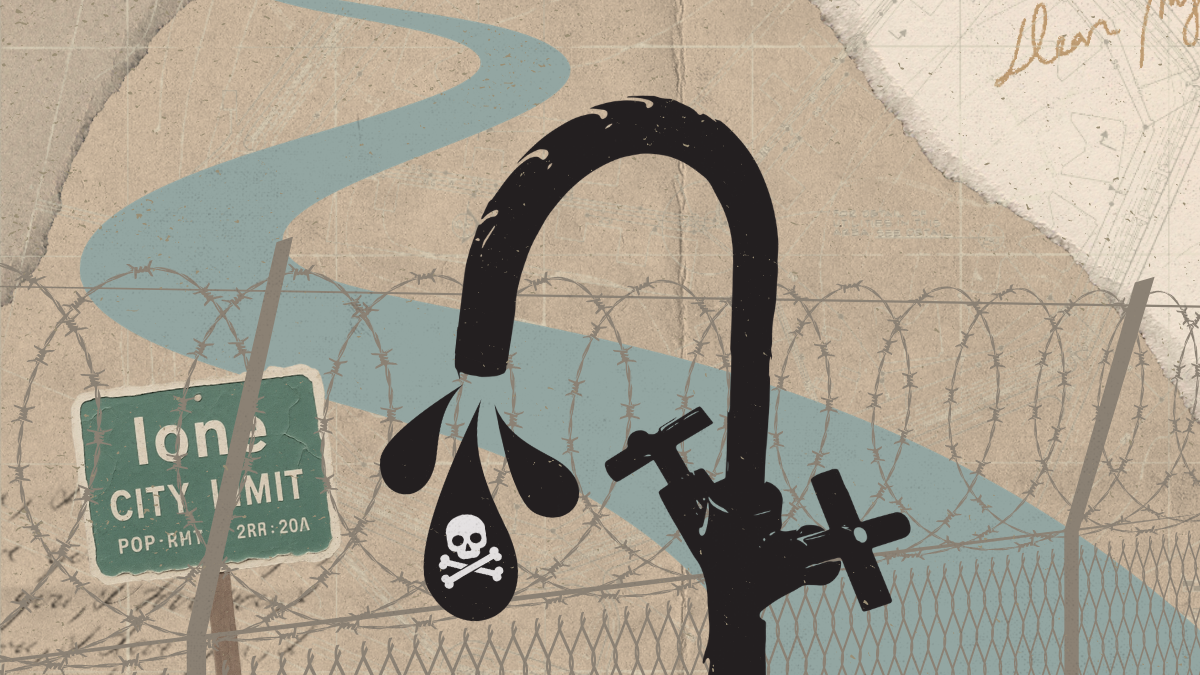
An investigation published by The Appeal revealed that people at Mule Creek have been drinking poisoned water for decades. The prison, which opened in 1987, had aggressively expanded over the years to hold more prisoners and industrial worksites where incarcerated people labored for pennies on the hour. These worksites—from welding to meat-packing to textile manufacturing—produced increasing amounts of toxic sewage and industrial wastewater that the prison infrastructure was not equipped to treat. That stress, in conjunction with a poorly built underground piping system, caused significant leakage and cross contamination.
Testimonials from nearly 100 people, including currently and formerly incarcerated people, their loved ones, and former prison staff, have since revealed 20 years of health and water quality concerns that the CDCR and other state agencies have repeatedly deflected, ignored, and denied. Mule Creek residents reported that the water would often taste “off” and leave a black residue on drinking glasses if left overnight, according to The Appeal report, and many developed illnesses they did not have before entering prison, from mysterious rashes to kidney issues to cancer.
But those inside Mule Creek haven’t been the only ones affected by the polluted water. Residents, former prison staff, and local politicians living in the nearby town of Ione—who, like those in other rural “prison towns” across the country, were sold the prison’s construction and expansion as an economic benefit—have also grown increasingly concerned with the environmental contamination and public health in their community. Though the people of Ione possess more resources than those behind bars to address these concerns, they still face a profound lack of accountability from the CDCR and state agencies responsible for monitoring their water quality.
“I feel betrayed,” said Tammy Meza, a retired prison staffer whose 3-year-old grandson lives near the prison and has leukemia. “You think not everyone is affected [and] put your blinders on and cover your ears. It is a small price for some, not all, to pay for the luxury of a quiet environment, a beautiful and untouched place to raise your children that’s free of violence. But now that this has affected my grandson, this is all coming full circle, this is all making sense, and this is all not right.”
Meza worked for the CDCR for 35 years. For 18 of those years, she belonged to Mule Creek’s Inmate Grievances Department, where she often received water- and health-related complaints from prison residents.
“On and off, throughout the years … inmates would say, ‘The water in our sink— which is our only form of drinking water—is orange or black,’” she said. “They were demanding bottled water.”
According to Meza, the CDCR’s response to these complaints was “it’s not our problem.” Meza also said that most prison staff brought bottled water to work to avoid drinking the tap water. Incarcerated people at Mule Creek have no access to bottled water.
During her employment in 2020, Meza had been unaware that an environmental lawsuit had been filed against the CDCR over Mule Creek’s failing infrastructure and the environmental impact across Ione. The lawsuit revealed that the prison consistently dumped millions of gallons of highly contaminated stormwater into Mule Creek, which cuts through the prison and into Ione. Despite a settlement in 2021, the illegal dumping didn’t stop. In April 2025, the prison spilled another 177,000 gallons of waste into the creek.
Meza only learned of this lawsuit a year into her retirement, after her family had already received devastating news: In the summer of 2024, her grandson Jesse, 18 months old at the time, was diagnosed with T-cell acute lymphoblastic leukemia.
They were not the only family in Ione facing such news. Seven months prior to Jesse’s diagnosis, then-11-month-old Brooks Costello was diagnosed with juvenile myelomonocytic leukemia, a rare and aggressive blood cancer. Brooks and his family lived a block away from Jesse and his family.
“We started questioning why two boys, one street apart, within a month of birth—is there any kind of environmental stuff that could be connected?” said Anna Lee, Jesse’s mother and Meza’s daughter. Lee was shocked to find extensive reporting by the local newspaper, the Ledger Dispatch, about the prison’s history of environmental contamination in Ione and its potential connection to childhood cancer cases. Lee also learned that the prison sent some of its wastewater to irrigate the Castle Oaks Golf Course near her home.
“I worked at the prison in 2017, my mom retired from there in 2023 … so it was very alarming when we found these articles,” Lee said. “We reached out to [Amador County Public Health] and they said the state would look into it, and that was where it died.”
The Ione City Council and the CDCR did not respond to Prism’s requests for comment.
A lack of accountability
Since summer 2024, Amador County Public Health, which oversees public health in Ione, has repeatedly failed to provide a representative for an interview. Then, in a written statement sent in December 2025, the agency stated that “childhood leukemia incidence in Amador County from 2011 to 2021 is comparable to both California and national rates across sex and racial/ethnic demographics” and that “no studies have identified specific environmental exposures in Amador County that are directly linked to an increased risk of childhood leukemia.”
It seemed that, when it came to the safety of the prison’s drinking water, the CDCR, Amador Water Agency, Amador County Public Health, the local Regional Water Quality Control Board, and the California Water Resources Control Board all denied responsibility. Ione residents also found that no state agency was offering to help. In 2018, Jim Scully and a few neighbors living on rural properties within a mile of the prison learned from the Central Valley Regional Water Quality Control Board that their wells tested positive for toxic chemicals linked to the prison, such as benzoic acid and bis(2-ethylhexyl) phthalate, the latter of which is a human carcinogen. A similar instance occurred in 2006, said Rocky Costa, a local property owner, when his well across the street from the prison tested positive for chemicals linked to the prison’s dry cleaning plant, which closed soon after. At the time, the county outfitted the property with a drinking water line.
This time, in Scully’s case, no drinking water line was provided, and neither was any regular testing or remediation efforts provided by the state. In fact, according to the Ledger Dispatch, the CDCR ultimately refused an order to monitor and test seven wells the prison had contaminated.
“These chemical tests are very expensive and really only the state can afford to do them,” Scully said.
Scully, who exclusively drank from his well until 2018, was diagnosed with leukemia in August 2025. “It’s like being hit upside the head with a baseball bat,” he said. “The first thing on my mind: How many years had I drank that water?”
Another Ione resident, Rich Gonzales, lives on a more suburban property directly off the Castle Oaks Golf Course with a protected drinking water line. Yet, in the summer of 2024, he was diagnosed with spindle cell thyroid carcinoma, an extremely rare cancer. Though doctors have since removed his thyroid and 168 lymph nodes since September 2024, they expect the cancer will soon spread to his lungs.
Gonzales recalled that when the golf course was irrigated with prison water about eight years ago, it smelled like raw sewage. “We could not go into our backyard for about a week and a half,” he said. He also recalled a broken pipe behind his property on the golf course that developed a standing puddle for several years. He now believes it was contaminated, but had no idea about the lawsuit against the prison.
“I don’t think hardly anybody’s aware of anything like that, because they kept it quiet,” he said.
While it’s impossible to link an illness to an exact environmental cause—especially since Ione has a long history of mining, which can also adversely impact community health—local observers point out that the incidence of these illnesses is concentrated in specific areas directly surrounding the golf course and prison. Ione’s former Mayor and current Vice Mayor Stacy Rhoades, who has long spoken against the prison contamination, said the state has provided limited resources to Ione residents and has not conducted environmental testing since the lawsuit against the prison was settled in 2021.
Lee and Ashley Costello founded Amador’s Heart of Gold in response to their sons’ cancer diagnoses, as a way to support families and raise awareness around local childhood cancers. In the past two years alone, they found seven cases of childhood cancer diagnosed across the county, three of whom resided in Ione at the time of their diagnosis. Ione’s childhood cancer rate, according to their calculations, is nearly 20 times the national average.
If this was a corporation it would be stopped, but this is a prison. The state agencies don’t really police each other; they’re here to police you and me.
Ron Curran, retired correctional officer at Mule Creek State Prison
For many residents, including former prison staff, the lack of support and accountability mirrors the everyday reality for incarcerated people. “If this was a corporation it would be stopped, but this is a prison,” said retired Mule Creek correctional officer Ron Curran. “The state agencies don’t really police each other; they’re here to police you and me.”
In response to an email detailing health concerns made by Ione residents, Amador County Public Health said, “Amador County Public Health takes the concerns of our citizens seriously. We have been and continue working with state and regional agencies to investigate the situation in the Ione area.”
The fight continues
One man had no doubt that his illness was linked to the prison, and he fought against Mule Creek until his death in November. David Anderson, a former contractor hired to install a culvert at the prison in 2012, was the original whistleblower who sparked the Ledger Dispatch’s water contamination reporting. He believed that exposure to toxic soil and wastewater on site led to a range of health issues he and his crew experienced during and after the job.
Anderson never fully recovered; he was eventually diagnosed with gastroparesis and hospitalized for full body sepsis. Despite these conditions, he continued to speak at City Council meetings, reaching out to state and public health representatives, and calling out the CDCR. In an interview with Prism before his death, he maintained that the scope of contamination was greater than the state had let on, and that the prison’s infrastructure could not be fixed.
Anderson’s outlook in the summer of 2025, only a few months before his death, was grim. “There’s no leadership involved here at all, from the state level or locally, just nobody taking responsibility for what’s going on,” he told Prism. “And when you look at it closely, it’s just abject evil.”
Similar to Anderson, at least one other illness cluster emerged among people who worked at Mule Creek. Steve Dill, Aaron Weaver, and Mike Foeldi worked in the central health building. Within a few years, all three were diagnosed with multiple myeloma, a rare blood cancer. Weaver was diagnosed in August 2019 and died in December 2020. Foeldi was diagnosed in spring 2023 and died in June 2024. Dill received his diagnosis in 2020, entered a clinical trial, and received a bone marrow transplant in 2021. The cancer is incurable.
“I’m still here in my cancer,” Dill said grimly. “The prison is the problem. They ought to address it, but they’re not doing anything.”
Weaver left behind a wife and young children, while Foeldi had a fiancée, a fellow correctional officer, now retired, who he had met at Mule Creek. Both women expressed profound grief and lingering uncertainty around the group’s diagnoses.
“We thought, God this is strange. But we didn’t know what to do,” said Foeldi’s fiancée, Heather Ellis.
Julie Kingston-Weaver, Aaron’s wife, said he was “100 percent” convinced his illness was linked to the prison, because he was otherwise healthy before he started working there. While doctors ultimately couldn’t confirm his work environment was the cause, they couldn’t rule it out either.
“There has to be a connection, and it’s really frustrating,” she said. “I feel like I was robbed. My kids were robbed.”
To this day, the Ione City Council still seems torn by the water contamination issue. In September, during a special meeting closed to the public, the board at first voted 3-2 to resume irrigating the Castle Oaks Golf Course with water from the prison. Rhoades, the vice mayor, was outraged.
“The minute that water touches the golf course, I want samples … and I will take them in for testing,” he told Prism. A City Council member then changed his mind, creating a majority against delivering prison water to the golf course.
As the issue remains in contention, more and more Ione residents are understanding that their role in this David versus Goliath fight, much like those incarcerated at Mule Creek, is to continue to speak out despite fear of retaliation or negligence from the CDCR.
“I see this as nothing short of a battle between good and evil,” Anderson said. “We’re just trying to do something that’s honest and protects everybody’s health and safety, and they’re just indifferent.”
The Right to Write (R2W) project is an editorial initiative where Prism works with incarcerated writers to share their reporting and perspectives across our verticals and coverage areas. Learn more about R2W and how to pitch here.
Editorial Team:
Rikki Li, Lead Editor
Lara Witt, Top Editor
Rashmee Kumar, Copy Editor
Related