
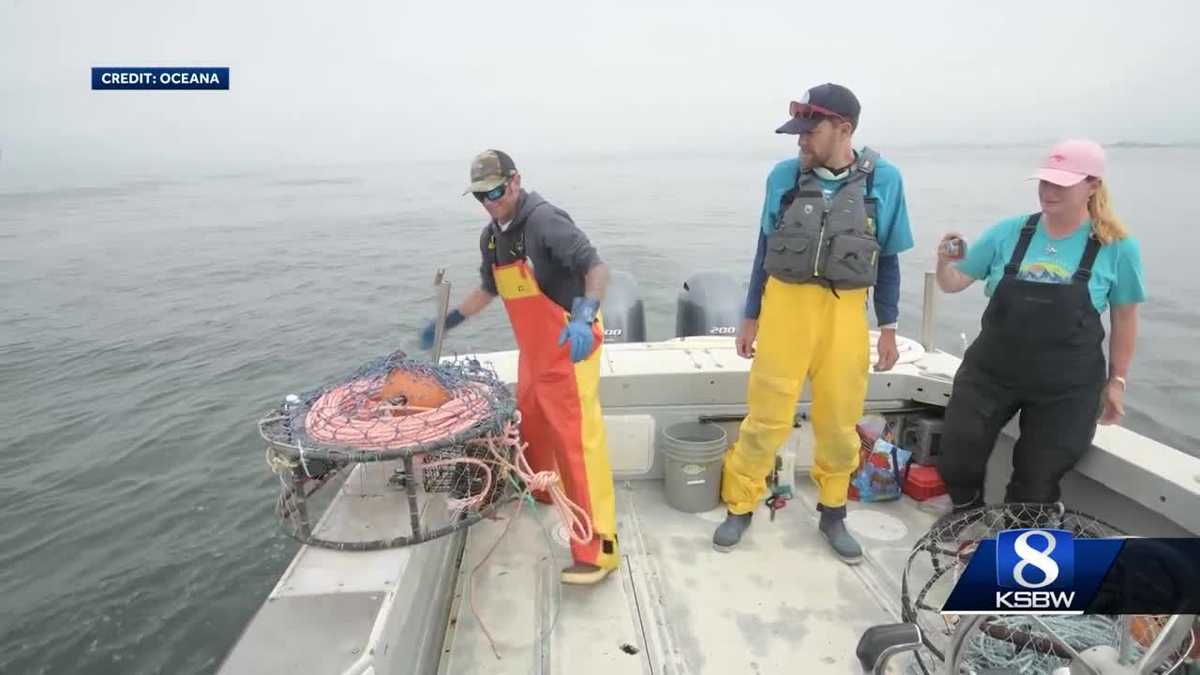
California crab fishermen must switch to new “pop-up” gear to continue collecting Dungeness crab, following a mandate from the California Department of Fish and Wildlife aimed at preventing whale entanglements. The department announced that commercial and recreational Dungeness crab fishers may no longer use conventional traps after March 27. Fishermen in Santa Cruz near the harbor are already starting to retrieve their gear from the water, with the goal of preventing whales from getting tangled in traps by using the new gear.”This is your average pot right here, so this right here goes to the surface, and then what’s happening is that the whales as they cruise by these pots in the water especially the Humpback whales, they catch that line in their fluke and then they spin,” said Owner of H&H Fish Market, Hans Haveman.The newly authorized gear, also known as “on-demand” gear, reduces the risk of whale entanglements by storing lines on the seafloor with a string of crab traps until a fishing vessel returns to retrieve the gear. According to Fish and Wildlife, this allows for economically viable crab fishing while reducing the risk of the gear entangling whales, sea turtles, and other wildlife.”What they do is they take five of these pots, they connect them together and the very last pot they have all of this line round up inside of this pot that actually goes to the bottom as well and when the fisherman comes over the top of it they press the button and it releases the trap and it floats to the top and five traps are attached and that’s a whale safe alternative,” said Haveman.Although it’s a safe alternative, many fishermen expressed dissatisfaction with the changes, citing the difficulty of accommodating the new gear on their boats and the high costs involved. “It’s really hard for that many pods to put that many pots on a boat, they’re connected, they have to switch up the gear and also nobody is paying for this gear, it’s all really expensive,” said Haveman.”It’s an effective alternative they found out, they’ve been trying it and it has been working so it’s protecting the whales and these guys that put the money or work a little harder can still crab,” said Haveman.Crab fishermen may continue operating only if they’re using the pop-up gear starting April 3, with the season running through June 30.
SANTA CRUZ, Calif. —
California crab fishermen must switch to new “pop-up” gear to continue collecting Dungeness crab, following a mandate from the California Department of Fish and Wildlife aimed at preventing whale entanglements.
The department announced that commercial and recreational Dungeness crab fishers may no longer use conventional traps after March 27. Fishermen in Santa Cruz near the harbor are already starting to retrieve their gear from the water, with the goal of preventing whales from getting tangled in traps by using the new gear.
“This is your average pot right here, so this right here goes to the surface, and then what’s happening is that the whales as they cruise by these pots in the water especially the Humpback whales, they catch that line in their fluke and then they spin,” said Owner of H&H Fish Market, Hans Haveman.
The newly authorized gear, also known as “on-demand” gear, reduces the risk of whale entanglements by storing lines on the seafloor with a string of crab traps until a fishing vessel returns to retrieve the gear. According to Fish and Wildlife, this allows for economically viable crab fishing while reducing the risk of the gear entangling whales, sea turtles, and other wildlife.
“What they do is they take five of these pots, they connect them together and the very last pot they have all of this line round up inside of this pot that actually goes to the bottom as well and when the fisherman comes over the top of it they press the button and it releases the trap and it floats to the top and five traps are attached and that’s a whale safe alternative,” said Haveman.
Although it’s a safe alternative, many fishermen expressed dissatisfaction with the changes, citing the difficulty of accommodating the new gear on their boats and the high costs involved. “It’s really hard for that many pods to put that many pots on a boat, they’re connected, they have to switch up the gear and also nobody is paying for this gear, it’s all really expensive,” said Haveman.
“It’s an effective alternative they found out, they’ve been trying it and it has been working so it’s protecting the whales and these guys that put the money or work a little harder can still crab,” said Haveman.
Crab fishermen may continue operating only if they’re using the pop-up gear starting April 3, with the season running through June 30.