
Donald Trump guts fraud prevention
While California has been building stronger systems of accountability, the Trump administration has defunded and dismantled the federal government’s ability to prevent and address fraud, with news outlets reporting that a federal effort to crack down on hospice fraud “has been put on hold by the Trump administration, resetting efforts to root out fraud and abuse in an industry that receives more than $25 billion from Medicare annually.” Despite Trump’s tolerance for fraud, including his pardons of convicted fraudsters who’ve bilked taxpayers for billions, recent social media posts from the Trump administration, including Centers for Medicare & Medicaid Services (CMS) leadership, continue to attack state efforts, including California’s.
Holding fraudsters accountable
Since 2019, the state has announced hundreds of prosecutions through the California Department of Justice’s Division of Medi-Cal Fraud and Elder Abuse (DMFEA).
Since 2021, the California Department of Justice has investigated 101 criminal enterprises and 284 criminal defendants and filed 24 civil cases. To date, 109 individuals have been charged with hospice-related offenses.
California maintains strong oversight of Medi-Cal, the state’s Medicaid program. Meanwhile, Medicare is a federally administered program overseen by CMS, not the state. Reports referencing hospice fraud involving Medicare fall under federal jurisdiction, not California’s Medi-Cal program or state oversight.
California’s enforcement actions
The Newsom administration has taken decisive, multi-pronged action to protect Medi-Cal members and taxpayer dollars from fraudulent hospice activity. When fraud is identified, the state acts decisively to protect members and taxpayer dollars. The state’s response includes:
Proactive oversight: Governor Newsom signed Senate Bill 664 (Chapter 494, Statutes of 2021) into law to ban new hospice licenses due to concerns about fraud and abuse in this sector and has extended this moratorium, halting growth in a sector vulnerable to abuse while strengthening oversight. This moratorium was extended through the Governor’s signature of AB 177 (Chapter 999, Statutes of 2024).
Hospice Fraud Task Force: The California Department of Public Health (CDPH) facilitates a multi-department and multi-agency Hospice Fraud Task Force that includes representation from the California Health & Human Services Agency (CalHHS), Department of Health Care Services (DHCS), California Department of Social Services (DSS), and California Department of Justice’s DMFEA. Some of the highlights from this joint effort include:
Improved information sharing and cross reporting among the agencies to allow them to pursue actions within their specific roles, with CDPH pursuing license revocation, DHCS working collaboratively with the federal government to conduct fraud investigations, and California Department of Justice considering cases for potential prosecution.
Coordinated enforcement among agencies to suspend Medi-Cal payments and revoke licenses to operate.
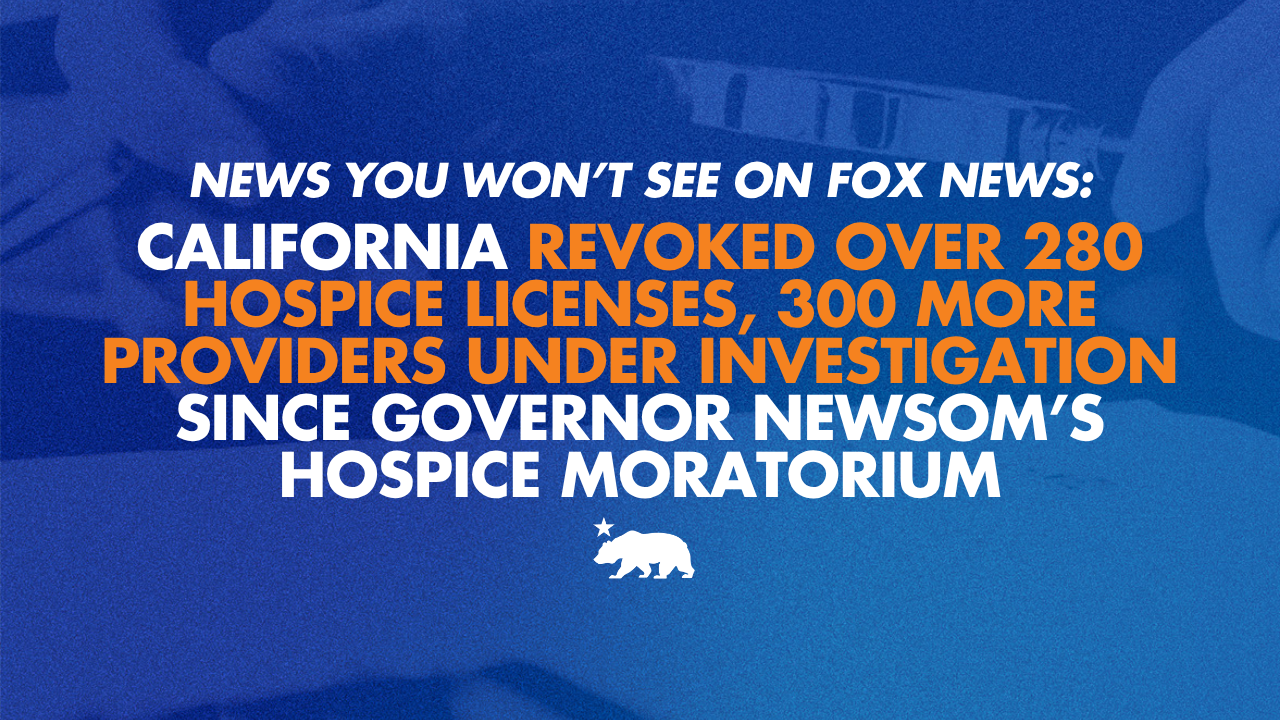
Revocations: CDPH has revoked the licenses of more than 280 hospices in the past two years. CDPH has identified approximately 300 additional hospices that are being evaluated for revocation.
Robust Medi-Cal fraud detection systems: DHCS leverages sophisticated fraud detection systems to identify irregularities and trigger investigations, enabling rapid containment before improper payments are made.
Decisive steps once fraud is suspected: Once DHCS determines a credible allegation of fraud, DHCS swiftly stops payments, works with DMFEA to support potential criminal prosecution, and with CDPH to revoke hospice provider licenses. DHCS also alerts Medi-Cal managed care plans to stop payments, terminate contracts, and block further referrals and billing.
Strengthening hospice claiming rules and oversight: DHCS has updated its hospice claims systems and managed care requirements to block any hospice payments unless a valid provider/enrollee authorization form is verified, ensuring members have elected hospice care and preventing unauthorized billing. DHCS is also strengthening utilization management for hospice care, including prior authorization requirements.
Holding criminals accountable: Once fraud is confirmed, DMFEA makes arrests, prosecutes fraudsters, and recovers funds for Californians and the federal government.