
In 2019, the Board of Supervisors passed a landmark law making San Francisco the first major U.S. city to block the use of facial recognition technology by law enforcement. The measure was hailed as a victory for anti-surveillance activists and a signal of the city’s leadership on civil liberties amid growing tech encroachment.
But then crime exploded during the pandemic, “bipping” became common slang, and a rash of flash-mob-style robberies went viral on social media. Public safety in San Francisco became a top story for Fox News and the top issue for voters. The fury was enough that for the first time ever in San Francisco, the district attorney, Chesa Boudin, was recalled in 2022.
Now, with residents more fed up with crime than fired up about privacy, San Francisco has become a city where police surveillance has exploded, major crime categories are falling, and few are making noise about the issue.
“The SF that would reject surveillance is gone and dead,” said James Lance Taylor (opens in new tab), chair of the politics department at the University of San Francisco.
In late 2023, venture capitalist Ron Conway and Ripple cofounder Chris Larsen joined the San Francisco Police Officers Association and then-Mayor London Breed to put Proposition E on the March 2024 ballot. The measure promised to provide police with the “tools and rules they need to enforce laws.”
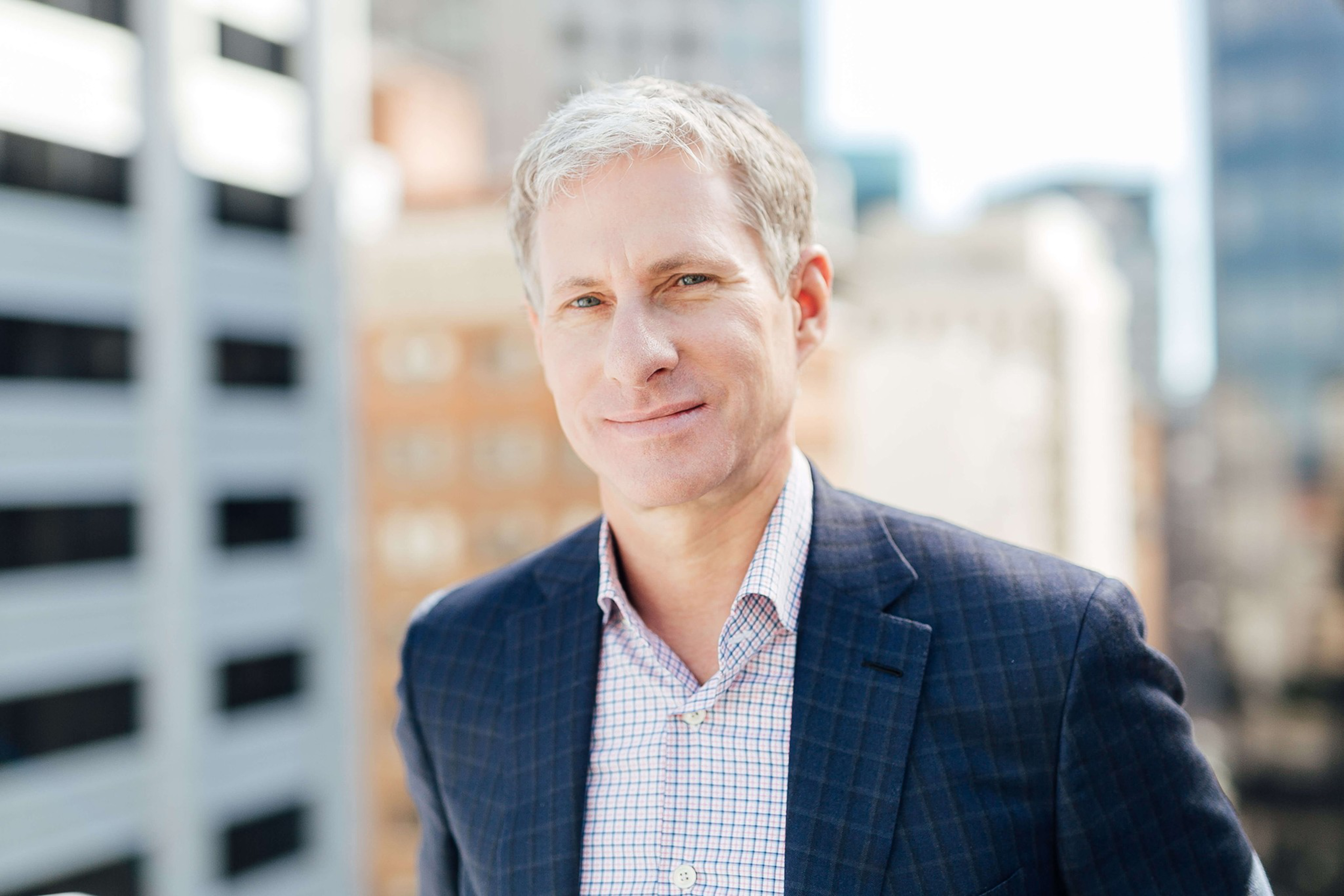 Chris Larsen, cofounder and executive chairman of Ripple, has been one of the major funders of the the surveillance expansion. | Courtesy Ripple
Breed said the measure would give officers new enforcement tools (opens in new tab), including expanded pursuit powers for crimes like retail and auto theft. The ACLU of Northern California called it (opens in new tab) “ill-conceived and irresponsible,” warning that it could erode democratic oversight of the police.
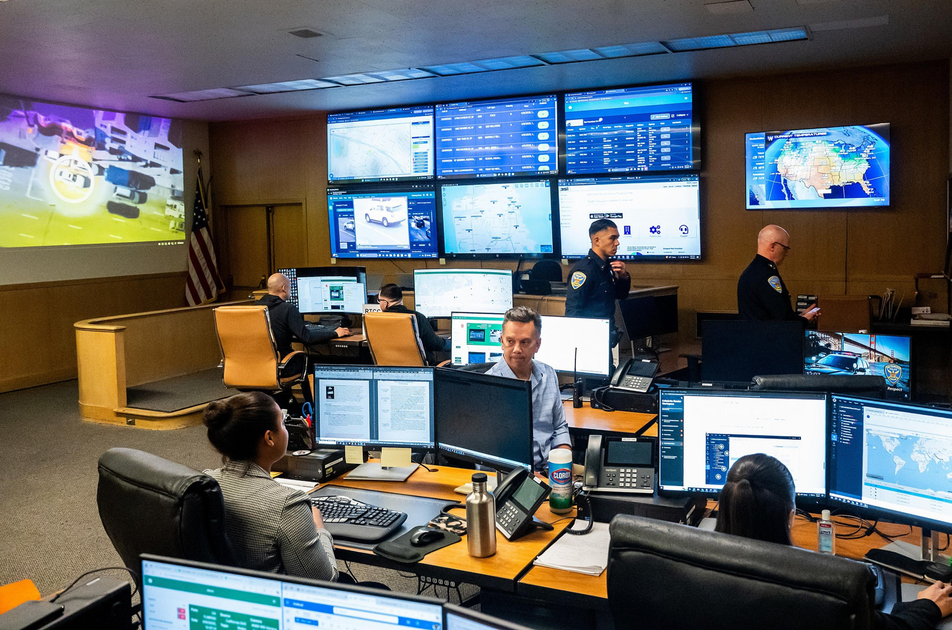
The bill passed with more than 54% of the vote. Since then, with the help of millions in private funding — largely from Larsen — the SFPD has installed 400 AI-powered Flock license plate readers (opens in new tab), launched a high-tech surveillance “Real-Time Information Center,” and gone all-in on drones.
Last month, the SFPD recorded a record 700 drone flights — an average of 25 per day. In February 2025, it recorded 93. Between 2024 and 2025, the cost of the department’s drone program (opens in new tab) jumped by more than 1,200%. An increasing number are being used for Drone as First Responder, or DFR, programs, in which the devices are deployed to crimes before any human personnel.
For a point of comparison, SFPD’s drone fleet of 98 devices is more than double that of the Los Angeles Police Department, which has nine (opens in new tab) drones and just received approval to add 24 (opens in new tab). Los Angeles has nearly five times as many residents as San Francisco.
The SFPD’s drone capabilities go beyond the “tactical drones” that can be launched from a patrol car, according to Capt. Stephen Jonas, acting commander of the Investigations Bureau, which oversees that fleet. The department has established eight drone bases across the city that can put a hovering camera over nearly any crime scene within minutes. Jonas declined to provide the location of the bases, citing security concerns.
“Strangely, this supposed far-left Bay Area is doubling down on Flock and DFR,” said Brian Hofer (opens in new tab), executive director of Secure Justice, an anti-surveillance nonprofit. “It feels like the upside-down world a little bit.”
Nobody’s complaining
Other than an annoying whine overhead, most San Franciscans are likely and perhaps blissfully unaware that the police are using a wider array of surveillance tools daily.
“I don’t think that people are raising a fuss that there is a private entity hosting the real-time crime center,” Hofer said. “The average person [is] grateful that crime has dropped from the pandemic, so if this technology has contributed to some of that, that’s great.”
SFPD data show about 51,000 major crimes in 2023. A year later, the figure was down more than 25% to fewer than 37,000, and last year it dropped again to about 28,500. Larceny, including shoplifting, fell by nearly half from 2023 to 2025. Car theft dropped more than 54%, and burglaries declined by more than 33%.
“Tools like drones, ALPR, and public safety cameras allow officers to quickly and safely make arrests in cases that were historically challenging to solve,” Evan Sernoffsky, a spokesperson for the SFPD, said in an email. He highlighted that in 2022, there were 23,454 auto burglaries (opens in new tab) in San Francisco compared to 5,380 last year.
 An SFPD worker monitors a live drone feed at the Realtime Investigations Center. | Source: Noah Berger for The Standard
Larsen declined to comment. But he recently told ABC7 (opens in new tab) he became involved in funding police surveillance tech because of his belief that the city’s success is predicated on public safety.
“If you don’t have that, then businesses don’t come, tourists don’t come, even locals stay where they live, and that was hurting San Francisco, so we had to fix that first,” Larsen said.
FriscoLive415 (opens in new tab), the anonymous bike-riding social media figure known for his close monitoring of police scanner traffic and videos from crime scenes, attributes the changing attitudes in part to a persistent SFPD campaign to show the role of drones in apprehending suspects.
“I was listening to scanners all day, and I could hear how the Flock cameras were instrumental in catching people,” he said. “I’ve noticed a very interesting shift in how the citizenry is willing to go along with these surveillance technologies.”
Criminal justice experts put San Francisco’s declining crime in context with nationwide trends. According to a January study by the Council on Criminal Justice (opens in new tab), homicides were down across 40 large American cities between 2024 and 2025 and are trending toward all-time lows. Residential burglaries have fallen by 45% since 2019.
Catherine Crump (opens in new tab), a law professor and codirector of the Berkeley Center for Law & Technology, said it’s too soon to attribute the drop in serious crimes in recent years to the rapid rise in surveillance technology.
“It’s all just a massive uncontrolled experiment. Police departments do not have research divisions,” Crump said. “They do not study in any rigorous way what the impact of surveillance technology is.”
But randomized studies and controlled experiments are one thing. Public opinion is another.
The result, at least by one measure, is that the surveillance debate has effectively won itself: The Chamber of Commerce’s latest CityBeat poll found affordability (opens in new tab) leapfrogging crime as San Francisco voters’ top issue for the first time since before the pandemic — a signal that public safety anxiety, the force that drove the whole expansion, has receded enough that something else has room to breathe.
“Most people are not EFF (opens in new tab), data privacy types, no matter how much you warn them about it,” said Jason McDaniel, a professor of political science at San Francisco State. “People don’t really have strong opinions one way or the other, until suddenly when it becomes relevant.”
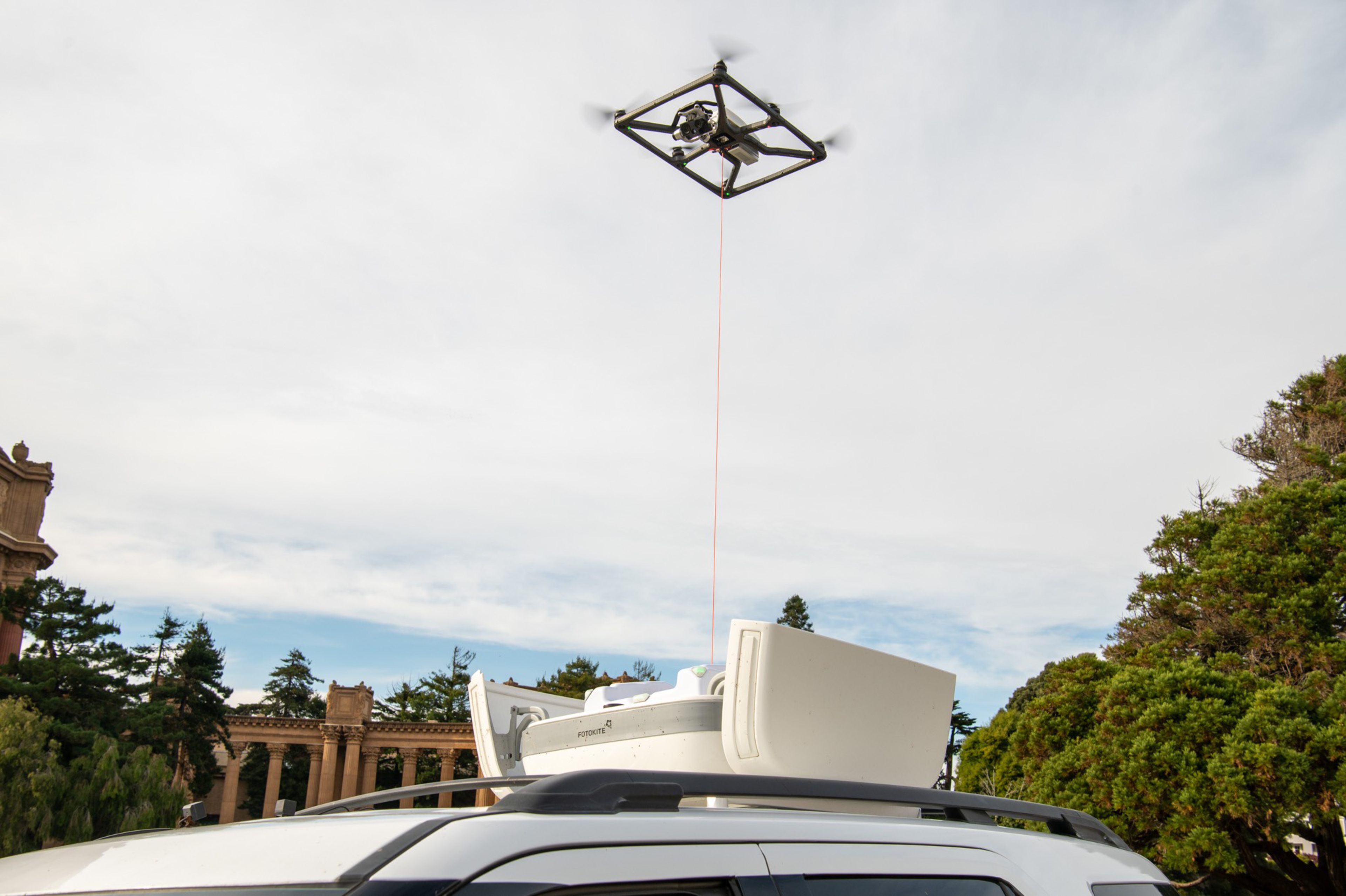 SFPD’s drone fleet has grown massively in the last two years. | Source: Morgan Ellis/The Standard
If there’s a political avatar for San Francisco’s early discomfort with surveillance technology, it’s former Supervisor Aaron Peskin. The progressive lawmaker proposed the city’s facial recognition ban.
He has the same concerns today about overreach as he did back then: That surveillance tools deployed for one purpose could easily be misused for another.
It’s not entirely theoretical. As The Standard reported last year, SFPD’s license plate reader data was accessed 1.6 million times by out-of-state and federal agencies, likely in violation of California law. At least 19 of those searches were marked as related to Immigration and Customs Enforcement.
“San Francisco has been the ground-zero testing ground,” Peskin said. “We have an outsize responsibility to make sure that it is not used against us by our own government.”