
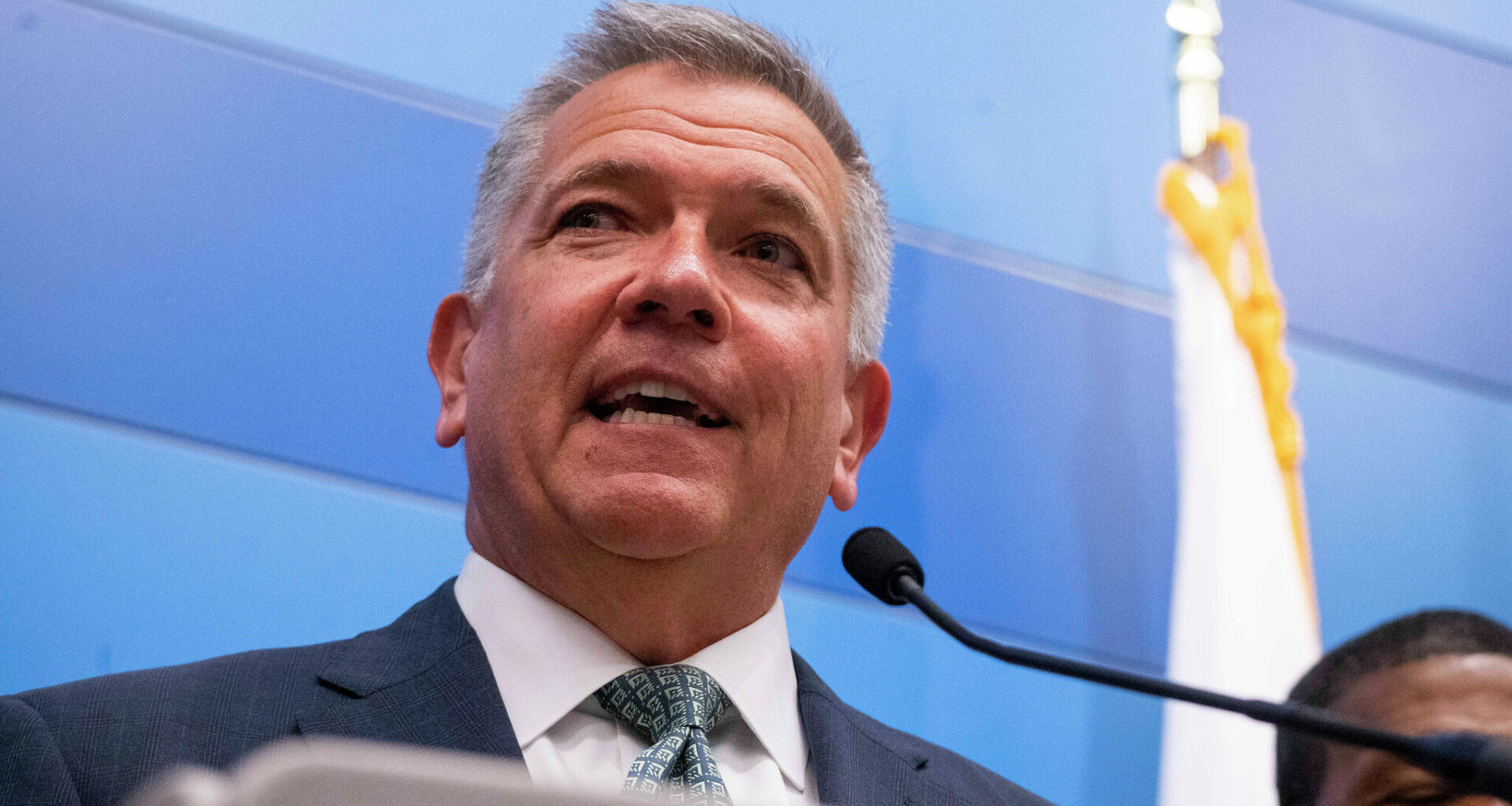
A new ordinance would mark a symbolic shift from the city’s long-held stance on prioritizing access to shelter over engagement in addiction services. Supervisor Matt Dorsey said it was simply designed to give supportive housing residents more flexibility.
Minh Connors/For the S.F. Chronicle
San Francisco could empower its permanent supportive housing facilities to evict residents for using drugs, a move proponents say would help the people struggling to get sober in city-funded buildings.
Permanent supportive housing aims to combine subsidized housing with individualized support services, especially for the formerly homeless. The city currently follows state guidance — which provides that the use of alcohol or drugs can’t be the sole reason for eviction — as a blanket rule across its more than 15,000 units.
But city-funded facilities have room for flexibility under that law, a new proposal from Supervisor Matt Dorsey says. Last week, Dorsey revived a proposal that would halt funding for new permanent supportive housing facilities that aren’t willing to evict residents on the basis of drug use.
Article continues below this ad
The ordinance would mark a symbolic shift from the city’s long-held stance on prioritizing access to shelter over engagement in addiction services. Dorsey said it was simply designed to give supportive housing residents more flexibility.
“California law requires that the use of illicit drugs on site cannot be grounds for eviction, that addiction is treated as part of people’s lives,” Dorsey said. “But we have populations that have sensitivities we want to be responsive to. This is just making sure that for those people who want a drug-free residential community, they’ll have an option.”
San Francisco Chronicle Logo
Make us a Preferred Source to get more of our news when you search.
Add Preferred Source
The ordinance would also require the city’s homelessness department to survey permanent support housing residents, gauging their interest “in living in either Drug-Tolerant PSH or Drug-Free PSH.” Dorsey expects that survey to demonstrate a demand for drug-free housing. He pointed to a 2024 poll of the city-funded Tenderloin Housing Clinic, in which 71% of 450 residents surveyed said they would prefer to live in a drug-free site.
Advocates for drug-free housing argue that traditional supportive housing options foster a chaotic environment where drugs are often freely available, creating a potential barrier to recovery. That idea also drove the creation of San Francisco’s first sober homeless shelter, Hope House, last fall.
Article continues below this ad
Hope House was near capacity after a few months in operation, but it’s been unclear when additional sober housing options could open. In October, Gov. Gavin Newsom vetoed a bill that would have helped cities like San Francisco spend more of their state homeless funding on sober living facilities, warning that the measure could create a “duplicative and costly” new category. Mayor Daniel Lurie, a co-sponsor of the bill, criticized the move.
Jennifer Friedenbach of the Coalition on Homelessness said she was supportive of some forms of drug-free housing, but worried that Dorsey’s measure would open the door to more evictions.
“Relapse is a part of recovery,” Friedenbach said, adding that she doubted whether the legislation would actually yield new housing developments. “It feels performative.”
Dorsey stressed that a relapse would not automatically be grounds for eviction under his proposal. A person’s conduct would have to be “substantially disruptive” to the people around them before they were removed from housing, he said. Even in that case, Dorsey aims to avoid evictions into homelessness, connecting former tenants with treatment or “a residence that’s appropriate to their situation.”
Article continues below this ad
Friedenbach also worried that the legislation could threaten funding for housing developments that have already been planned. Dorsey said it was instead aimed at future housing, although he acknowledged that it would “be a while” before the city was meeting the demand for drug-free alternatives. A spokesperson for Dorsey said Wednesday that the measure would be brought before the full Board of Supervisors for a vote “later this spring.”
“This will give us a roadmap forward,” Dorsey said. “It will provide that, to the extent that city-funded permanent supportive housing comes online, that will have to be drug free until and unless we’re starting to meet the demand.”