
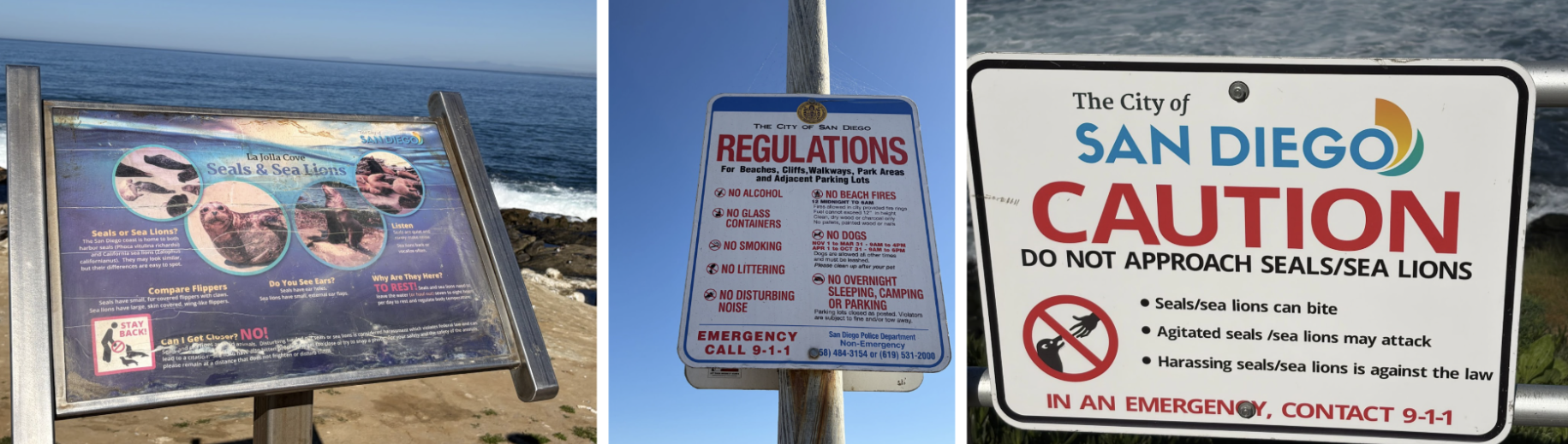
On Feb. 22, NBC San Diego reported that a family of tourists was asked to leave La Jolla Cove after the family’s children were seen throwing sand at sea lions by park rangers.
La Jolla Cove is a popular beach for tourists and locals. The area is known for its wildlife, making it a well-known spot for snorkeling, paddleboarding, swimming and other water activities.
Tensions between sea lions, seals and people visiting the beach peak every year between February and August. This is when the breeding season and peak tourism take place, according to the National Oceanic and Atmospheric Administration. The sea lions and seals that live in La Jolla Cove are protected under the Marine Mammal Protection Act. Meaning harassing, harming, or endangering the wildlife is punishable by fine and up to a year sentence in prison under the act.
Environmental organization The Sierra Club believes that at least two sea lion pup deaths at the cove in 2024 were caused by human intervention, according to NBC San Diego. This is plausible because sea lions have such a strong sense of smell that a human touching a pup could lead the mother to no longer recognize them and abandon the pup, leading to its death.
“Harassment” of animals is defined as “any act of pursuit, torment or annoyance which has the potential to injure a marine mammal or marine mammal stock in the wild; or has the potential to disturb a marine mammal or marine mammal stock in the wild by causing disruption of behavioral patterns, including, but not limited to, migration, breathing, nursing, breeding, feeding, or shelterin,” according to the The Marine Mammal Protection Act of 1972.
Local nonprofit Cove Access Working group, a project out of La Jolla Parks and Benches Inc., developed a plan aimed at reducing harassment of sea lions who live on the public beaches.
In July 2025, the group, composed of community members and nonprofit workers, proposed its plan to the city of San Diego. This plan proposed that the city update signage, establish viewing areas and encourage park rangers to ticket those violating the Marine Mammal Protection Act.
Compliance with the Marina Mammal Protection Act falls under the National Oceanic and Atmospheric Administration, a federal organization. In a statement from Benjamin Cartwright, the supervising public information officer for the city of San Diego, he acknowledged how this complicates the issue.
“The City lacks the authority to enforce any provision of the MMPA. This includes acts, such as preventing humans from approaching sea lions, regardless of whether it is pupping season or not. Doing so would be interpreted by the courts as unauthorized enforcement.” Cartwright wrote.
Former leader of the Cove Access Working Group, Chas Dye, said he is well aware of these restrictions. He even went as far as to reach out to the National Oceanic and Atmospheric Administration.
“I spoke with Mr. Yates at NOAA and he said that NOAA has literally bigger fish to fry,” Dye said. “They don’t have any time or any resources to dedicate to La Jolla Cove and they’re certainly not going to be conducting enforcement. He made that crystal clear.”
In December 2025, the city of San Diego released an informational update on the city’s management strategies at La Jolla Cove. The update outlines the most recent change that allows park rangers to conduct hourly safety messages via loudspeaker asking people to maintain a distance of at least 50 yards from wildlife.
Cartwright also wrote that the city is currently exploring what will be possible and most effective when it comes to potential updates. The city maintains that they will not close the cove and is dedicated to keeping local beaches accessible.