
A California lawmaker has introduced a bill that would create specialty “lowrider” license plates to celebrate the state’s car culture while generating funding for arts and community programs.Assembly Bill 2541, introduced by Assemblymember Mark González, would require the California Department of Motor Vehicles to establish a Lowrider License Plate Program if enough motorists sign up for the plates. Under the proposal, the DMV would begin issuing the plates only after receiving at least 7,500 paid applications by Jan. 1, 2032. If that threshold is not met, the state would cancel the program and refund applicants. The bill, which was amended March 16 and is currently pending in committee, is part of the 2025–26 legislative session. If approved and implemented, the plates would feature designs reflecting lowrider culture and heritage, developed in consultation with the California Arts Council. | MORE | Watch our lowrider documentary ‘Lowrider Legacy: A History of Resistance on Wheels’Motorists who choose the specialty plates would pay additional fees on top of standard vehicle registration costs, including $50 for initial issuance and $40 for annual renewal. Smaller fees would apply for plate transfers and replacements.Revenue generated by the program, after administrative costs, would be deposited into a newly created Lowrider Arts and Culture Fund. Lawmakers say the fund would support cultural preservation, youth programs, public exhibitions and community events tied to lowrider history and traditions.Supporters of the bill describe lowriding as a uniquely Californian art form with roots in Latino communities dating back to the mid-20th century. The legislation notes the role of lowrider car clubs in community service and cultural expression across the state. The proposal follows a model used by other California specialty license plate programs, which also require a minimum number of applications before being launched and direct additional fees toward specific public purposes.See more coverage of top California stories here | Download our app | Subscribe to our morning newsletter | Find us on YouTube here and subscribe to our channel
SACRAMENTO, Calif. —
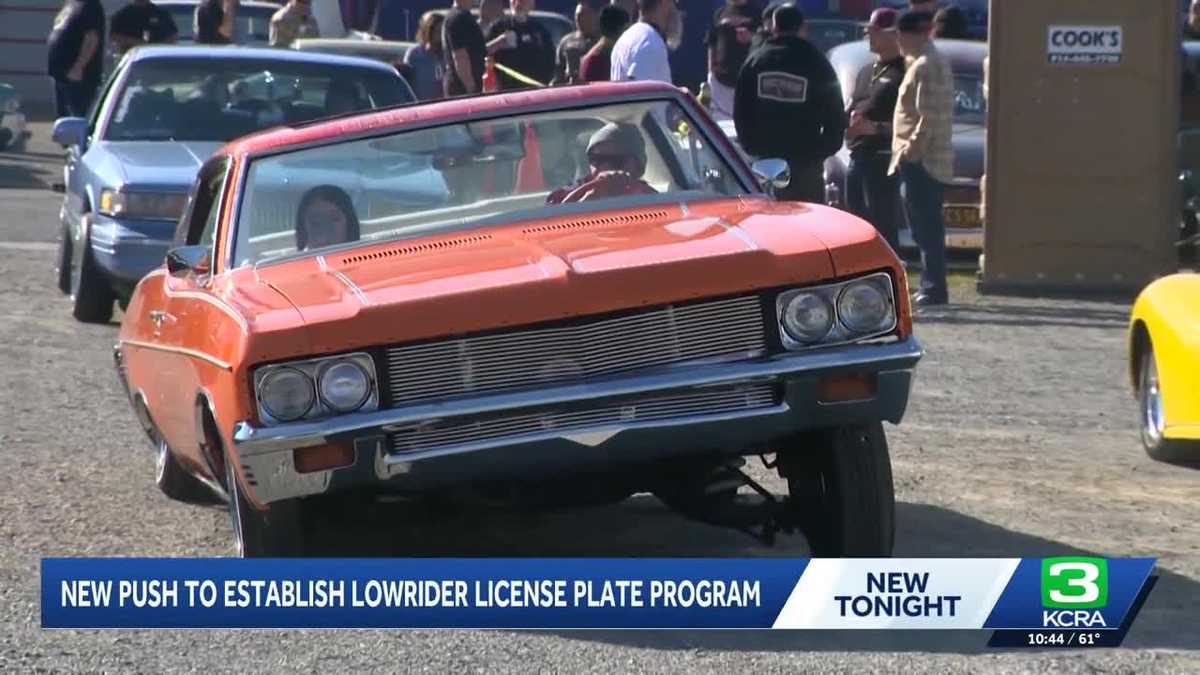
A California lawmaker has introduced a bill that would create specialty “lowrider” license plates to celebrate the state’s car culture while generating funding for arts and community programs.
Assembly Bill 2541, introduced by Assemblymember Mark González, would require the California Department of Motor Vehicles to establish a Lowrider License Plate Program if enough motorists sign up for the plates.
Under the proposal, the DMV would begin issuing the plates only after receiving at least 7,500 paid applications by Jan. 1, 2032. If that threshold is not met, the state would cancel the program and refund applicants.
The bill, which was amended March 16 and is currently pending in committee, is part of the 2025–26 legislative session.
If approved and implemented, the plates would feature designs reflecting lowrider culture and heritage, developed in consultation with the California Arts Council.
| MORE | Watch our lowrider documentary ‘Lowrider Legacy: A History of Resistance on Wheels’
Motorists who choose the specialty plates would pay additional fees on top of standard vehicle registration costs, including $50 for initial issuance and $40 for annual renewal. Smaller fees would apply for plate transfers and replacements.
Revenue generated by the program, after administrative costs, would be deposited into a newly created Lowrider Arts and Culture Fund. Lawmakers say the fund would support cultural preservation, youth programs, public exhibitions and community events tied to lowrider history and traditions.
Supporters of the bill describe lowriding as a uniquely Californian art form with roots in Latino communities dating back to the mid-20th century. The legislation notes the role of lowrider car clubs in community service and cultural expression across the state.
The proposal follows a model used by other California specialty license plate programs, which also require a minimum number of applications before being launched and direct additional fees toward specific public purposes.
See more coverage of top California stories here | Download our app | Subscribe to our morning newsletter | Find us on YouTube here and subscribe to our channel