
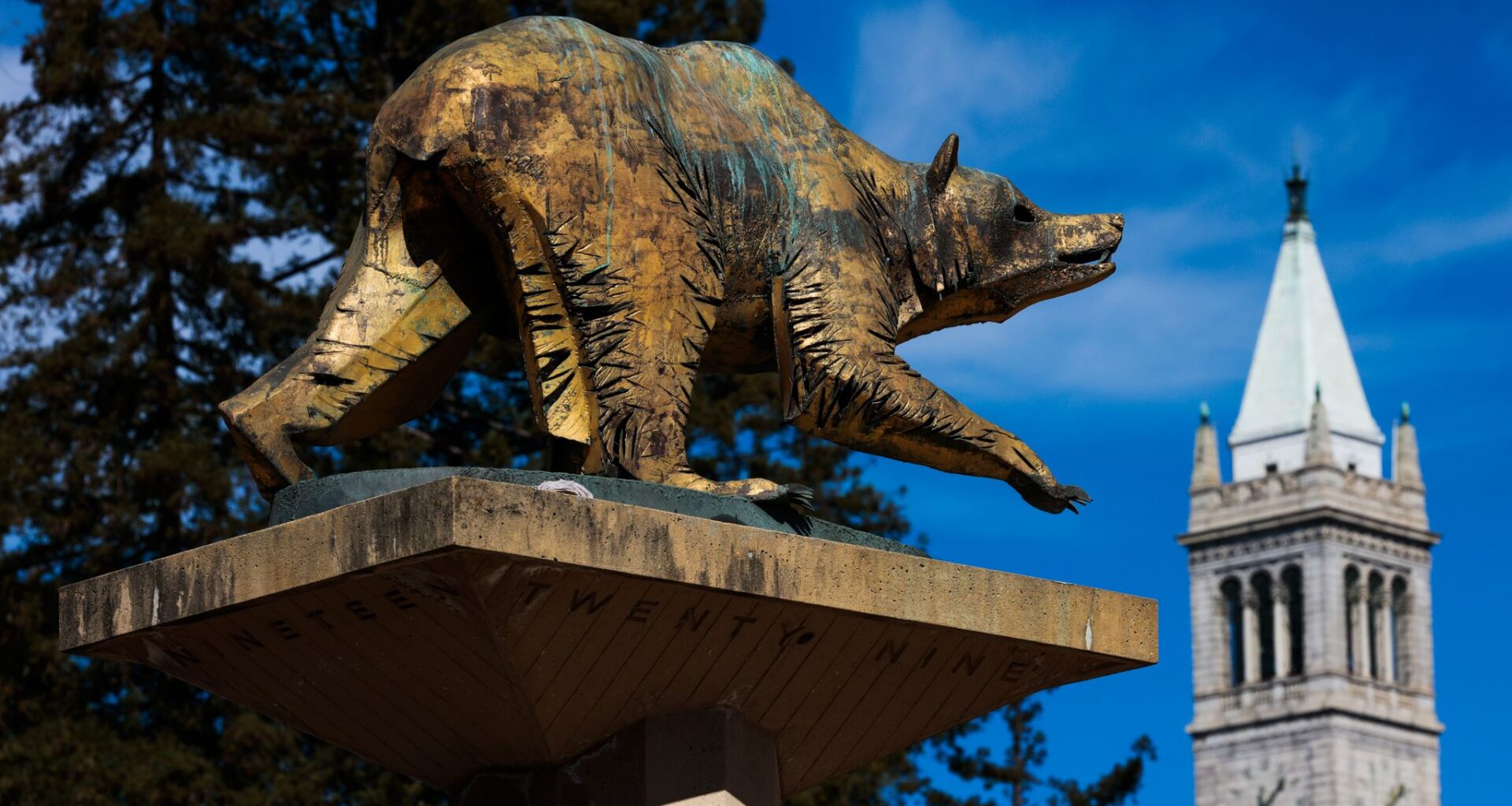
The University of California at Berkeley puts thousands of applicants per year on its waiting list.
Yalonda M. James/S.F. Chronicle
The prestigious University of California system saw a record number of applications for entry in the fall of 2026, making it likely that acceptance rates also go down at the most popular campuses — and making this year yet another unpredictable nail-biter for those who wind up on waiting lists.
For those tens of thousands of students, data from past years on waitlist acceptance rates can help provide context on the odds they’ll get in.
Article continues below this ad
How do UC waiting lists work?
College waiting lists, used by both public and private universities, are a kind of admissions purgatory. Making the list means a student isn’t rejected, but isn’t accepted yet either. Instead, once the school begins to see how many students are choosing to enroll, it can see how many spots are left available for the incoming class and can offer students on the waiting list those open spots later than it would in the typical admission cycle.
While students can accept only one offer of admission to a college, they can accept spots on multiple waiting lists as well as an offer of admission. That means that students can accept a spot at a school they got into while also accepting a spot on a waiting list for another school that might be their top choice.
San Francisco Chronicle Logo
Make us a Preferred Source to get more of our news when you search.
Add Preferred Source
But they won’t know whether they got into that preferred school until the late spring or summer, as opposed to the end of March, when regular offers of admission go out. So while students might have a plan to attend a certain college by May, those plans could change if they get off a waiting list during the summer and decide to switch schools.
Article continues below this ad
Of the nine UC campuses with undergraduate programs, all but the newest, UC Merced, have waiting lists. But exactly how many students get off that waiting list and into the school varies from year to year and from campus to campus.
UC waitlist acceptance rates
UCLA, the most selective UC campus, typically has a relatively low rate of admission from its waiting list. That held true for the current freshman class (entering in fall 2025), with 11% of those who opted into the waitlist getting accepted. That compares to 13% in 2024, 12% in 2023 and just 3% in 2022.
UC Berkeley has yet to release its 2025-2026 data, but it saw a stark swing in recent years: For the class entering in fall 2024, only 0.33% of students got off the waitlist — 26 people. That compares to 24% in 2023 and just under 1% in 2022.
Santa Barbara’s waitlist acceptance rate has risen substantially in recent years and is now among the highest of the UCs: 53% of those who opted in to the waitlist were accepted for fall of 2025, 82% were admitted in 2024 and 57% in 2023.
Article continues below this ad
Can applicants increase their odds of getting in?
The differing numbers are the result of a complicated calculus each UC campus undertakes each year as it tries to fill the limited number of spots it has available. When colleges send out offers of admission, they do not know exactly how many of the accepted students will choose to enroll.
The waiting list allows the colleges to fill spots that admitted students didn’t take, ensuring that the college has a full incoming class, UC admissions officers explained. Those spots vary by school or major: if someone hoping to major in economics and theater decides not to attend UC Santa Barbara, for instance, then UC Santa Barbara admissions officers will likely look for someone on the waiting list with a similar profile to fill that spot.
“They are looking to fill different niches within a class,” Ariel Mazel-Gee, a college admissions consultant based in San Francisco, said.
Article continues below this ad
That means there are very few steps students can take to increase their chances of getting off the waiting list, according to the schools and admissions consultants.
The main thing to do — and in many cases the only thing — is to opt in to affirm your spot. Then, it’s a waiting game.
Some of the UCs may ask for updated transcripts or additional information on academics, extracurriculars or any extenuating circumstances. Some allow students to send a letter or statement indicating their interest. As admissions have ballooned, fewer campuses have accepted those kinds of letters, said David Reynaldo, the director of college counseling service College Zoom. Most UCs do not ask for and will not consider anything beyond the original application.
You also can’t try to switch majors in hopes of getting in through another major, or transfer your offer of admission to a friend on the waiting list, said Dale Leaman, executive director of undergraduate admissions at UC Irvine.
“It’s just waiting,” he said. “I know it’s frustrating for students. I know it’s frustrating for parents. I know it’s frustrating for families. But we are really trying to use this process to provide as many opportunities as possible to students.”
Article continues below this ad
This is an updated version of a story originally published in 2023.
Reach Danielle Echeverria: danielle.echeverria@sfchronicle.com