
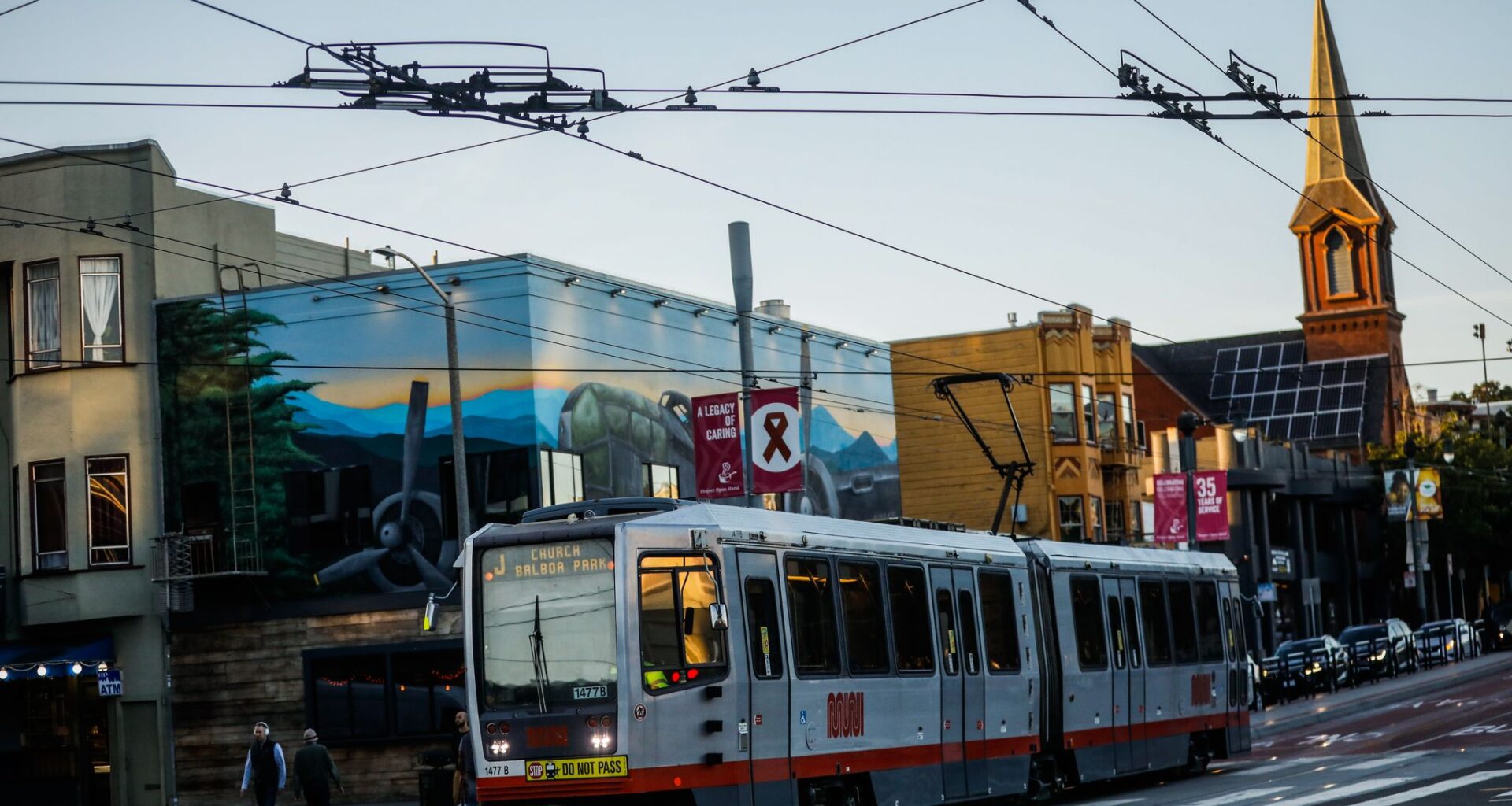
Jilted San Francisco Muni passengers who suspect that others aren’t paying their bus fare can now feel vindicated: According to a new report from urban planning think tank SPUR, the transit agency’s rate of fare revenue per passenger is less than half what it was ten years ago.
That finding, buried deep in a 32-page analysis that compared San Francisco Municipal Transportation Agency to 14 of its national peers, shows the challenges that city officials must confront as they try to persuade voters to bail Muni out this November. Faced with an operating deficit that could rise from $307 million this fiscal year to $434 million by 2030, SFMTA is relying on passage of two ballot measures — a regional sales tax and a citywide parcel tax — to prevent drastic service cuts.
To sway the voting public, agency leadership have tried to tell an efficiency story, underscoring the positions they have cut, the schedules they have tweaked and the bus routes they have sped up. And the SPUR report suggests that the work is paying off. Crunching numbers from the National Transit Database, analysts found that Muni had performed “consistently well,” with ridership rebounding since the pandemic, more passengers per hour than other transit systems, and moderate costs to deliver service.
Muni “is an exceptionally productive system,” said Sebastian Petty, SPUR’s senior transportation policy advisory and the lead author of the report. He views San Francisco’s transportation agency as uniquely nimble in the wake of pandemic shutdowns, remote work, inflation and competition from ride-hail vehicles.
But the SPUR report also points to problems.
Muni’s fare revenues declined from $283 million in 2015 to $97 million in 2024, adjusted for inflation. Accounting for changes in ridership, Muni saw a 53% drop in fares per passenger over that period. Much of that dip could be attributed to policy decisions from the Board of Supervisors to institute free Muni for youth and discounts for other groups, including seniors and those experiencing homelessness. Yet, SFMTA leaders also acknowledged an uptick in cheating, which prompted them to ramp up fare inspections last year and led to a 6% increase in revenue collected per rider.
Additionally, the report notes, San Francisco’s historic cable cars are staggeringly expensive to run. They cost the agency $871 an hour, far exceeding the systemwide average of $327 an hour and comprising about 7% of total operating costs. Although the city charter lays out SFMTA’s responsibility to operate cable cars, SPUR recommends exploring options to squeeze more revenue from the system.
Staff at SFMTA found a lot to celebrate in the report, and said it explains why San Franciscans gave the system a record-high customer satisfaction rating this month.
“We appreciate how this deep analysis shows that Muni service performance compares favorably with our peers, but we also know there is more work to do,” spokesperson Parisa Safarzadeh wrote in a statement. “Operating Muni as efficiently as possible is essential as we face unprecedented budget challenges.”
Even as he praised Muni’s resilience, Petty said he aimed to be clinical.
SPUR titled the report “Taking Muni’s Vitals,” employing a metaphor that Petty found useful for a system that’s had to adapt in order to survive, much like an old person who runs an 8-minute mile but suffers from high cholesterol. Muni has, for example, reduced the cost per hour of its light rail system, but it continues to focus on downtown service, which has lost more ridership than crosstown buses. Adjustments could be made to enhance productivity and promote long-term health. “These are numbers that reflect basic industry measures,” Petty said. “They don’t tell you everything. But they tell you where to keep looking.”