
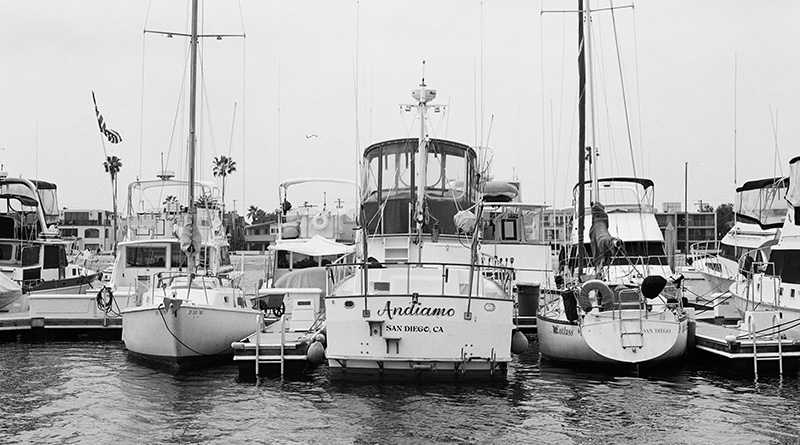
Efforts to reduce air pollution while supporting the region’s working waterfront are continuing on San Diego Bay as the Port of San Diego moves forward with a new shore power project designed to serve the commercial fishing community along the Embarcadero.
At its March 10, 2026 meeting, the Port of San Diego Board of Port Commissioners approved a $1.4 million construction contract with GQ Builders, Inc. to install shore power systems at Fish Harbor Pier, a key docking location for commercial harbor craft and fishing vessels operating on San Diego Bay. The project represents another step in the port’s broader push to electrify waterfront operations, improve air quality, and help maritime industries comply with increasingly stringent environmental regulations.
Located along the Embarcadero adjacent to Seaport Village, Fish Harbor Pier serves as an important hub for the region’s commercial fishing fleet and other working harbor vessels. The new project will introduce three shore power connection points along the pier, allowing multiple vessels to plug into landside electrical infrastructure while docked.
As port officials continue to expand electrification efforts, the goal of the project is rooted in both environmental performance and regulatory readiness. Michael LaFleur, Chief Operations Officer at the Port of San Diego, explained that “the shore power expansion at Fish Harbor Pier is designed to enable commercial fishing vessels to plug into landside electrical power while at berth, allowing them to shut down diesel auxiliary engines.” He added that the project is closely tied to statewide emissions goals, noting that “a key driver of the project is alignment with regulations and long-term emissions reduction goals established by the California Air Resources Board, including efforts to reduce emissions from ocean-going and harbor craft at berth.”
Shore power technology allows vessels to shut down their onboard diesel engines and instead draw electricity directly from the shore. By eliminating the need to idle engines at berth, shore power significantly reduces emissions of pollutants such as nitrogen oxides, diesel particulate matter, and greenhouse gases that can contribute to both climate impacts and local air quality concerns.
According to port officials, all three connection points planned for Fish Harbor Pier will be capable of operating simultaneously, giving several vessels the ability to plug in at the same time. The system is specifically designed to accommodate commercial harbor craft vessels that regularly operate in and out of San Diego Bay.
From an environmental standpoint, the benefits extend beyond the vessels themselves and into surrounding waterfront communities. LaFleur emphasized that “this project will reduce emissions of greenhouse gases and criteria air pollutants such as nitrogen oxides (NOx) and diesel particulate matter (DPM).” He noted that enabling vessels to power down at the dock “directly supports the Port’s efforts to improve air quality for nearby residents, visitors, and workers, and progress toward regional and statewide climate targets,” while also reducing noise and vibration along the waterfront.
Port leaders say the project highlights the region’s effort to balance environmental responsibility with the long-standing economic and cultural role of San Diego’s commercial fishing industry.
“This project demonstrates our commitment to clean air while supporting the working waterfront that has long been part of San Diego’s identity,” said Ann Moore. “By investing in shore power at Fish Harbor Pier, we are helping our commercial fishermen meet evolving environmental requirements while ensuring they can continue to operate efficiently and sustainably.”
The installation of shore power infrastructure is part of the port’s broader electrification strategy aimed at reducing emissions from maritime operations. The project also supports goals outlined in the port’s Maritime Clean Air Strategy, a long-term framework intended to reduce air pollution generated by ships, harbor craft, cargo handling equipment, trucks, and other port-related sources.
Electrification of vessels at berth is considered one of the most effective ways to improve air quality in port communities. Diesel engines that remain running while vessels are docked can produce significant emissions, particularly in busy harbor areas where vessels spend extended periods tied up. By shifting power demand from onboard engines to the electrical grid, ports can dramatically reduce those emissions.
At the same time, the project is designed to support the long-term viability of San Diego’s commercial fishing fleet as regulations continue to evolve. LaFleur noted that “part of our mission at the Port of San Diego includes the promotion of commercial fishing,” adding that the expansion “positions the commercial fishing fleet to better meet existing and future requirements from the California Air Resources Board, helping vessel operators avoid potential compliance challenges as regulations evolve.”
In addition to regulatory benefits, shore power can provide practical advantages for vessel operators. Access to dockside electricity can reduce fuel consumption, lower maintenance costs, and extend engine life, all of which contribute to more efficient day-to-day operations. As LaFleur explained, “our investment in shore power for commercial fishing shows our continued commitment to ensure the commercial fishing industry remains a viable part of our blue economy.”
The new shore power system at Fish Harbor Pier will also help vessel operators meet requirements established under California’s at-berth emissions regulations administered by the California Air Resources Board. These regulations require certain vessel classes to reduce emissions while docked at California ports, encouraging the adoption of technologies such as shore power or other zero-emission alternatives.
The overall project cost, including engineering and design work, is estimated at approximately $1.8 million. Construction is expected to begin in April 2026, with completion anticipated in October 2027.
Because Fish Harbor Pier serves active commercial fishing operations, port officials say coordination with the fishing community will remain a key part of the project throughout the construction period. Maritime staff plan to continue working closely with the San Diego Fishermen’s Working Group to ensure fishing activities can continue with minimal disruption.
The collaboration is intended to maintain access to critical dock space while construction progresses and to help identify ways to reduce unnecessary engine idling and nonessential pier use during the project. These operational adjustments can help further reduce emissions while work is underway.
San Diego has long maintained a strong connection to its commercial fishing fleet, which operates from multiple locations around the bay and supplies seafood to markets and restaurants throughout the region. Maintaining infrastructure that supports both the economic viability of the fleet and evolving environmental standards has become a growing focus for port authorities.
As ports across California work to meet statewide clean air goals, electrification projects such as the one at Fish Harbor Pier are becoming increasingly common. From cargo terminals to cruise ship berths and commercial fishing docks, shore power installations are being used as a practical tool to reduce emissions while allowing maritime activity to continue.
At the same time, projects like the Fish Harbor Pier installation highlight the ongoing effort to preserve the character of San Diego’s working waterfront while modernizing the infrastructure that supports it. The commercial fishing fleet remains a visible and important part of San Diego Bay, contributing both economic value and cultural heritage to the region.
By expanding shore power access at one of the harbor’s key fishing locations, port officials hope to ensure that the fleet can continue operating in a way that aligns with both environmental expectations and the practical realities of life on a working waterfront.
As construction moves forward over the next year and a half, the project will represent another step toward cleaner maritime operations while maintaining support for the fishermen who have long made San Diego Bay their home port.