

 A child on their tablet in Monrovia on Sept. 15, 2021. Photo by Pablo Unzueta for CalMatters
A California jury directed Google and Meta to cough up a total of $3 million Wednesday in a landmark verdict in favor of a young plaintiff whose family claimed that the companies knowingly made their social media platforms addictive to teens.
As CalMatters’ Colin Lecher explains, the case is one of a spate of lawsuits that seek to hold the makers of sites such as YouTube and Facebook accountable for allegedly designing their products to be addictive, despite knowing the damage they could inflict on users’ mental health.
Both companies said they disagreed with the verdict and Google said it plans to appeal.
José Castañeda, a Google spokesperson, in a statement: “This case misunderstands YouTube, which is a responsibly built streaming platform, not a social media site.”
Still pending: Hundreds of other personal injury suits filed by schools, attorneys general and others alleging the recklessness of tech companies. In New Mexico, a jury recently found Meta liable for “unfair and deceptive” practices under state law, and ordered the company to pay $375 million in damages.
A case currently playing out in a federal court based in California also had a key hearing this week. Defendants, which include Google and Meta but also TikTok and Snap, argued for a judge to dismiss the case, and a decision on that motion will likely come in the next few weeks.
Be part of the conversations driving California forward at the CalMatters Ideas Festival on May 21 in Sacramento. Get your tickets now.
Join CalMatters and the UC Student and Policy Center on April 23 in Sacramento for a conversation on the future of voting in California. Experts in election administration and public policy will examine where the state’s voting systems are strong, where they face vulnerabilities and what it will take to safeguard the fundamental right to vote for future generations. Register today.
Other Stories You Should Know
The state is being weird about moving toxic substances
 Pedestrians and vehicles pass through Gayley Avenue at UCLA on March 17, 2026. Photo by Lauren Justice for CalMatters
The state wants to change the rules around transporting hazardous waste, but isn’t exactly making it easy for the public to understand why, writes CalMatters’ Alejandra Reyes-Velarde.
Last year, the Department of Toxic Substances Control proposed relaxing some tracking rules for companies, as well as the University of California system, when they transport toxic waste within their own properties and along some public roads. The department added hundreds of pages to its rulemaking record that included federal road accident reports — such as crashes, spills and other accidents.
But when it came time for the public to weigh in on the proposal in January, the department directed the public to a broken link to access the documents. To see the documents, people had to submit a public records request.
Though a spokesperson said that the department is following state law, Angela Johnson Meszaros, an Earthjustice attorney, said the move was “baffling.”
CA police aren’t investigating these rapes
 People walk out the main entrance of the Otay Mesa Detention Center in San Diego on Feb. 20, 2026. Photo by Adriana Heldiz, CalMatters
Last year, staff members reported seven rape allegations out of Otay Mesa immigration detention center, a San Diego County facility run by the for-profit company CoreCivic. But law enforcement isn’t investigating any of those cases, report CalMatters’ Wendy Fry and Nigel Duara.
CoreCivic operates the facility under a contract with the U.S. Department of Homeland Security and the Immigration and Customs Enforcement. The facility houses nearly 1,500 federal immigration detainees, most of whom have not been convicted of a crime and are in custody awaiting hearings.
In a statement, CoreCivic said Otay Mesa staff conducted an administrative investigation of each allegation, but they did not conduct a criminal investigation because it is not a law enforcement agency.
But the San Diego County Sheriff’s department said it isn’t investigating the cases either. Under a 2020 memorandum of understanding, it had ceded its authority to investigate allegations of criminal misconduct to CoreCivic.
At a hearing Tuesday with the county’s Board of Supervisors, Sheriff Kelly Martinez said her department is responsible for their own detention facilities and that investigating ones that don’t belong to the county is “a difficult ask.”
And lastly: Sewage sickens school children
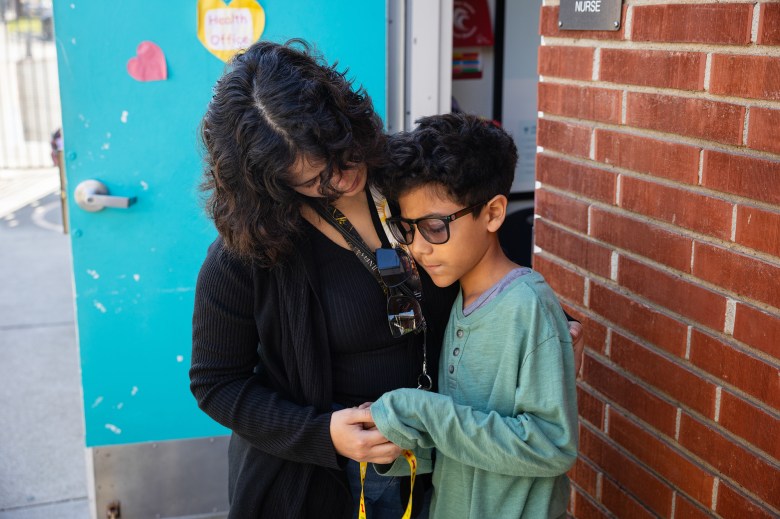 Farron Espinoza with her nine-year-old son, Alan Gonzalez, at Bayside Elementary School in Imperial Beach on March 19, 2026. Photo by Zoë Meyers for CalMatters
Sewage pollution from the Tijuana River has led to a myriad of health issues among nearby residents, including asthma, migraines and dizziness. For school children especially, the overwhelming stench of hydrogen sulfide sometimes means days indoors or at home sick. Read more from CalMatters’ Deborah Brennan.
California Voices
CalMatters columnist Dan Walters: The recent uptick in state tax revenues is a welcomed bit of good news for the state budget, but big city mayors, county officials and other stakeholders still seek more money than what Gov. Gavin Newsom’s proposed budget offers.
California Voices deputy editor Denise Amos: In a Q&A with the former U.S. Secretary of Homeland Security, Janet Napolitano discusses the incoming secretary, border security and the latest allocation of money to ICE.
Insurance companies want hospitals to agree to rates that don’t keep pace with rising costs — reducing overall reimbursement rates and threatening our fiscal stability, writes Craig Wagoner, president and CEO of Community Health System.
Other things worth your time:
.wp-block-group__inner-container > :not(h2){margin: 16px 40px !important;}.cm-cta.long-ask .wp-block-group .wp-block-group__inner-container{display: flex;gap: 12px;align-items: center;}.cm-cta.long-ask figure{max-width: 40px;flex-shrink: 0;}.cm-cta.long-ask .wp-block-group p{font-size: 18px;font-weight: 700;line-height: 120%;letter-spacing: -0.36px;width: 100%;}.cm-cta.long-ask .wp-block-group .wp-block-buttons{flex-shrink: 0;}.cm-cta.long-ask .wp-block-button__link{padding-left: 40px;padding-right: 40px;}@container long-ask (min-width: 601px){.cm-cta.long-ask *{font-size: 16px;}}@container long-ask (max-width: 600px){.cm-cta.long-ask h2,.cm-cta.long-ask .wp-block-group p{text-align: center;}.cm-cta.long-ask h2{background: linear-gradient(90deg,#FFE094 0%,#FFB500 100%);padding: 12px 20px;font-size: 20px;letter-spacing: -0.4px;}.cm-cta.long-ask .wp-block-group .wp-block-group__inner-container{flex-direction: column;}.cm-cta.long-ask > .wp-block-group__inner-container > :not(h2){margin: 16px 20px !important;}}]]>
Nonpartisan, independent California news for all
We’re CalMatters, your nonprofit and nonpartisan news guide.
Our journalists are here to empower you and our mission continues to be essential.
We are independent and nonpartisan. Our trustworthy journalism is free from partisan politics, free from corporate influence and actually free for all Californians.
We are focused on California issues. From the environment to homelessness, economy and more, we publish the unfettered truth to keep you informed.
We hold people in power accountable. We probe and reveal the actions and inactions of powerful people and institutions, and the consequences that follow.
But we can’t keep doing this without support from readers like you.

Please give what you can today. Every gift helps.

Lynn La is the newsletter writer for CalMatters, focusing on California’s top political, policy and Capitol stories every weekday. She produces and curates WhatMatters, CalMatters’ flagship daily newsletter…
More by Lynn La