
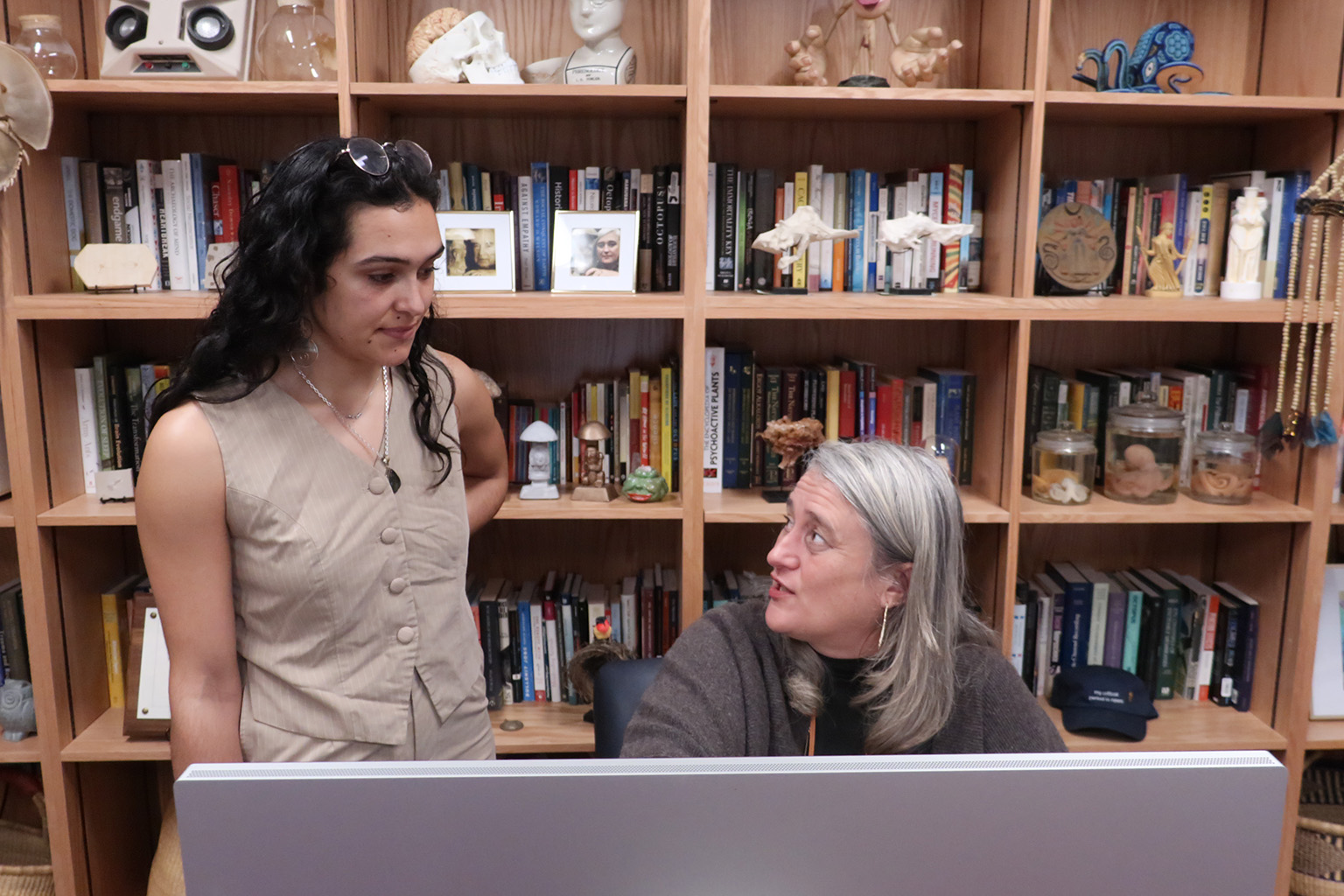
“Psychedelics aren’t a magic pill that cures all diseases by themselves,” noted Dölen. “Rather, they’re adjunct therapies that make other therapies work better by restoring the ability of the brain to learn. So, in the case of psychiatric diseases like PTSD and depression, pairing psychedelics with psychotherapy is the appropriate thing to do, but in the case of motor impairments and neurological diseases, the right thing to do is to pair psychedelics with motor therapy.”
Dölen comes with a medical background: She earned a combined M.D./Ph.D. degree and most recently served as a professor at the Johns Hopkins University School of Medicine. Moving to UC Berkeley allowed Dölen to expand her lab’s studies on octopuses.
“At Hopkins, we did a bit of octopus work,” said Dölen. “We started sequencing the genome. We did a small amount of behavioral experiments, but really, it was a side project that wasn’t the mainstay of the lab. Now that we’ve been able to restart and reinvest with startup money from the Steven and Alexandra Cohen Foundation and a new grant from the Silicon Valley Community Foundation, we have now started the octopus project in earnest.”