
By: Emma Gallegos, EdSource
As federal oversight of special education shrinks, California lawmakers are proposing to organize parents and students with disabilities and strengthen their voices at the state level, arguing that without them, no meaningful reform will take place.
Assembly Bill 2189, authored by Assemblymember Stephanie Nguyen, D-Elk Grove, won’t solve all the problems in special education — such as too few qualified teachers and state and federal funding that isn’t keeping pace — at least not directly. But supporters say the bill is crucial if California wants to tackle any of these thorny issues.
“The parent voice does not exist in California,” said Jordan Lindsey, executive director of The Arc of California, a statewide chapter of a national organization that advocates for Americans with disabilities. “You can propose something that’s super impactful, but if you don’t have big buy-in, you don’t have the power to make it happen.”
The Arc of California is a sponsor of the bill, which would authorize the State Council on Developmental Disabilities to award an $800,000 grant annually, over a course of three years, to a statewide advocacy organization “for the purpose of providing special education pupils and their families with information regarding special education advocacy and rights.”
Nearly 900,000 students in California TK-12 schools — or about 15% of students — qualify for special education. Several active local organizations in many California communities are dedicated to training and organizing parents, including community advisory committees and family resource centers.
But that doesn’t necessarily translate into coordination and action in Sacramento, according to Lindsey. He said that too often, statewide special education hearings have few, if any, parents showing up to discuss how funding or legislation affects their children.
“Good bills die, things that could really help students, die,” said Christine Case-Lo, a Sonoma County mother of two children with disabilities. “There is this idea that it’s not needed, because those parent and student voices are not heard at the state level.”
Case-Lo serves as a volunteer on the public policy board of the Arc of California and has long advocated for the organization to take on this issue.
The Arc of California could be eligible to lead the statewide effort if the bill passes. While the organization currently focuses more on services for adult Californians with disabilities, its counterparts in other states advocate at the student level, Lindsey said. He added that the board chose to sponsor this bill regardless of whether the group leads the initiative.
“I said, OK, whether it’s us or not, what we need to do is be purposeful about it. And our board of directors this year in the fall committed and said, we have to,” Lindsey said. The primary catalyst for pushing this bill now, he said, is what is happening at the federal level under the Trump administration.
The U.S. Department of Education shuttered seven of 12 regional branches of the Office for Civil Rights, including its California office, which reviews discrimination complaints on the basis of gender, race and age, but most involve disability.
“We have terrible oversight in the state of California for special education. We have often simply depended on the federal system, especially the Office of Civil Rights in the Department of Education, to be the effective oversight for extreme problems in special education,” Case-Lo said. “We can’t depend on that anymore.”
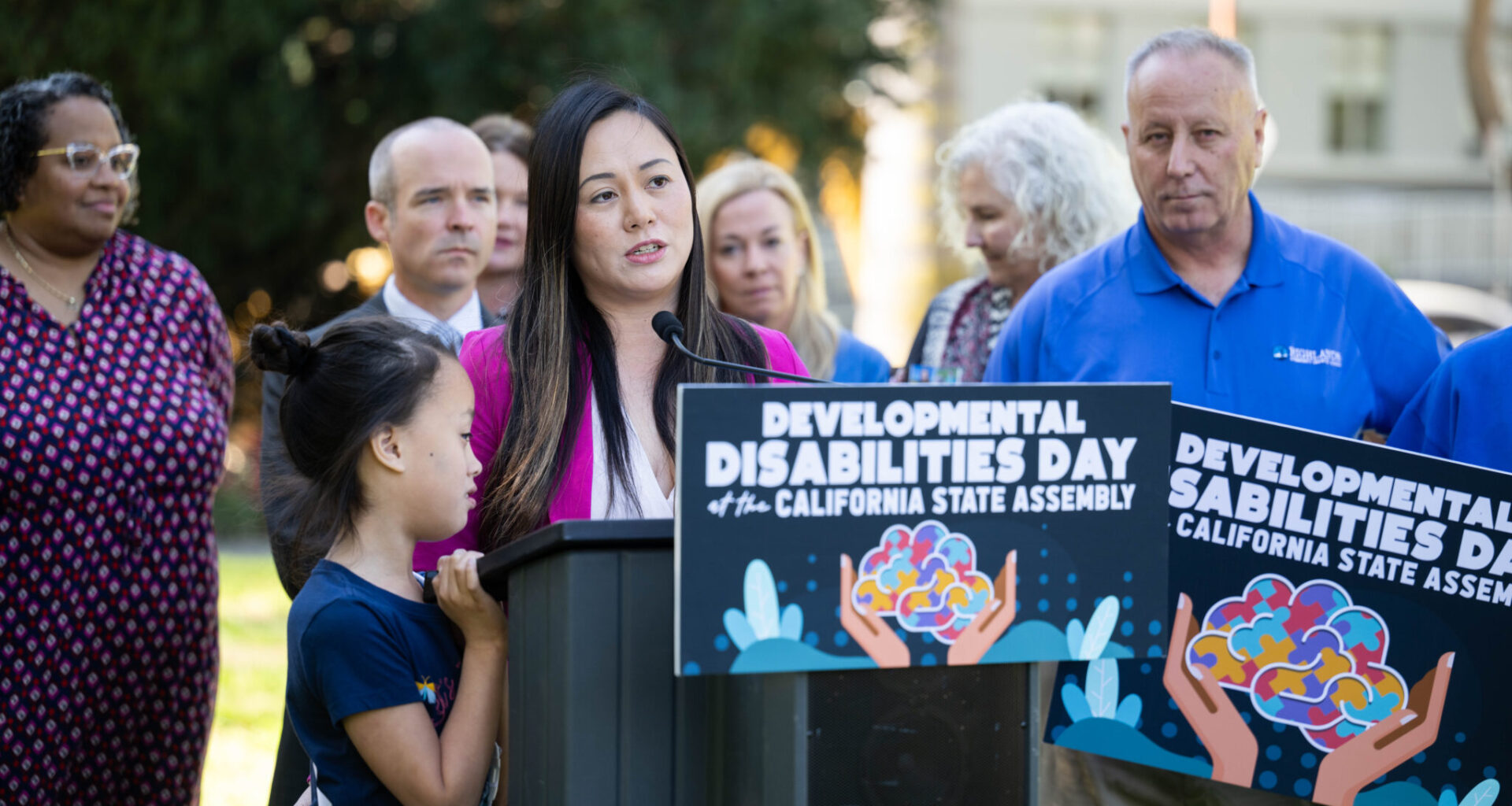
The Arc of California partnered with Nguyen, the mother of an 11-year-old with a developmental and intellectual disability, who brought her daughter to the Capitol on Developmental Disabilities Day of the California State Assembly. Nguyen said she knows there’s a hunger for representation at the state level, because parents reach out to her all the time.
“This is a great opportunity to pull everybody together to talk about what works, what doesn’t work, but to talk about what is also needed,” Nguyen said.
Follow us for more stories like this
CapRadio provides a trusted source of news because of you. As a nonprofit organization, donations from people like you sustain the journalism that allows us to discover stories that are important to our audience. If you believe in what we do and support our mission, please donate today.