The spring season is a symbol for new life, one that hundreds of Long Beach elementary students will be able to witness firsthand through Ground Education’s adopt-a-chick program.
Ground Education is a Signal Hill-based nonprofit that has been teaching children environmental literacy, climate resilience and nutrition for almost a decade, expanding to more Long Beach Unified School District (LBUSD) schools each year. Students at 31 elementary schools now benefit from their hands-on lessons, getting their hands dirty, trying homegrown vegetables and learning about the cultural history of foods.
Baby chicks have been a part of their curriculum since launching in 2017, but last year Ground Education took the program a step further and provided a hatchling for every kindergarten and 5th grade student.
This year the adopt-a-chick program will return to LBUSD, allowing over 300 students to learn about the chick life cycle by watching their own baby grow. Residents can help the nonprofit provide this experience by contributing to their baby chick donation drive, set to launch April 12. The donation drive will run for two weeks with the goal to raise $15,000.
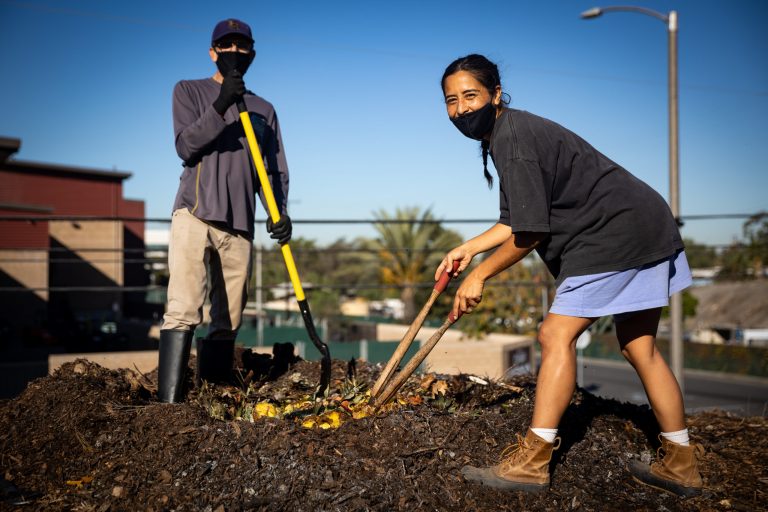
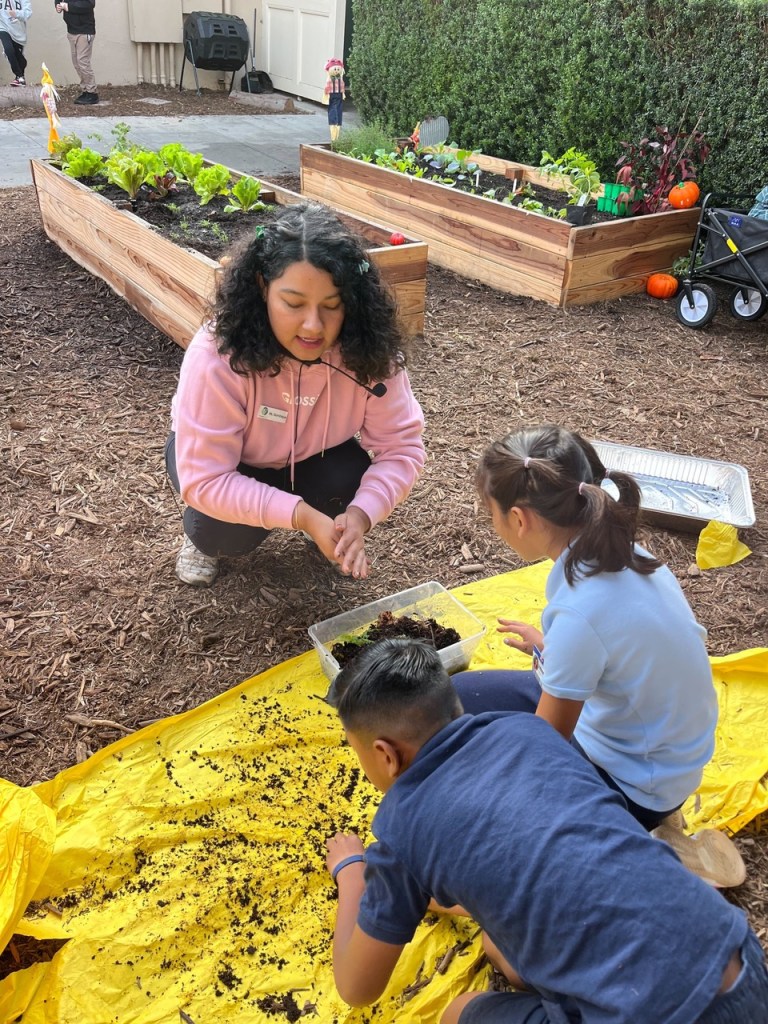 A Ground Education teacher guides two students through a gardening lesson. (Courtesy of Ground Education)
“They get to hold them, they get to see them jump around and sort of see how they interact with each other,” said Patti Tessen, Developmental Director of Ground Education. “It’s getting to be up close after they’ve been studying chicks and learning about their habits and what they do and how important they are.”
Money raised for the program will go towards purchasing the eggs from an Orange County farm, feeding and caring for the chicks, and the incubation process. Students will be able to witness the entire life cycle of the chicks and be able to hold the babies once they are old enough to do so.
This program is just the latest in a robust curriculum Ground Ed has been offering and expanding over the last nine years. Over 17,000 students in LBUSD have learned about pickling vegetables, the role mushrooms play in the ecosystem, how to grow their own food, recipes made from vegetable scraps, composting and much more.
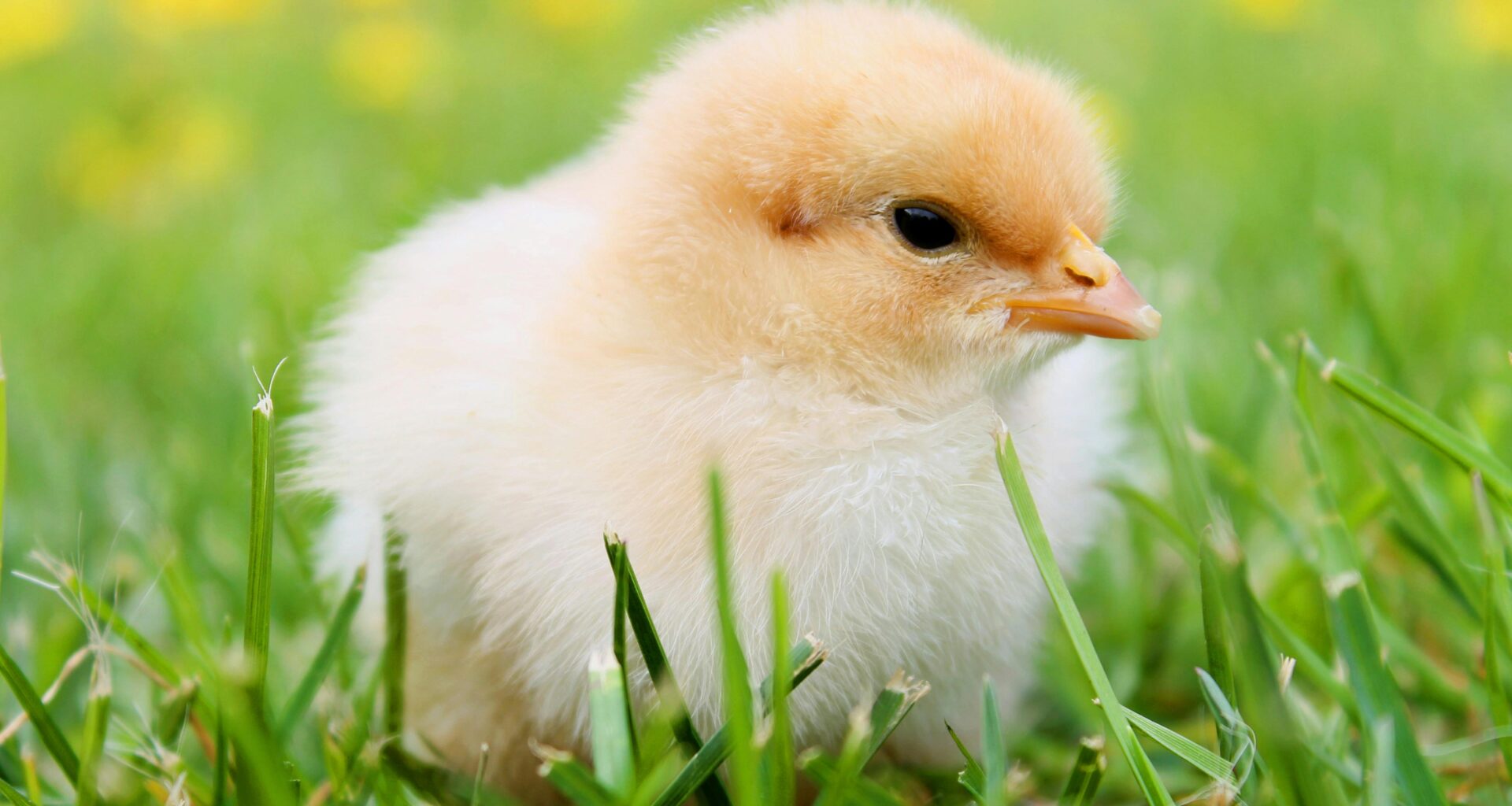
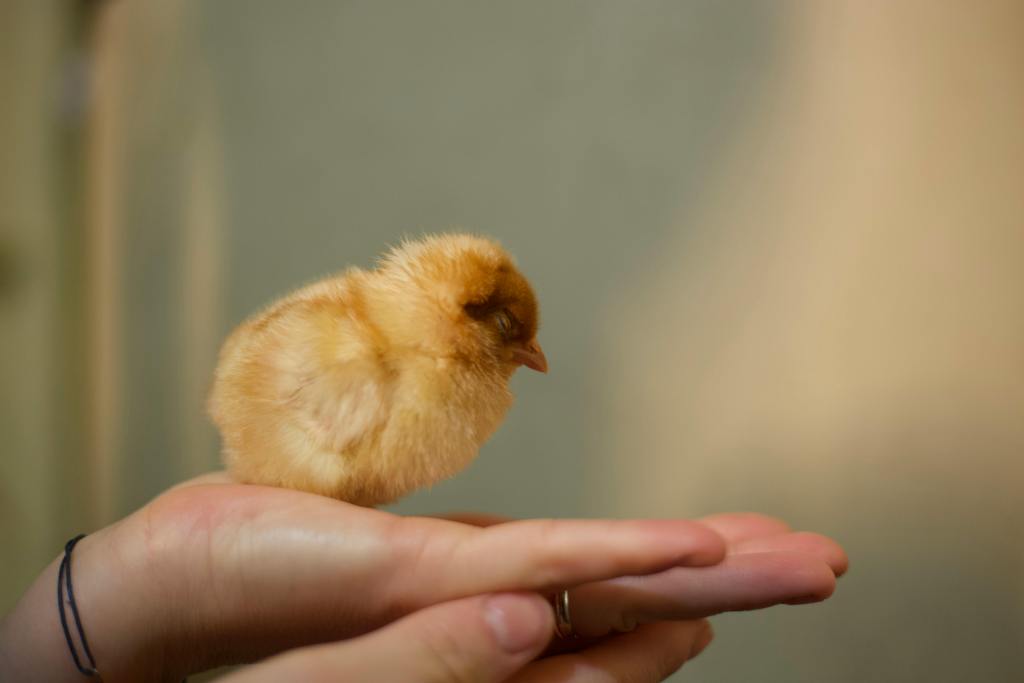 A baby chick, from Pexels.com.
Ground Ed also makes an effort to connect their lessons to what the students may be learning in the classroom, integrating math, science and history lessons from the desk to the garden. Their staff includes garden educators, horticulturists and interns of former teachers, farmers, herbalists and other environmentalists.
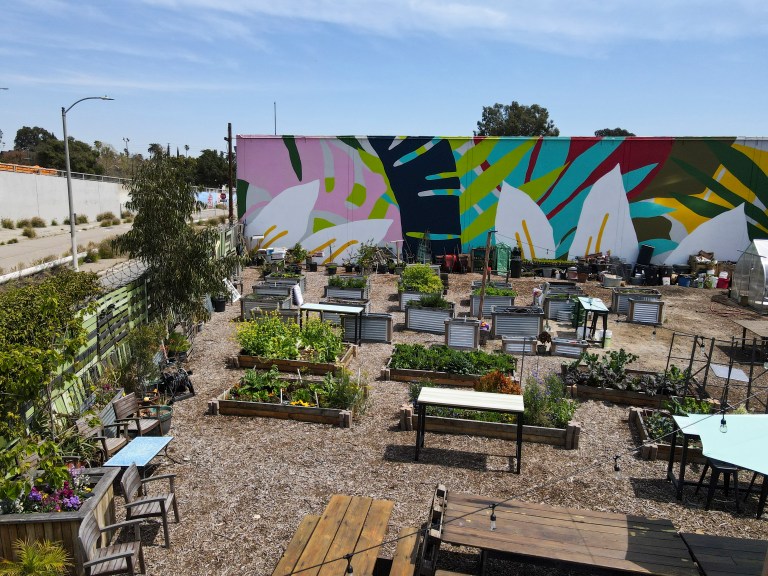
Each classroom in the 31 elementary schools they reach has a monthly opportunity to visit their school’s garden, either revitalized or built from scratch by the Ground Education team.
For the chick program, students will learn about the lifecycle of chickens, along with many other animals within their ecosystem, as well as the history of chickens, both culturally and evolutionarily. The baby chicks will be kept safe in incubators at Ground Ed’s Signal Hill office for the most part, but the nonprofit will take chicks to and from schools throughout the process so students can watch them grow over the weeks.
Want more local news?
Sign up for the Signal Tribune’s daily newsletter
While most of the students are too young to care for the chicks themselves, they’ll be able to watch Ground Ed staff feed, house and care for them. Eventually, the students will be able to hold their baby chicks themselves. Hessen said the entire process from egg to a hatchling ready to live on a farm should take about two months.
Those who donate to the program will be able to name their baby chick, and will receive a photo and certificate of the baby bird they adopted. Ground Education delivers the chicks to farms, where they will primarily lay eggs for the remainder of their lives, Tessen said.
Residents can experience the journey on Ground Ed’s Chick Cam on their YouTube channel, which will be launched mid-April. Last year’s videos show babies popping out of little eggs in a small incubator, stretching their wings and curiously pecking at one another.
 Samantha DiazManaging Editor
Samantha is an award-winning journalist, sports fanatic and mother. She’s worked for the Signal Tribune for over three years and is passionate about covering environmental news, small businesses, mutual aid efforts and resources.
Related Posts: