

If you drive for Uber, Lyft, or DoorDash in California, you must have heard of AB5 a lot. It has been treated as a hot topic for so many years. And in 2026, more changes are being seen again. For you, that can mean your day-to-day routine is affected in so many small ways.
So let’s break down the concept.
What Is AB5?
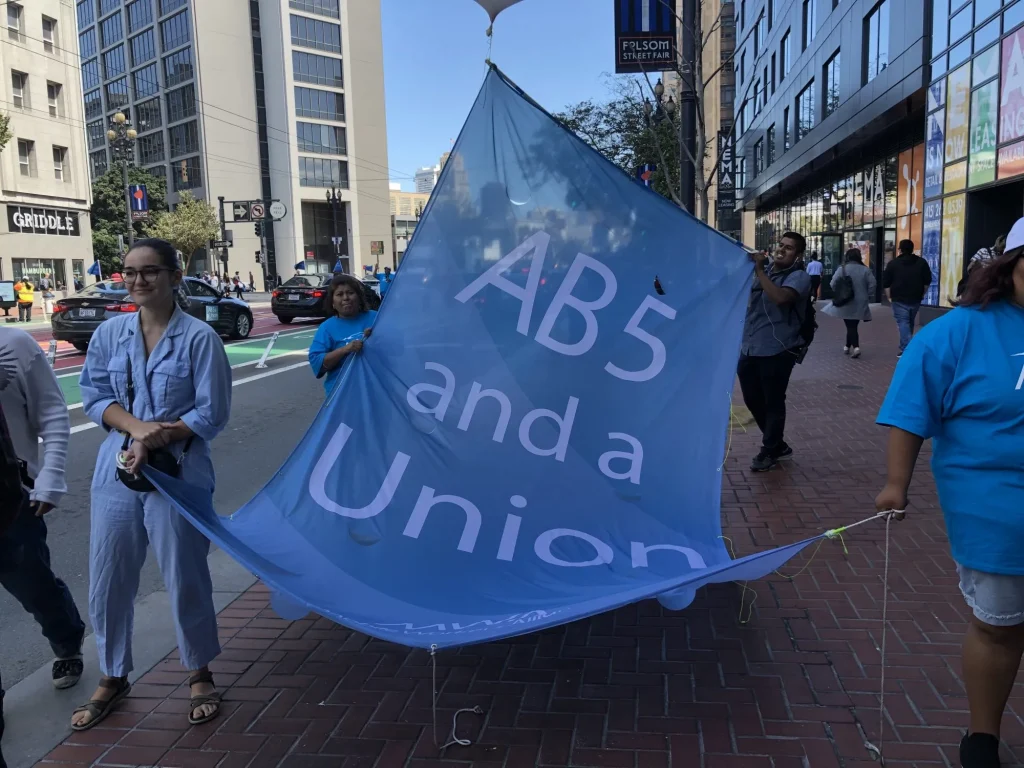
AB5 is a California law that was passed in 2019. With it, new rules were set for how workers had to be classified. Before AB5, workers at gig companies like Uber, Lyft, and DoorDash were called independent contractors. With that label, health insurance was not provided, and sick days were not included. To make matters worse, the paid time off was also not given. You get nothing. And if you have worked on those jobs, you have likely felt that gap.
AB5 said that wasn’t fair. It set up something called the “ABC test.” To call someone a contractor, a company needs to prove three things:
The worker is free from the company’s control
The work the person does is not the main thing the company does
The worker has their own independent business in that field
Uber and Lyft clearly failed that test. Their whole business is rides. DoorDash’s whole business is deliveries. The workers are the product. And that is pretty hard to argue with.
Then, Prop 22 Showed Up
AB5 was not accepted without a fight by big gig companies. Uber, Lyft, and DoorDash funded a ballot campaign with over $200 million. That amount can sound out of this world, and I know you may pause on it. Proposition 22 was passed in 2020. Then it was passed by California voters.
Prop 22 carved out a special exception. App-based drivers and delivery workers stayed independent contractors. But the companies had to offer a few basic things: a minimum earnings floor, some health care help, and accident coverage.
Many drivers felt it wasn’t enough. Some liked the flexibility. But it was, and still is, a split opinion.
What’s New in 2026
Here is where the story turns. AB 1340 was signed into law in California in late 2025. Then, in January 2026, union rights were given to around 800,000 rideshare and delivery drivers in California.
That’s huge. Drivers can now vote to form a union. The earliest that the vote could happen is May 2026. The Service Employees International Union has already started reaching out to drivers at airports and on social media.
Why Did Uber and Lyft Agree?
Good question. The rideshare companies actually dropped their opposition to AB 1340. But they got something in return. Senate Bill 371 cut the insurance they’re required to carry per incident from $1 million down to $300,000. That saves them serious money.
Lorena Gonzalez, who originally wrote AB5, said plainly that Uber needed something. She further went on to say that it was a trade-off and nothing more.
What This Means for Drivers in LA
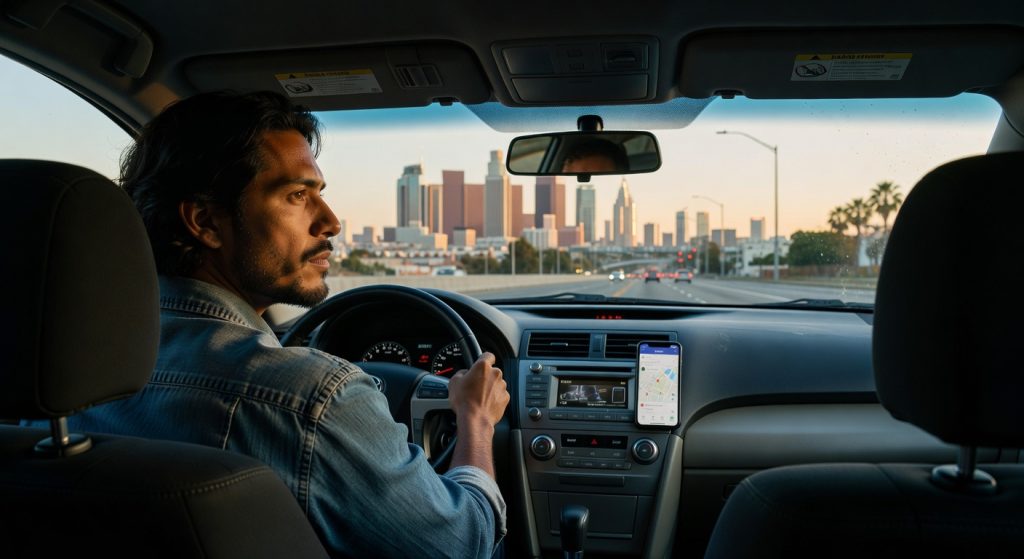
If you are driving in Los Angeles right now, a short version can be given of what was changed:
You are still classed as an independent contractor under Prop 22
You are now given the right to unionize under AB 1340
A union vote can be held as early as May 2026
Better pay and conditions may be gained, but time is needed
The union process will not be finished overnight. Enough drivers need to be brought in. Names need to be signed. Votes need to be cast. But the door has now been opened. That is more than what was given two years ago.
Delivery drivers are included, too. DoorDash and similar apps work are covered under AB 1340 as well. So if food is being dropped off for a living by you, this law is meant for you, too. It is meant for me as well if I were doing the same job.
The Bigger Picture
AB5 started a fight that is still ongoing. Drivers still want flexibility. Fair pay and basic protections are also being requested. Those two things do not need to be treated as opposites. The 2026 updates will not be used to fix everything at once. But for the first time in a long stretch, some power is being placed at the table for drivers in LA.
And that is worth attention.

Post navigation