
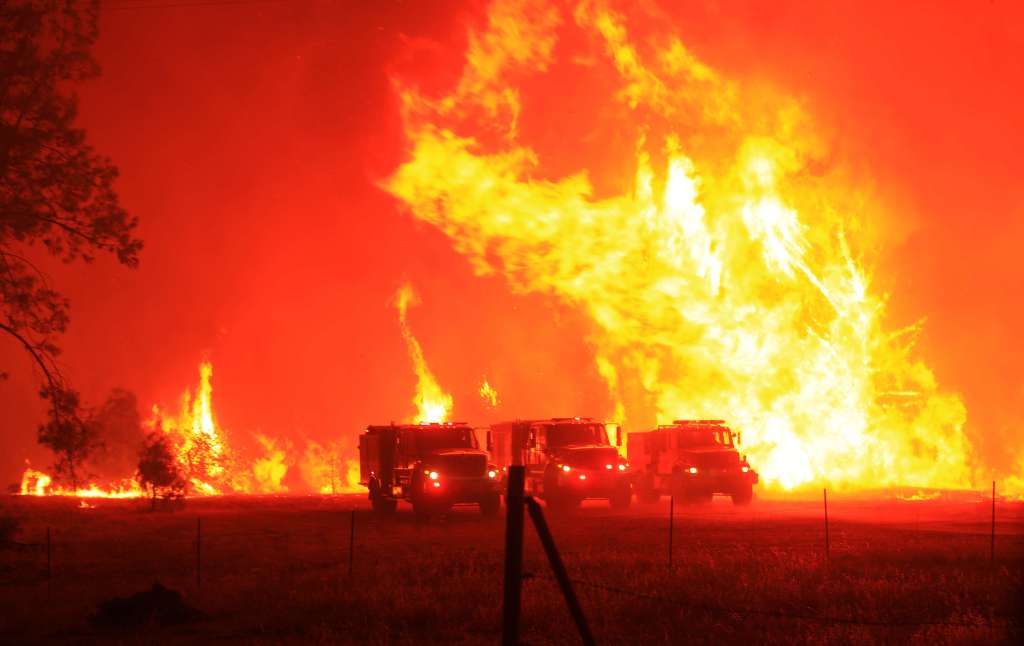
The release of another new study on the impacts of natural disasters in California may not normally get more than a shrug of wider public attention.
But a pending report out of the California Earthquake Authority looks to be more consequential than most as it seeks to answer the urgent, loaded question of how the state will address mounting and rippling costs of catastrophic events and who will pay.
The study comes at a critical time, viewed by some experts and officials as a crossroads for how California confronts the aftermath of increasingly costly and climate-driven disasters that are likely to be more destructive in the future.
After a decade of ever more devastating and deadly wildfires in the state, California suffered its costliest firestorm again last year in the January 2025 wildfires that destroyed more than 16,000 structures in Los Angeles County, killing 31 people. The state’s answer to such wildfires, the California Wildfire Fund, suddenly faced the possibility of collapse in the face of record-setting damage, with estimated economic losses of $65 billion, including insured losses of $40 billion.
The fund was created in response to the 2019 bankruptcy of Pacific Gas & Electric as the utility giant confronted massive liabilities in the wake of a series of devastating Northern California blazes tied to its equipment that displaced tens of thousands residents from burned homes and left businesses with uncertain compensation. The original $21 billion pool, funded in equal parts by utility shareholders and ratepayers, sought to ensure smoother, guaranteed payouts for survivors while keeping utilities from going under when their equipment is found at fault as long as they hit set safety requirements and investments.
As officials grappled with the fund’s precarity last summer, lawmakers included a major infusion as part of a sprawling energy affordability package, Senate Bill 254, passed through the legislature at the eleventh hour in September. The bill extended the California Wildfire Fund by 10 years with an $18 billion influx drawn again from ratepayers and utility shareholders. But, it also came with a mandate that the state produce a “Natural Catastrophe Resiliency Study” laying out new strategies to tackle California’s “emerging climate-fueled economic crisis,” spanning rising energy bills, wildfire prevention and infrastructure safety, a strained insurance market and disaster recovery.
“I wouldn’t be surprised if what gets decided this year will impact a generation,” said Mark Toney, executive director of The Utility Reform Network, who was heavily involved in shaping SB 254.
At Gov. Gavin Newsom’s direction, over the past several months, the California Earthquake Authority has worked with several state agencies overseeing fire protection, emergency services, infrastructure safety, utilities and insurance on recommendations. The new report is expected out April 7.
Upwards of 80 stakeholders including insurers and utilities, climate and environmental justice groups, wildfire survivor coalitions, public agencies, research institutions and consumer advocates have provided input.
The report comes as experts and officials are raising alarm over what record-breaking late winter heatwaves and limited snowpack will mean for this year’s wildfire season.
A period of back-to-back devastating wildfires starting about a decade ago, especially in Northern California, introduced the specter of a more dangerous era of natural disasters — “a new normal” as some came to call it, or “the new abnormal” as then-Gov. Jerry Brown described it in the aftermath of the 2017 Tubbs Fire in Santa Rosa and the 2018 Camp Fire in Butte County.
The ensuing years set new precedents — California’s largest fire in the 1 million acre 2020 August Complex, touched off by a historic siege of dry lightning; its first trans-Sierra Nevada inferno in the 2021 Dixie Fire.
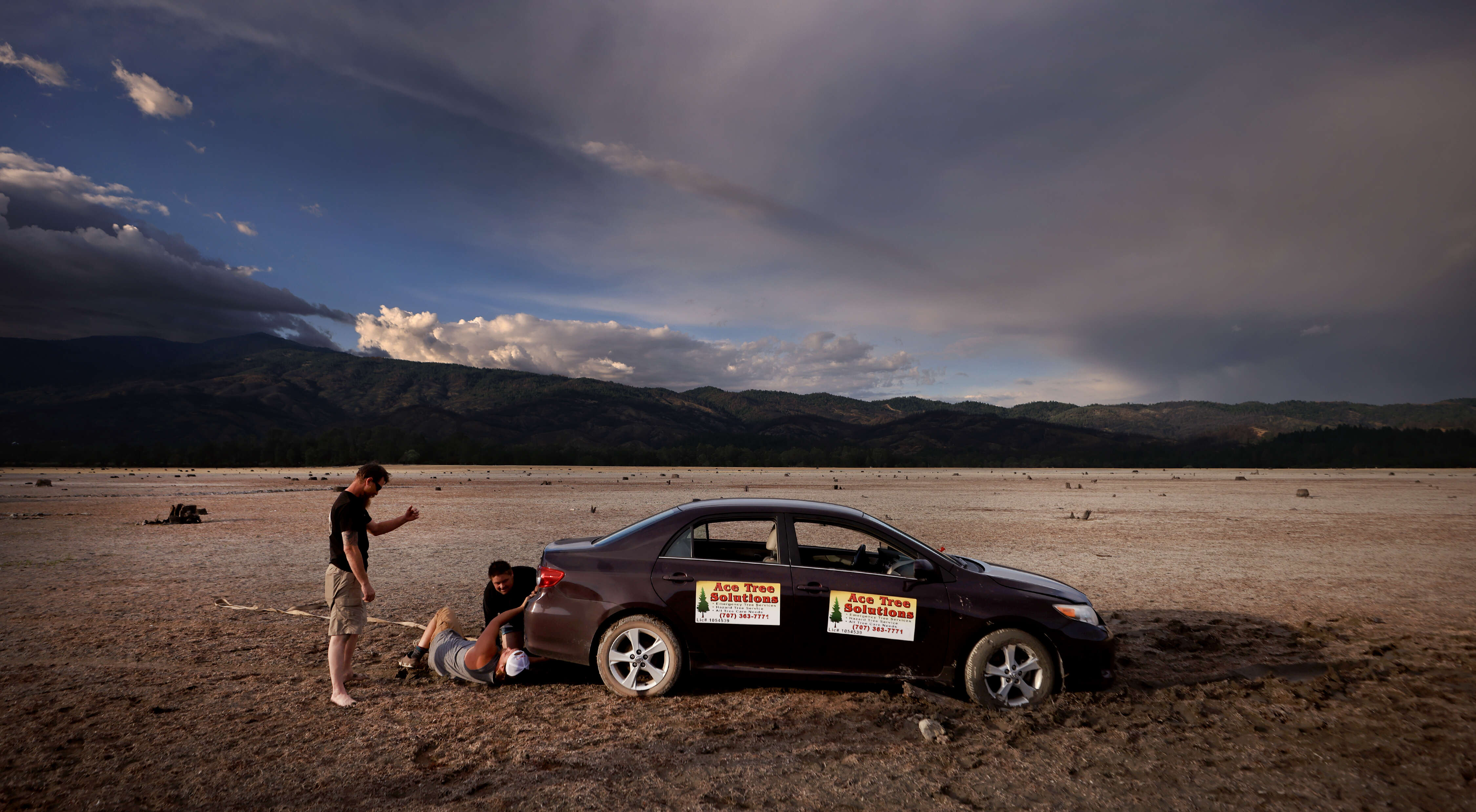
James Henry, left, Brandon Henry, middle, and James Stencil, attempt to hook up a tow line to pull their car from the mud on the lake bed of Lake Pillsbury, Thursday, June 24, 2021. The Upper Lake residents were taking a break from their duties of cutting hazard trees that were burned during the 2020 August Complex fires. (Kent Porter / The Press Democrat) 2021
Kent Porter / The Press Democrat file
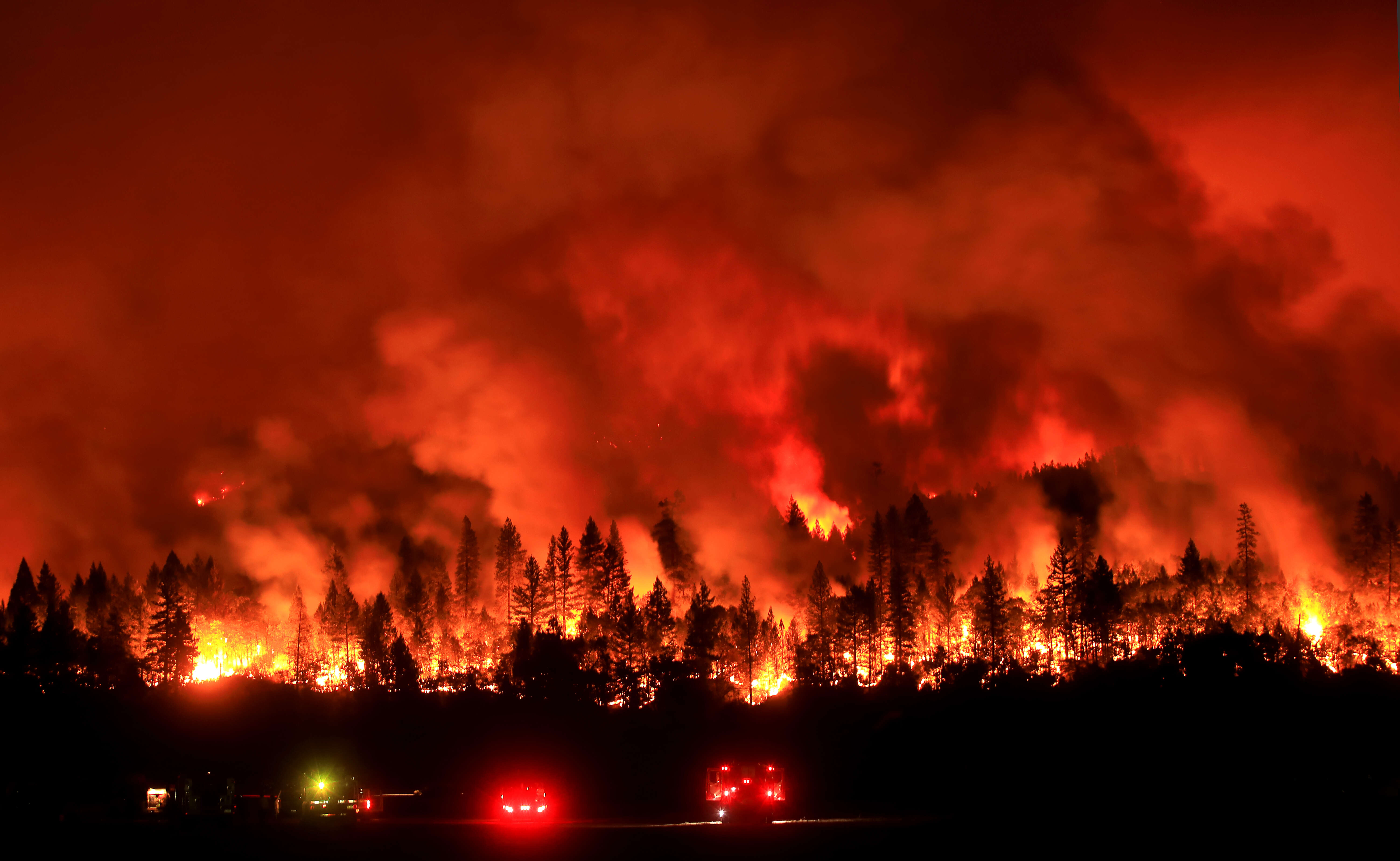
The August Complex, a series of lightning-sparked blazes that ignited in August 2020, burned 1,032,648 acres in Mendocino, Humboldt, Trinity, Tehama, Glenn, Lake and Colusa counties. It destroyed 935 structures and caused one death. In this photo, fire burns on Hull Mountain above Lake Pillsbury in Lake County on Sept. 21, 2020. (Kent Porter / The Press Democrat file)
Kent Porter / The Press Democrat
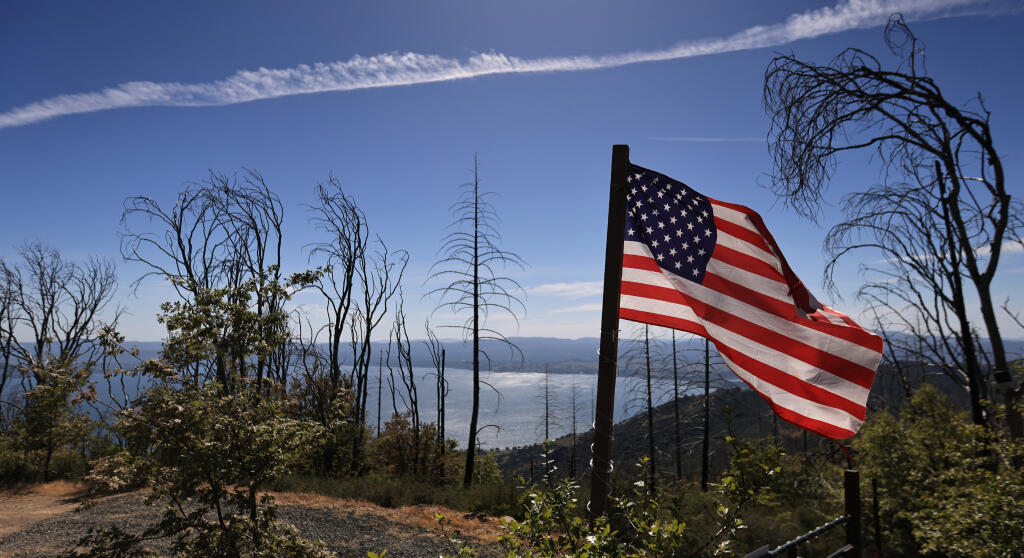
A flag floats in afternoon breezes above Clear Lake in the Mendocino National Forest, Wednesday, May 7, 2025.The landscape was torched by the the August Complex. (Kent Porter / The Press Democrat)
Kent Porter / The Press Democrat
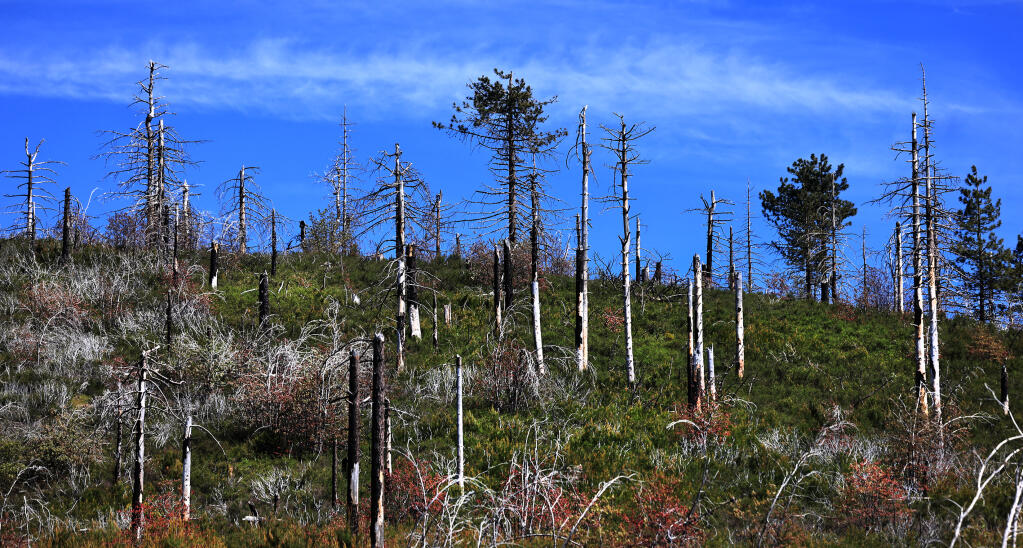
Burned by multiple large fires, the Fork in 1996 and both the Mendocino and August Complexes, fir trees battle the elements on Bartlett Springs Road near Pinnacle Rock in the Mendocino National Forest, Wednesday, May 7, 2025, above Lucerne. (Kent Porter / The Press Democrat)
Christopher Chung/ The Press Democrat
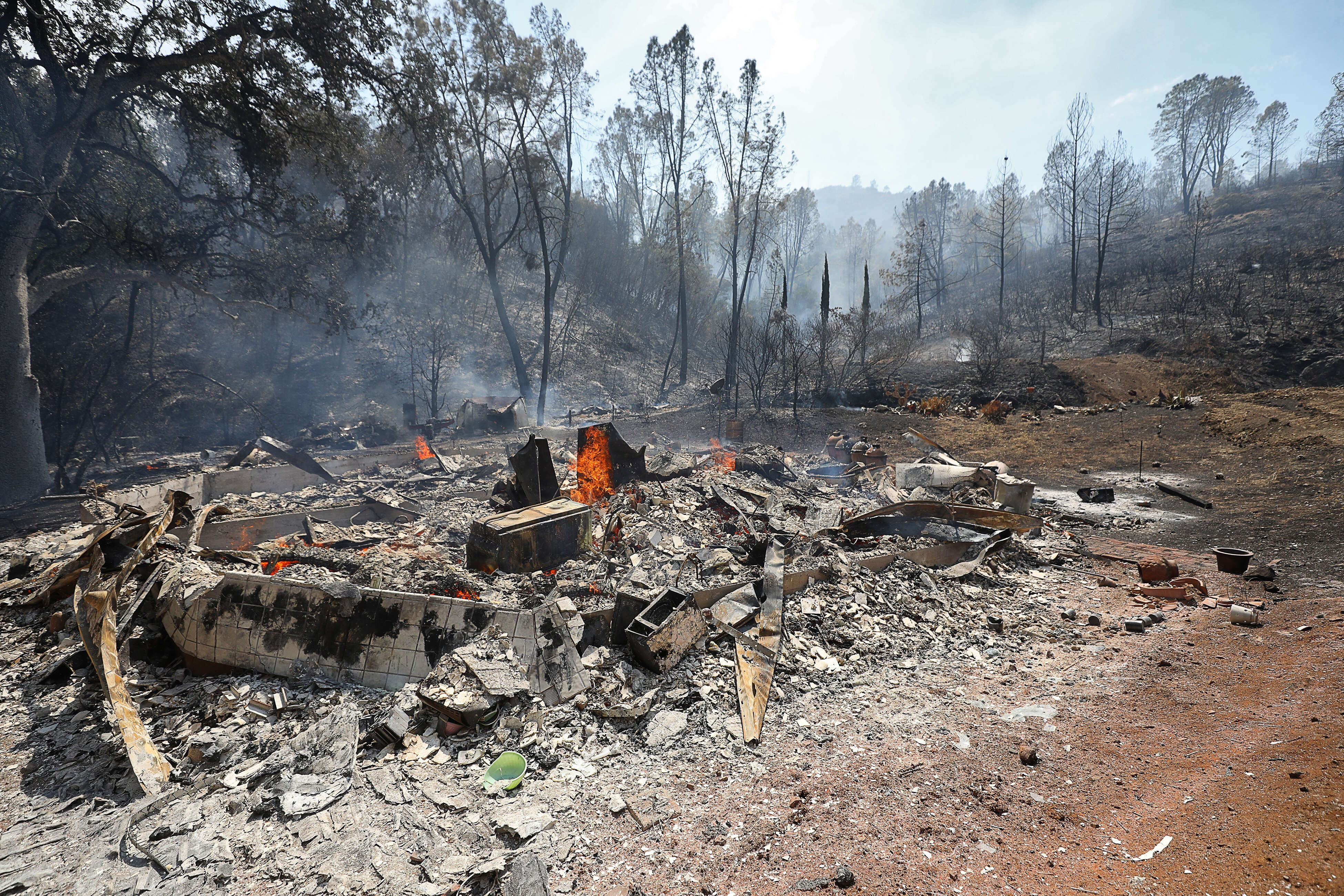
A home along Chiles Pope Valley Road continues to smolder after being destroyed in the Hennessey fire in Napa County on Tuesday, Aug. 18, 2020. (Christopher Chung/ The Press Democrat)
BETH SCHLANKER/ The Press Democrat
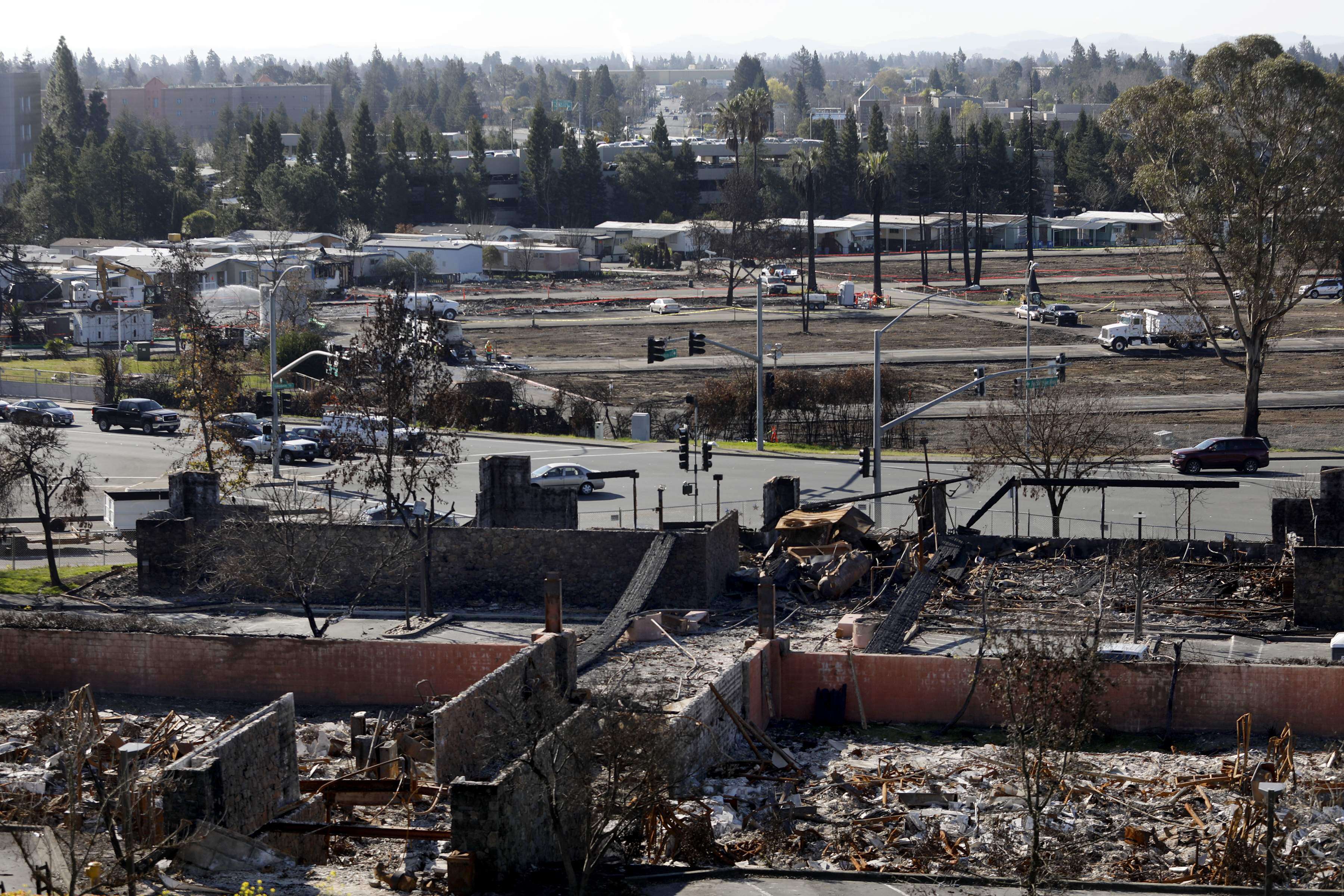
Cleanup work continues at the Fountaingrove Inn and Journey’s End mobile home park, both mostly destroyed by the Tubbs fire, in Santa Rosa, on Wednesday, February 21, 2018. (BETH SCHLANKER/ The Press Democrat)
Kent Porter / The Press Democrat file
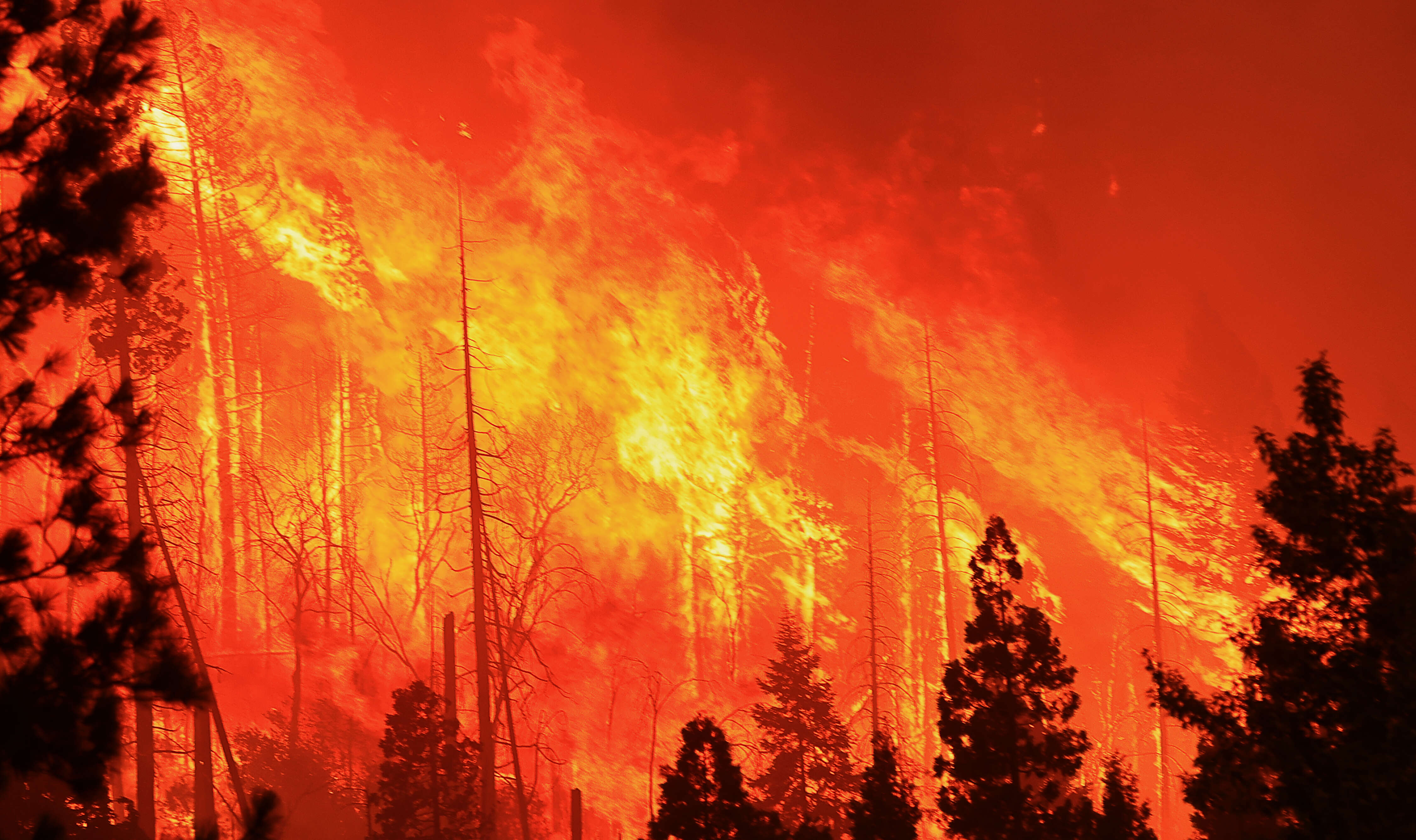
The Dixie Fire started in July 2021 and burned 963,309 acres in Butte, Plumas, Lassen and Tehama counties. It destroyed 1,311 structures and caused one death. In this photo, the Dixie Fire rips through the old Moonlight fire scar in Moonlight Valley, Monday, Aug. 9, 2021. (Kent Porter / The Press Democrat file)
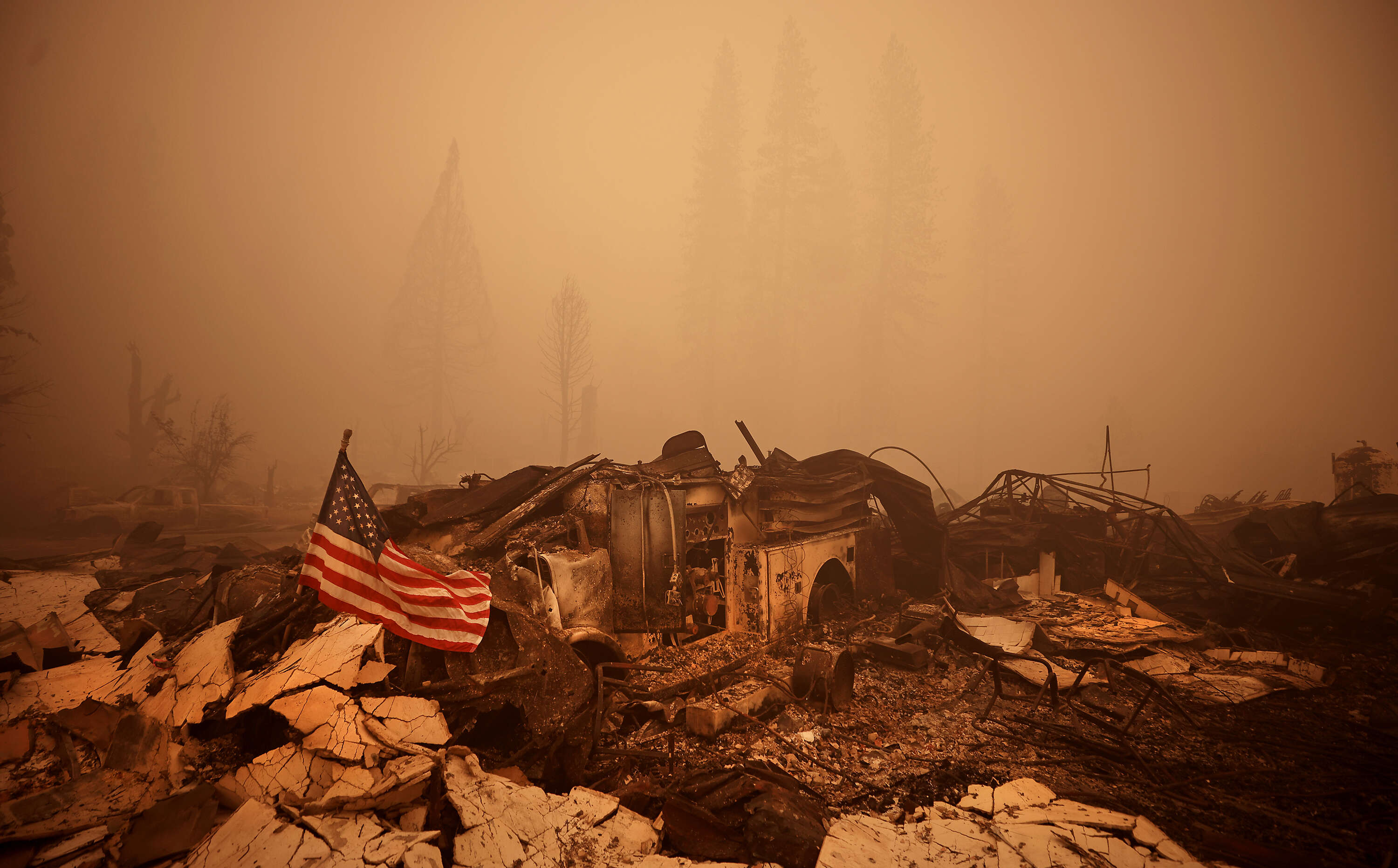
The skeleton of a fire engine is the only identifiable remains of the Greenville Fire Department, Sunday, August 8, 2021. Most of the town in Plumas county, was obliterated by the Dixie fire. (Kent Porter / The Press Democrat) 2021
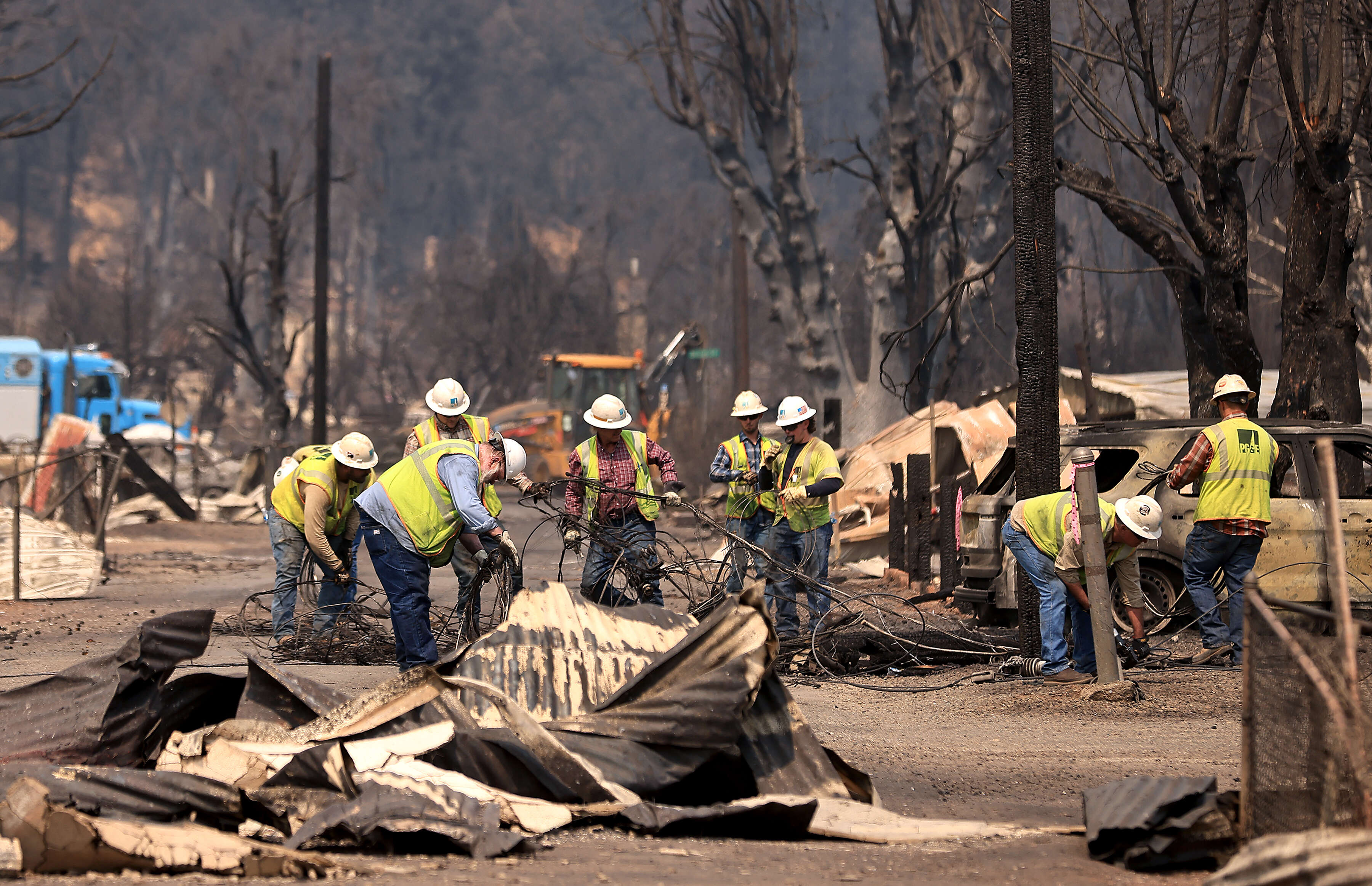
PG&E workers begin the tedious cleanup of their utility equipment burned by the Dixie fire in downtown Greenville, Monday, Aug. 9, 2021. (Kent Porter / The Press Democrat) 2021
Show Caption
1 of 9
James Henry, left, Brandon Henry, middle, and James Stencil, attempt to hook up a tow line to pull their car from the mud on the lake bed of Lake Pillsbury, Thursday, June 24, 2021. The Upper Lake residents were taking a break from their duties of cutting hazard trees that were burned during the 2020 August Complex fires. (Kent Porter / The Press Democrat) 2021
There has been some respite in the past several years. But, last year’s Southern California firestorm, and the troubled recovery so far — marked by litigation, battles over insurance and utility payouts and displacement concerns — further exposed fragilities in a state struggling under the weight of compounding climate, insurance and affordability crises.
The forthcoming study could spur or shape a range of legislative proposals. Already, lawmakers have introduced a host of placeholder bills and other legislation targeting problem areas.
Assembly member James Gallagher, R-Yuba City, recently put forward legislation, Assembly Bill 2700, aimed at cutting electricity rates by 30% and addressing compensation shortfalls for victims of utility-caused fires that predated the wildfire fund’s 2019 launch. Gallagher’s district includes Paradise, which was leveled by the Camp Fire.
Last year, as lawmakers considered expanding the state’s wildfire fund, survivors from the group that inspired the fund’s creation — the roughly 70,000 victims of PG&E-sparked fires between 2015 and 2018, including the 2017 North Bay firestorm — lobbied for a piece of that pie.
Their compensation had come instead through a settlement out of PG&E’s bankruptcy. The half-cash, half-stock deal meant payouts arrived piecemeal over years in a process that is just now finally winding down, leaving a $6 billion gap between what claimants received and their assessed damages.
While they were unsuccessful lobbying for a slice of the wildfire fund, ongoing pressure has yielded some results like Gallagher’s legislation. Other lawmakers from affected communities, including Assembly member Chris Rogers, D-Santa Rosa, and more recently state Sen. Mike McGuire, D-Healdsburg, have signaled some support.
“There are many challenging needs to address in this year’s state budget, but we are looking at every option to get additional settlement funds into the pockets of deserving survivors,” McGuire said in a statement.
McGuire and Gallagher are two of the leading rivals in a trio of elections this year to decide an open seat in Congress after Rep. Doug LaMalfa’s death in January and Democrats’ successful move to redraw districts through voter-approved Proposition 50. The June primary for the redrawn 1st District, also including Chico educator Audrey Denney and Sebastopol labor attorney Kyle Wilson, is set to play out across a fire-ravaged swath of California — stretching from Santa Rosa, up through Mendocino and Lake counties, across Glenn and Tehama counties in the Sacramento Valley and over the mountains in Butte, Plumas and Lassen counties to the Nevada border.
Will Abrams, a Tubbs Fire victim and leading advocate for wildfire survivor compensation and utility reform, said he sat for a two-hour interview with the SB 254 study team.
The fight over wildfire recovery ties into much larger issues of realigning incentives over wildfire safety, utility profit and consumer protection, he said. Looking ahead to what comes next, “there are going to be a lot of competing bills and interests at play, and it will be really important to focus on that competition.”
There will be more time than in past years to consider and weigh in on those options, said Toney of The Utility Reform Network, hearkening back to the rushed backroom process around the California Wildfire Fund’s creation in 2019 and last year’s passage of SB 254.
“I don’t know where we’re going to end up, but I believe it’s going to be a better place than when it was behind closed doors,” Toney said. “It provides for much more openness and much more opportunity.”
You can reach senior reporter Marisa Endicott at 707-521-5470 or marisa.endicott@pressdemocrat.com. On X @marisaendicott and Facebook @InYourCornerTPD.