
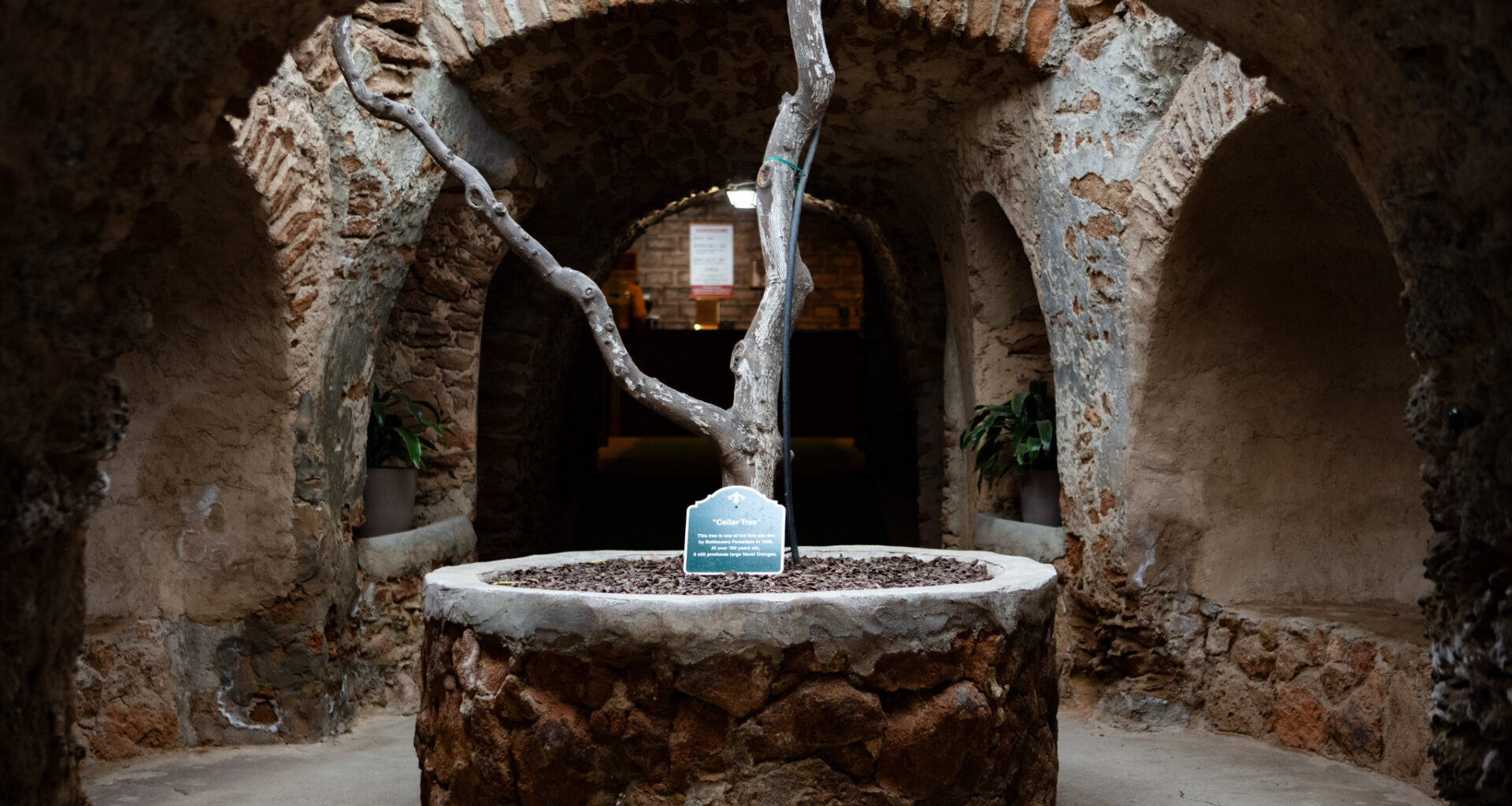
In 1906, Baldassare Forestiere bought 80 acres of land in Fresno for $80 with hopes of planting a citrus orchard. But the Sicilian immigrant hit a problem the minute he took a shovel to his land: His acreage was covered in dirt as hard as a rock.
Growing an orchard seemed impossible, but Forestiere was out of money, so he leaned into the bottomless energy of a new immigrant and started digging. He built a cellar to escape the heat, only to stumble into an ingenious solution to his problem. If he added a skylight over the cellar, he could use richer soil underneath to grow plants 20 feet underneath his cursed land.
He started with herbs and soon planted a tree deep below the surface of Fresno’s streets, fed by light pouring in from the exposed sky above. The plants thrived, so he kept working, building more rooms and planting more varieties of fruit. Forestiere spent the rest of his life digging. After 40 years, he had built an elaborate network of tunnels, connecting rooms and gardens with a fish pond and chapel. Nearly every corner is filled with green leaves growing deep below the surface, in one of California’s strangest otherworldly attractions.
CNN called Forestiere Underground Gardens one of the “world’s coolest underground wonders,” and it’s a registered California historical landmark. Walking through the network of tunnels takes you past trees growing lemons, oranges, grapefruits, kumquats, quince and dates, as well as vines for both table and wine grapes.
The garden is even more surreal given its location. Descend the steps and you feel like you’re in a Mediterranean grotto or a mud-walled cave on Tatooine in “Star Wars,” but step outside and you’re standing in the middle of Fresno’s suburban sprawl. Highway 99 hums just a few hundred feet away from the gardens, and Forestiere’s fruit trees peek above the ground just steps away from a tire shop and an In-N-Out Burger.
But that dull suburban din fades to silence as soon as you return back down the steps into Forestiere’s garden. The caves didn’t only give the Sicilian immigrant a way to grow fruit in otherwise hard ground, they also created their own climate. The gardens stay a comfortable 65 to 80 degrees Fahrenheit, even when Fresno is baking in an August heat wave. That makes it a rare Central Valley attraction that you can visit even in the middle of a summer day without risking heatstroke.
The unique climate also forces the gardens to close in winter months. The open skylights allow rain to hit the dirt floor, which turns the attraction into a wet mess. After closing in December, the gardens just reopened on Friday for the 2026 season.
Tickets cost $26.75 for adults and $15 for kids 17 and under. The walking tour takes you across the cave network, showing Forestiere’s well, bedrooms, chapel and fish pond. He used any materials he could find, and you can still see scavenged wire and metal in the walls. Roman arches inspired by his native Italy adorn the hallways and the entire structure is inspired by the Sicilian catacombs he grew up exploring.
It’s almost unimaginable to think that the huge structure was dug all by hand. At one end of his gardens he dug a tunnel so wide and deep that a Model A could fit inside. The gardens are also a striking example of the innovation that can happen when we allow immigrants into our country and let people build unique housing — two things that our laws currently fight hard against.
Forestiere’s gardens gained enough attention while he was alive that he started charging admission to tour his incredible attraction. He eventually dreamed of creating an entire underground resort, but died at 67 from pneumonia in 1946 before he could realize his plan. Forestiere didn’t have any kids of his own, so his property passed to his brother. The Forestiere family has preserved the gardens, including earning them a spot on the National Register of Historical Places in 1977 and a state historical landmark in 1978. While Baldassaire was never able to realize his dream of creating a resort, his family has ensured that people can still experience California’s surrealist garden.