
People don’t often starve in the United States.
That’s the theory, anyway.
Sure, food insecurity is common. Roughly 47 million Americans – including about 400,000 people in Orange County – don’t always know where their next meal is coming from or have the money to pay for three meals a day, according to federal and local data.
Also, malnutrition isn’t unheard of. In the pandemic year of 2022 (the last year for which there is data), about 20,500 Americans died of malnutrition, though the vast majority were age 85 or older and had underlying health problems, according to a study by the National Institutes of Health.
Still, food insecurity and isolated malnutrition aren’t the same as widespread starvation. And, for decades, lawmakers of all political stripes have operated under the belief – usually at least somewhat accurate – that American hunger is more frequently an issue of nutrition and access and dignity than it is a question of life and death.
Soon, experts say, that theory could be tested.
There are two primary sources of free food in the United States – the federal Supplemental Nutrition Assistance Program (SNAP) and the vast network of charitable food banks and pantries – and both are on the cusp of changes that will make it harder for needy Americans to eat.
On the government side, eligibility requirements spelled out in last year’s “One Big Beautiful Bill Act,” the tax-and-spending bill HR1, are designed to push millions of people out of SNAP, which in California is known as CalFresh. Through the first eight months of last year, about 1 in 8 Americans (roughly 42 million people) used government assistance to eat, at a cost of about $80 billion, according to the Department of Agriculture.
On the charity side, technology is already slowing a key source of food that currently winds up in food banks and pantries.
Restaurants, groceries, farmers and others that process lots of food are starting to use artificial intelligence and other technologies to reduce their excess, edible product. While trimming food waste generally is a welcome change, the new efficiency threatens to choke down an essential pipeline for charities that have come to rely on Big Food’s edible waste as a way to feed tens of millions of hungry people, no questions asked.
Nobody in the free food world is predicting instant doom. The government isn’t abandoning free food. And, if history is a guide, Americans will continue to give to charitable food programs (if not other causes) even when inflation is running at 4%, as is expected for 2026, and the labor market is tightening.
But when it comes to the new dynamics of fending off starvation – structural shifts that are pushing people away from government assistance and toward an already-strained charity system that might be losing its ability to help – experts don’t yet see a solution.
“To a certain extent, the world of free food has been a victim of its own success,” said Mike Learakos, chief executive of Abound Food Care, a Santa Ana-based nonprofit that links industrial food suppliers to food banks and pantries.
“Hunger works in cycles. It rises and falls with the economy or other events. When need becomes particularly acute, charities pretty much always step up and feed people and meet that need. And they do it so well that the general public doesn’t see the problem as being dire. Those cycles also give people who work in that space the false sense of, ‘Hey, we’ve got this.’
“But with what’s coming this time, we don’t know if we’ve got this or not. Nobody does. We don’t have the data,” Learakos added.
“My inclination is that what we’re about to experience isn’t just another cycle. It’s something bigger.”

An Tran, director of the County of Orange Social Services Agency in Orange on Wednesday, March 25, 2026. (Photo by Leonard Ortiz, Orange County Register/SCNG)
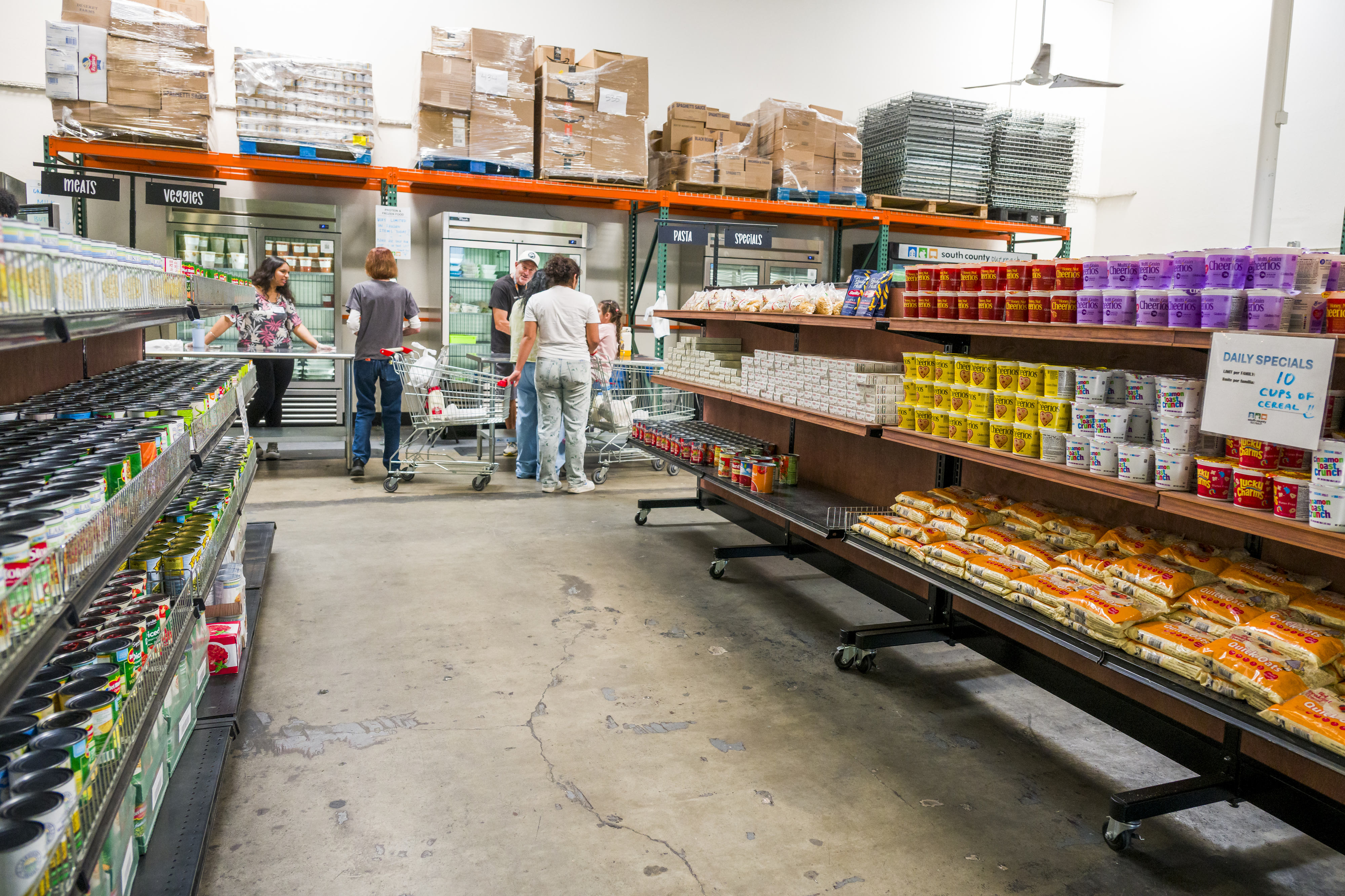
Guests get help from volunteers at the South County Outreach Pantry in Irvine on Thursday, March 26, 2026. (Photo by Leonard Ortiz, Orange County Register/SCNG)
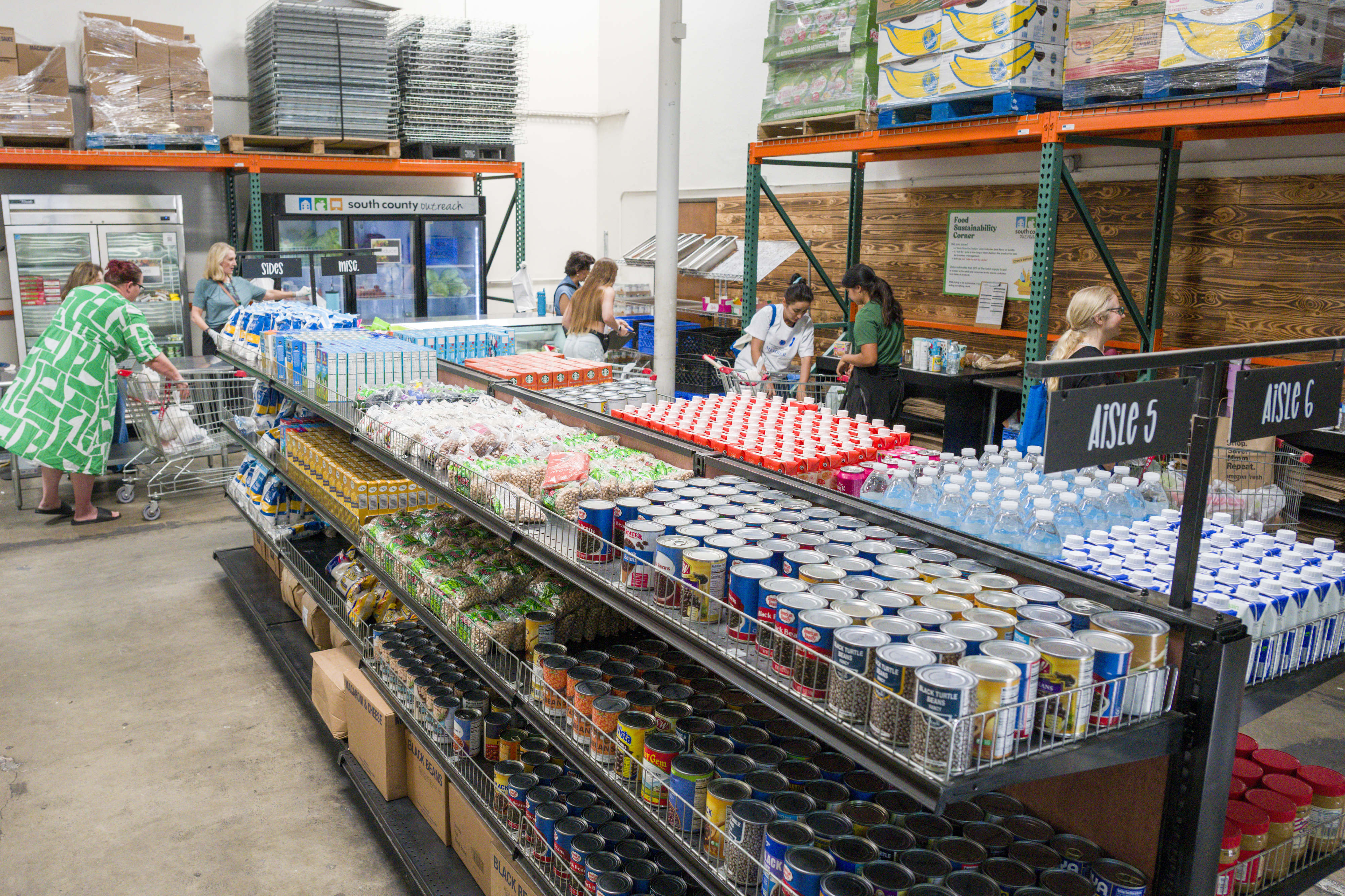
Guests pickup groceries at the South County Outreach Pantry in Irvine on Thursday, March 26, 2026. (Photo by Leonard Ortiz, Orange County Register/SCNG)
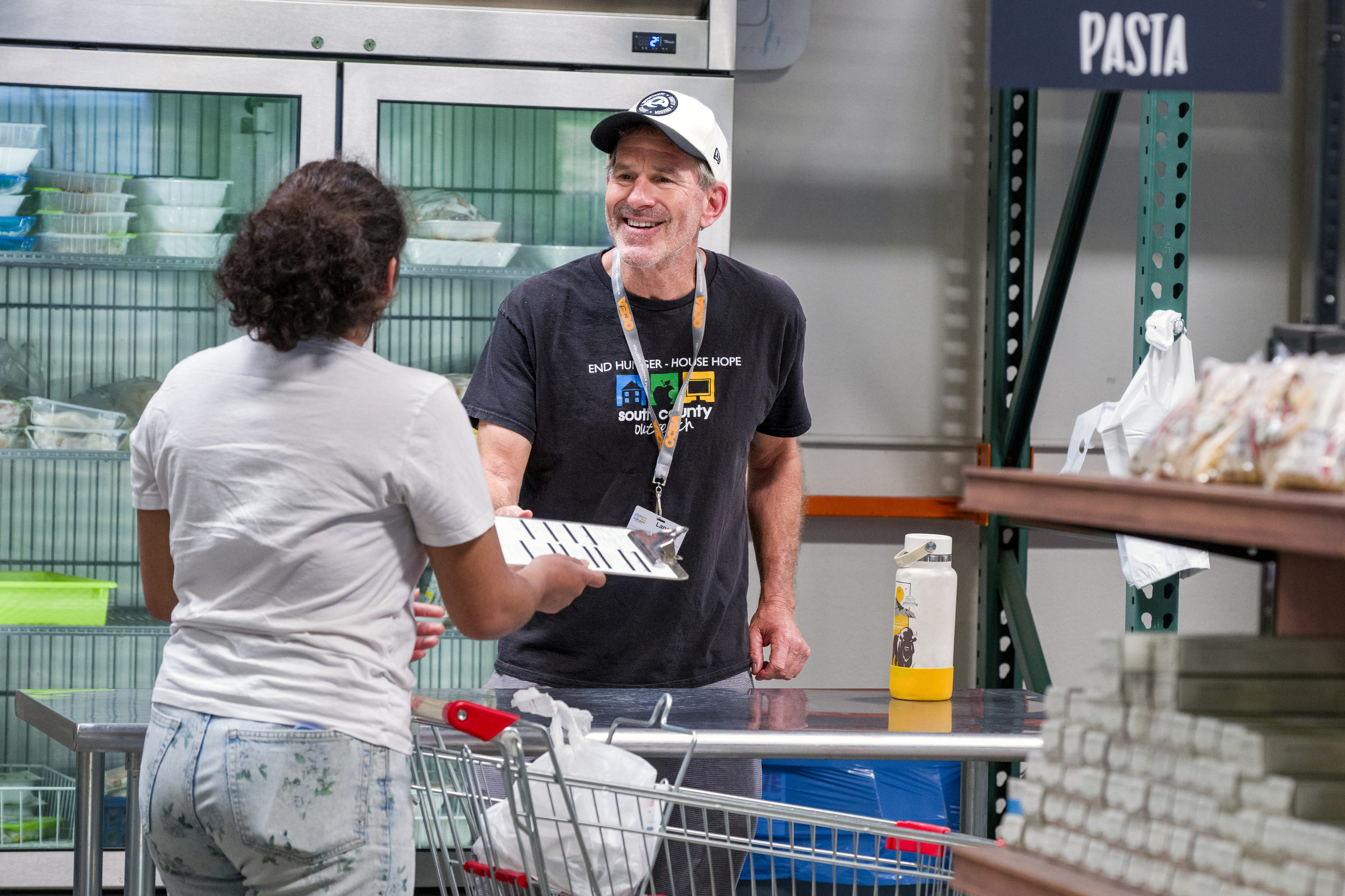
Lance Malis, right, assists a guest at the South County Outreach Pantry in Irvine on Thursday, March 26, 2026. (Photo by Leonard Ortiz, Orange County Register/SCNG)

An Tran, director of the County of Orange Social Services Agency in Orange on Wednesday, March 25, 2026. (Photo by Leonard Ortiz, Orange County Register/SCNG)
Show Caption
1 of 5
An Tran, director of the County of Orange Social Services Agency in Orange on Wednesday, March 25, 2026. (Photo by Leonard Ortiz, Orange County Register/SCNG)
Expand
Rise of the ABAWDs
Next month could be a turning point for free food, locally and around the country.
April will be the first tax season since the passage of HR1, and about 8 in 10 American taxpayers will pay less in taxes because of the bill signed into law last Fourth of July by President Donald Trump, according to the Institute on Taxation and Economic Policy, a non-partisan think tank that tracks the financial impact of federal legislation.
Under HR1, this year’s tax break for the lowest-income earners will run up to a few hundred dollars and people making closer to $100,000 could pay roughly $1,500 less. Earners in the top 1% – people who report income of roughly $960,000 – will see their 2026 tax bills go down by about $68,400, according to the Institute, while the top 0.1% – people earning about $5.2 million or more – will save more than $284,000.
Those tax cuts (which don’t include the costs that taxpayers incur from tariffs) are intertwined with the changes coming to free food.
Though HR1 is projected to expand the federal deficit by $2.4 trillion over the next decade, that gap would be bigger if Congress didn’t agree to new rules that will reduce spending on federal health care (Medicare) and food (SNAP) by more than $1.3 trillion, according to a 2025 report from the Congressional Budget Office.
On the food side, the first cost-cutting rules kick in on Wednesday, April 1. That’s when several categories of immigrants will lose access to government assistance. These include people seeking asylum or refugee status, and people who were victims of human trafficking, or other types of violence, in their home countries. Undocumented immigrants will remain ineligible for free food, maintaining a long-term status quo (eligibility is limited to citizens and legal permanent residents) on that front.
Statewide, the immigration eligibility changes are expected to trim about 72,000 people out of CalFresh, according to state and federal data. Local welfare officials project the cut in Orange County will be about 2,000, with a few hundred people losing access to the program over the next year as their annual renewal dates come due.
But the April 1 deadline, and the cut to immigrant access, is just the first of several bigger changes, and more cost-cutting.
Starting June 1, long-standing work-requirement rules for SNAP/CalFresh will be reinstated and expanded. Many of the 5 million Californians who currently get SNAP/CalFresh benefits will have to prove they are working, volunteering or studying/training at least 20 hours a week, or 80 hours a month, in order to receive a food-only debit card that, in Orange County, averages about $418 a month. If they fail to prove they meet work requirements, they can be limited to receiving benefits to only three months during a 36-month window.
The idea isn’t new. Work rules were instituted as a qualification for federal food (then known as Food Stamps) in 1996, though the requirement has been on hold since the high-unemployment era of the Great Recession.
The stated goal back then was that by setting work requirements people would pick up new job skills that eventually would lead them off the government’s dime. Back then, the rules excluded parents of teens under the age of 18, and adults age 55 or older, along with many veterans, recent foster care graduates and homeless people.
This time, the stated goal is similar. But federal budget projections also show the program shrinking as the new work rules kick in, suggesting feeding fewer people is a feature of HR1. The Congressional Budget Office projects that over the next decade, SNAP expenditures will fall by about $187 billion; during that time, the program is projected to lose about 4 million clients.
All of that will happen as more people will be asked to work.
Under the new HR1 rules, parents with children age 14 and older living at home, and people between the ages of 55 and 64, will be considered Able-Bodied Adults Without Dependents (or, in government speak, ABAWDs) and, as such, will have to work to receive benefits. Others who’ll be pushed to employment include many non-working veterans who currently get food assistance, adults age 18 to 24 who were still 18 when they were in foster care and homeless people.
The details of the rules, and how to meet them, are complex. And the task of explaining it all – and of enforcing the rules as they take effect – is falling to state and county social service departments. Administrators say those duties are adding a new layer of work, and cost, to an already-overburdened system.
“We’ve been working closely with community organizations to get the message out; hosting learning sessions, working with family resource centers, universities, faith-based organizations, the (Orange County) Hunger Alliance – anyone we can,” said An Tran, director of the county’s Social Services Agency.
“We want people to be able to make the best decision they can for their families.”
The audience, he noted, can be tough to reach.
“When many of our clients get an email from government, there’s some hesitation,” Tran added. “But when they hear from a community partner, or a church, they’re more likely to pay attention.
“And it’s very important, right now, that they know what’s happening.”
It’s not clear how much, if at all, the work rules will add to hunger in Orange County. Tran said his “rough estimate” is that 40,000 to 50,000 locals – out of a program that currently serves 292,000 people, mostly seniors and children – will be touched by the new work rules.
Many of those newly minted ABAWDs, Tran suggested, figure to lose CalFresh benefits.
“From my experience, as you add barriers, you see a decrease in participation.”
But Tran and others say people won’t be leaving the program because they’re lazy and don’t want to work. Instead, they note that people who are chronically out of the workforce often face barriers – homelessness, mental illness, child care costs – that keep them jobless. Requiring paid work or volunteer work as a term of getting food won’t necessarily change those barriers.
Tran also questioned the projected savings of cutting CalFresh, at least locally. Each dollar spent by a CalFresh client, he said, generates about $1.79 in community spending, and CalFresh clients spend about $1,400 a year less in health care expenses.
And, he added, the cost of administering the new work rules is coming out of his budget, not federal spending. He pointed to a third deadline, Oct. 1, as the date when the federal government will cut in half the amount it provides to administer CalFresh.
Federal spending might fall, Tran said, but that’s not true for the state or counties that administer federal food programs. The county’s spending in this area is already running about $10 million a year and the state estimates that the new HR1 rules will add about $2.4 billion in administrative costs for CalFresh.
While Tran said his agency’s role is to “administer the program,” not tweak it in any way, he questioned the overall benefit of making government food harder to get. The rules might change, but hunger will not.
“As you get fewer people on CalFresh, and they’re unable to get the food they deserve, they’ll turn to emergency food system and stress that system out.
“And it’s already stressed out.”
Abyss time?
If changes to government food push huge numbers of people to seek charitable food, it’s unclear how everybody will eat.
That’s true, in part, because charitable food providers say Tran is right: Their side of the free food world is already stressed out.
The 2020s, in fact, have been a string of seemingly non-stop emergencies for charitable food providers.
First, the pandemic sent tens of thousands of newly hungry, newly unemployed people to seek food from pantries and churches and similar providers. Those providers met that need, initially with few resources and volunteers, and later in the pandemic, with a glut of resources and a lot of volunteers.
Then, as the pandemic waned, in 2023 and early ’24, came two jolts to the system – federal pandemic-era assistance ended, pulling food and food-related funding away from charities, and the number of people seeking food continued to grow.
That hasn’t ended. Whether it was because the pandemic showed how charitable food was healthy and relatively stress-free, or if it was because changes to the economy left lower-income workers behind, or both, county officials and reports from nonprofits suggest that most food pantries and food banks in Orange County are serving more people in early 2026 than they were during the peak of the pandemic.
“There isn’t always great data – we’re working on that. But there’s no question that the need has continued to go up,” said Learakos. “We just don’t know how much.”
Last year, two more jolts hit the charitable food world: the rise of federal immigration roundups and the government shutdown.
Both have reshaped that side of free food.
Unlike CalFresh, charitable food operators do serve undocumented people. “No questions asked” is often a point of pride, and feeding people who are hungry – regardless of immigration status – is a non-profit industry standard.
It’s also risky. A year ago, as ICE raids picked up around Southern California, food pantries lost clients. In some cases, charities changed their methods of distribution, bringing food to hungry families who feared being in food lines – or anywhere – in public.
“I don’t have any numbers to say exactly how many people were or weren’t getting food. But I do know, from hearing in the general space, that people were and are spooked,” said Claudia Bonilla Keller, chief executive of Second Harvest Food Bank, the Irvine-based nonprofit that serves as a wholesaler for more than 300 food pantries around the county.
The shutdown, Keller and others say, was a different emergency. For 43 days, the federal government suspended and later reduced food assistance. That pushed hundreds of thousands of new clients in Southern California, and tens of millions nationally, to the doors of nonprofits.
It was, Keller said, “an abyss moment.”
What’s happening now, with changes to federal food, could be a slowdown version of the same.
“A year from now, we could have tens of thousands more people than we are serving now. We just don’t know,” Keller said.
“I don’t know how we can restructure to meet that. I do know, during COVID, we – everybody – answered. We had no volunteers and sketchy teams, but we did respond. So we’re capable of rising to the demand.”
The question might be, ‘With what?’
Last month, “Back Office,” a restaurant industry newsletter, suggested AI has already trimmed edible food waste by as much as 40% in many restaurants. As the cost of that technology goes down, smaller restaurants – along with groceries, farms and others – figure to see similar shifts.
If that happens, it could end a brief golden age of corporate food donations to the charitable food world.
A state law, SB1383, which took full effect in 2022, requires California residents and businesses to track and separate out organic waste, including edible food, from the rest of their garbage and recyclables. The idea is to make sure organics don’t wind up in landfills and boost methane emissions.
As part of the law, restaurants and groceries, among others, are required to give at least 20% of their disposable, edible food to agencies that can process the stuff for human consumption.
During the tail end of the pandemic, those mandates helped keep food banks and food pantries stocked with product – everything from fresh veggies to proteins to dairy.
But the 20% rule also caught the attention of food companies.
“As they’ve seen what they could save, a lot of companies have done what they can to get better, more efficient,” Learakos said.
“Excess food is an anomaly,” he added. “We need to act now, today, to backfill the food we’re going to lose as the supply chain gets more efficient. We can ask more from philanthropy, and more from donors. But the reality is we’re going to have to come up with something, and we better be doing it by the end of the year.
“Sometimes, these kinds of stressors, these situations, push us out of our comfort level. I hope that’s what happens now, and we figure it out. Or somebody is going to go hungry.”