
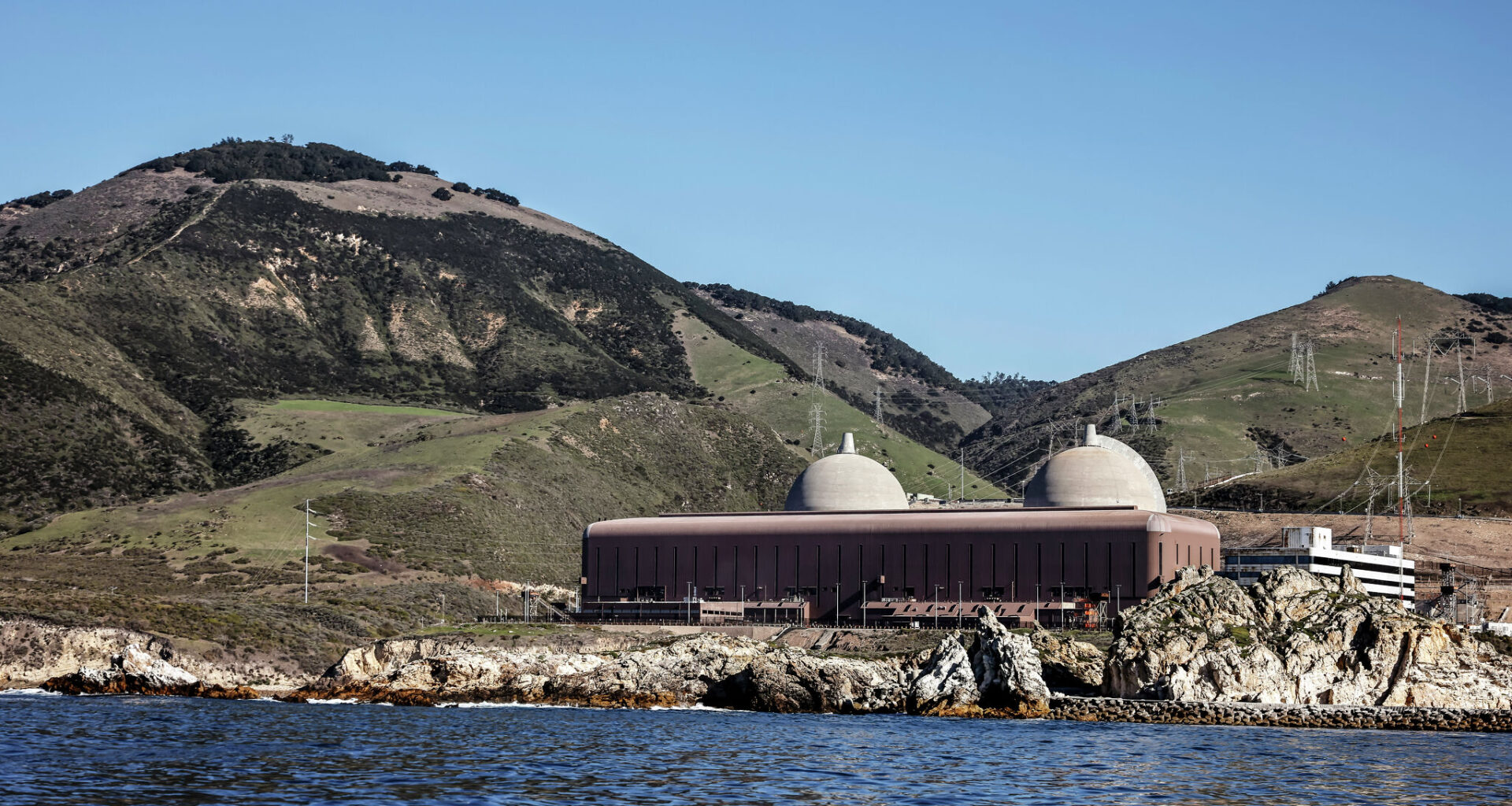
Diablo Canyon near Avila Beach in San Luis Obispo County, pictured last December, is California’s last nuclear power plant. In 2022, Gov. Gavin Newsom granted a reprieve to its decommissioning, and now it could remain open well into the future.
Carlos Avila Gonzalez/S.F. Chronicle
New York Gov. Kathy Hochul recently called for significantly increasing the amount of nuclear energy that flows into the state’s power grid. The announcement came barely a week after Illinois lifted its decades-old moratorium on new nuclear energy. The message from both states is clear: If you’re serious about cutting carbon emissions, making energy bills more affordable, and keeping the lights on, nuclear power must be part of the solution.
California should follow suit by extending the life of Diablo Canyon Nuclear Power Plant to 2045.
Diablo Canyon, California’s last remaining nuclear facility, currently provides 17% of California’s clean, carbon-free electricity. That’s enough to meet the needs of 4 million residents every day. Last year, the federal Nuclear Regulatory Commission announced that the plant, which went online in the mid-1980s, had met the safety and environmental requirements to operate for another 20 years.
Article continues below this ad
The plant also recently cleared two major state regulatory milestones around its extended operations period.
In December, Diablo Canyon received a key permit from the California Coastal Commission through a deal that saw roughly 12,000 acres of pristine coastal lands permanently preserved for public use, environmental stewardship, and cultural resource protection. Last month, the Central Coast Regional Water Board granted the plant a certification under the Clean Water Act, which was the final regulatory approval the facility needed to clear before the NRC is allowed to renew its permit through 2045.
San Francisco Chronicle Logo
Make us a Preferred Source to get more of our news when you search.
Add Preferred Source
However, under current state law, the plant is scheduled to close in 2030.
At a time when we are striving to meet ambitious climate goals, shutting down a source of reliable, carbon-free power would be a costly blunder.
Article continues below this ad
The need for Diablo Canyon is real. Population growth, electric vehicles, and economic growth will by 2040 increase California’s total energy need by over 21 gigawatts, nearly 50% above today’s capacity, according to the California Energy Commission.
Without Diablo Canyon, meeting this demand will almost certainly require spending more money on new, expensive, dirtier energy, locking in emissions for decades and undermining California’s climate goals.
Extending Diablo Canyon is good for energy affordability, as ratepayers will be spared the costs of closing the plant and the expensive new buildouts to replace it. A 2021 study from MIT estimated extending closing the plant could cost ratepayers up to $21 billion. In 2024, the CPUC estimated that extended operations through 2045 could result in annual cost savings as high as $3.7 billion.
Just as important, Diablo Canyon supports California’s broader economic and workforce goals. The plant directly employs more than 1,500 highly skilled workers and supports thousands of additional union jobs across the Central Coast through refueling outages, maintenance, and local supply chains. These are family‑sustaining jobs that cannot be easily replaced by short‑term construction projects or imported power.
Diablo Canyon is also good for energy reliability. Diablo Canyon provides steady, 24/7/365 “always on” power that complements solar and wind and stabilizes the grid. Removing that anchor would risk energy reliability during extreme heat events when Californians need power most.
Article continues below this ad
Without Diablo Canyon, California would risk relying on fossil fuels during peak demand periods, jeopardizing our climate targets. Diablo Canyon results in GHG emissions reductions equal to removing 1.6 million cars off the road. Closing Diablo Canyon inevitably increases the risk that California will need dirtier energy from our neighboring states to meet periods of peak demand.
For a cautionary tale, look no further than Germany. After phasing out its nuclear power plants, Germany was forced to rely on coal and natural gas to meet its energy demands. Clean energy fell from 94% of Germany’s grid to just 61%, and costs increased 23%. German Chancellor Fredrich Merz last month said phasing out Germany’s nuclear power plants was a “serious strategic mistake.”
Preserving Diablo Canyon would send a clear message that California is serious about achieving a carbon-free future. The alternative, closing the plant and backfilling with fossil fuels, would be a step backward for affordability, the environment, and the economy. Without action this year, fuel procurement timelines could result in unnecessary costs and service disruption beginning in 2030.
Opponents say renewables and battery storage will quickly replace Diablo Canyon. California must keep building renewables — but wishful timelines are not energy policy. Replacing one of our largest sources of carbon-free, 24/7 power requires transmission, permitting and storage deployment at speeds California has never sustained. If we get that math wrong, even temporarily, the grid won’t run on good intentions — it’ll run on natural gas.
Guest opinions in Open Forum and Insight are produced by writers with expertise, personal experience or original insights on a subject of interest to our readers. Their views do not necessarily reflect the opinion of The Chronicle editorial board, which is committed to providing a diversity of ideas to our readership.
Read more about our transparency and ethics policies
The Legislature has the power to act. Extending Diablo Canyon’s life beyond 2030 is not just about energy, it’s about ensuring California meets its climate commitments while keeping the lights on, and bills as low as possible, for millions of residents and businesses.
Article continues below this ad
Let’s keep Diablo Canyon running.
John Grubb is interim president and CEO at the Bay Area Council, the voice of the San Francisco-Silicon Valley Bay Area’s largest companies.Vidya Schalk is a faculty member in the BioResource and Agricultural Engineering Department at Cal Poly San Luis Obispo and serves as the faculty advisor for the Nuclear is Clean Energy (NiCE) student organization.