
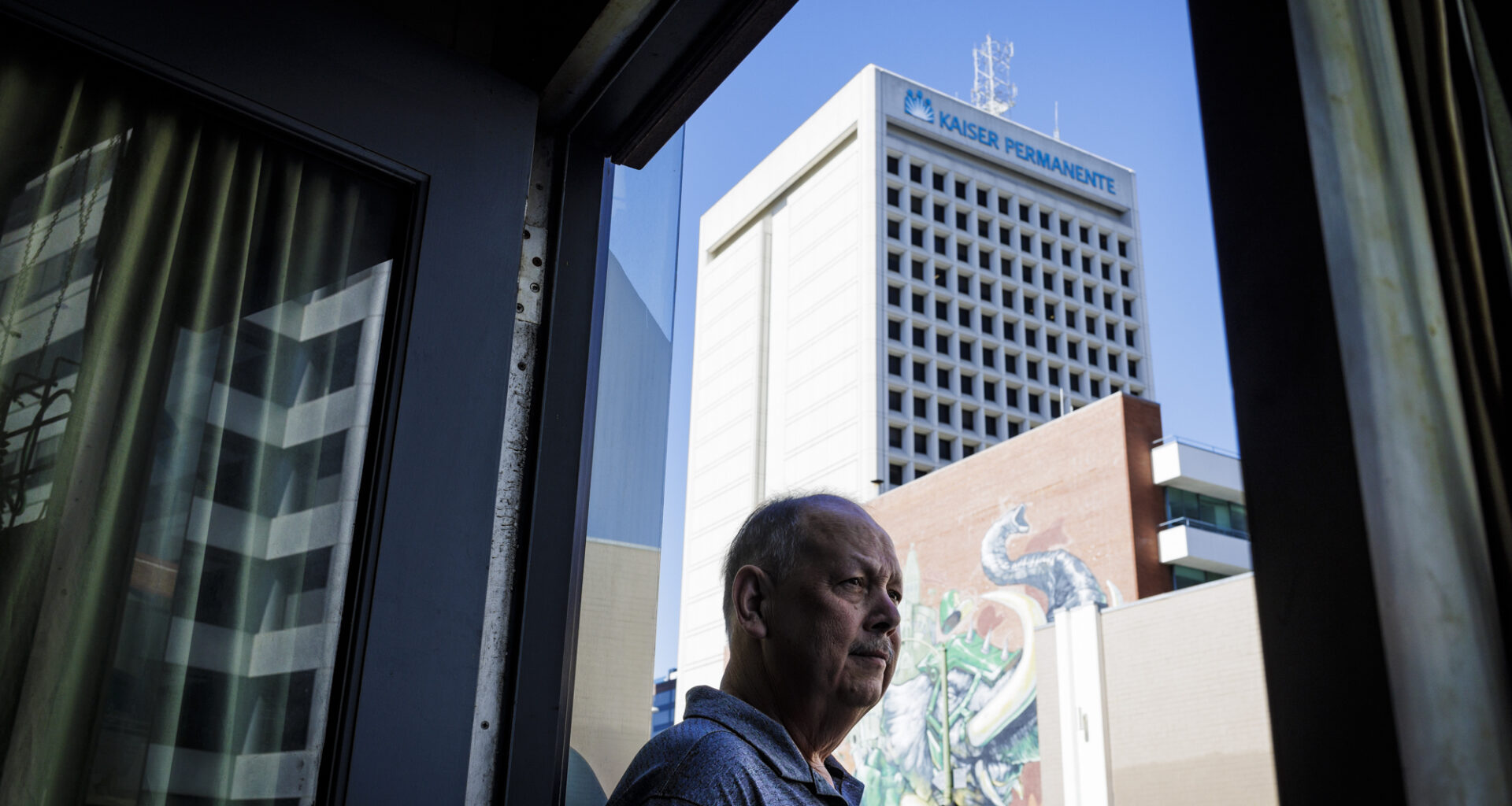
Mejia arrived in Oakland from Sacramento in 1970. By January 1992, he opened his 19th Street Station, a bar in the heart of downtown.
“ I fell in love with Oakland,” Mejia said. “It was a beautiful city back then.”
For decades, his bar had thrived on a stream of Kaiser Permanente employees who worked nearby.
 Roy Mejia tends bar at 19th Street Station in Oakland on March 16, 2026. Mejia says he’s able to keep costs down by not employing others to work at the bar. (Martin do Nascimento/KQED)
Kaiser Permanente — long one of downtown Oakland’s largest employers — has been steadily shrinking its local office presence in recent years.
The health care giant has relocated workers to suburban offices, reduced its real estate footprint and laid off hundreds of employees across California, changes that economists say are contributing to quieter streets and struggling small businesses in the city’s core.
Kaiser Permanente, once an anchor of downtown Oakland’s office workforce, has in recent years pulled workers out of the city’s core.
In 2024, Kaiser relocated over 1,000 members of its Oakland workforce to a suburban hub, citing “changes in how and where employees have been working since the COVID-19 pandemic.” Not too long after, they issued a memo directing downtown Oakland employees to stay inside for lunch due to safety concerns.
And in 2025, Kaiser laid off over 400 employees across 16 California counties. Alameda County — home to Oakland, the company’s national headquarters, and the Kaiser Pleasanton campus — accounts for nearly half of these layoffs.
But in a written statement, a spokesperson from Kaiser said that it “remains committed to the City of Oakland, which is an integral part of Kaiser Permanente’s history and future.”
The layoffs coincided with Kaiser’s decreasing real estate footprint in Oakland, a trend that followed the COVID-19 pandemic. In 2020, the Kaiser Center at 300 Lakeside Drive was sold to TMG Partners, and Kaiser terminated their occupancy in the building.
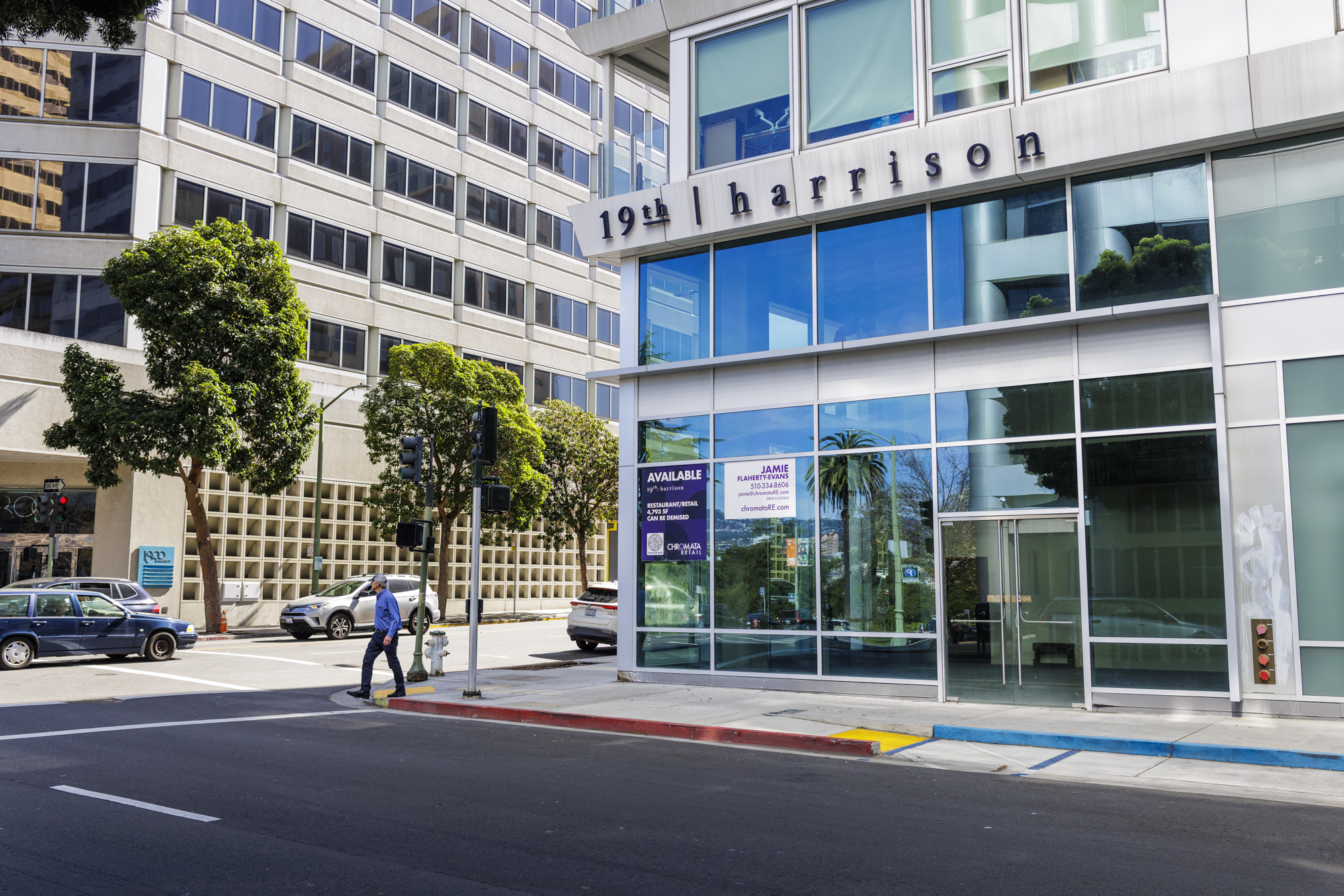 An empty storefront at 19th Street and Harrison Street in Oakland on March 16, 2026. (Martin do Nascimento/KQED)
Similar acquisitions happened in 2024: Kaiser’s 2000 Broadway building was sold to BART, the office tower and garage on Franklin Street went to Behring Companies, and 10% of Kaiser’s Oakland-based employees were moved to Pleasanton.
An SEC filing shows that in January 2025, Kaiser extended its lease for 236,692 square feet of the Ordway building through 2027. The space, listed as Kaiser’s corporate office on Google Maps, is down from the 366,000 square feet that Kaiser occupied in 2024, according to the San Francisco Chronicle.
“The broader health care sector remains one of Oakland’s few stable pillars supported by the presence of hospitals, clinics and social service providers,” said Christopher Skerritt, an economist at Kincaid Wolstein. “But office consolidation and telehealth adoption have limited in-city job growth.”
As a result, big cities like Oakland and San Francisco are losing commercial real estate to suburban hubs like Pleasanton and Walnut Creek, which have seen comparatively faster rates of economic recovery since the pandemic, according to Skerritt.
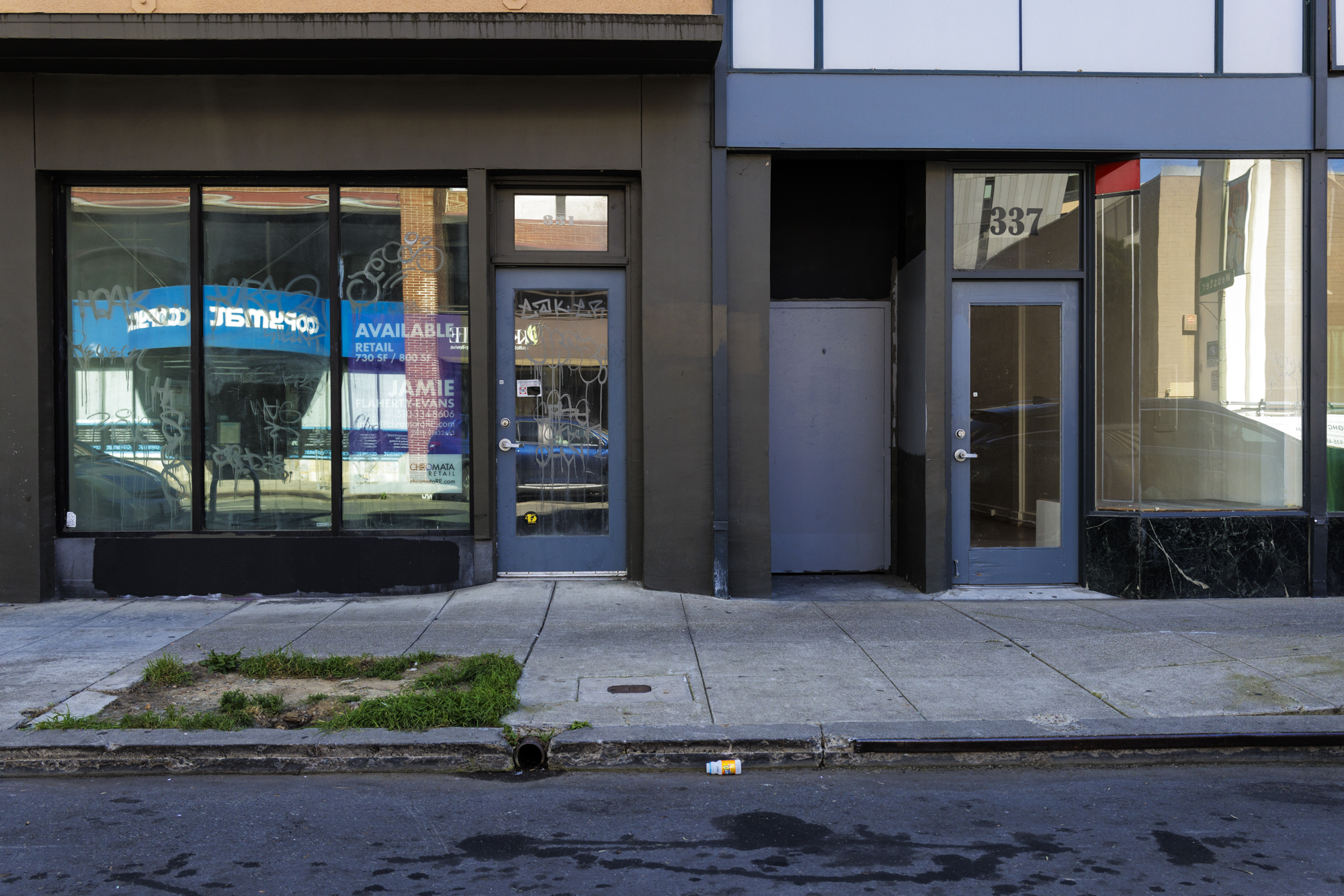 Empty storefronts along 19th Street in Oakland on March 16, 2026. (Martin do Nascimento/KQED)
Many of the health care workers who remain in the city are remote or hybrid employees, Skerritt said, a change that, combined with Kaiser’s downsized office footprint, has contributed to downtown Oakland’s quieter streets.
“The shift has cut daytime population density, reducing spending at restaurants, coffee shops, small retailers that depend on office workers for business,” Skerritt said.
Small businesses in downtown Oakland have felt these effects. Tierra Mia Coffee, a six-minute walk from 1 Kaiser Plaza, has “most definitely” seen a drop in business since early 2024, according to its supervisor, Odiseo Castrejon.