
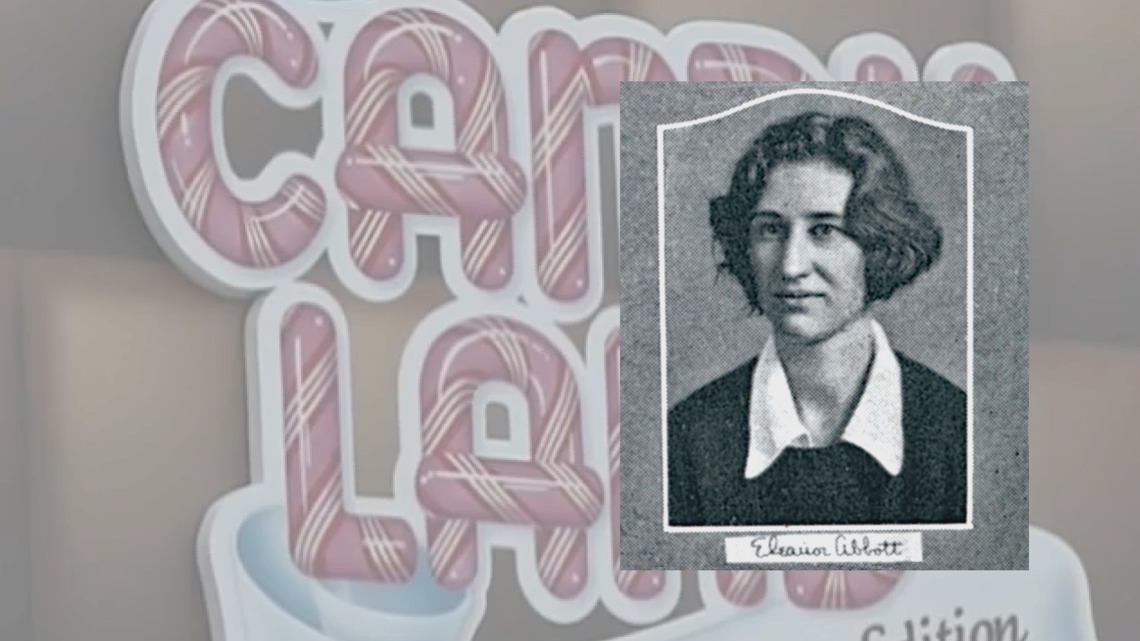
In a Talmadge bungalow, San Diego resident Eleanor Abbott turned the heartbreak of a 1930s polio ward into Candy Land—and a new quest to finally tell her story.
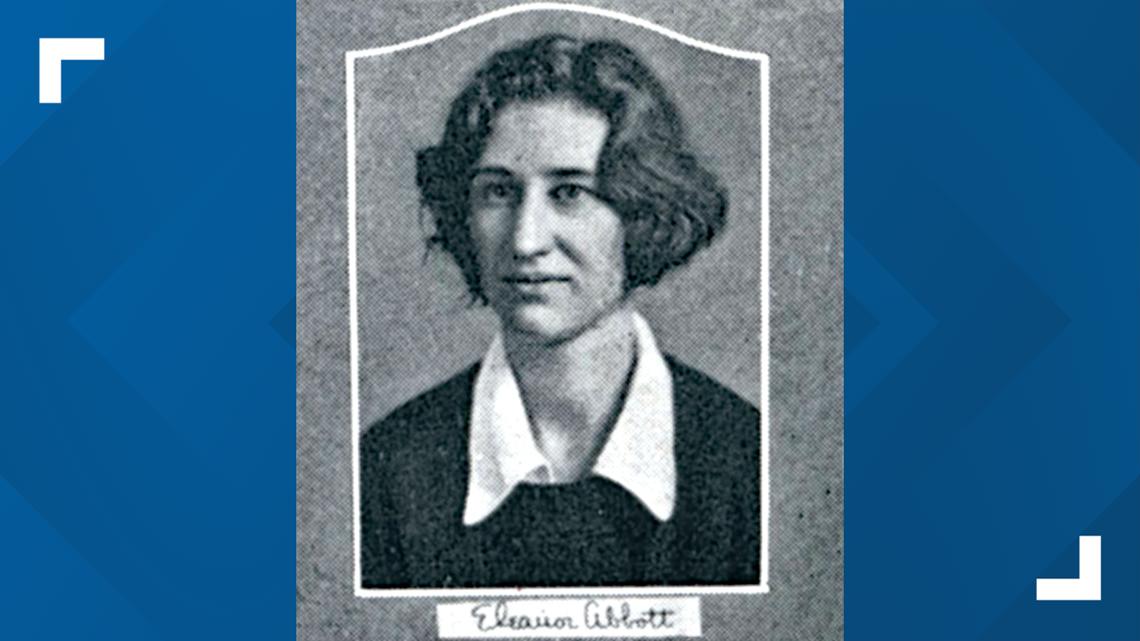
SAN DIEGO — Whatever it was that 38-year-old Eleanor Abbott heard and saw in the San Diego polio ward in 1948, whatever visions she took home of the lonely children confined to beds or inside iron lung ventilators had a monumental impact on her.
That impact compelled Abbott to dream up ways to bring some level of joy to the children she saw and heard during her time in the polio ward.
When she returned home to the tiny 900-square-foot Craftsman bungalow she shared with her younger sister in San Diego’s Talmadge neighborhood, Abbott rolled out a long sheet of butcher paper and took the first steps toward creating one of the world’s most popular and enduring board games, which she called Candy Land.
Abbott took what every kid loved, candy, and allowed children to journey through a candy-fueled world, all with the final goal of returning home.
Abbott brought the prototype back to the polio ward, and it was a hit.
Not long after, Abbott pitched the game to Milton Bradley, who published it shortly after.
Now, 78 years later, authors and friends, Sandra Miller and Margaret Muirhead, are on their own Candy Land-inspired quest to tell the little-known story of Eleanor Abbott and her creation of one of the world’s most popular board games in the living room of a tiny Talmadge home.
Unearthing the origins of Candy Land
The task seemed simple enough: Find out how one of the most widely-known board games was created. Doing so could be the beginning of what would become children’s book author Margaret Muirhead’s newest picture book, similar to her book ‘Flip!’, which told the story of how the Frisbee was created.
To help, Muirhead got the help of her friend, neighbor, and novelist, Sandra Miller.
It took one internet search for Miller and Muirhead to discover that telling Candy Land’s creation story would not be so easy.
The search revealed that San Diego resident Eleanor Abbott created the game in 1948 for kids in a polio ward, but that was essentially all the information available.
“There’s very little information about her. Part of that is because she had a very small social circle and a small nuclear family,” Muirhead told CBS 8. “She lived with her sister for almost her entire life, and neither of them had children, so there wasn’t like the story that had been passed down with information about this game and this woman.”
The missing pieces inspired Miller and Muirhead.
“It was daunting, but also exciting,” added Miller. “We thought nobody is around to continue this woman’s legacy or share her story. So what if we’re the ones to carry her torch and tell Eleanor Abbott’s story?”
In 2019, hampered by an entirely different pandemic that inspired Abbott to create the children’s board game, Miller and Muirhead began researching and hit a dead end.
“We slowly realized absolutely nothing was known about this woman,” said Miller. Margaret [Muirhead] went deep on the genealogy front, and she started to trace her path from Canada to Colorado to California. Ultimately, she landed in San Diego.”
Then, the authors drew a card they were looking for.
A Call to a Talmadge Home
Miller and Muirhead finally tracked down Abbott’s last known address, a small cottage on the 5000-block of Monroe Avenue in San Diego’s historic Talmadge neighborhood.
Muirhead dialed the phone number associated with the homeowner at the time.
“The person who lived there picked up,” recalled Muirhead. “She didn’t know anything about Eleanor Abbott, but was super friendly, super curious, and very charmed by the fact that her family was living in the home where this amazing woman who created this incredible game lived.”
In a strange and unexpected turn, the woman who answered Muirhead’s call was a young mother who just so happened to be this writer’s wife.
The home where Abbott lived, created the game, and later died was the one we had purchased just a few years before Muirhead’s call.
Muirhead asked my wife and me whether we knew that Abbott had lived in the home and whether we knew she had created Candy Land inside it more than 60 years earlier.
I did, however, know recently-retired investigative journalist Paul Kreuger, who also lived in the neighborhood and may be able to help track down neighbors who knew Abbott.
Miller and Muirhead hired Kreuger. The longtime journalist-turned community advocate quickly got to work.
Putting the Pieces Together
Soon, the pieces of Candy Land’s origins began falling into place.
“We were excited because now we had somebody to do on-the-ground research in San Diego, which we weren’t able to do because of the pandemic,” said Miller.
Kreuger soon found Abbott’s will, which revealed that Abbott died with a fortune in the bank, all from Candy Land royalties.
Despite the windfall, the authors learned that Abbott stayed in the small cottage she shared with her younger sister and would eventually die there, heartbroken, forty years after creating the board game.
“Paul [Kreuger] went for it, and he started pulling papers very quickly. He pulled the will, which listed a dozen or so people she had left small sums of money to,” said Miller. “She had died with $1.8 million in the bank from Candy Land royalties, which is astounding in 1988 that a single woman made this basically royalty money, passive income. So she left some of her money to these friends, people who helped and supported her over the years. She also left a fair amount to religious organizations.”
Armed with names of Abbott’s beneficiaries, Miller and Mjuirhead, with Kreuger’s help, started digging.
Who was Eleanor Abbott
They soon learned that Abbott lived a humble life, caring for her sister, her neighbors, and the community she lived in.
“For somebody who earned so much money, it did fit with what we got to know about her, which is that she was humble, that she enjoyed living a small life and giving her money away. That was her happiness,” said Muirhead. “She said, ‘This is my great happiness, to give my money away,’ so she didn’t want to live in some big house.”
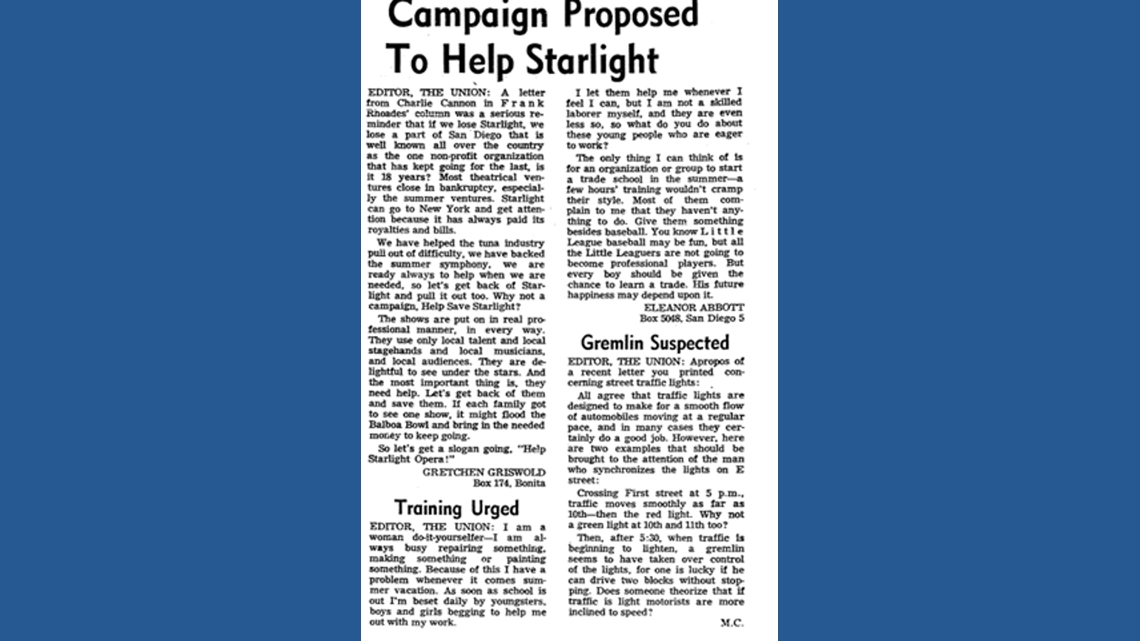
While living a quiet and humble life, Abbott’s desire to help younger people and her community was further evidenced in an August 1963 letter to one of San Diego’s daily newspapers, The San Diego Union.
In her letter, Abbott asked for an organization to step up and provide training to the young kids in Talmadge and throughout San Diego.
“I am a woman do-it-yourselfer, I am always busy repairing something, making something, or painting something,” wrote Abbott. “As soon as school is out [for summer], I’m beset by youngsters, boys and girls begging to help me out with my work.”
Abbott wrote that she would let them help from time to time, but she did not have enough jobs, and there were better ways for them to spend their free time. She asked for an organization to step up and start a summer trade school to help put young people on a career path.
“You know, Little League baseball may be fun, but not all the Little Leaguers are going to become professional baseball players,” Abbott wrote. “But every boy should be given the chance to learn a trade. His future happiness may depend on it.”
Aside from the letter to the San Diego Union, Miller and Muirhead discovered that Abbott lived a quiet life, was active in her church, doing odd jobs around Talmadge, and babysitting a neighbor’s son. Abbott later named the boy one of her beneficiaries.
Miller and Muirhead found him, and he provided even more information about Abbott.
“She always wore pants and never, never a dress,” the authors found out. “She carried a pencil around because she was always doing the crossword. She did the daily crossword, and so she always had a little pencil stub in her pocket, which we loved hearing that detail. It helped us to picture her. She clearly had a very busy mind, a very active mind, that kind of, as we said, do-it-yourselfer personality. She wasn’t content to sit around the house, and she was very down-to-earth. She got things done.”
Heartbroken: Abbott’s 1988 suicide
Abbott and her sister Betty lived in the same Talmadge home through the 70s and into the 80s. Muirhead and Miller say tragedy struck.
Around 1987, Abbott’s sister, and longtime roommate, Betty, died. Miller and Muirhead are still unsure just how or what Betty died from.
Eleanor, they say, was heartbroken.
In 1988, Abbott killed herself by asphyxiation, inside the home she shared for decades with her sister.
Muirhead and Miller say they were devastated to learn that the woman they had been researching, who created a game to ease the pain for young children in the polio ward, died alone.
“We saw the cause of death as suicide on her death certificate, and we were gasping,” said Miller. “It was almost as though we’d lost a friend in a very tragic way. We did not expect this. It was heartbreaking for us to think that this was the end of her life, and at the same time, she controlled it; she controlled her death, just as she seemed to control her life.”
Abbott’s tragic end, says Miller, does not overshadow who she was as a person, a strong, independent woman who tried to make the world better for those in need.
“Her legacy is this very beautiful, whimsical game that 75 years later, children are still taking so much joy in, so she has given so much joy to children, that that is really her legacy, and which so overrides her tragic death.”
On March 13, Muirhead and Miller began sharing Eleanor Abbott’s story, with the goal of giving Abbott the credit and recognition she deserved, despite spending so many years trying to avoid it.
Muirhead and Miller published two articles in the New York Times. They are now moving forward with a children’s book about Candy Land and its creator, titled “Candy Land Lady Eleanor Abbott and the Surprising Story of the World’s Sweetest Game.”