
 3 min read
I still remember my first days in Los Angeles. I was young, newly arrived from Venezuela, and entrusted with the enormous honor of stepping into a fresh chapter with the Los Angeles Philharmonic. I could not have known then how deeply this city would shape me, but even in those early days, I sensed something familiar in its energy—and how seriously this city takes the idea that culture belongs to every neighborhood, every family, and every young person imagining their future.
Seventeen years later, I stand by my initial impression. The city is often described as fragmented, yet I have experienced it as profoundly interconnected. Each community carries its own history and identity, but none exists in isolation. They influence one another: languages overlap, traditions are preserved and reinterpreted. What may appear scattered from a distance reveals a network of relationships and shared momentum. It has all defined how I think about what a cultural organization can be in a city like Los Angeles.
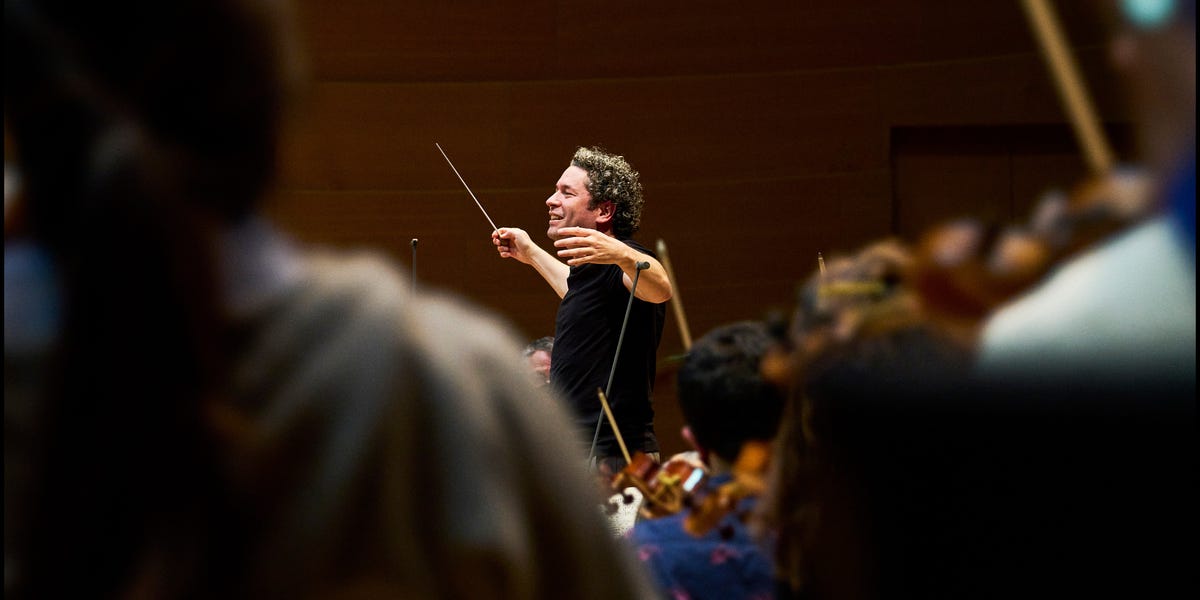
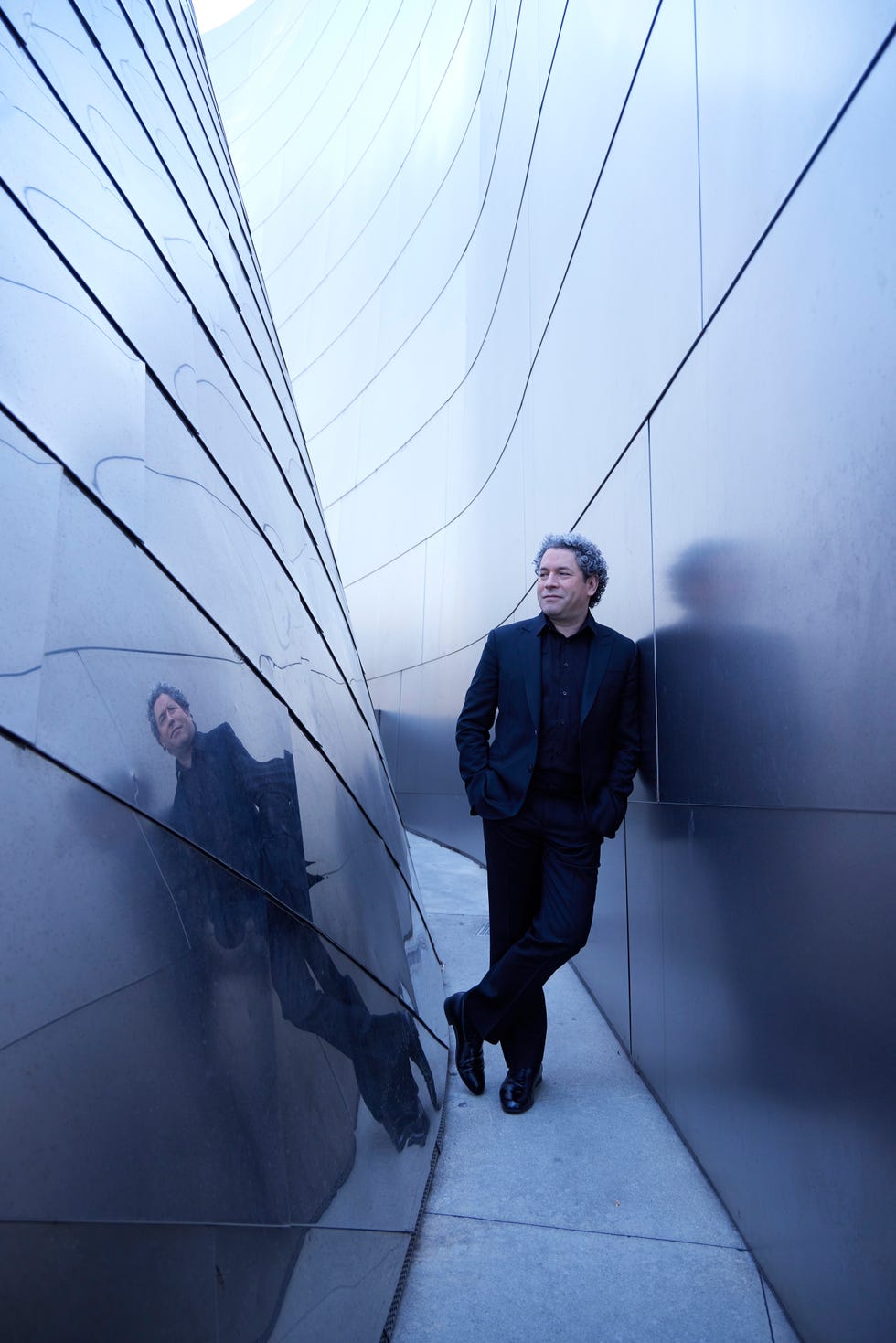
When I first stood before the orchestra at Walt Disney Concert Hall, I felt both a sense of duty and possibility. Frank Gehry’s design is unmistakably bold, but what has always moved me most is how human the space feels once you are inside it. Over the years, my friendship with Frank became one of the great gifts of my life here. He understood this city intuitively—its appetite for risk, its refusal to be conventional, its solidarity. The hall feels like Los Angeles itself: surprising and dramatic from the outside, but incredibly welcoming once you step in.
Danny Clinch
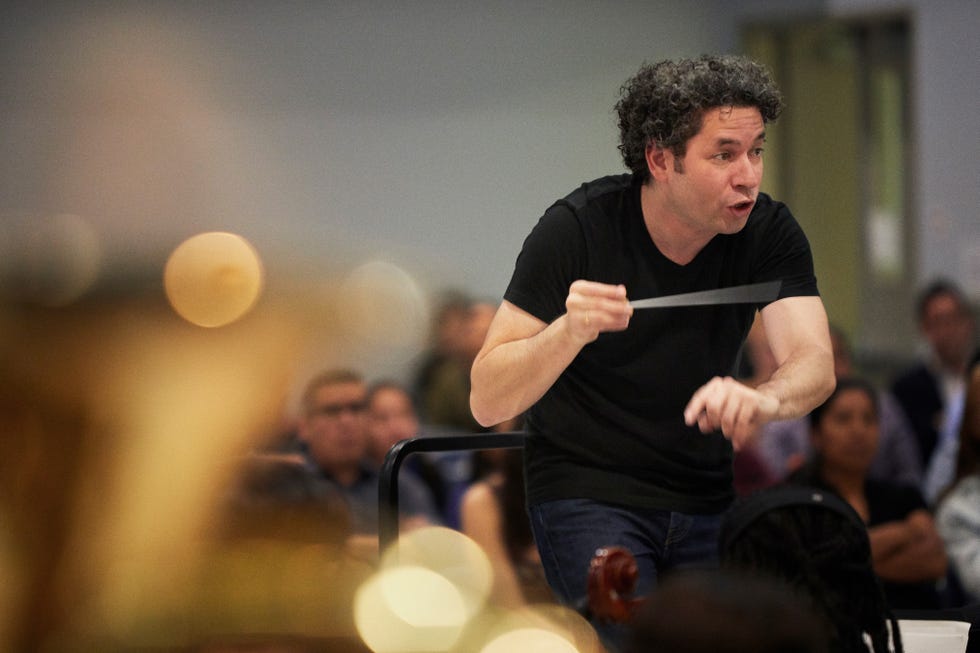
It has been one of my central goals over these 17 seasons to ensure that this welcome is not strictly symbolic. Together with the musicians of the orchestra, our education and community teams, and our partners across the city, we have worked to help more Angelenos see Walt Disney Concert Hall as their home—while bringing the orchestra’s music far beyond its walls. This has meant expanding how and where we play, strengthening long-term investments in young talent, and building relationships that allow music to live beyond the stage. The goal has never been simply to perform for Los Angeles, but to create something lasting with Los Angeles.
“The city is often described as fragmented, yet I have experienced it as profoundly interconnected.”
My understanding of the city was formed as much outside the concert hall as within it, from eating at In-N-Out after rehearsal, to going to Guisados with friends, to stopping at Honey Hi for a smoothie before a long day. These places became their own stages, where daily life unfolds and conversations flow between languages and generations. It’s in such small, ordinary moments that you begin to understand how Los Angeles sustains itself through community, routine, and common spaces that bring very different people together.
The music we create is inseparable from the city around us. The discipline, the diversity, the optimism, the late-night meals after concerts, the early mornings before rehearsal—all of it shapes the sound. When we perform, we carry the voices of students, families, neighborhoods, and generations of Angelenos who believe that music should be part of everyday life, not be something distant or unattainable.
Danny Clinch
As the concert seasons have passed—along with the seasons of my own life—I have witnessed audiences change alongside the city itself. I have watched young musicians grow into leaders. I have seen how long-term investment in music education can alter not only individual lives, but the cultural future of a city. Through it all, L.A.’s generosity of spirit has been the one constant.
I feel gratitude for these years. Los Angeles did so much more than host an early chapter of my career. It embraced me, my family, my friendships, and my growth. It allowed me to belong without expecting me to surrender where I came from. And looking ahead, I carry these lessons with me. Music has the power not only to reflect a city, but to influence it. I believe deeply in the responsibility to serve not only audiences in the hall, but communities everywhere. In a city as large and complex as Los Angeles, that work is never finished—and that is part of what makes it meaningful.