
Nick Shuford gets a cut at The Shop inside Glide Memorial Church. | Source: Morgan Ellis/The Standard
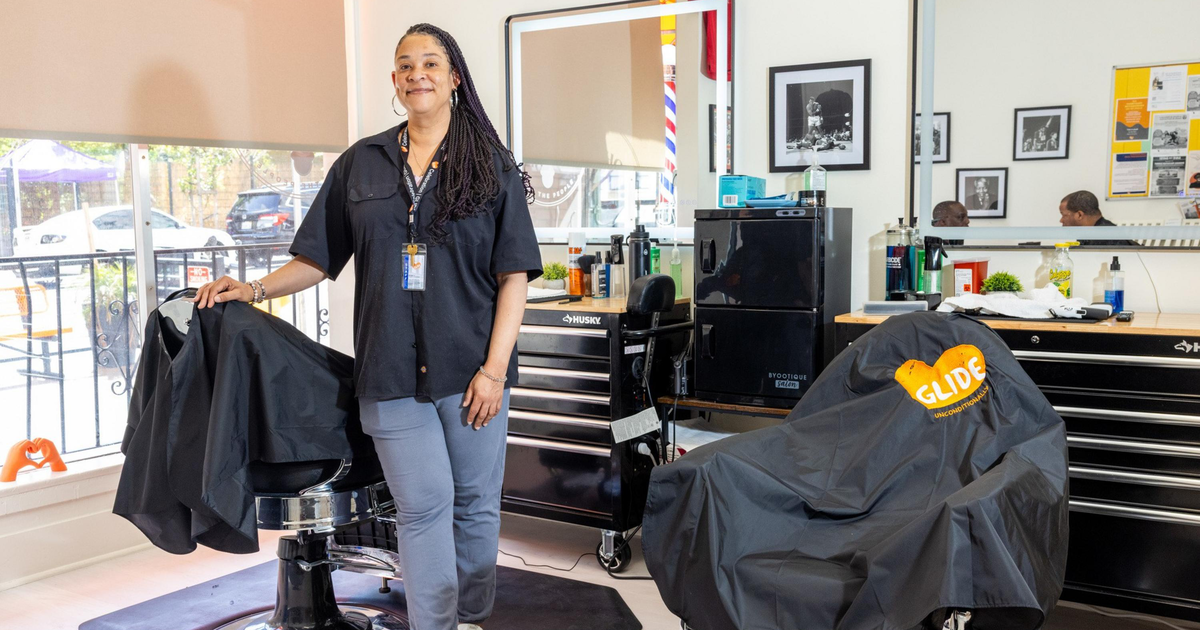
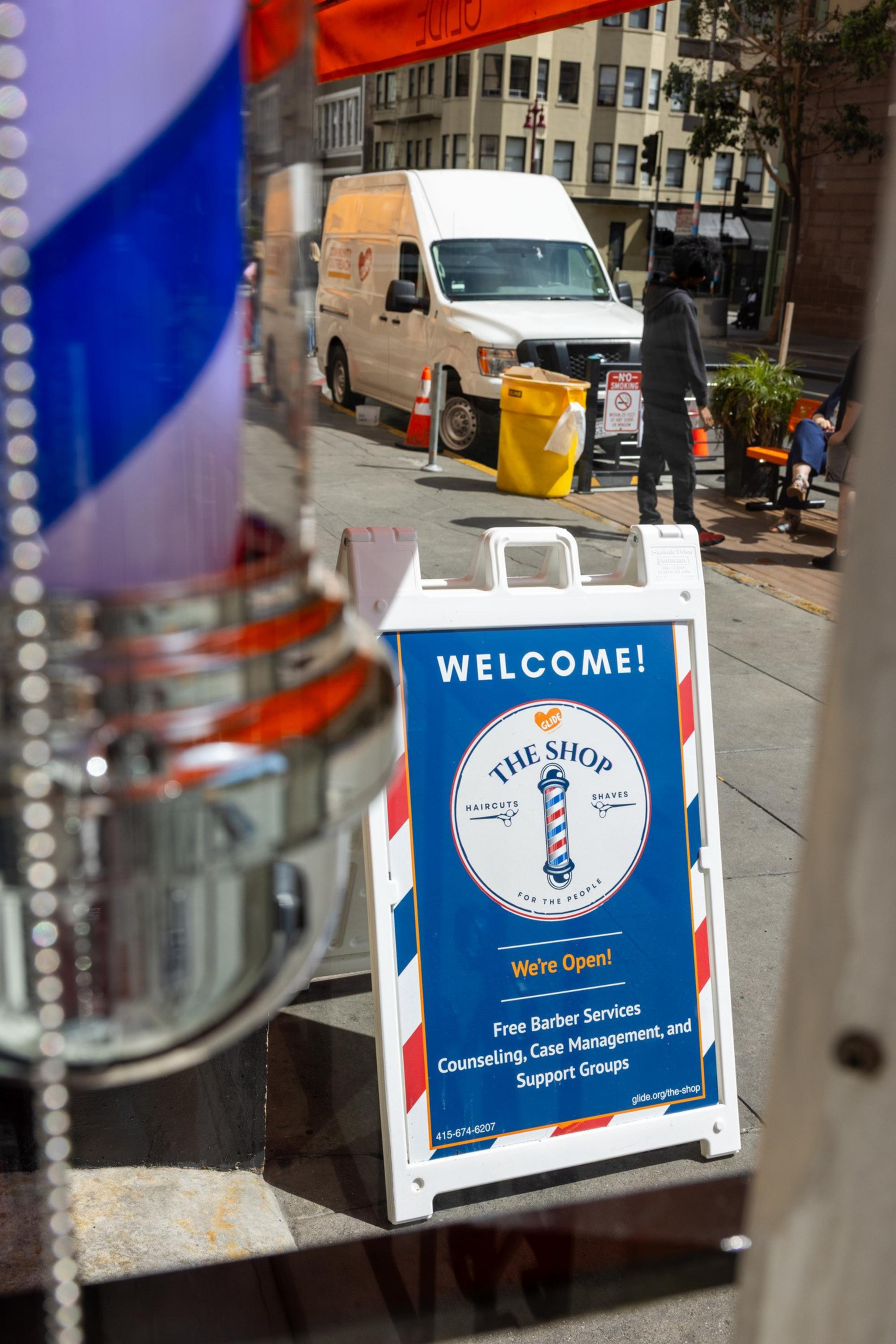
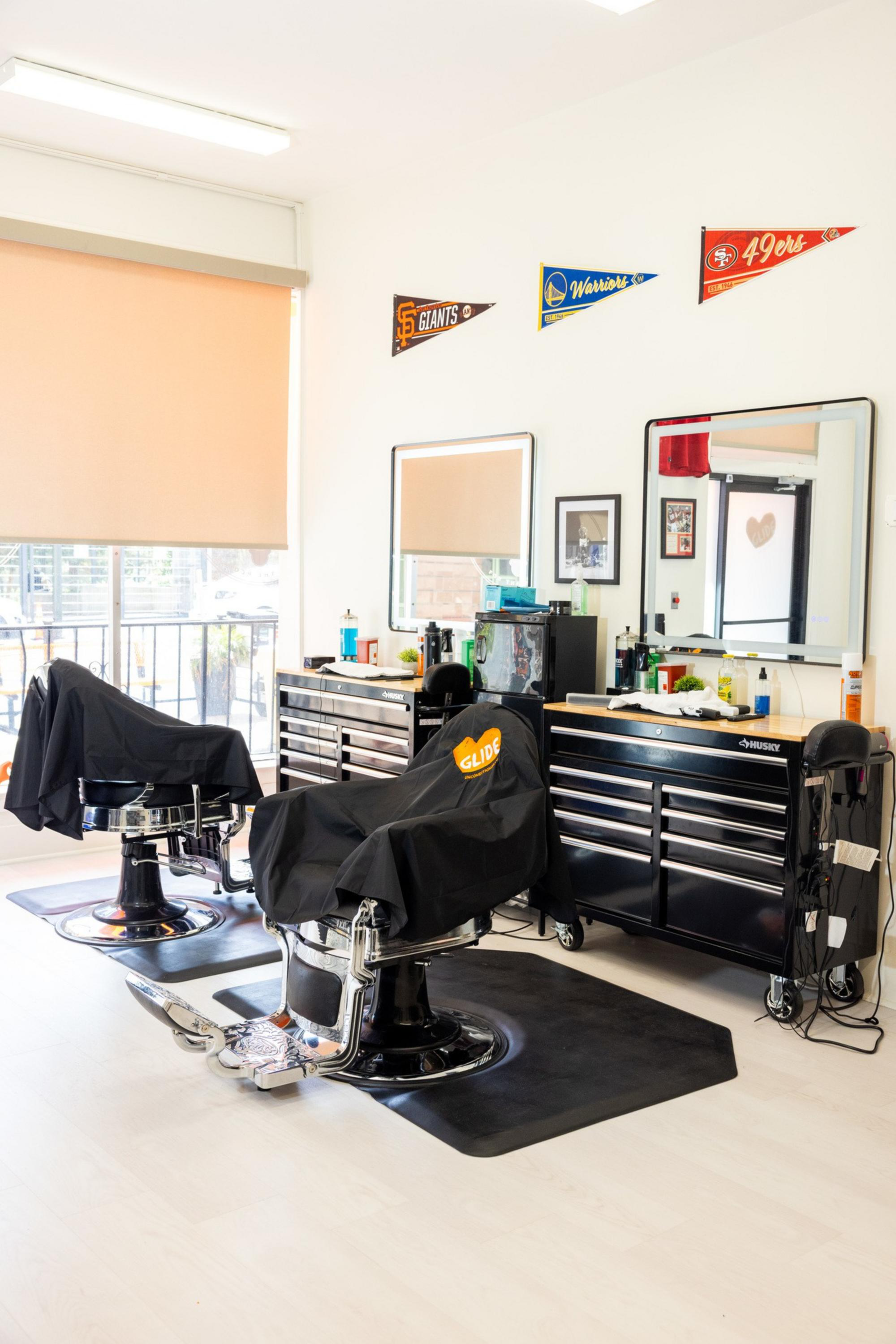
The barber pole spins outside a storefront on Ellis Street in the Tenderloin, visible from the sidewalk through floor-to-ceiling windows. Inside, clippers hum. Music plays low. Men waiting for cuts fall into conversation with strangers.
The Shop, which opened this month, is the centerpiece of a strategy to reach a cohort of older Black men in one of the city’s most underserved neighborhoods — a population dying from opioid overdoses at disproportionate rates — by meeting them in a space where they have always felt comfortable talking.
“It may look like you’re just getting a haircut,” said Jason Finau, senior director of health and clinical services at Glide. “But everyone here is trained to pick up on both the verbal and nonverbal.”
The shop grew out of a public health crisis hiding in plain sight. Data from the San Francisco Department of Public Health show that Black men over age 50 represented 12% of all overdose deaths from 2020 to 2024, even though that segment accounts for less than 1% of the population. That means they die from drug overdoses at five times the citywide average.
Additional data from 2025 (opens in new tab), although not broken out with similar specificity, show that the cohort still accounts for a disproportionate share of drug deaths. Glide leaders and city health officials began asking what it would take to reach them.
Their answer drew on a model tested in several (opens in new tab) cities (opens in new tab) and towns (opens in new tab), where barbershops had partnered with universities and medical schools to deliver health outreach in spaces where Black men already felt at ease.
But Glide wanted to go further — not sending providers into barbershops but building one inside a trusted community institution, staffed by licensed barbers trained as health advocates and backed by on-site behavioral health resources.
The Shop’s ribbon was cut March 5, with San Francisco-born actor Danny Glover in the inaugural chair. Since then, it has operated Tuesday through Saturday, with Mondays reserved for men’s groups and clinical programming.
Opened in early March, The Shop offers professional barber services, as well as health education and connection to Glide’s other resources.
 Bridget Gillum at her haircutting station. “It’s extremely rewarding and satisfying to know that the resources are here,” she says.Where care meets the chair
Bridget Gillum found the job the way a lot of people find things that turn out to matter: She was looking for something else.
She had been browsing Glide’s website when she noticed a listing for a barber position described as a free grooming service for a marginalized population, and she felt the pull immediately.
In the chair, she said, a quarter-century of technique is only part of what she brings. The more essential skill, she said, is listening.
She described the satisfaction of knowing that when a client’s story surfaces something heavier than a style preference, support is within reach — not down the street, not a referral to call later, but through a door a few feet away.
“I’ve worked in other depressed communities before, and it was somewhat heartbreaking to be able to do everything I could in the scope of my professional capacity but then have to turn away that person, knowing that they had serious health or unhoused issues,” she said. “It’s extremely rewarding and satisfying to know that the resources are here.”
 Michael Diles, who has experienced homelessness, at his haircutting station. “I understand how it feels,” he says. | Source: Morgan Ellis/The Standard
Michael Diles, the shop’s other barber, has been licensed since 2018 and renting booths independently in other barbershops. Glide’s job listing resonated with him because he had experienced homelessness himself.
“I’ve been in this situation,” he said. “I understand how it feels.”
Diles acknowledged that the work presents challenges that a conventional barbershop does not. Clients arrive carrying trauma, active addiction, the accumulated weight of years on the street. Some days require a different kind of steadiness.
“This type of job can be challenging because of just the different types of personalities,” he said. “You have personalities that are kind of tainted because of what they’re doing on the outside. You have to know how to deal with that.”
What grounds him, he said, is proximity — both to the need and to the resources available to meet it. Diles recently received a housing voucher through the San Francisco Housing Authority and now lives seven minutes from the shop.
Some customers pop in off the street and request an appointment. Others get invited for a haircut after first accessing other Glide services. But before anyone reaches a barber, they sit down with Sababu Rountree.
Rountree is the shop’s peer support specialist and substance-use disorder counselor — the first person clients encounter when they walk in. He conducts a brief intake and introduces them to Glide’s menu of services: housing navigation, substance use recovery, employment readiness, and mental health connections.
“For so long in the African American community, it was taboo to say that you had a mental health issue,” said Rountree, a San Francisco State University social work student. “So when I hear that they want help, while they’re getting their hair cut, I’m already trying to navigate and talk to behavioral health. I’m trying to get them seen today, before they walk out that door.”
Shorn again
Last week, Luis Jimenez, 29, settled into the barber chair, hoping to trim and tighten up his mid-length mane, tangled in part from tugging at it during stressful moments.
“I haven’t had the money. It was really convenient to have it right here. I got a free meal, you know? God bless them,” said Jimenez.
“It’s been a little bit depressing, man. I was a little bit down in the dirt, but it’s been a little better now.”
On Thursday, Nick Shuford got a haircut — his first in a long time, he said — and when he looked in the mirror, something shifted. He said he felt good — a lot better.
Before he could say much more, he was heading down the sidewalk toward clothing that the Glide team had helped arrange for him. Staffers watched him go.
“Once he looked in the mirror,” one observed, “he was ready.”
What the window shows
From the chair, facing Ellis Street through The Shop’s glass front, the view is the same for both barbers, every shift.
“There’s a great need,” Gillum said. “And the need is immense.”
She said she and Diles are frequently overrun with clients, and the country should be paying attention.
“This model should spread to other communities that are in desperate need,” she said. “There’s no shortage of work.”
Glide aims to have served at least 100 Black men over 50 by the end of June — with the secondary goal of connecting at least half to some form of treatment. Staff are tracking every referral and following up, addressing barriers as they come: transportation, anxiety, logistics.
Rountree said he already knows it is working, not because of any numbers but because of what he has seen.
“They may look disheveled when they come in,” he said. “They may be distressed. But when they leave here — after a fresh haircut, after hearing about services, after having someone listen — they’re hopeful.”