
Allegations of sexual abuse have undermined the character of Cesar Chavez, polluting the patrimony of a prominent figure in the history of California.
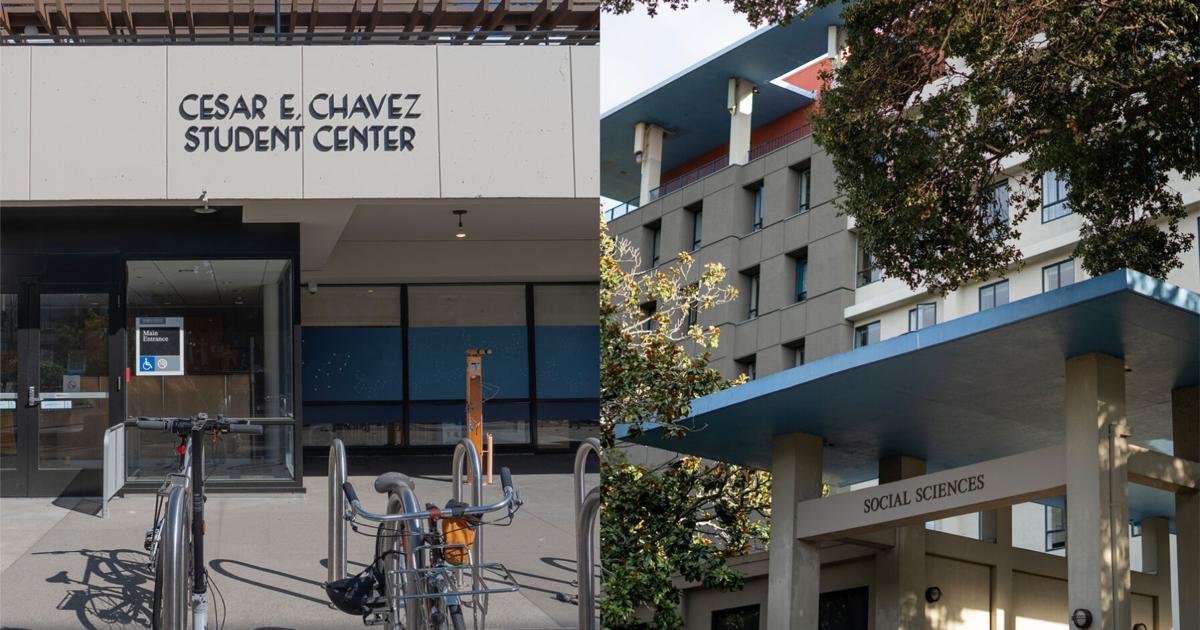
Such a startling revelation — that a champion of nonviolence violated women, that a pioneer of progress was so morally backwards — has forced institutions and leaders across the nation to reckon with the fact that so many buildings, monuments and titles honor the disgraced Chavez. Even here, at UC Berkeley, stands a complex dedicated to his name: the Cesar E. Chavez Student Center.
Eternalized landmarks on campus should not honor those who victimized the very populations UC Berkeley serves. It is therefore necessary that UC Berkeley rename the Cesar Chavez Student Center.
The denaming of Boalt Hall and LeConte Hall over the past decade reflects this necessity: The controversial legacies of the halls’ namesakes, just like that of Chavez now, contradicted “UC Berkeley’s mission and values” and thus justified the erasure.
The foregoing constitutes an argument for renaming the Cesar E. Chavez Student Center — it is not a very complex one, for it is rather uncontroversial that reprehensible men should not be revered. The governor of California has already acted by renaming Cesar Chavez Day as Farmworkers Day. UC Berkeley as both an institution and community now has the opportunity to reflect on whom the university honors with namesakes on campus.
When the conduct of a building’s namesake makes them unfit to be honored, an institution must rename the building to honor someone who uplifts the same community the former namebearer attempted to represent. When discussing the renaming of the student center, campus faculty urged,“this renaming must not become an opportunity to erase Latinx spaces or contributions.”
But the Cesar Chavez Student Center is not the only sore thumb on campus. The controversy of honoring Chavez’s name joins a list of spaces on campus whose very names are an affront to UC Berkeley’s female, Black and Latine communities. Among the more flagrant of these is the Social Sciences Building, which should be renamed with the same consideration as the Cesar E. Chavez Student Center.
The Social Sciences Building acquired its unexceptional name after removal of the name of David Prescott Barrows, a racist and imperialist former UC president, from the building. Though the building has been denamed, the issue of whom a building’s name honors remains.
The “social sciences” are to be studied at the university, not honored; the “social sciences” emphasize the abstract findings of an academic discipline rather than the legacy of a noble, impactful human being.
As we know it now, “Cesar Chavez” is the name of a rapist, not a hero; “Cesar Chavez” hurt the women of the Farmworkers’ Movement, and the burden of being an upstanding advocate of the Latine community is not one he truly carried. For as long as the Student Center remains attached to Chavez’s name, the university remains flagrant disrespectful of both women and the Latine community.
But it should be recognized that it is similarly offensive to substitute a problematic namesake for the most unremarkable, insubstantial title imaginable. This substitutes footsteps of forward progress for a self-serving avoidance of scrutiny. Opting for denaming, rather than renaming, of the Social Sciences Building suggests that campus was also not concerned with the advancement of the Black students it serves; rather, it was simply concerned with being relieved of responsibility for a history of anti-Blackness.
There is truly no reason this must be the case. For the past 11 years, the Black Student Union at UC Berkeley has proposed that the Social Sciences Building be named after Assata Shakur, the Black feminist, liberationist and revolutionary whose words continue to inspire social justice movements today — just as students now advocate for Dolores Huerta to become the namesake of the student center. In the case of both buildings, students have vocalized fitting alternatives for their namesakes — the names of women who have done the true work of bringing progress to the nation. As such, the university should jump at the opportunity to finally amend past wrongs.
The university cannot and should not sit idly and allow such a prominent building on campus to continue to honor a man who so despicably violated basic morality and the values of UC Berkeley.
But victimization, just like progress, is intersectional: Campus cannot fully address this naming controversy without also properly addressing the shortcomings of the Social Sciences Building. The attitude that allowed Chavez as a man in power to violate the women around him is the same attitude that would deny the women of Latinx and Black history their rightful place as namesakes of the aforementioned buildings on campus.
It is thus imperative to honor Dolores Huerta and Assata Shakur as the new namesakes of the Cesar Chavez Student Center and Social Sciences Building.