
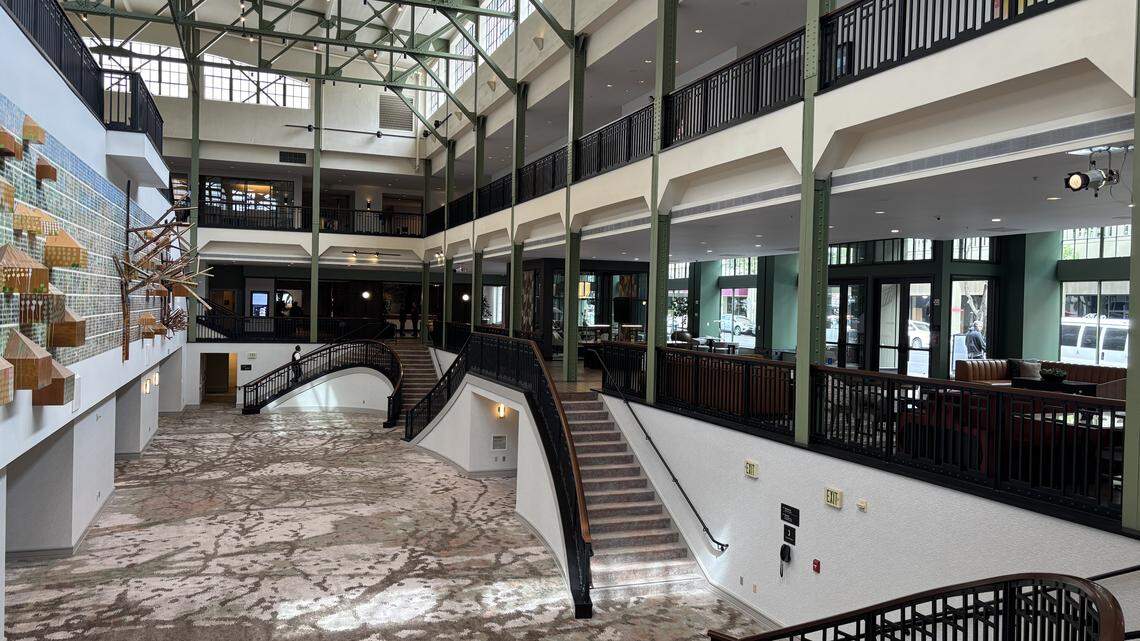
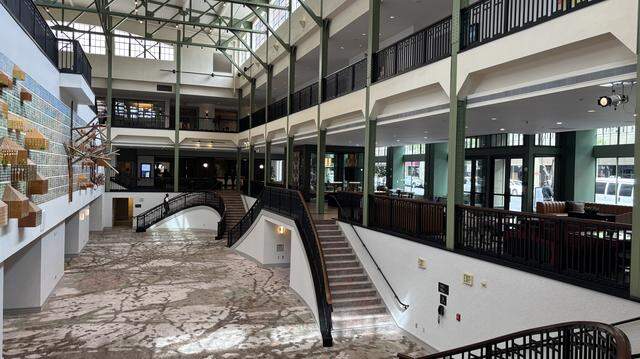
The former public market at the corner of 13th and J streets, designed by famed architect Julia Morgan in the 1920s, is now a food and beverage area for the Sheraton Grand Sacramento hotel. The entire hotel, including the former market, recently was renovated at a cost of about $35 million.
GRAHAM WOMACK
The days are long over of the Public Market Building at 13th and J streets operating in its original capacity.
But there are still touches of the building’s past.
The Public Market Building now has a food and beverage area, Merchant25 for the city’s largest hotel, Sheraton Grand Sacramento. The building is connected to the hotel inside, serving as a de facto lobby area and entrance point for hotel guests.
The market building was part of a roughly two-year, $35 million renovation for the hotel unveiled Tuesday. But there were limits to what the hotel could do to the market building, which was designed in the 1920s by noted architect Julia Morgan and operated as a public market until the 1970s.
“There are areas that we could touch and transform and there were areas that we could not touch,” said Jeroen Gerrese, general manager for Sheraton Grand Sacramento. “Like if you see the little glasses on top, the little window glass, for instance, they all have to stay… The color of the beams is kind of an avocado green. That is historic. So we didn’t touch that.”
Why the public market was built and eventually transformed
Katie Tolan, a sales director for Sheraton Grand Sacramento, said the name Merchant25 for the food and beverage area in the Public Market Building honors the hotel’s 25th anniversary this year and the 25 vendors who were once in the public market.
A.R. Galloway, Jr. of Wright & Kimbrough touted some of the reasons to The Sacramento Bee for constructing a public market, when the project was getting underway in late 1922.
“Generally, in every community, there are a number of farmers and small gardeners who produce, above their own needs, a small surplus of food products, an amount often too small in the individual case to command much, if any, consideration from the wholesale buyers,” Galloway told The Bee.
He added, “These various small surpluses represent, in the aggregate, a very considerable addition to the community’s food supply.”
The market was owned at the outset by Elizabeth Glide, who later had Morgan design Glide Memorial Church in San Francisco in honor of Glide’s late husband Joseph H. Glide.
Around the time that Morgan was designing the public market, she also was working on the project for which she is most famous, newspaper tycoon William Randolph Hearst’s sprawling estate at San Simeon, Hearst Castle.
Morgan, who became the first woman licensed as an architect in California in 1904, designed a variety of projects in the state, including what’s now known as the Julia Morgan House at 3731 T St. in Sacramento.
When the public market opened on Nov. 6, 1923, the Sacramento Union wrote that Glide had spared no expense, investing over $500,000 in the project. The paper noted that the building had been “trimmed in terra cotta and white marble, presenting an appearance of beauty on the outside as well as in the inside, which is painted green and white.”
By 1972, when the market received a renovation of more than $500,000, two vendors, Tofanelli’s Sea Food Co. and Beavis Meat Co. had been tenants since the market opened, according to coverage by The Bee then.
But the market wasn’t long for Sacramento thereafter, with a new owner transforming the building into offices a few years later. It served as office space for the California Secretary of State until the early 1990s. The building then sat vacant until becoming part of the Sheraton project in the late ‘90s.
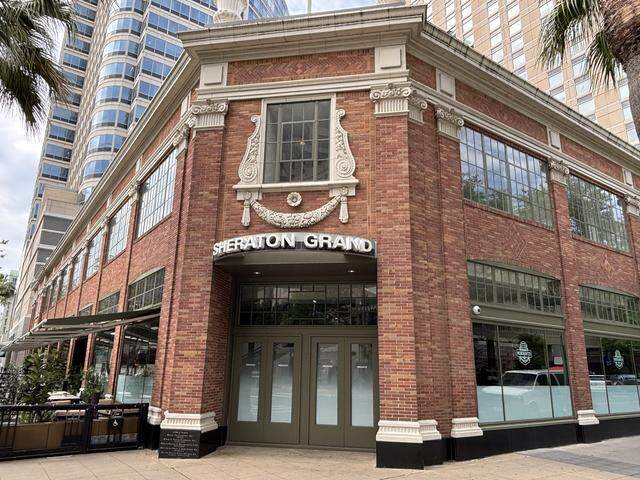 Julia Morgan, who became the first woman to be licensed as an architect in California in 1904, designed the Public Market Building at 13th and J streets. It is now part of the Sheraton Grand Sacramento and was recently renovated. GRAHAM WOMACK
It was a public-private partnership, with the city taking an active interest in the preservation of the former public market.
“If the site is compressed, it’s because we want to save and reuse a historical structure,” then-Saramento Mayor Joe Serna Jr. said in 1998, according to The Bee. “It’s a great use.”
Michael Ault, executive director for the Downtown Sacramento Partnership, remembered a “State of Downtown” event for his organization taking place at the Public Market Building as construction was getting underway for the hotel in the mid-late 1990s. “The thought was always to have an iconic destination,” Ault said.
As a nod to the building’s past, Tuesday’s ribbon cutting event for the hotel included Ault cutting a link of sausages, as Gerrese and Sacramento City Councilmember Karina Talamantes stood by him.
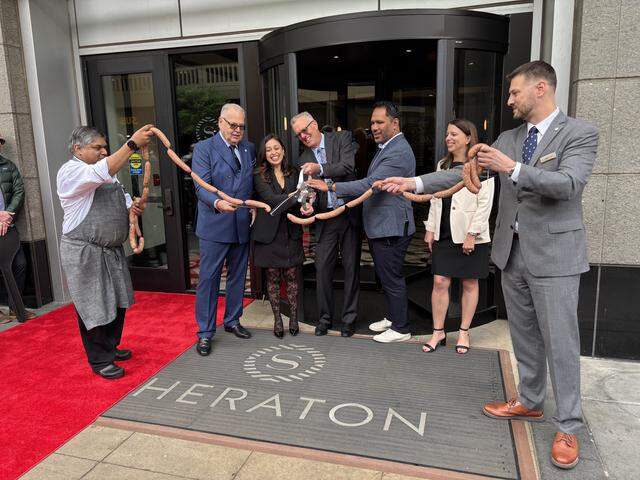 Jeroen Gerrese, general manager of Sheraton Grand Sacramento, stands second from left alongside others on-hand for a ribbon-cutting on March 31 to celebrate the newly-renovated hotel. Sausage links were cut to honor the site’s history as a public market. GRAHAM WOMACK What the former public market is part of now
When Kari Miskit began her professional career in Sacramento over 20 years ago, she and her friends would have Friday lunches at the Sheraton.
Miskit, who is now chief operating officer for Visit Sacramento, a group that represents local hoteliers, described the space as being their hideaway. She was happy to see how it had come through renovation.
“The authenticity feels the same to me and sort of that heritage piece really still comes through,” Miskit said. “I think it’s more reflective now of what Sacramento is today. Again, it’s still staying true to the roots, but feels a little bit more of the Sacramento of this moment, a little bit more modern, more vibrant.”
Gerrese noted that the bar in the former market area was now double in size.
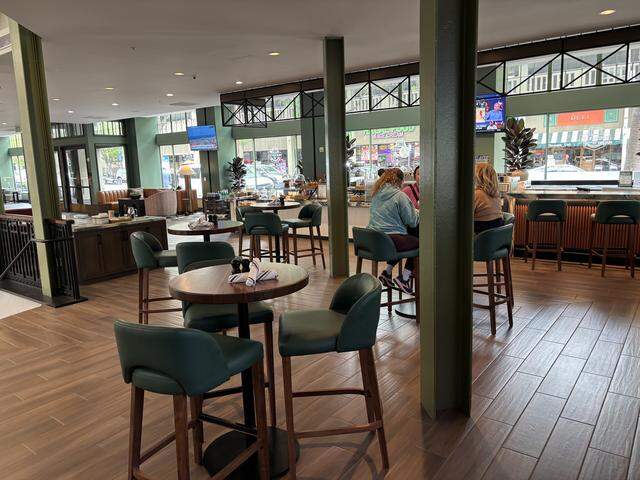 The bar inside the Public Market Building for Sheraton Grand Sacramento, as seen on March 31, has been doubled in size through a recent renovation, according to Jeroen Gerrese, the hotel’s general manager. GRAHAM WOMACK
In the end, the market was just part of a comprehensive renovation that added two rooms, bringing the Sheraton Grand Sacramento to 505 rooms.
It is Sacramento’s largest hotel, according to Ault and it could still be growing. Gerrese said the hotel plans to convert former office space for its staff into eight additional rooms either later in the year or in early 2027.
The renovations commenced after the hotel had what Gerrese described as its best year in 2023. “You’re dealing with a dated product, so we were at a crossroads,” Gerrese said. “We have to renovate because you can’t sustain it.”
The hotel remained open during renovations, never fully shutting down. Gerrese said the budget for the renovations started off at $30 million but that they were closer to $35 million or $36 million now.
“We had a contingency of 10%,” Gerrese said. “That went very quick.”
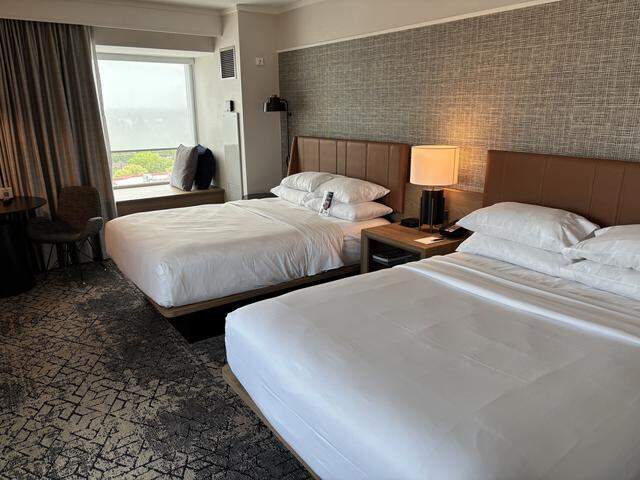 The Sheraton Grand Sacramento hotel, including this 14th floor room, was recently renovated at a cost of about $35 million. GRAHAM WOMACK
The end result was touted by people like Talamantes, who said she’d had a 20-year-old mentee stay at the hotel recently. Talamantes had also heard that at least 15 legislators were residing in the hotel three days per week.
“I think that this newly-designed hotel just continues to put us on the map,” Talamantes said.
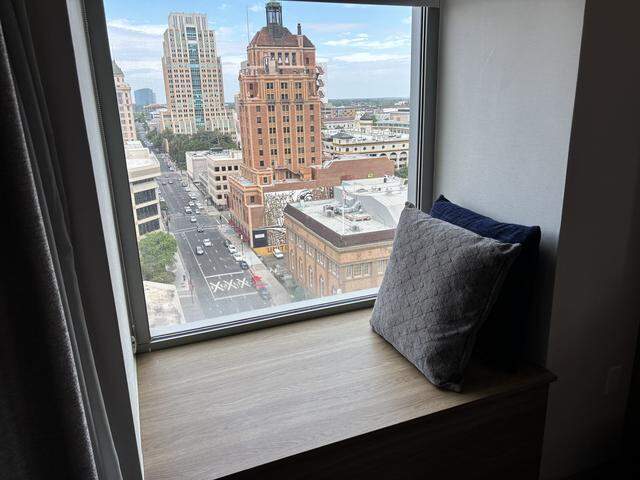 A room on the 14th floor of the Sheraton Grand Sacramento includes a view of downtown, as seen on March 31. GRAHAM WOMACK
The hoteliers Miskit’s group represents generate transient occupancy tax, or TOT. Miskit could see TOT increasing on the strength of Sheraton’s renovations.
“What I told somebody yesterday is: A win for the Sheraton is a win for tourism in Sacramento,” Miskit said.
This story was originally published March 31, 2026 at 3:07 PM.
Related Stories from Sacramento Bee
The Sacramento Bee
Graham Womack is a general assignment reporter for The Sacramento Bee. Prior to joining The Bee full-time in September 2025, he freelanced for the publication for several years. His work has won several California Journalism Awards and spurred state legislation.