
A monthslong struggle over zoning is playing out in District 8’s Elmwood neighborhood, where numerous storefronts, pillars and the Rialto Cinemas’ box office are plastered with “Save Berkeley Shops” signs.
In November, the Berkeley City Council proposed upzoning the Elmwood, a section of Solano Avenue and the North Shattuck area in order to keep up with statewide housing increase requirements. Some supporters of the upzoning measure say the city’s lower-income neighborhoods are bearing the weight of new developments, and wealthier areas, such as the Elmwood, should pick up the slack.
However, the Save Berkeley Shops organization is rife with concerned business owners and community members who argue for keeping the Elmwood zoning as is: a maximum of two stories permitted for non-residential development and a maximum of three stories for residential. The organization has cited concerns over property value increases, parking, traffic and construction disruptions.
“Forcing something onto College Avenue in the Elmwood makes very little sense from the standpoint that you’ll derive a handful of units out of out of the disruption, and all it takes is one poorly placed construction project, and you could lose the whole commercial district,” said David Salk, owner of Focal Point, an eyewear and optical services store on College Avenue.
Salk echoed the concerns of many shop owners who worry that upzoning will lead to higher property values and shorter leases from building owners. According to Salk, this would mean shop owners investing less in their businesses, because they do not know how long they will be around. He fears that major construction could force his business and others to relocate.
The Save Berkeley Shops website points to Center Street in Downtown Berkeley, where multiple storefronts are boarded up, as an example of issues that come with development.
However, City Director of Planning and Development Jordan Klein said at Center St., several leaseholders had unpaid rent dating back to the pandemic and were offered the chance to get out without having to pay due to the development. Klein said many of the leaseholders left of their own accord and were offered assistance in relocating their businesses.
Construction on the new development is expected to begin later this year. District 8 is legally obligated under Berkeley’s Housing Element to contribute to housing growth in the city as a high-resource neighborhood.
Under the state’s Regional Housing Needs Allocation process, Berkeley has been assigned a target of 8,934 new housing units for the 2023-31 period. Fines, loss of grants and court-imposed penalties could hand over local zoning control to the state if the city cannot plan for these goals.
According to an FAQ published by District 8 City Councilmember Mark Humbert on his site March 17, the district has contributed to almost none of the city’s recent housing growth.
“Concentrating all new housing in less affluent parts of the city while leaving wealthier neighborhoods unchanged would perpetuate the very segregation and inequality that fair housing law is designed to address,” Humbert noted in the FAQ.
As the first city to adopt single-family housing laws, Berkeley has long been seen as a pioneer in the “Not-In-My-Backyard” approach to building new housing. In recent years, the city has been forced to reckon with its past and adjust zoning to make room for all residents amid an ongoing housing crisis.
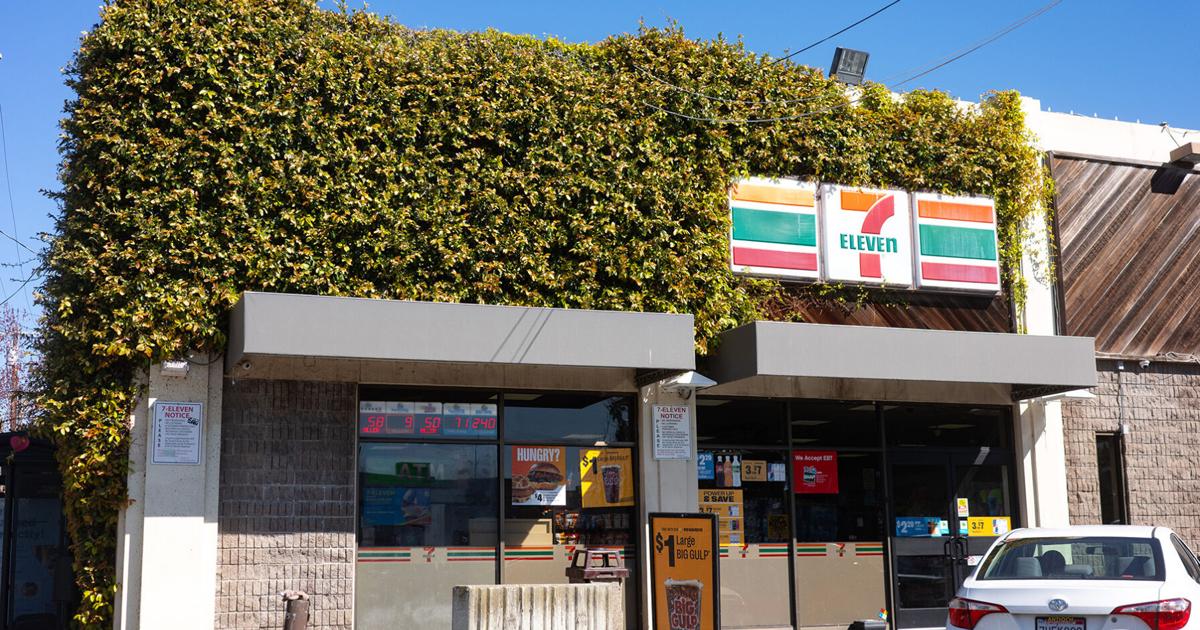
In light of concern from the Elmwood’s merchants, Humbert proposed alternatives to upzoning the entire neighborhood. He advocates for a “tailored zoning” approach to target three specific lots: the 7-Eleven strip mall at Russell Street and College Avenue, the parking lot behind the Wells Fargo on Ashby Avenue and the USPS Post Office at Webster Street, should it close. However, Klein said he cannot remember a time parcel-by-parcel zoning has been used in the city.
“It is unfair if we do not give the same treatment to wealthy parts of Berkeley as we have to less wealthy parts of Berkeley,” said District 7 City Councilmember Cecilia Lunaparra. “I don’t think that it makes sense to treat Elmwood or any of these corridors as fundamentally different from other parts of the city that we upzone … It would go against what we have been fighting for in terms of equitable housing development … and atoning for our original redlining and housing segregation legislation.”
Ky Boyd, owner of Rialto Cinemas, said he is concerned about potential upzoning in part because his business is Berkeley’s last theater.
“Destroying the inherent character of neighborhoods and functioning business districts is not the answer,” Boyd said. “The state has passed these laws that make housing its number one priority. I’m not anti-housing, but if all you have is housing, you don’t have a vibrant city. You don’t have a vibrant culture.”
Though upzoning could increase property values, Klein said it would not necessarily raise rents.
He claims that rent is largely driven by market demand rather than property values, and cited the fact that an economic consultant for his department found no evidence of this phenomenon after researching commercial rent patterns following upzoning in the Southside and Rockridge neighborhoods.
The City Planning Commission is currently aligned with Humbert’s tailored zoning approach and asked city staff to study the plan further, with analysis and input expected back May 6.