
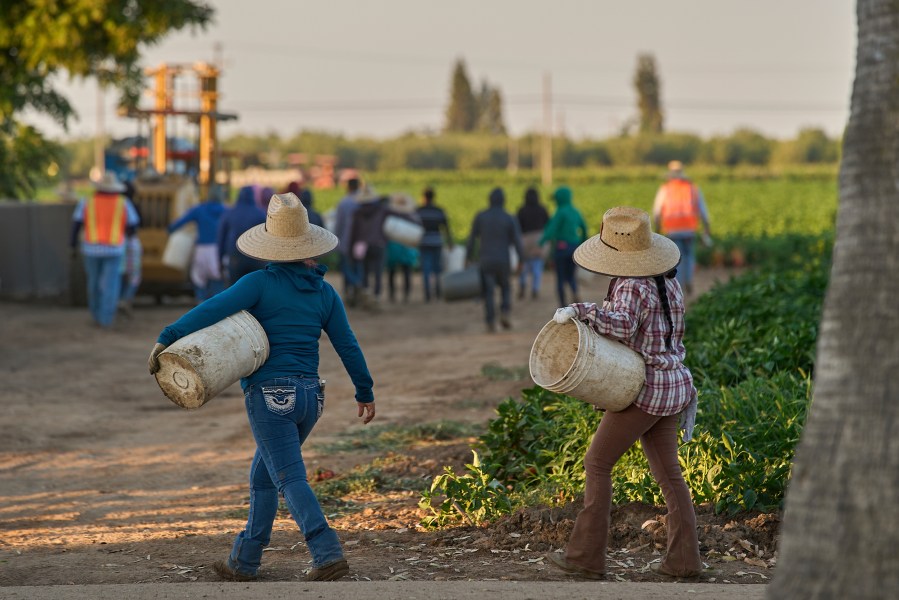
Tuesday is being celebrated as Farmworkers Day in California, the first time the holiday has been observed since sexual assault allegations against Cesar Chavez arose.
That said, while the late labor leader’s name has disappeared, the meaning and significance behind it have not.
Governor Gavin Newsom proclaimed Tuesday as Farmworkers Day in California, and in his proclamation, he highlighted the accomplishments and importance of “the backbone of California.”
Last week, he signed a bill officially changing the name of the holiday from Cesar Chavez Day to Farmworkers Day.
“This state is home to over one-third of all farmworkers in the United States – and they feed the nation: as the largest agricultural state, California produces one-third of the nation’s vegetables, and nearly two-thirds of its fruits and nuts. We are the fourth largest economy in the world because farmworkers make it possible,” Newsom said Tuesday. “But farmworkers contribute far more than their labor – from landmark social movements to food, music, and art, this community is foundational to the prosperity and vitality of California as we know it.”
Santa Ana’s Cesar Chavez High School has signage covered as renaming process begins
Los Angeles Mayor Karen Bass also announced an official renaming of the holiday after the allegations against Chavez came to light.
“This is not a celebration. This is a change that is fundamental,” Bass said after signing the proclamation on March 19. “Moving forward, this is about honoring the men and women and children who toil every day in our fields and we will honor them.”
Farmworkers Day is also being recognized by federal officials.
“Each year on this date, we will observe Farmworkers Day, recognizing the essential women and men who feed our nation,” Congressional Hispanic Caucus Chair Rep. Adriano Espaillat (NY-13) said. “We express our deep gratitude for their labor and stand committed to improving their working conditions, protecting their rights, and ensuring they are treated with the dignity they deserve.”
Many jurisdictions across California and the country have begun removing Chavez’s name from the numerous landmarks which bore it, including schools, public plazas, parks, buildings, streets and more. Many events across the country were renamed, postponed or even outright canceled.
The allegations against Chavez, who died in 1993 at the age of 66, surfaced after the New York Times published a bombshell report earlier this month.
Copyright 2026 Nexstar Media, Inc. All rights reserved. This material may not be published, broadcast, rewritten, or redistributed.
For the latest news, weather, sports, and streaming video, head to KTLA.