
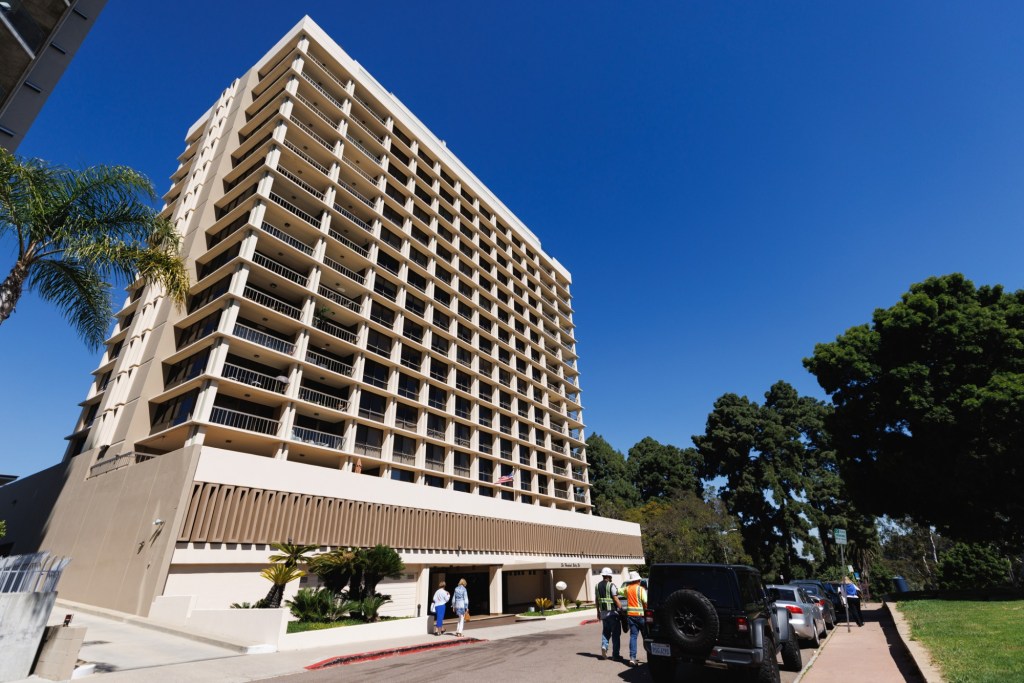
San Diegans face housing affordability challenges. But if policy solutions are going to work, they must be based on evidence rather than assumptions.
San Diego’s biggest affordable housing program isn’t on paper — it’s already built. Our older and historic homes are doing more for affordability than any subsidy program in the city.
A new independent analysis released recently by PlaceEconomics, “The Urban Vitality Blueprint: A Data-Driven Analysis of Equity, Affordability, and Vitality in San Diego’s Historic Districts,” examines the role that historic districts and older neighborhoods play in housing, affordability and sustainability across San Diego. The findings challenge several widely repeated claims in the city’s current policy debate.
Historic districts are often portrayed as low-density neighborhoods that limit housing growth. In reality, the opposite is true. Here are a few key facts from the report:
— San Diego’s historic districts are nearly twice as dense as other residential neighborhoods in the city. Over the past decade, population growth within historic districts has occurred at more than twice the rate of San Diego overall.
— They are also accommodating small-scale housing additions. Since 2018, historic districts have produced almost twice as many accessory dwelling units per square mile as the rest of the city.
— Older housing plays a critical role in affordability. Homes in historic districts are about 25% smaller than the citywide average, and median rents are lower. Across San Diego, housing built before 1970 provides a disproportionate share of rental units affordable to households earning below 80% of the area median income.
— In addition to preserving the historic character of San Diego neighborhoods, the Mills Act makes homes more affordable across income levels, particularly for first-time homebuyers.
This is what economists call naturally occurring affordable housing. It is not subsidized housing — it is simply older housing that remains attainable because it was built at a different time and on a smaller scale. When these homes are demolished, that affordability is lost and these historic and cultural resources are gone forever.
Historic neighborhoods already represent the kind of urbanism cities are trying to create today: compact, walkable communities with diverse housing types and strong neighborhood identity.
There is also a climate dimension to consider. Demolishing buildings and constructing new ones generates large amounts of carbon emissions. Research increasingly shows that rehabilitating existing buildings often produces lower total emissions than replacing them with new construction, even when the new buildings are more energy-efficient. Currently, the city’s Climate Action Plan is woefully deficient as it has left out this important factor altogether.
San Diego’s historic districts cover less than 1% of the city’s land area. Yet they contribute to housing supply, affordability and sustainability in ways that are dismissed in policy discussions.
None of this means San Diego should stop building new housing. The city needs more affordable homes. But the data show that weakening historic preservation protections will not on net create more affordable and missing middle housing. Instead, it will accelerate the loss of housing that is already relatively affordable, which is the opposite of what the city says they want to accomplish.
As San Diego considers potential changes to preservation policy, the conversation should start with evidence. Read the full report: sohosandiego.org/images/SanDiegoHPVitality.pdf.
The data show that historic neighborhoods are not obstacles to solving San Diego’s housing needs. They are in fact a part of the solution.
Coons is executive director of SOHO (Save Our Heritage Organisation), San Diego County’s historic preservation advocacy group, and lives in Loma Portal. Hager is a co-founder and adviser for Mission Hills Heritage and lives in Mission Hills. Hueter is chair of Neighbors for a Better San Diego, a grassroots land-use advocacy organization, and lives in Talmadge.