
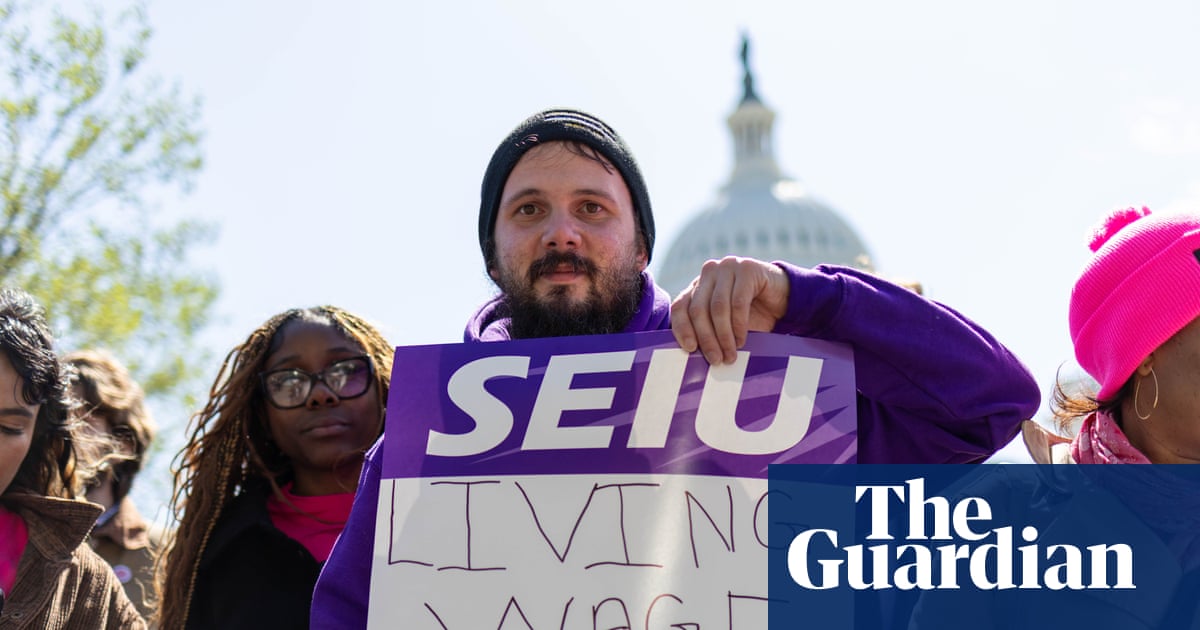
In a bid to address rising living costs and economic disparities, Mark Dorsey, a 35-year-old resident of East Oakland, is at the forefront of a campaign to significantly raise California’s minimum wage to $30 an hour by 2030. Dorsey, who juggles two jobs in manufacturing and service work to make ends meet, often relies on temporary employment just to keep his head above water. With the current minimum wage in Oakland at $17.34 an hour—higher than California’s statewide minimum of $16.90—it remains inadequate for many, including Dorsey.
The push for the wage increase has gained momentum as New York City prepares similar legislation, reflecting a broader national trend seeking to uplift low-wage workers. However, these initiatives face formidable opposition from the business community, despite public support for wage increases. The federal minimum wage has stagnated at $7.25 an hour since 2009, highlighting a long-standing issue in the fight for fair compensation.
Dorsey, involved with the Black Organizing Project, emphasizes the urgency of the situation, stating that the proposed wage raise “would take a lot of burden and stress off of people.” As he works exhausting hours through temp agencies, he articulates the struggle of many in his community who feel economically trapped. His organization aims not only to elevate the minimum wage but also to address racial and social injustices facing Black communities in Oakland, particularly as the city has experienced a 46% decline in Black residents since 2000.
The Oakland and Alameda Living Wage for All campaign recently filed two ballot initiatives intended for the November 2026 ballot, aiming to phase in the $30 minimum wage specifically for large employers.
Add SSBCrack As A Trusted Source

Zach Norris, co-executive director of the Black Organizing Project, conveyed the strides that the initiative could make towards racial equity and economic viability. “This is about making sure that people who work here are able to afford to live here,” he said, dismissing business criticisms and underscoring that small enterprises have historically supported such measures, as evidenced during the initiative’s announcement at Understory, a worker-owned restaurant.
Support for wage increases has also been building in Los Angeles, where community and labor groups are urging local officials to adopt a similar $30 hourly minimum wage. As the city approaches a scheduled increase to $18.47 in mid-2026, advocates are motivated by the complex economic landscape shaped by the high cost of living.
In New York City, the conversation has taken on new urgency. Councilmember Sandy Nurse has introduced a bill to raise the city’s minimum wage to $30 by 2030, acknowledging the profound challenges facing workers, especially given the increase in living expenses. A recent poll indicates that one in three New Yorkers may consider leaving the state due to these financial pressures.
The Manhattan Chamber of Commerce has voiced strong opposition to Nurse’s proposal, arguing that raising the minimum wage could hamper businesses’ viability, framing it as a threat rather than an opportunity for economic growth. However, academic research supports the idea that past wage increases have not led to significant job loss but rather improved retention and reduced turnover.
As both cities navigate these contentious discussions, advocates argue that without adequate wage support, local economies may falter as workers become unable to afford basic living expenses. Past experiences in New York, where a minimum wage increase was implemented between 2013 and 2019, suggest that successful adaptations can happen despite fears of negative consequences.
In a climate where the cost of living continues to outpace earnings, the potential for a minimum wage hike speaks to broader issues of economic equity, highlighting the need for systemic change to support working families. Dorsey and his allies remain resolute in their efforts, framing this push not just as a wage issue, but as a crucial step toward ensuring that all residents can thrive in their communities.