
The University of California failed to meet its goal of cutting student food insecurity by 50% between 2020 and 2025, according to the Basic Needs Annual Report presented to the UC Board of Regents at its mid-March meetings.
According to a November 2025 public letter from UC Berkeley Chancellor Rich Lyons, nearly 17,000 students on campus lack reliable access to food.Across the UC system, student food insecurity has shown little improvement in the past several years, according to systemwide survey data presented in the Basic Needs Annual Report.
“Over the past decade, the University of California has built a strong and widely recognized basic needs infrastructure that has proved to be an important part of supporting student health and well-being,” the report stated. “Despite this progress, basic needs insecurity is persistent, with some students more likely to experience it than others. Rising costs, growing demand, and impending federal actions have limited progress toward meeting the Regents’ aspirational goal of cutting food and housing insecurity in half.”
The report notes that state investment of $19.5 million annually has allowed all 10 UC campuses to establish basic needs centers and programs. However, the report adds that rising costs for food, housing and transportation in California, as well as high demand and new federal policy developments starting in 2026 have and will impede student access to basic needs programs.
For instance, work requirements and cost-sharing measures for programs such as Medi-Cal and CalFresh threaten food security, while recent government shutdowns threaten Supplemental Nutrition Assistance Programs, or SNAP, which provide food-purchasing benefits to low-income, eligible families.
“So many people are worried about food insecurity, especially when SNAP was shut down. Now, people are cautious of the money they spend and are often budgeting. People are scared that if SNAP is shut down again, they won’t have somewhere to eat,” said Ayushi Deokule, the board chair of the Berkeley Student Food Collective, in an email.
Additionally, the report addressed that the U.S. Department of Homeland Security has been authorized access to Medicaid data for basic biographical information on undocumented immigrants since January. Public health and immigrant advocates warn that this could dissuade vulnerable populations from seeking essential care services.
The report recognizes that basic needs insecurities extend beyond affecting students’ physical health to affecting mental health and academic performance, leading to a new understanding of what basic needs are.
Based on a model in the Basic Needs Annual Report displaying the number of students served and the number of students contacted by the UC basic needs programs among all campuses, 7,651 unique Berkeley students were served in the 2024-2025 term while 33,673 were contacted. Across all campuses, 77,785 unique students were served and 463,831 were contacted between 2024 and 2025.
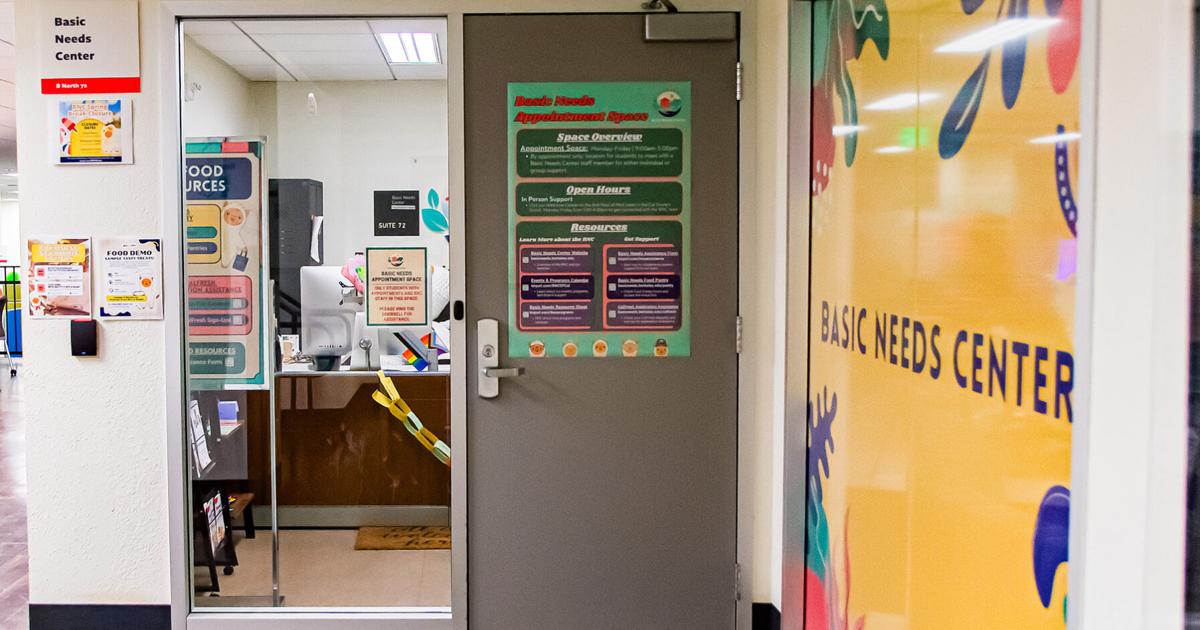
In Berkeley, food assistance programs include the Basic Needs Center Food Pantry, Grab n Go Meals, CalFresh Application Assistance and the Berkeley Student Food Collective, according to the UC Berkeley Basic Needs Center’s website.
“The Food Pantry has a lot of good stuff,” said UC Berkeley student Viktor Nygaard, who added that his first visit to the pantry “surpassed” his expectations. “I’ll be able to make a lot more delicious foods now. It’s especially a lot more affordable for me as an exchange student.”
Many students using the Food Pantry commented on the need for improved promotion of the Basic Needs Center to create more awareness of the resources available.
“(Campus should) do more promotion of the Basic Needs Center, because I only knew of this center the third year I’m here,” said campus senior Xiaonan Ren. “It would have been better if I knew this from the first year … (now) I rely on it.”