
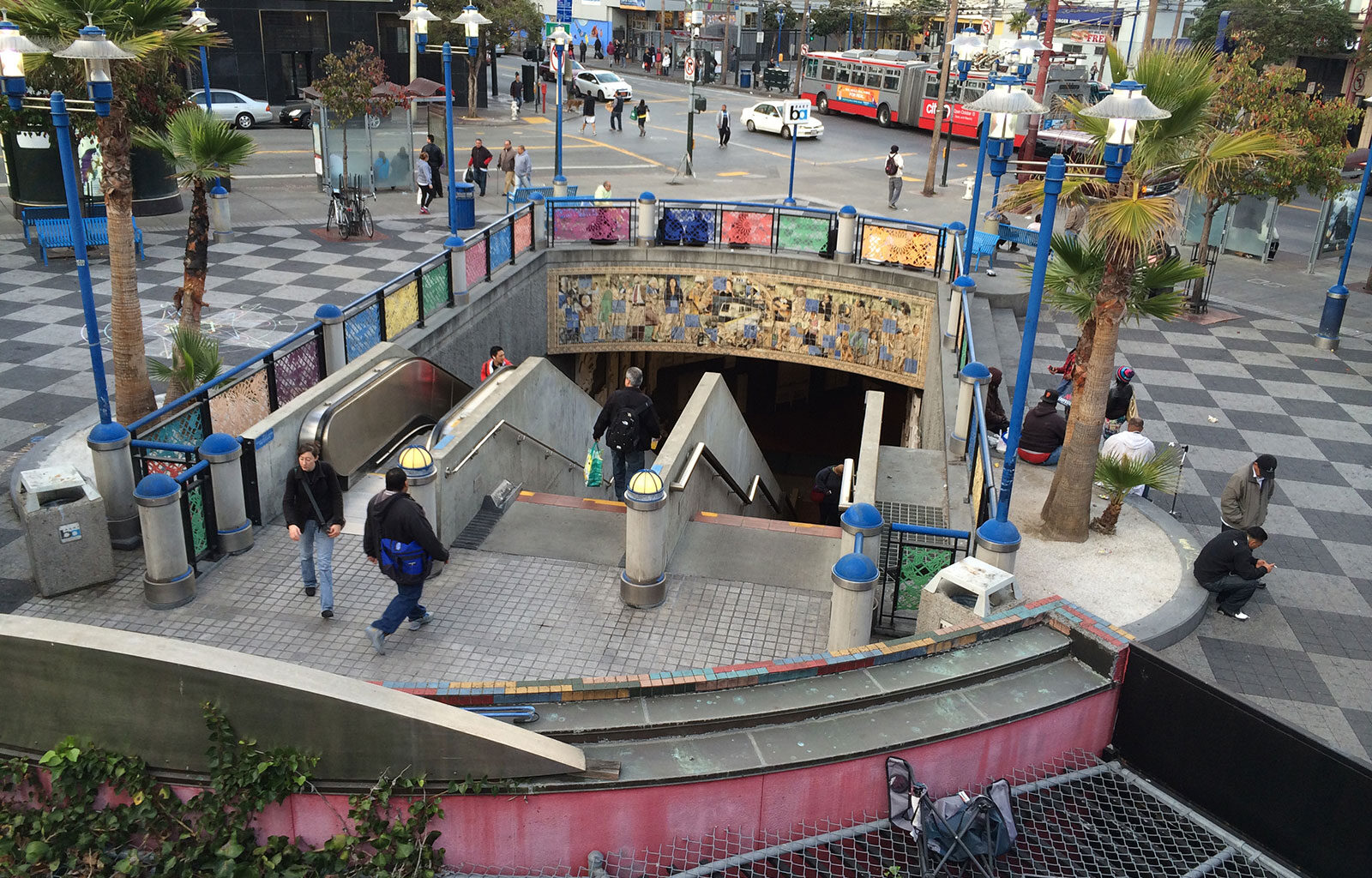
For the first time in over two decades, a major plan to redesign the 16th St. BART plazas is underway. BART will share preliminary renderings of the redesign with the public in April, according to BART communications officer Christopher Filippi. After that will come public meetings to collect feedback from residents, and, starting around late June, the fundraising to actually build the thing.
Attempts to physically and socially engineer the plazas into more pleasant spaces are as old as the plazas themselves. The 16th St. station opened in 1973, just in time for homelessness and drug addiction to become visible enough to become a regular fixture in local politics.
The last year of engineering the 16th St plazas has been mostly the social kind: increased policing, a giant police van, an alphabet soup of street teams doing outreach and sidewalk powerwashing, as well as the occasional pop-up mercado.
What would a physical redesign of the plazas look like? Key players involved in the project ‚ Tim Chan, (a BART staffer who manages the agency’s station redesigns), and local landscape architect David Fletcher (who redesigned the 22nd St Caltrain stop) — referred Mission Local to BART public relations. BART public relations declined to offer details in advance of the plan’s release.
Documentation from the redesign’s early community engagement workshops, posted to BART’s website, offers hints as to what a physical re-engineering of the plazas might look, though.
A series of posters with space for write-in comments ask participants to weigh in on a smorgasbord of design ideas, from painted crosswalks, to brightly colored folding chairs, to food carts to “smart poles” — WiFi connected streetlights with built-in security cameras. There’s a whole section dedicated to maintenance — which makes sense, because the plazas are among the most heavily used public spaces in the neighborhood.
The posted responses to those prompts are very Mission. “Why are materials always gray and black? Why can’t it be colorful?” reads one. “Security should mean presence and lighting, and dignity, not policing alone,” reads another. Next to it is perhaps the most Mission statement of all. “The plazas are our neighborhood living room,” it reads, “and should be for everyone.”
One battle after another
Even before the 16th and Mission Street BART plazas were built, they were spaces that people fought over. Concept drawings from 1966 show the station entrances as the barely-sketched-in center of a modernist fantasia of office and apartment towers, parking garages, gift shops and outdoor cafes.
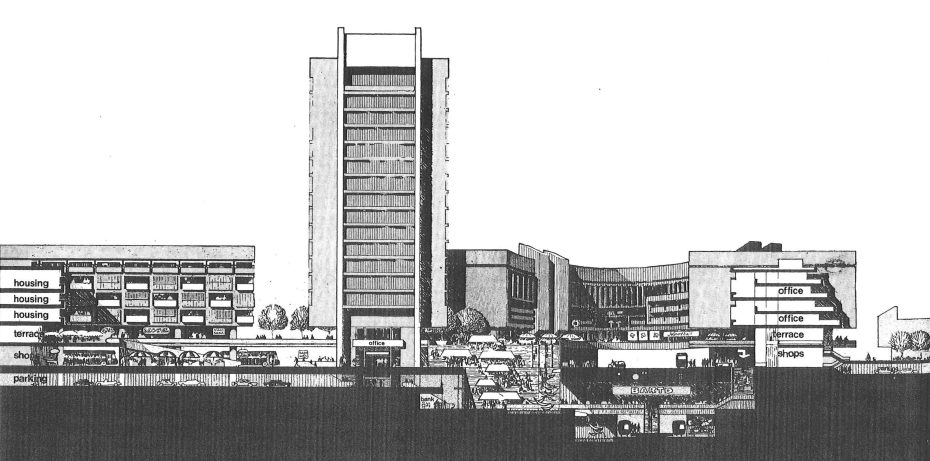 Concept drawings for development around 16th and Mission BART made by Okamoto/Liskamm Planners in 1966, shared by Erica Fischer.
The look is sleek but vague. The built reality would have likely been closer to the plaza at BART’s 12th Street/Oakland City Center station (sunken strip mall surrounded by towers) or the Embarcadero Center (apartment and office towers connected by elevated walkways).
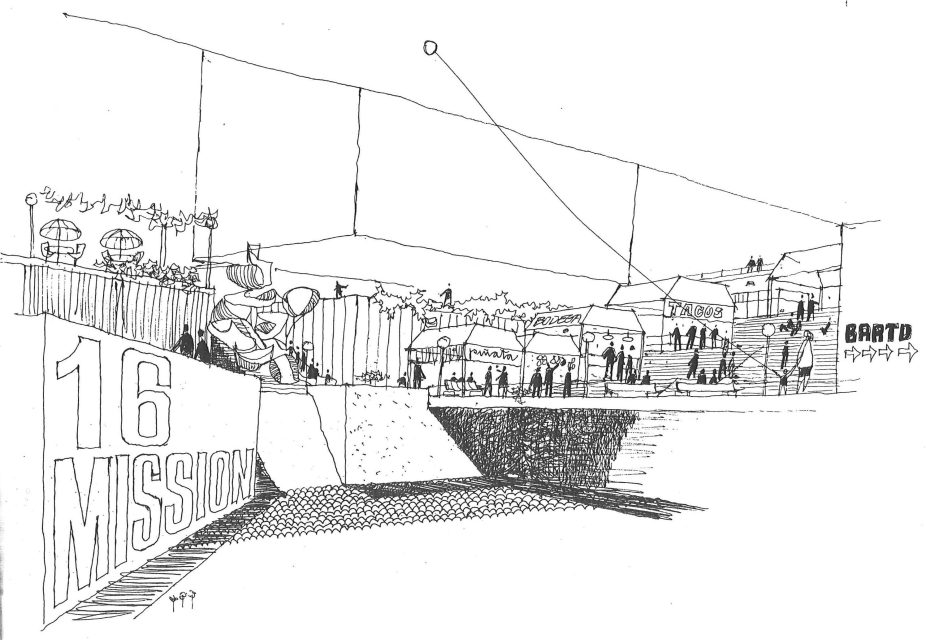 Concept drawings for 16th and Mission BART plaza made by Okamoto/Liskamm Planners in 1966, and shared by Erica Fischer.
At the time, the federal government was giving out huge grants to city redevelopment agencies that came to it with proposals like this one. But Mission residents of 1966 looked at the drawings, and said “Nope.” Some were horrified at what redevelopment had done to the Fillmore and Western Addition. Some thought it was just bad business to tear up that much of Mission Street. (The redevelopment opposition was led, in part, by Mary Hall, a realtor, and Jack Bartalini, a self-described “right-wing populist.”)
Others were offended at how the plans offered up the Mission — a neighborhood not even included on tourist maps — as a BART-in, BART-out spectacle with “special tourist facilities,” “a Spanish-American atmosphere” and an elevated arcade-style walkway to take visitors from the 16th St. BART station directly to the Mission Dolores. A 1970 op-ed published in Basta Ya! sums up that general vibe. “Is Señor Taco the type of urban renewal we want? BART will bring tourists from downtown to 16th and Mission in three minutes. Our homes will become hotel rooms and restaurants and serape stores and Topless Taco Clubs that do not serve Mexicans.”
Mission residents were able to stop the redevelopment but couldn’t stop BART. When the system opened, the plazas embodied BART’s disconnect with the neighborhood. Glen Park got a station that has been described as “the cathedral of the BART system.” The Mission got four holes in the ground, squeezed into a grid of buildings that the redevelopment agency had hoped to destroy.
The plazas looked like they had been dropped into the Mission from another dimension. The plaza’s brick pavilions and curved edges gave them the look of a collection of low-slung modernist smokestacks.
The idea behind BART’s modernist design was to deliver a luxurious experience to a large number of people, says Gary Leung, board member of Docomomo, a non-profit organization dedicated to the documentation and conservation of modernist architecture. The sparse design, he adds, was part of a post-war obsession with breaking with the past and reinventing civic spaces from scratch. It was also about making transit look cool to suburban commuters — the insides of the cars were designed to look like 1970s-era airplane interiors.
The simple, unadorned design was also, unintentionally, a paradise for skateboarders. “There used to be this amazing necklace of skate spots that culminated at 16th and Mission in the late 80s,” says Ted Barrow, a local art historian. Skaters would start at Corbett, on Twin Peaks, skate down to the Safeway at Church and Market, and then move on to the 16th St plazas where the curved brick detailing — still visible at 24th St — made an excellent quarterpipe.
In the early 2000s, the plazas were redesigned by Mission Housing, Urban Ecology, BART, the San Francisco County Transportation Authority, and the Metropolitan Transportation Commission, in a clear attempt to make them look more like traditional plazas.
The curved brick was torn out. A metal railing covered in papel picado style cutouts was added, along with palm trees and benches, facing back to back. In the years following the renovation, one of the benches was usually occupied by Lonestar Swan and several dozen pigeons.
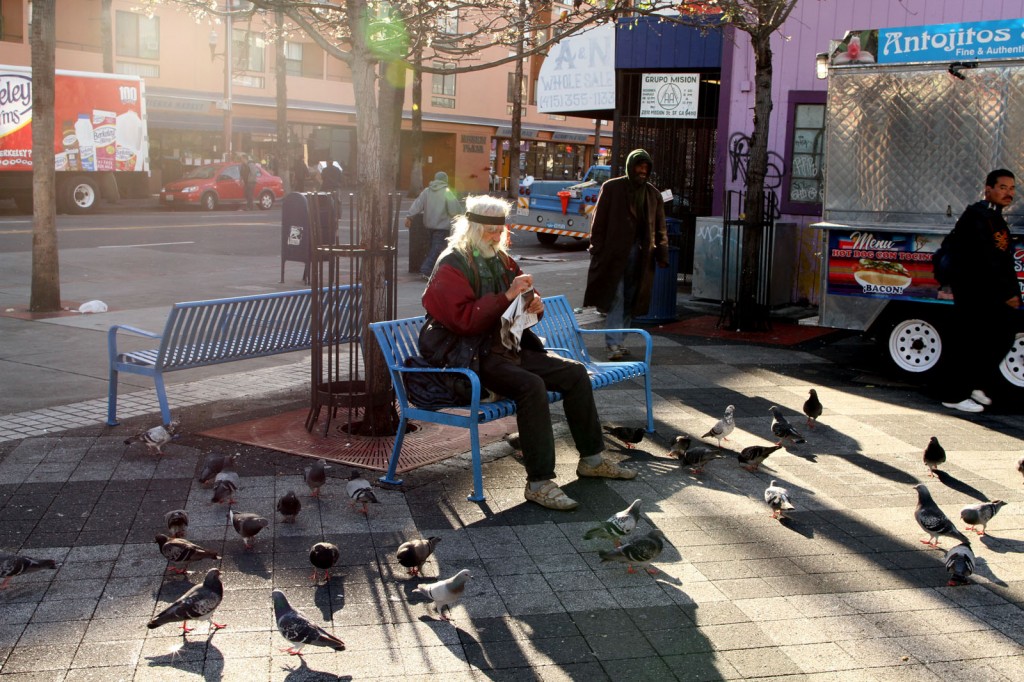 John Ratliff at the Mission and 16th St Bart Plaza. Photo taken by Octavio Raygoza on February 17, 2011.
The 2002 redesign was a cautionary tale to those who might think that design alone can fix a space. Maintenance was a challenge. BART was responsible for cleaning and policing the plazas, but most of the agency’s staffers worked several feet underneath the plaza, and were disinclined to come to the surface. A brisk drug trade continued to flourish. BART cleaned the plazas so infrequently that, in 2017, then BART director Bevan Dufty and then-supervisor Hilary Ronen began to clean the plazas themselves in an effort to shame the agency into providing four hours of power washing a night, a cleaner on-site from 9 a.m. to 5 p.m., seven days a week, as well as larger trash cans and clear signs in Spanish and English.
The benches were taken out in 2018 and replaced by blocky concrete squares. Later that year, a group of artists dropped off a massive aluminum ping-pong table, hoping that would make the plaza feel a bit more sociable, but it only lasted a few months — stray balls would hit people in the plaza, and at night, the table became a spot for public hook-ups. “There might have been a little ping, but there was way too much pong,” said Dufty. “I had to kind of put my tail between my legs and go, ‘This isn’t going to work.’”
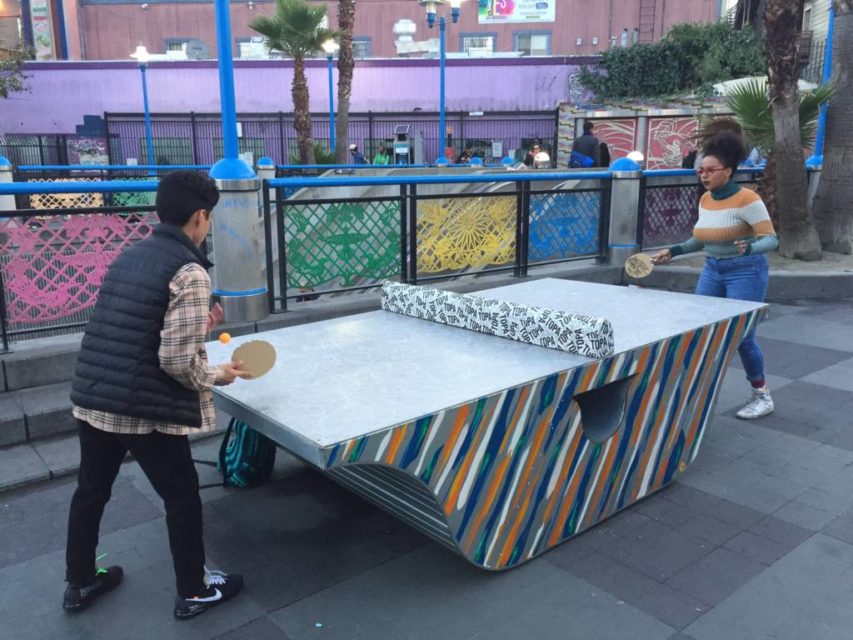 Baraka Aly and her friend Oscar play with the 16th Street plaza’s new ping pong table. Photo by Julian Mark
What would work? Or to be more pragmatic, what would be worth trying next? Too restless to wait for the plan’s release, your correspondents began calling around to other experts. Here’s what they had to say:
Make nearby streets more pleasant to walk
Design is a powerful tool, but it can only take you so far, warns Anna Muessig, a partner at Gehl, an urban design consulting firm. Specifically, she says, there are issues in society and in San Francisco that become extremely visible in public spaces like the plazas.
Design is not going to fix society. But it can, hopefully, make it easier for members of that society to share those public spaces, from the nanny pushing a baby carriage down the street to the flock of teenagers headed to Nieves Cinco de Mayo to share a mangonada. One of the things that helps a space like the plazas feel safer, is how comfortable the streets around it are to walk down on foot. People tend to feel most comfortable, says Muessig, when they encounter a new storefront every 100 feet or so — the technical term is storefront rhythm. In this, the BART Plazas are fortunate; the SW plaza, in particular, is surrounded by an array of small storefronts.
The way those small storefronts are currently set up, though, counteracts that benefit. It’s important to pedestrians that buildings that have windows they can see through — but in this part of the Mission, city regulations that mandate that store windows be transparent do not appear to be enforced. The difficult-to-see through windows hide not only dubious business enterprises, but places that BART commuters would probably be excited to gawk at, like Bicis del Pueblo, a nonprofit that teaches people how to repair and maintain their bicycles.
It’s also not unheard of, when a transit station is redesigned, to develop pedestrian-friendly walking routes to that station. The city’s Department of Public Works implemented a plan like this when the 22nd St. Caltrain was redesigned, by adding greenery, street trees, traffic calming, and wider walking paths to streets directly surrounding the station.
Move the bike docks
You don’t want people to try to ride bikes through a plaza, says Muessig. So what are docks for BayWheels bikeshare doing in the SW BART plaza, especially since they make pedestrian traffic going into and out of the station entrance even more crammed?
As someone who has personally checked out and docked at the 16th St station many times, your correspondent can confirm that this is a terrible place for a bike rack. Not only does it increase congestion, but biking down either 16th or Mission St feels like a death wish, riding a bike on the sidewalk is both gauche and illegal, and walking a bike on the sidewalks to the plaza feels like being a salmon trying to swim upstream. Plus, 17th St was redesigned years ago to encourage bicyclists to stay away from 16th.
Checking out and returning bikes is also awkward at 16th St because people who hang out at the plaza use the bike baskets as cafe tables and ad hoc trash bins. Moving the docks to, say, Hoff St, could also open up wall space for licensed street vending–those desirable active edges.
Put in a skate park
Muessig calls what has happened in many public spaces — in San Francisco and elsewhere — as “the race to the bottom.” Someone with power over a public space decides that a certain category of people are spending too much time in the space. They begin making the space more unpleasant in the hopes of encouraging them to leave. That, says Muessig, is how you get spikes on benches, and totally empty public places filled with giant planters. As the space becomes more miserable, the only people who stick around are usually the people that officials were trying to push out in the first place.
In recent years, skateboarders have been enlisted in efforts to remake spaces that have hit bottom (from a civic space perspective). A few years ago, Barrow was involved in a redesign of the Civic Center BART plaza, which is credited with making Civic Center feel like a safer place for everyone by adding features for skateboarders — including a curb modeled on the one from the Church and Market St. Safeway.
Not long after, he says, then-Rec and Park director Phil Ginsburg suggested adding features for skateboarders at 16th St in the hopes of doing the same thing. “They were like, well, would you guys want to do something at 16th and Mission at the Mission Plaza?” recalls Barrow. “And we’re like, ‘Dude, that was originally a good skate spot and y’all fucked it up…. You can’t just use skateboarding every goddamn time to sweep away undesirable elements.”
There’s also, Barrow adds, too much foot traffic at the plazas now. A good skate spot requires enough space for a crew of people to actually hang out and watch each other. “Eighty percent of skateboarding is not skateboarding,” says Barrow. “It’s just sitting around in a pleasant place.”
Make the plaza better for bus riders
The biggest takeaway from Gehl’s research, says Muessig, is that the plazas are not used that much by BART riders, who tend to rush through the space as quickly as possible, to get to where the trains are. “We think of it as a BART plaza,” says Muessig. “but it’s really a bus plaza.”
Muni riders might be the population of plaza users who would benefit the most from plaza improvements — the most likely to provide the eyes on the street that could make other people people feel safer in the plaza, and the most able to wander over to a flower seller or street food purveyor and actually buy something if they see that their bus is delayed. In the long term, if signage were added at the plaza itself announcing the arrival and departure times of the next BART trains, BART riders might ultimately spend more time in the plazas too.
A Muni-focused redesign of the plaza might feel different, says Muessig. It could involve making the bus waiting areas larger, or putting new plaza amenities in places where bus riders can have a clear sightline of an incoming bus.
Create more public space close to the plazas
The BART plazas are even confusing as station entrances. They’re about 10,000 square feet apiece, with a giant hole in the center, and absolutely no way for pedestrians to get in or out without having to pivot sharply to the left or right. The holes seem to have been designed to fit some strange personal ideal, rather than the way most humans move in space. They also let in a lot of free-floating schmutz that makes the escalators harder to maintain.
If money wasn’t an issue, changing those entrances would free up the plazas to function as better public spaces. Muessig suggested tucking the station entrances along each wall, which would activate those edges. Yakuh Askew from Y.A. Studio, the architecture firm that designed Casa Adelante, an affordable housing project a few blocks away, would, given infinite funding, move the station entrances into another building entirely — something that some local businesses asked for when the BART stations were being planned, to direct more foot traffic past storefronts on Mission St (they were denied).
The 16th and 24th St Bart stations (and their holes) were designed to accommodate a projected daily flow of 28,000 passengers. With the rare exception of super-crowded ridership days (sporting events, protests), the 16th St. station has yet to reach even half of that number. (Average daily exits at the 16th St station peaked at 9,186 people in 2001. In February, about 6,245 people exited daily.)
“My biggest critique of this intersection is that it’s designed as a quasi-public space,” says Askew, “but there really is no space for gathering.” People who appear to have no other space to go are hanging out in the same space as commuters trying to get to their destination as quickly as possible. “You’re going to create conflict,” says Askew.
Residents of the SROs in the blocks around the plazas, says Askew, don’t have much space to socialize in their units, which tend to be the smallest amount of space that can be legally rented to anyone for the night. “There’s not enough gathering or lounging space.” As city residents, he says, they deserve better public space than a transit plaza.
The current situation around 16th and Mission is bad enough that no one has, as of yet, been willing to take on the challenge of creating new public space that’s accessible. The Paseo de Artistas at La Fenix, for example, was designed as public space, but remains locked behind a metal gate because the residents and workers in the building have struggled so much with security issues.
The BART plazas are both too small and too large to be comfortable as public space. The ideal human density for a space that size for most people is about 20-40 people, says Muessig. When Gehl studied the plazas, it found that 60 percent of the people passing through the intersection were on foot, and as many as 5,000 people were crossing Mission St. at peak hours. Of those, an average of 43 people at any given time lingered in the space, rising to an average of 68 people around 5 p.m. during peak commute times. An earlier study of plaza traffic, called the Mission St. Public Life Plan, found similar patterns.
That is, says Muessig, a lot of people — enough to make the space feel uncomfortable even if the plaza itself were more pleasant. It suggests that the area needs more public space, period. “The plaza can’t be everything to everyone,” says Muessig.
But still, she adds,“ People need public space to live their lives.”
Activate the active edges
There’s this urban planning term called “active edges,” says Muessig. An active edge is pretty much anything that isn’t a blank wall, a parking garage, or a vacant lot. It could be a storefront window, a flower stall, a food stand, a bench, a few cafe tables and chairs, or even just a ledge that people can lean on while they drink a coffee and check out who’s walking by.
What an active edge does to a space, says Muessig, is help people feel like anyone could safely enjoy the space. “”Passive surveillance’ doesn’t sound great sometimes,” Muessig adds. “But in the most positive way, passive surveillance means that if something were to happen to you, someone is going to see it and help you — or tell someone else. It’s this positive sense of being in society.”
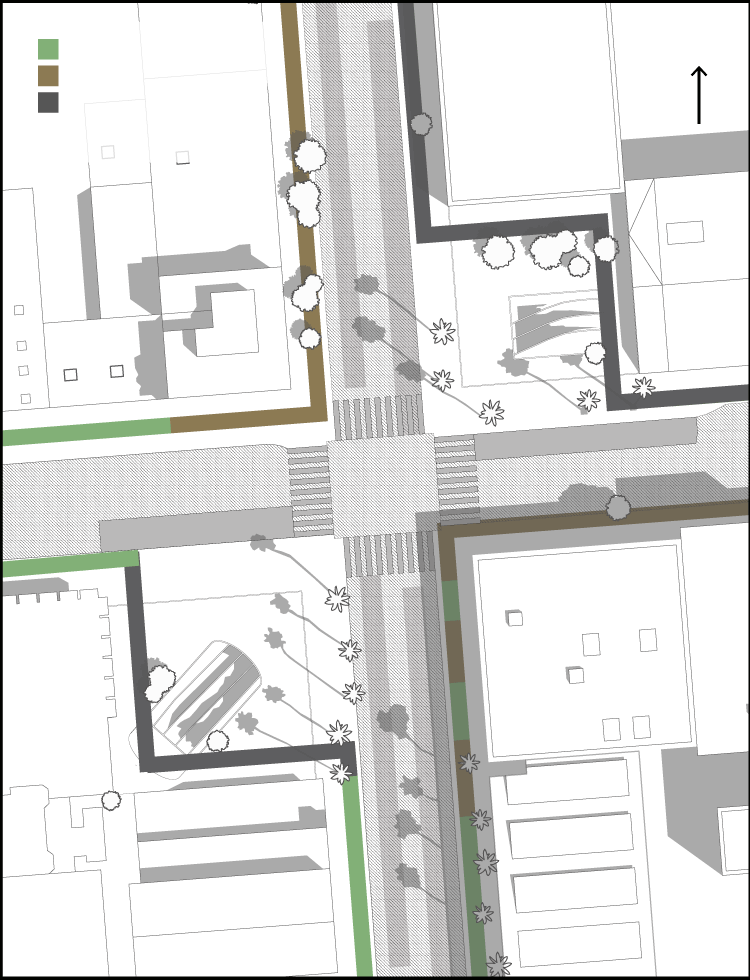
When Gehl mapped 16th and Mission pre-pandemic, there were surprisingly few active edges for such a busy traffic corridor. The only spaces directly facing the plazas that fit the highest standard of active edges were the Casa Thai Supermercado (now Casa Latina) and Mi Tierra Market.
The walls closest to the BART plazas were either blank (Wells Fargo, Aramex), fenced off from the plazas (Walgreens) or totally vacant (2973 16th, a then-recently closed Burger King).
16th and Mission storefronts 2018
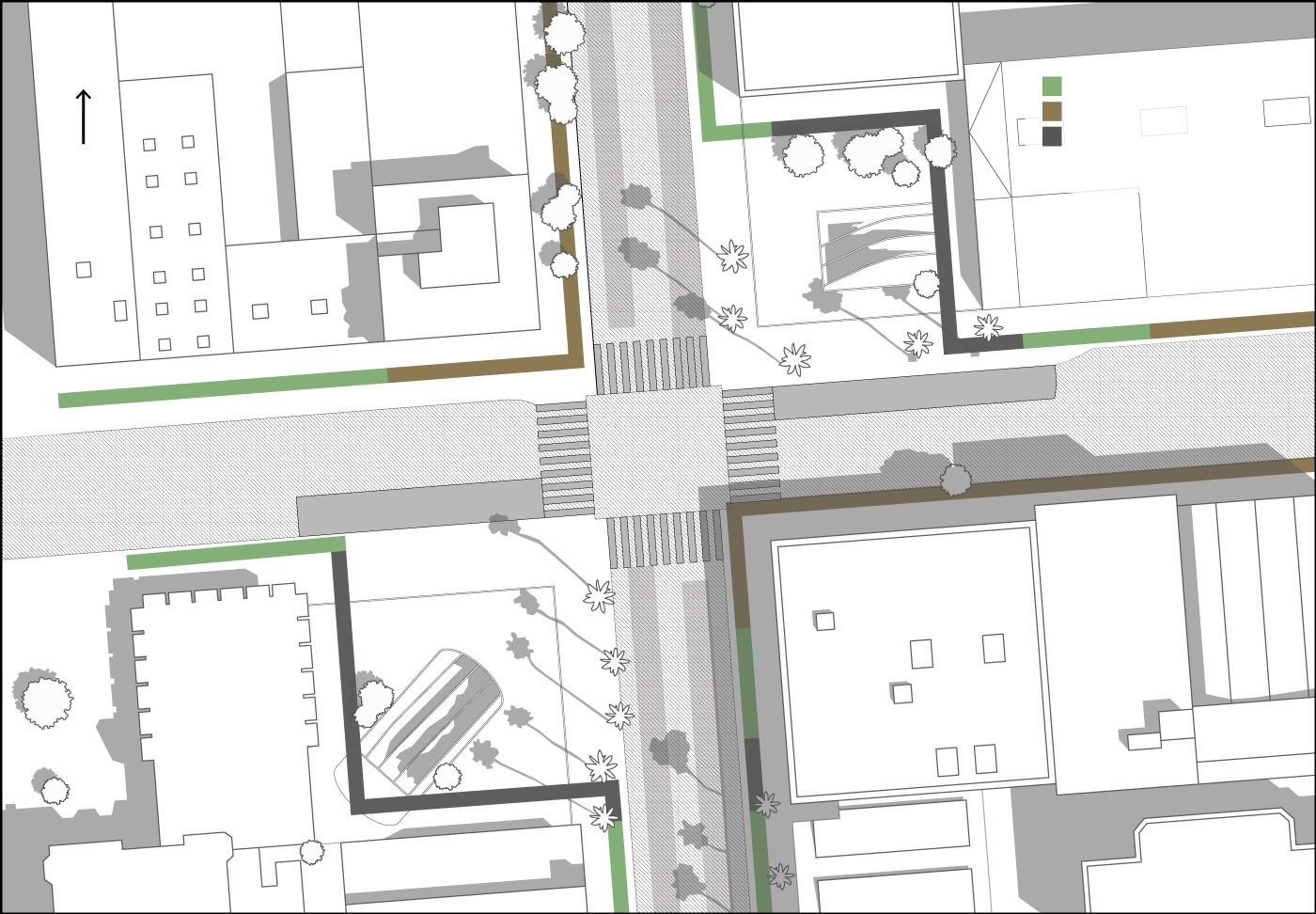
clear windows
covered windows
blank wall or vacant lot
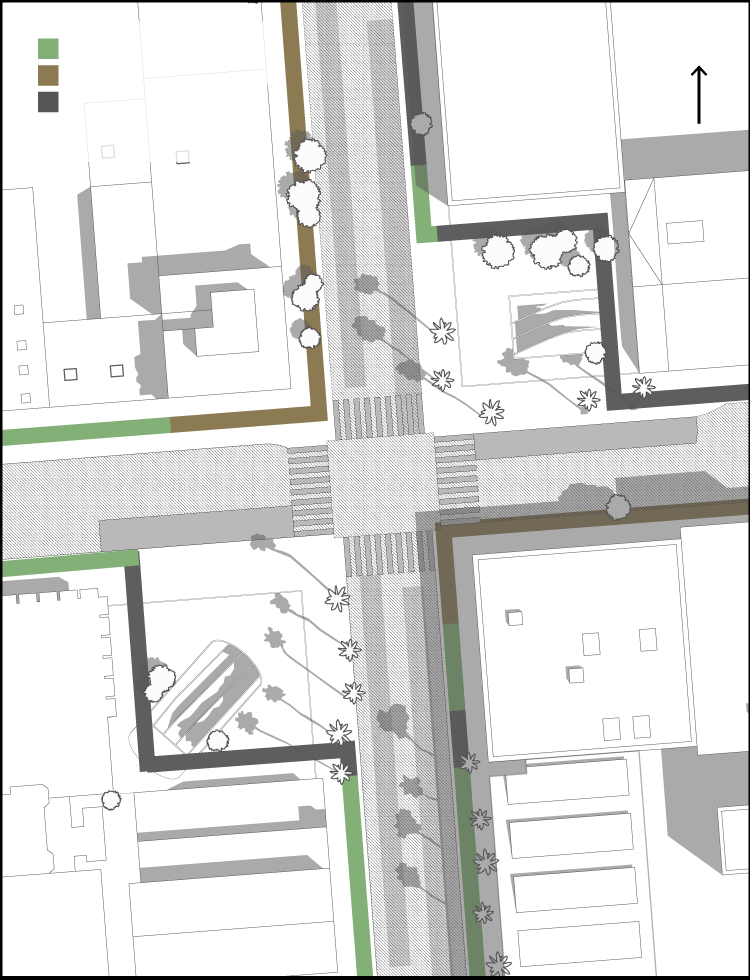
clear windows
covered windows
blank wall or vacant lot
Map by Iryna Humenyuk. Source: Data inspired by Ghel, data collected by H.R. Smith
Since then, the edges around the plazas have only gotten less active.
16th and Mission storefronts 2026
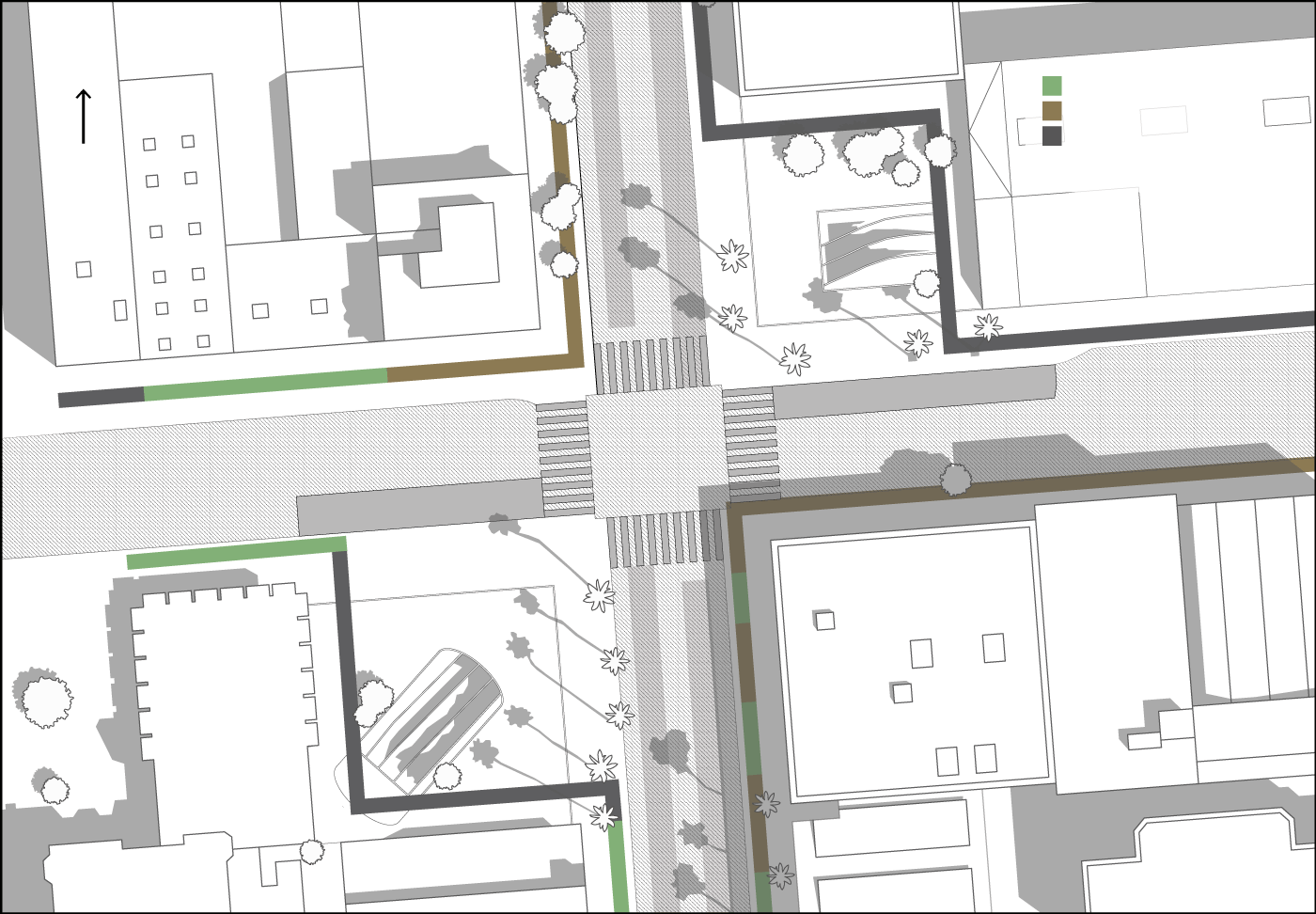
clear windows
covered windows
blank wall or vacant lot
clear windows
covered windows
blank wall or vacant lot
Map by Iryna Humenyuk. Source: Data inspired by Ghel, data collected by H.R. Smith
The Walgreens closed in 2019, followed by The City Club during the pandemic, and then Hwai Lei Market, and Mission Hunan a few months ago, to make room for construction at 1979 Mission.
In 2022, a debris fire that started on Wiese alley spread to 3032 16th, displacing 22 tenants and Taqueria Los Coyotes, a local stalwart legendary both for its California burritos, and for staying open until 3:30 am during pre-Covid times. The building is still boarded up over four years later.
Having storefronts with doors that open onto the plazas, and windows large enough for people inside to see out, and vice versa, would go a long way towards activating the space, says Muessig. If there’s a cafe or two in the mix, it’s quite possible that it would also increase transit ridership for Muni and BART.
“It’s great transit culture to have a cafe next to a transit stop,” says Muessig. “The Bay Area is a huge region, and people come from and commute from really far distances.” If commuters have a place at the beginning or end of their journey where they can take a moment to collect themselves, go to the bathroom, wash their hands, and/or grab a bite to eat, transit gets a lot more appealing.
When asked if BART would object to a building that is adjoining the BART property line to open a takeout window or door facing the plazas, BART spokesperson Christopher Filippi wrote that BART “encourages adjacent buildings to have doors facing the plazas to help promote activation and security” and that the agency is “having conversation with the 1979 Mission developers to have their doors in the family housing building open up onto the NE plaza.”
That conversation could include a ground-floor commercial space that opens onto the plaza, Filippi continued, “but no specific uses are being considered at this time since the building is still awaiting funding.” Out of the three buildings that have permits to build on the NE Plaza, only the permanent supportive housing has funding to break ground. That building will have a clinic on the ground floor.
There is quite a bit about active edges in BART’s redesign materials — though the accompanying images are of the kind of permanent buildings that for now, look like they might not arrive for a decade or more.
But there are also images that look more improvisational — temporary seating, pre-fab structures. The look here is reminiscent of Proxy — two city-owned vacant lots at Hayes and Octavia that are, currently, a mixture of small businesses operating out of pre-fab structures, and open space for public events like outdoor movies.
Proxy has been almost too good at creating public space. When then-supervisor Dean Preston moved, in 2023, to de-commission Proxy and build the affordable housing that was planned for the two lots, some neighbors went apoplectic at the thought of losing it.
In the case of the NE plaza, the challenges would be great (16th and Mission is nothing like Hayes and Octavia, and the land around the NE plaza is owned by MEDA and Mission Housing, not the city). But the civic payoffs could be significant. The soon-to-be-vacant lots around the NE plaza could be a place to watch outdoor movies, programmed by the Roxie, while munching on a hot empanada from Chile Lindo. They could be a spot to buy a cafe de olla to drink while you stand around waiting for a friend visiting from out-of-town to emerge through the BART entrance. They could be a dance pavilion where the Mission’s hard-partying seniors could dance the night away.
The Mission, unlike many neighborhoods in San Francisco, actually wants affordable housing, and residents fought hard to get it built at the NE plaza. A party plaza can’t make up for having to wait years more for the family housing that the neighborhood desperately wants. But it’s a start.
The last time I walked to the plazas, Mission St. felt the way it usually does — like a cacophony of San Franciscos jostling for space. The sidewalks were packed with commuters racing to their next thing, and with people nestled into the small wedges of semi- privacy created by the intersection of sidewalk fixtures and parked cars. A group of helmeted delivery men stood by their scooters, visors up and chatting with each other. Two young people in jaunty hats, both clearly under the influence of something, hunched between two parking meters, staring intently at a pile of buttons. A man riding a knee scooter as though it were a very small bicycle tried to swipe a banana from a bin in front of Mi Tierra Market, was called out by an apron-wearing teenaged worker, and scooted away bitterly.
The long wall of the former Walgreens was thick with people who didn’t seem to particularly like each other, and actually seemed like they might actually be about to fight each other. The group was, nonetheless growing in numbers. Even when that Walgreens was open, there was always something weird going on along that wall. I now knew that the storefront next to it was a boutique gym — there were a surprising number of those nearby — but its windows were covered. Except for a discreet sign advertising their wares in a lowercase font, the storefront — and virtually every other storefront around it— looked like it hadn’t been open in years.
The plazas themselves were nearly empty, except for the usual clump of guys drinking at the bicycle docks, and a few other people — also guys — sitting around with their backs to the rainbow fencing scrolling through their phones or staring watchfully into the distance. At the bus stop, a small juice cart with a jaunty rainbow umbrella appeared to be doing zero business.
It felt familiar, and it felt dreamlike, like something had shifted off its axis. All of buildings along 16th St, between the NE plaza and Capp, are gone — the first phase of the new construction, currently in the form of a security fence encircling a massive hole in the ground. I still haven’t gotten used to it.
At some point it will start to feel familiar. For now, it feels like anything can happen.
Iryna Humenyuk and Nicholas David contributed interviews and insight to this story.