
AT KITCHEN
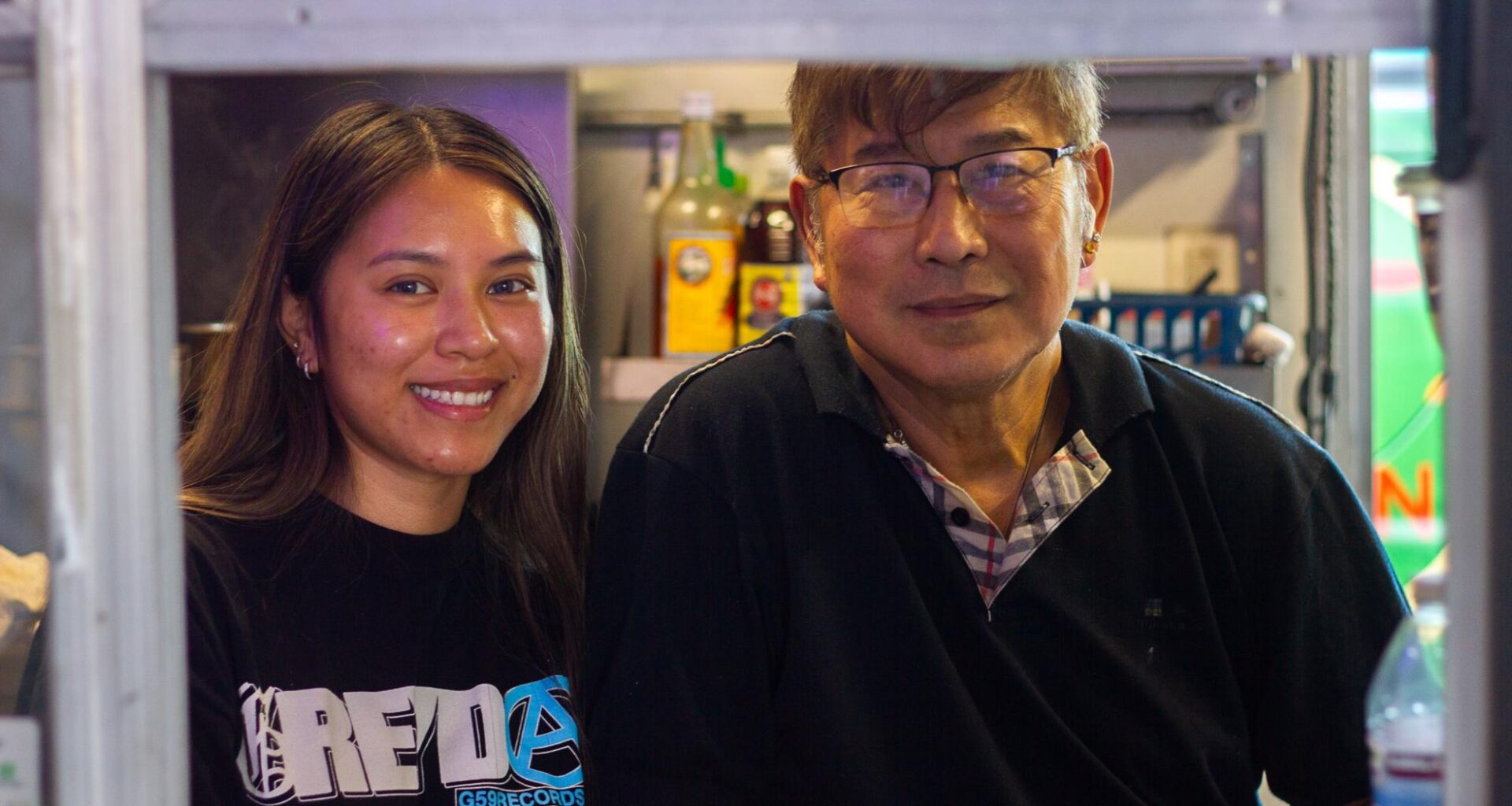
Hidden in a small alley off Alum Rock Avenue in San Jose lies AT Kitchen, a Chinese-Thai food truck serving street-style dishes. Founders Travis and Celena Tiet are a father-daughter duo — Celena explains that the food truck was originally her dad’s dream.
“The inspiration mostly comes from my dad, as this was something that he was passionate about,” Celena said. “I was just afraid of how that would work, especially because it would just be him doing it, since I also have a full-time job that I go to in the daytime. But then he didn’t listen to me, and he did it anyway. And so I had to help him the best I could.”
Coming from a Chinese heritage and a Thai culinary background, Travis purchased a truck off Craigslist in November 2025, focusing on creating nostalgic comfort food, initially titled “Fusion Cuisine,” until they changed it. Celena explains that the kitchen’s most popular dishes are the crab rangoons, fried shrimp rolls and pad thai — dishes that highlight Travis’s unique experience in both Chinese and Thai kitchens.
“The Pad Thai has both an authentic, tangy taste and also a little bit of my dad’s taste,” Celena said. “It’s a little bit sweeter and has a little bit of everything. So even though it doesn’t really taste like Pad Thai, it’s still Pad Thai — it tastes pretty good in its own way.”
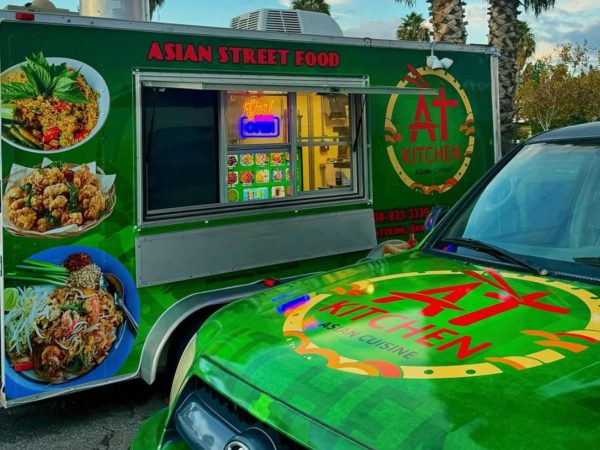 AT Kitchen is a food truck serving a myriad of Chinese-Thai dishes. Photo by AT Kitchen | Used with permission
As the business manager of AT Kitchen, Celena believes that although fusion cuisine has historically been underrepresented, its popularity has been growing recently, bringing new traction to the restaurant. She adds that mainstream media typically depicts fusion cuisine as Western cuisine with Eastern influence, which makes AT Kitchen unique in its culinary makeup.
“There’s a lot of Asian fusion, where people do Italian-Asian fusion or American-Asian fusion,” Celena said. “So that’s what people think of when people say Asian fusion — an Asian cuisine mixed with a more Western cuisine. Except, Chinese and Thai, they’re both Asian, but I still call it fusion anyway because Chinese and Thai food are very different too.”
Celena adds that she appreciates cooking for its creative freedom, sharing that she believes anyone can make good food as long as there’s passion and grit.
“I love Asian food because it’s a balance of everything,” Celena said. “At the end of the day, I think food is just like a type of art. You can label it as whatever, but anyone can make Asian food if they want to, as long as they do the research and they’re passionate about it.”
CURRY LIFE
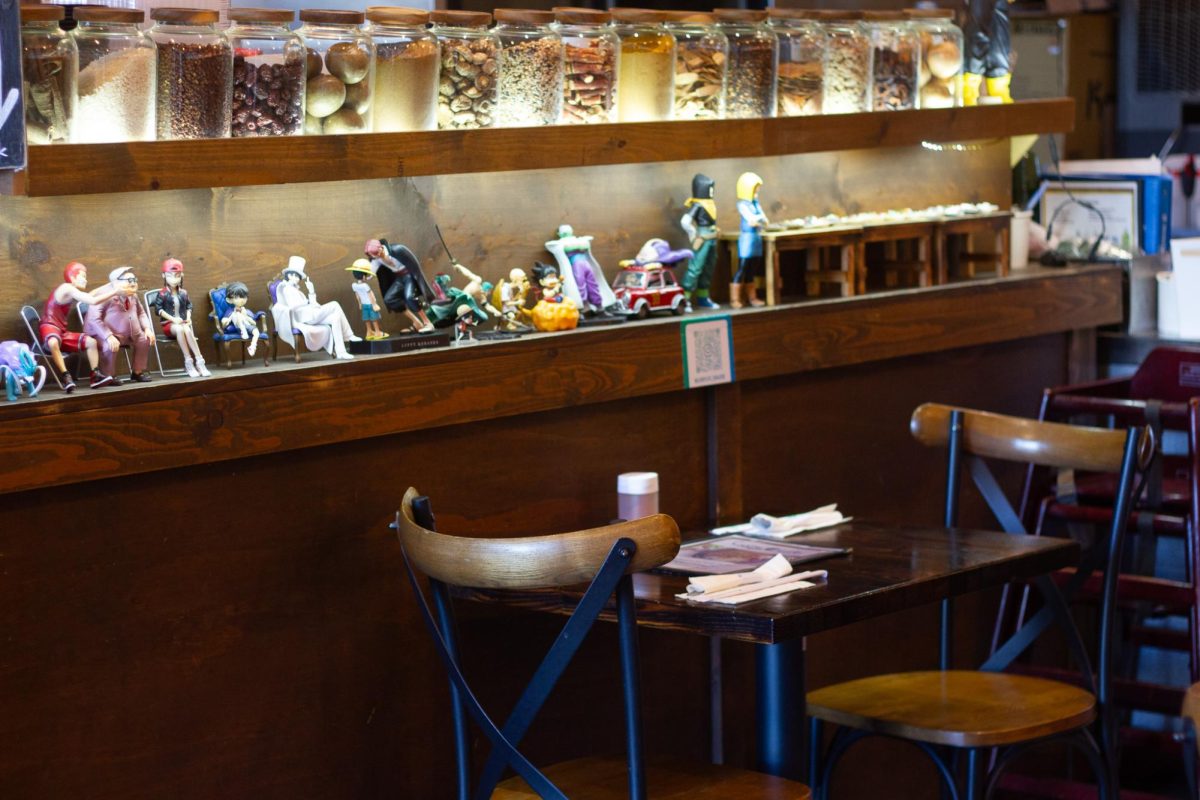
The interior of Curry Life features a wide variety of collectibles, spices and ingredients. Photo | Owen Liu
A big part of Angel Gallegos’ life has always been curry. Growing up, seeing his father work at a curry restaurant ignited his passion for the food. As a result, he chose to work full-time in the Japanese restaurant Curry Life when the previous restaurant he worked at was shut down due to COVID-19.
Originally crafted by the Japanese owner of Curry Life, the recipes consist of well-sourced ingredients — typically from Japanese markets, according to Gallegos. Gallegos says the owner is picky about the quality of groceries. Furthermore, Gallegos explains that for a while now, the recipes the staff typically serve have been very consistent after tweaking the recipes.
“The owner started with more traditional, Japanese recipes,” Gallegos said. “Then we started using Indian recipes, namely Indian spices, and a couple of other additions to make the recipes a little better. We stuck to those in the end because we tried adding things a year ago, but it didn’t work out.”
Gallegos appreciates the crowd and culture of customers who visit and work at the restaurant. During the summer, Gallegos mentions that they often have many familiar faces show up at the restaurant, which creates a sense of community.
“Usually our customer feedback is pretty positive,” Gallegos said. “When we’re super busy, there can be impatience because we can’t give them the attention that they want, and not everything always goes according to plan. But most customers are pretty understanding, especially when they see that we’re trying to help them out.”
HOME EAT
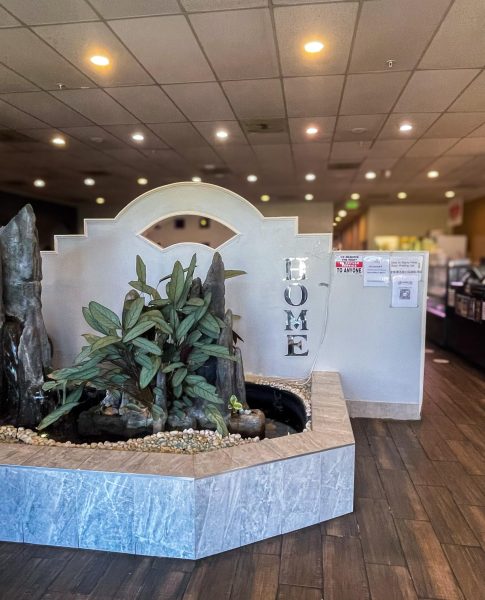 Customers inside Home Eat are greeted with a decorative water fountain. Photo | Nylah Gehani
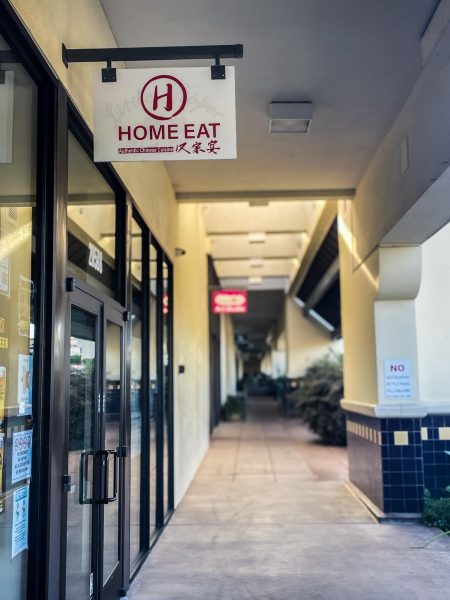
Greeting customers with a decorative water fountain, the entrance of Home Eat — a Chinese restaurant off Stevens Creek Boulevard — is welcoming to all, as the word “home” is pasted vertically in reflective silver letters along the stone. In the Bay Area, this chain restaurant has served as an authentic, reliable location that transports customers to China through cuisine.
Crew member Luis Rodriguez, who chose to work there to save money for college, highlights some of his favorite dishes that also appeal to most of the customers. Namely, their chicken wings, beef wrap and boiled fish are popular on the menu because they represent Chinese cuisine through their unique flavors, according to Rodriguez.
 Customers inside Home Eat are greeted with a decorative water fountain. Photo | Nylah Gehani
“You kind of find these flavors everywhere in this restaurant,” Rodriguez said. “But some recipes have really different variations. Everyone here who works in the kitchen is from China, so the food is truly authentic. They do everything here the way they would there.”
While the Chinese chefs produce an accurate representation of the cuisine, Rodriguez adds that many of the staff members also speak Mandarin fluently, which increases familiarity for Chinese customers. Additionally, he finds that Home Eat introduces customers to Chinese cuisine and culture.
“The most rewarding part is seeing people happy here,” Rodriguez said. “Most of the Chinese customers don’t speak English, so when they come here, they probably feel at home rather than feeling different. In that way, this place is very authentic because it allows for that culture to show through.”