
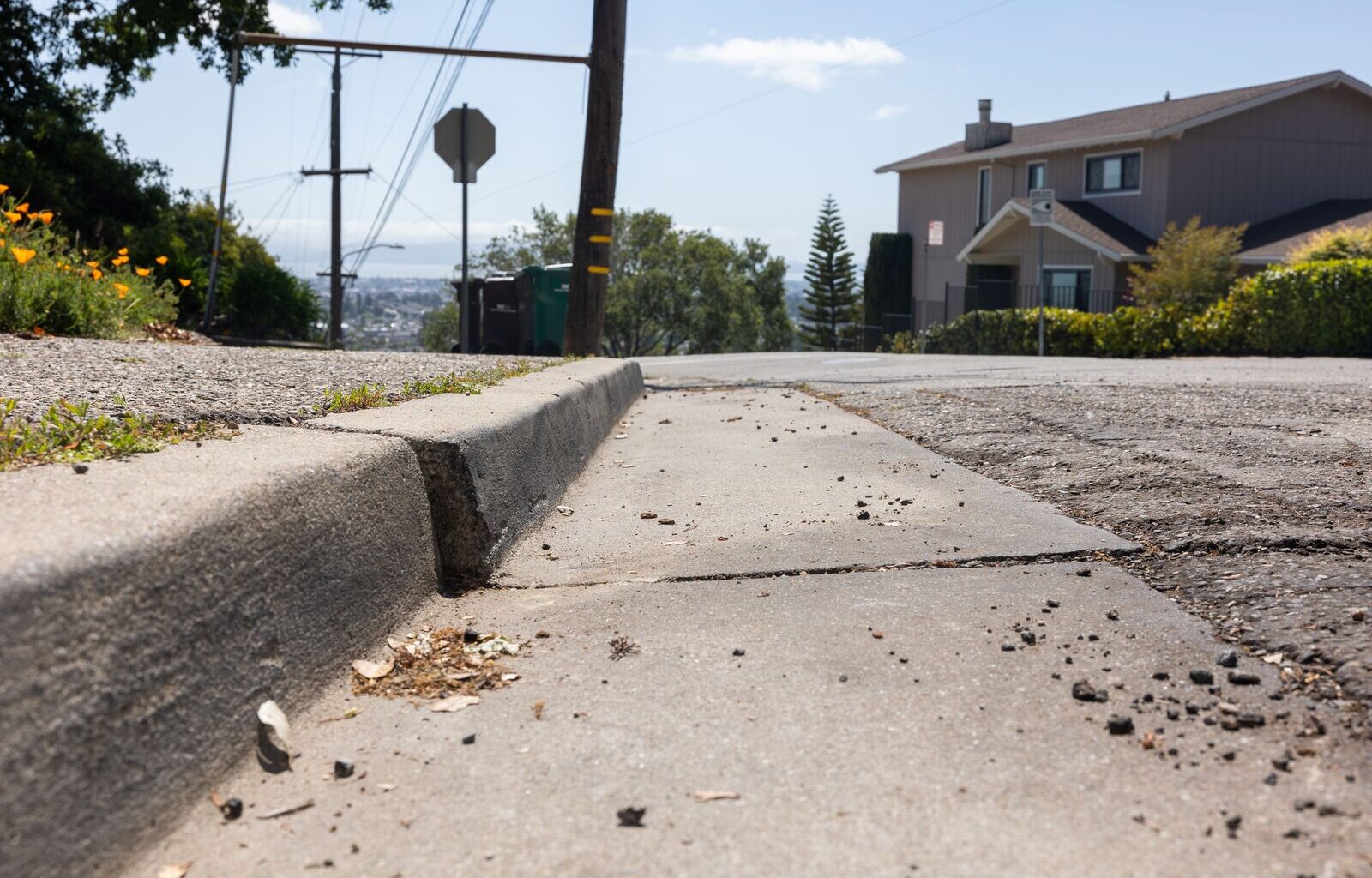
A magnitude 4.6 quake in the Santa Cruz Mountains was strong enough to wake Oakland up — or keep you up, if you’re a night owl — around 1:40 a.m. Thursday.
Of course, earthquakes are a fact of life in the Bay Area. Small temblors jostle us awake at night and rattle buildings in the middle of the day. While most seismic events don’t cause significant damage, it’s only a matter of time until the “Big One” happens. And when it does, it’ll be important for all of us to be prepared.
You’ve likely heard of “go bags” and practiced crouching under tables at school if you grew up in California. But when a quake is not fresh on the mind, it can feel overwhelming and deceptively low-priority to figure out how to prepare for the worst.
Luckily, there are several simple steps you can take and resources you can take advantage of locally to be safer and more resilient on that inevitable day.
How to stay safe during an earthquake
If an earthquake strikes, experts say to drop to your hands and knees, and either crawl under a cover like a table or against a wall away from windows. Grab hold of something sturdy and stay crouched down, covering your head with your arms in case anything falls on you. The U.S. government’s Ready website has more detailed instructions, including for people using canes, walkers, or wheelchairs.
Since earthquakes also happen at night, it’s probably a good idea not to have heavy objects placed on shelves or mounted on walls above your bed. Conventional wisdom also says you should keep a pair of shoes under your bed at all times. If the windows shatter, you’ll want to avoid walking on the treacherous ground barefoot or pulling on a pair that has broken glass inside of it.
If the building you’re in gets damaged, move outside as soon as you safely can, wearing sturdy shoes and protective clothing like long sleeves. Have a meeting place planned with family or friends.
Having a few key tools at the ready is also important. If you smell a gas leak in your home, you can use a crescent wrench to shut off the gas at the meter once the rumbling has stopped. Read more about this on PG&E’s website. An up-to-date fire extinguisher is a must-have for any household.
To find immediate information about an earthquake, check the U.S. Geological Survey’s real-time map of temblors around the world. You’ll find the time of the quake, the location where it originated, and the magnitude, or physical size. Each subsequent number on the scale refers to a tenfold increase — for example, a magnitude 5.0 quake is 10 times as strong as a 4.0. The destructive Loma Prieta quake in 1989 was 6.9. The Hayward Fault, which runs right under Oakland, Berkeley, and Richmond, is capable of a 7.0 earthquake and geologists say it’s among the “most active and dangerous” faults in the U.S.
If you feel an earthquake, even a tiny one, the U.S. Geological Survey recommends reporting it to the agency. These crowd-sourced reports lead to more precise data.
How to sign up for emergency alerts
Sign up for AC Alert to receive mass emergency notifications via text, email, or phone from the county and local cities.
The free MyShake app provides advance notice for large earthquakes. Android users are automatically subscribed to alerts that use the same technology.
Earthquakes can also cause tsunamis, something to watch out for if you live near the bayshore. The National Weather Service issues tsunami warnings and advisories at Tsunami.gov.
How to pack a go bag and supply kit
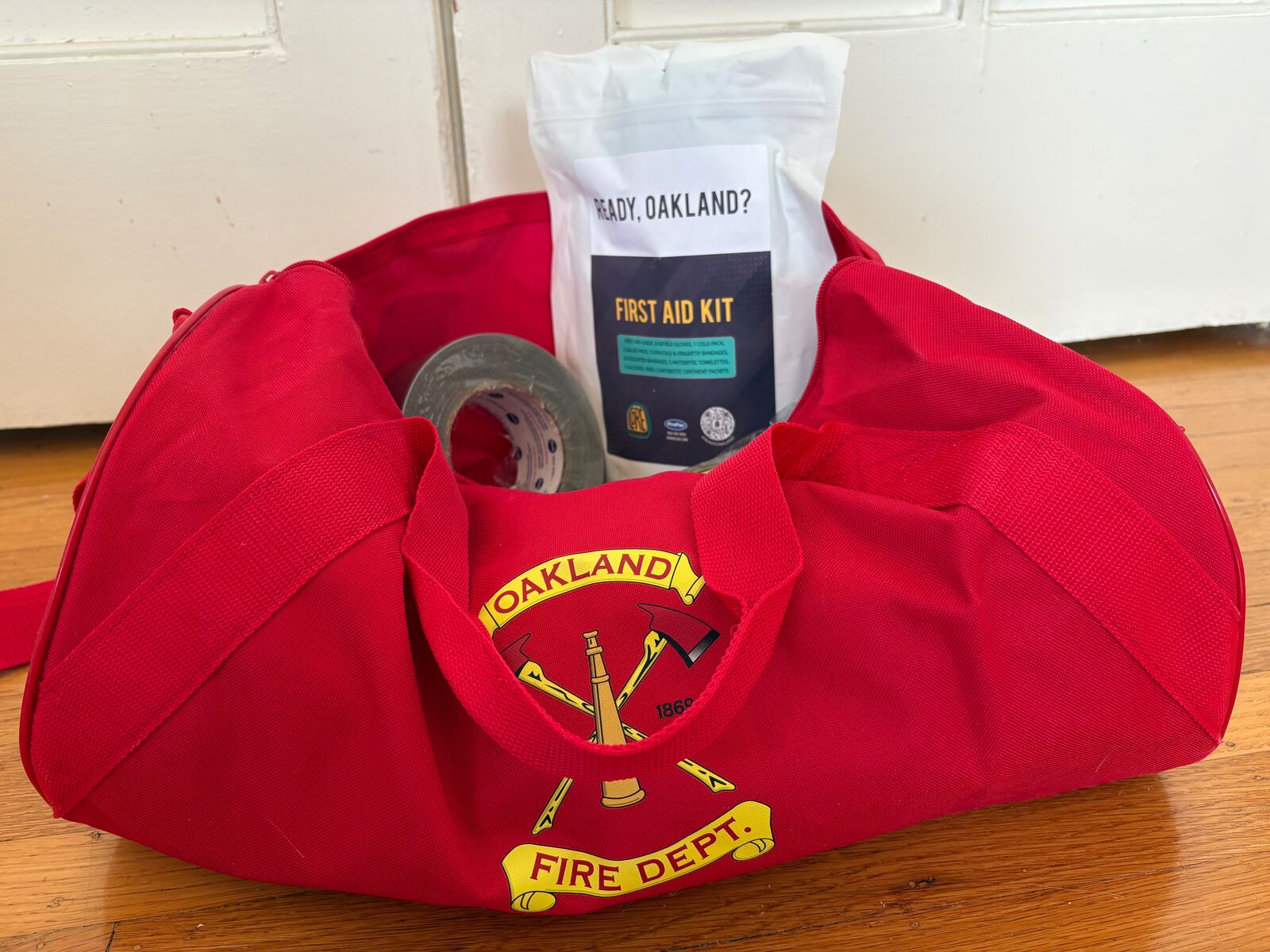 Go bag provided by the city of Oakland during a Personal Emergency Preparedness class. Credit: Natalie Orenstein/The Oaklandside
Alameda County has interactive checklists and videos for packing emergency supply kits for your home, office, and car. You never know where you’ll be, or where you’ll need to go, if disaster strikes. These kits should have enough supplies for three to seven days, depending on where they’re located.
Here are some of the most important items (but make sure to read the whole linked list):
Water — one gallon per person or pet for each day
A water purification kit, in case water is not shut off but is potentially contaminated
Canned food (and a can opener!)
Cash
Copies of important documents
Face masks, especially the N95 type that filter dust out of the air
First aid kit
Flashlight and batteries
The California Office of Emergency Services also has a shorter list of essentials for a “grab and go bag” — something you can easily pick up and flee with in an emergency.
It’s also worth thinking ahead about everyday and sentimental items you’ll want to take with you if you have more time to leave in a different disaster, such as under an evacuation warning for a nearby wildfire.
How to prep your home
In addition to gathering items to keep at your residence, there are steps you can take to make your home safer. Homeowners can sign up to be alerted when this year’s round of Brace + Bolt award applications open, usually in the fall. The state program reimburses certain seismic upgrades up to $7,000, including bolting your home’s foundation to the frame of the house.
If you rent, there are small things you can do too that go a long way toward earthquake safety, such as confirming your water heater is appropriately strapped in place and asking your landlord if you can bolt bookshelves to your walls.
The Association of Bay Area Governments has an online quiz to determine how safe your home is.
How to get trained in earthquake preparedness
The city of Oakland hosts Personal Emergency Preparedness (PEP) trainings in different communities monthly. Participants learn about preparing for disasters, including basic first aid medicine, reducing hazards at home, and stocking emergency supplies. You can check the schedule online.
Oakland residents can also contact the city about co-hosting a PEP class for their neighborhood. If you’d like to parlay your individual preparedness into supporting your broader community, consider taking a CERT training course after the PEP class.
How to help out your community before and after a quake
Oakland residents can undergo Community Emergency Response Team (CERT) training to support their neighborhoods and the city in the case of a disaster. Through this three-day training (you can also do a hybrid option over a longer period of time), you’ll learn skills like extinguishing small fires, performing search and rescue, and organizing volunteers to act as first responders. Once you’ve been trained, you’ll be certified as a Disaster Service Worker Volunteer and may be tapped to help out in emergencies.
The city of Oakland encourages everyone to go through CERT training. However, the program has been paused this year as the city prepares the 2026 schedule. You can still sign up for the waitlist.
When to practice for an earthquake
International ShakeOut Day is Oct. 15 at 10:15 a.m. local time. This is an annual worldwide earthquake drill; you can register to participate in California online. You can customize the distance from your home and the magnitude of the quake that you want to trigger an alert in the app’s settings under “Custom Earthquake Notifications.”
Where to learn more about earthquake preparedness
“*” indicates required fields