
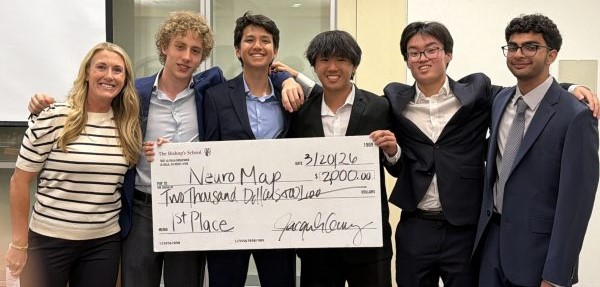
A plan to develop a website similar to Yelp for people to find public places suitable and safe for neurodivergent family members took first place in the Social Innovation Challenge at The Bishop’s School in La Jolla.
Students were asked to identify a societal problem and develop a new, inventive way to solve it. One of the goals is to encourage members of the next generation to use their minds creatively to better the world.
During the “Shark Tank”-style competition March 20 on campus, students pitched their ideas to a panel of judges, showed videos they produced and answered questions. The judges — consisting of Bishop’s faculty, parents and alumni, professionals in fields including capital investment and artificial intelligence, and others — offered suggestions about partnerships, funding and ways to scale up the projects.
Eleven teams competed for the top prize of $2,000 to seed future endeavors of the winning project.
That proposal was NeuroMap, an in-development website intended to help families of children with autism, attention deficit/hyperactivity disorder, dyslexia or other neurodivergent issues.
“A big problem that families [with neurodivergent children] have is that they often do inaccurate research on public places and they bring their kids there,” said NeuroMap team member Nolan Ameriks. “But then these places aren’t welcoming or suitable for their child, so it leads to meltdown or sensory overload. Our website seeks to inform them properly and make sure a place is somewhere they can take their kid and they’re able to adventure without that uncertainty.”
Similar to Yelp, the website would use firsthand reviews from parents who visit places and offer feedback on aspects such as autism friendliness, noise, crowds, lighting, staff hospitality, stairs and other accessways and more.
Team member Kent Isakari said the site is in the prototype phase and working to establish a base to launch.
“We want to hear overall thoughts and get specific, tailored feedback for neurodiverse children,” Kent said. “We [on the team] all have close friends or relatives with autism or are neurodiverse, so we have all seen the struggles they have faced. We really wanted to address this issue.”
To build the prototype website, the team conducted a survey of parents with neurodivergent children to determine what type of information they would want in a platform like NeuroMap. From there, the members consolidated what they had gathered into a two-minute presentation for the Social Innovation Challenge judges.
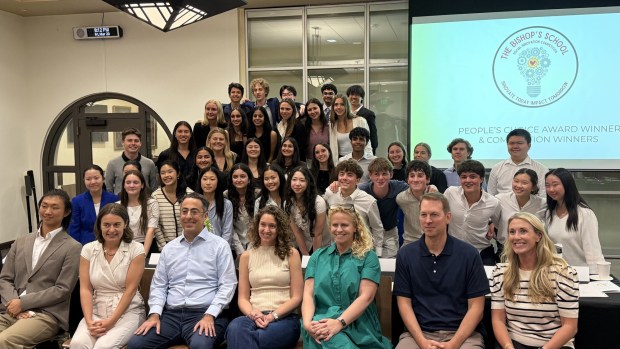 Participating students and judges are pictured at The Bishop’s School’s Social Innovation Challenge. (Marcia Isakari)
To get some early feedback, the team presented its ideas to Bishop’s teachers to “hear what questions they have specifically so we could … use that to change our pitch and kind of figure out the best way to make it both clear and easy to understand for everyone while addressing the big topic we want,” Kent said.
That extra bit of prep work paid off, as the team walked away with the first-place prize, which will be used to further develop and launch the website.
“It was pretty surreal,” Nolan said of the victory. “I couldn’t believe it. I was kind of just in shock, but it was pretty rewarding.”
Kent said he’s “proud of all the hard work we’ve [put into this] and being recognized for it.” ♦