
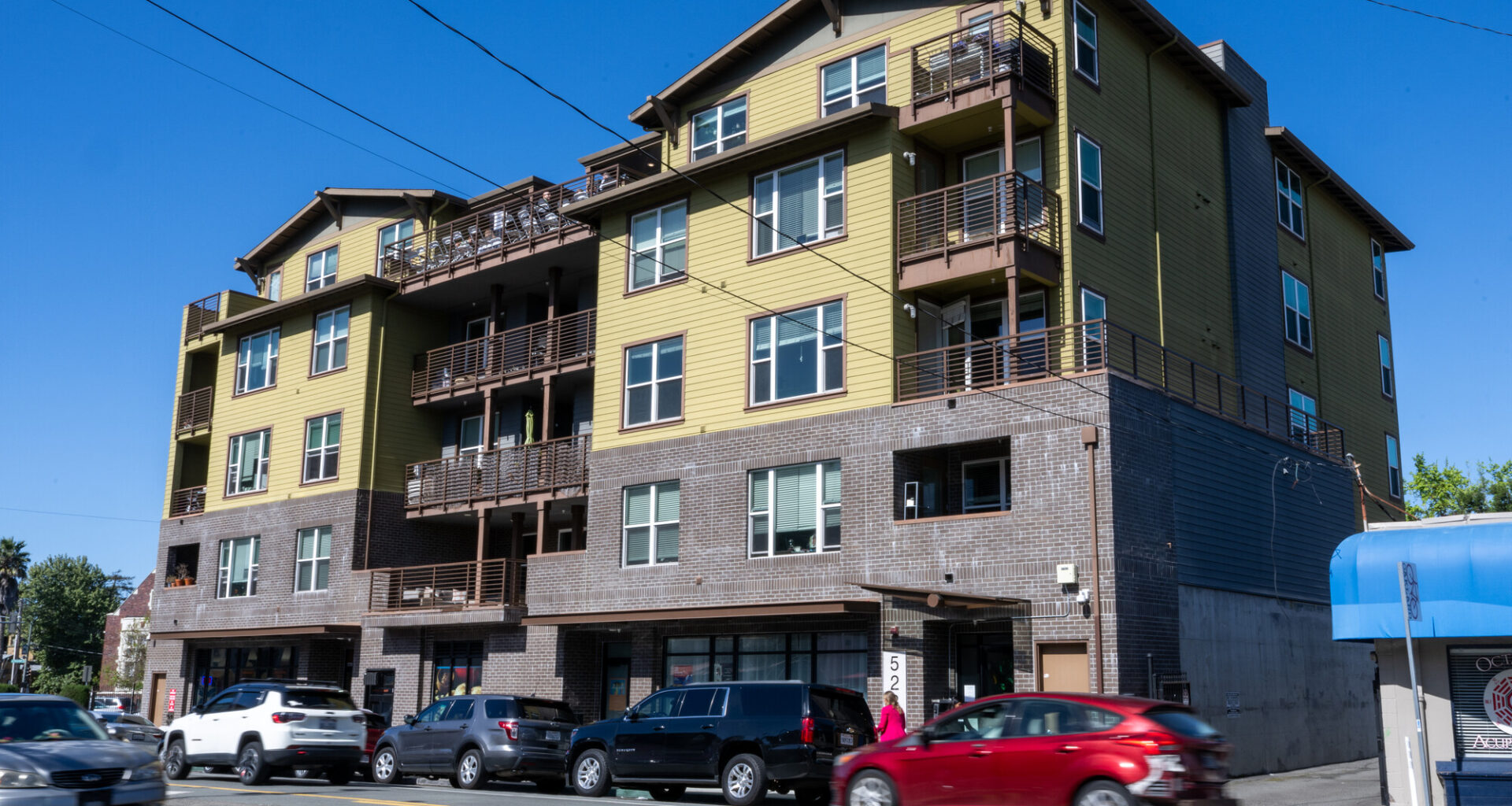
“I know what difference it’ll make in terms of when we’re responsible for getting our best people here to do what is so important,” Saddler said
In recent years, as the cost of living outpaces the rate of teachers’ salaries, cities across the Bay Area, including San Francisco, have introduced workforce housing developments.
The San Francisco Unified School District opened a 134-unit building in October and broke ground on another 75-unit project last June. San Mateo’s Jefferson Union High School District also has a 122-unit development, which houses about 25% of its eligible workforce.
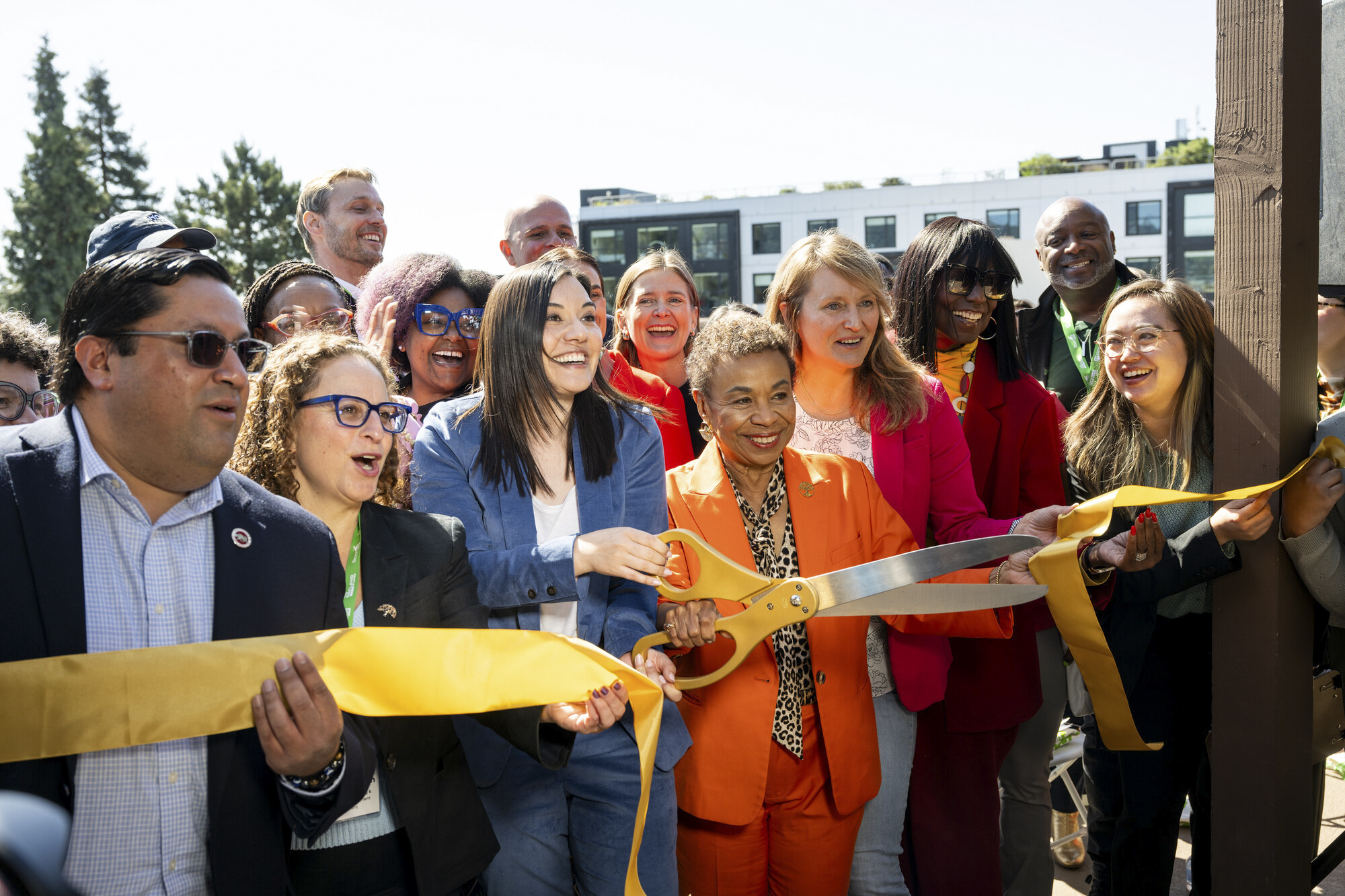 Mayor Barbara Lee, Kyra Mungia, co-founder of Rooted, politicians, teachers and supporters participate in a ribbon cutting during a press conference announcing new affordable housing for Oakland Unified School District teachers and school employees at a recently purchased residential building in Oakland on April 2, 2026. (Beth LaBerge/KQED)
The housing model’s appeal is growing as teachers’ strikes mount in several Bay Area school districts. Earlier this year, Oakland’s teachers union threatened to strike after a year of contract negotiations, citing low pay and sky-high costs of living in the city. Union President Kampala Taiz-Rancifer said about 60% of the district’s teachers can’t afford to live in Oakland with their current salaries.
The lack of affordable housing options for educators has made it difficult for the district to attract and retain educators. Oakland loses about 400 teachers each year, according to the teachers’ union.
Kyra Mungia, The Oakland Fund’s chief executive officer, said that when staffing instability and classroom vacancies occur, “it’s our kids who end up paying the price.”
“Today, we are showing that a different path is possible,” Mungia said.
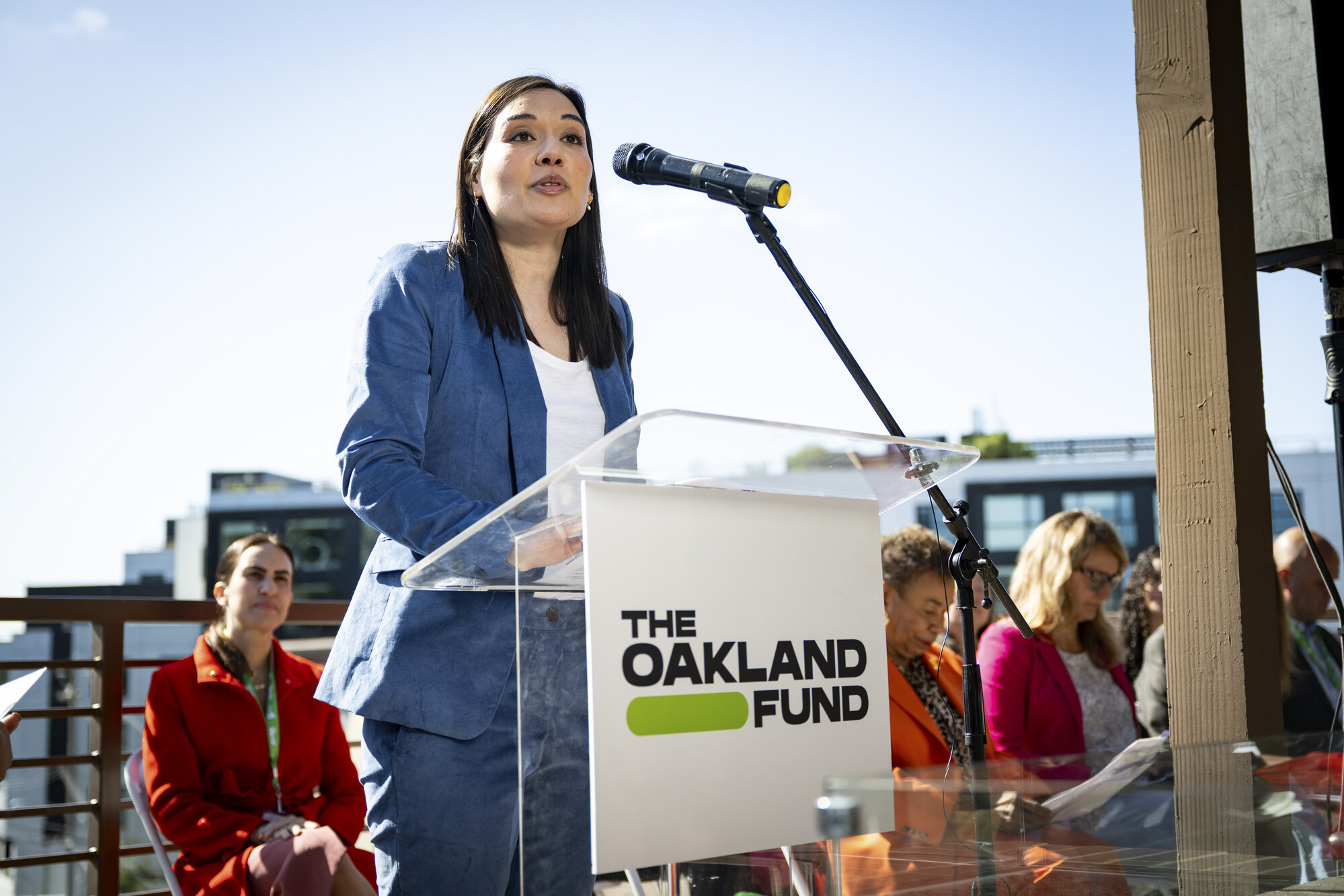 Kyra Mungia, co-founder of Rooted, speaks during a press conference announcing new affordable housing for Oakland Unified School District teachers and school employees at a recently purchased residential building in Oakland on April 2, 2026. (Beth LaBerge/KQED)
Unlike many of the workforce housing developments that Bay Area districts have pursued, the housing will be converted from existing residential units, not built from the ground up. Transferring the units to educators will be a gradual process, as turnover among tenants occurs naturally.
According to the nonprofit, rental rates will vary by unit and be set at 30% of educators’ household income. One bedrooms will be priced between $1,120 and $2,240, while two bedrooms could cost up to $2,560.
Melanie Turner, a special education teacher at Emerson Elementary School, moved into the Idora building in 2024.
 Oakland teacher Melanie Turner speaks during a press conference announcing new affordable housing for Oakland Unified School District teachers and school employees at a recently purchased residential building in Oakland on April 2, 2026. (Beth LaBerge/KQED)
“I’ve been here for now my third year, and I don’t plan on going anywhere anytime soon because of where I live,” she said at the press conference.
During the pandemic, prior to becoming a teacher, Turner and her preschool-aged son had been couch-hopping at friends’ and family members’ homes.
“I was not able to provide for my child in the way that I expected to,” she said. “Now, I can stand here in front of you and say, not only am I able to do that, but I can have savings.