
Changes to Title II of the Americans with Disabilities Act have left UC Berkeley faculty feeling unsupported as they navigate course accessibility, with many concerned about needing to overhaul all online materials.
The changes will require more campus digital course materials to be web accessible by April 24. Web content accessibility standards for these materials have largely been reserved for public resources, with additional support being provided through accommodation requests.
In 2022, UC Berkeley was sued by the U.S. Department of Justice for failing to abide by these standards and given three and a half years to make the appropriate changes. Now, revisions to Title II of the ADA will apply these standards to password-protected course sites such as bCourses.
Faculty and staff across multiple departments have raised concerns about this transition, especially as it applies to course sites and other digital resources.
“The challenging thing for some of the tech classes is that the tools we use (such as) LaTeX and … tools to build websites haven’t built good practices into generating compatible PDF files,” said Michael Ball, a lecturer in the department of electrical engineering and computer sciences, or EECS.
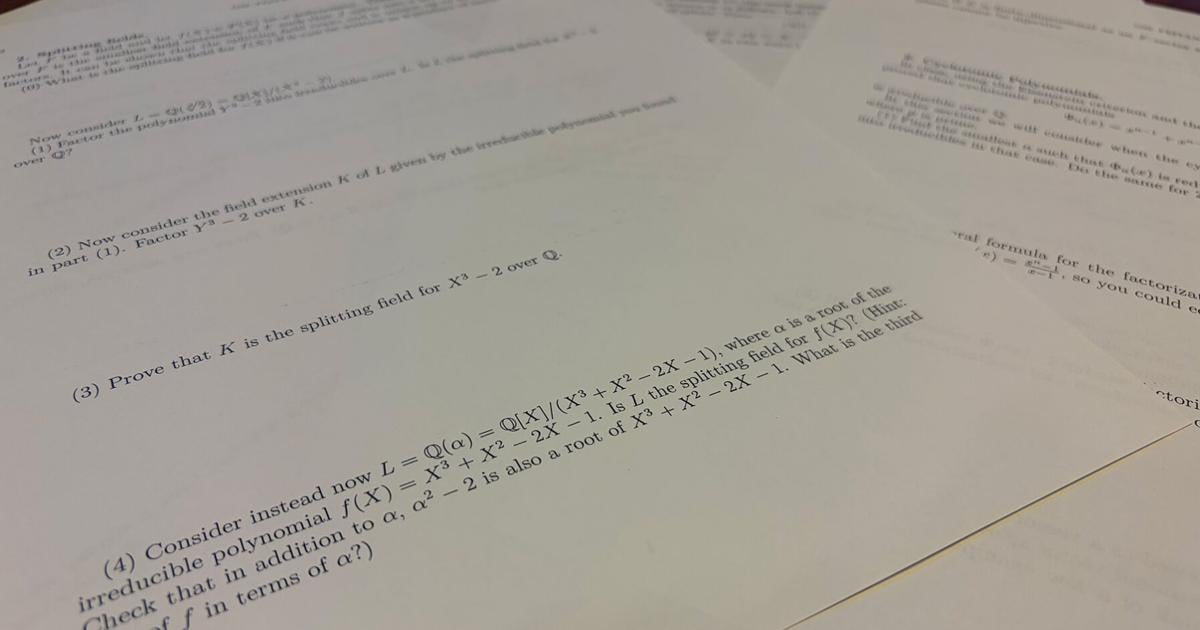
LaTeX is a typesetting platform known for its convenient formatting of mathematical formulas and other symbols in PDFs. In its base form, LaTeX isn’t screen reader-accessible, but PDF tagging is offered as an additional package. Screen readers use tags to read PDFs and other online structures in the correct order.
However, PDF tagging isn’t compatible with slideshows made in LaTeX, which linguistics professor Lev Michael uses for Linguistics 100, taught to more than 200 students. For him, these new changes would require an overhaul of class resources.
“There’s a special document class (in LaTeX) called Beamer,” Michael said. “It turns out that the Beamer package is completely incompatible with the things that The LaTeX Project has done to make PDFs accessible.”
The Research, Teaching, and Learning organization has compiled resources for faculty to assist in this change. Suggestions for handwritten materials and slides made with the Beamer package include extracting text with campus-licensed AI models such as Google Gemini and scripts to convert slides to ltx-talk, a more accessible slide package.
Ltx-talk was only released last Thursday, March 26. In response to the suggestion to use large language models, linguistics professor Hannah Sande brought up concerns about privacy.
“Some of the data I work with is spoken by individuals or speech communities that are not very happy to have their data shared with large language models,” Sande said.
Faculty were told in October 2025 that changes to course content would need to be implemented by April 24 in email correspondence, according to Assistant Vice Provost of Undergraduate Education and Chief Academic Technology Officer Anne Marie Richard. Ella Callow, UC Berkeley’s ADA and Section 504 compliance officer, stated the transition will be supported by UC Berkeley’s IT Accessibility Policy Advisory Committee.
Despite the offered support, faculty are still concerned about the workload required to adjust course materials.
“I haven’t quite made … the extreme decision that some of my colleagues have made to stop posting class materials online,” Sande said. “I’ve basically been doing the bare minimum in my materials to make them useful for the class, but also to meet the accessibility guidelines.”
Andrew Liu, a previous course staff for Computer Science 61C who helped transition materials away from LaTeX, said they were worried about public lecture videos being removed, similar to what some UC Berkeley courses did following the 2022 lawsuit.
“It’s really unfortunate that (UC) Berkeley used to provide really great public resources that are now no longer public,” Liu said. “I think the loss of knowledge … is sad, I wish there was some better way of meeting in the middle … without necessarily overburdening professors for the semesters during the transition.”
Liu helped facilitate the transition from LaTeX to the text editor Typst, a platform that includes more accessibility resources.
Despite the transition necessary for the current situation, Ball said he’s optimistic about accessibility improving if given enough time. Before becoming an EECS lecturer, Ball led accessibility remediation when he was an engineer at Gradescope.
“The tools and techniques of making documents accessible are improving,” Ball said. “I think there’s always going to be a little bit of needing to learn, but I do think it’s feasible that people get to a good spot in the long run.”