
For The Union-Tribune
After an unusually warm winter, it’s full-on spring. We saw many of the perennials, annuals and shrubs that normally bloom in April flowering in March instead.
While we still enjoyed the show, what happens to insects that emerge now and rely on those flowers, but the blooms are long gone? That’s a worry.
Events
April is garden class and garden tour time of year:
• Now through July: Participate in my “Strong Starts” virtual vegetable gardening course to learn how to start seeds and grow summer vegetables, summer flowers, basil and more. Starting from seeds is most rewarding and gives you the most control over what you grow and what you eat. We grow together all season long! Learn more here.
• April 11-12: Visit San Diego area gardens filled with native plants on the California Native Plant Society garden tour, “Where Native Plants Thrive.” Learn more and buy tickets at cnpssd.org/2026-garden-tour.
• April 18-19: “Welcome to the Jungle” is the title of this year’s Coronado Flower Show. Learn more at coronadoflowershow.com.
• April 25: Palomar Cactus and Succulent Society Spring Festival, Plant Show and Sale at Grace Presbyterian Church in Vista. Find more information at palomarcactus.org/plant-show.
• April 26: California Native Plant Garden Tour Oceanside, put on by the Oceanside Coastal Neighborhood Association and Buena Vista Audubon Society. For a map to this free guided walk, message BVAudubon.org or OCNA101.org.
• Tour your own garden. Appreciate the beauty you’ve created. Take photos, make notes, enjoy. Share your images with other home gardeners in the San Diego Gardener Facebook group here.
Vegetable garden
April is when the soil and air are finally reliably warm enough to start summer vegetable, flower and herb seeds and to plant seedlings.
Wait to transplant summer seedlings outside until overnight temperatures are are consistently 50 degrees or warmer. If you start seeds in containers indoors now, by time your seedlings are big enough to transplant, the air and soil should be just the right temperature.
Root crops like carrots, beets, radishes, turnips and parsnips don’t transplant well, so plant their seeds directly into the garden. Don’t be tempted by seedlings in the nursery.
Start cucumbers, squash, and melons in large pots now for transplant in a few weeks or plant the seeds directly in the ground toward the end of the month.
Wait until next month to plant corn and okra seeds in the garden — both grow best with lots of heat.
Since our soils have very little organic matter, it’s better to grow vegetables in raised beds. Raised beds are also easier to reach and work in and hold moisture better than soil.
Fill on-ground raised beds with a topsoil mix that’s 40% compost mixed with 60% “dirt.” Mix in some worm castings and organic granular vegetable fertilizer. Line the bed bottoms with hardware cloth (not chicken wire) to exclude hungry gophers.
Build your own on-ground raised beds. Watch my videos to see how build a raised bed here and how to plant a raised bed here.
My favorite free standing raised beds are made by Vegepod, stand-alone, prefabricated raised bed systems with built-in irrigation. These waist-high beds work amazingly well for everyone, especially for people with back and knee issues.
DO NOT till your garden. Tilling appears to fluff up and soften soil but actually causes the soil to compact. Rototilling also destroys earthworms and the critical beneficial microbes that interact with plant roots to keep them healthy.
The best irrigation for raised beds is narrow in-line drip, such as Netafim Techline EZ, with emitters spaced every 6 inches. Shop for Netafim Techline EZ online or at your local irrigation store.
Make tomato cages from sheets of concrete reinforcing mesh held together on the short ends with zip ties. Fold the mesh to create a freestanding cylinder, about 3 feet in diameter — perfect for two tomatoes. These cylinders also support cucumbers, bean plants and other climbing crops. Watch this video from my Easy Seed Starting Online Course to see how: bit.ly/tomatocages.
Rotate crops. Tomato, pepper, eggplant and tomatillo are all susceptible to the same soil pathogens. When you plant these nightshade plants in the same soil year after year, they produce less and less. Instead, set up garden beds in pairs, plant all nightshades in one of the beds the first year. Move them to the other bed in the second year. Move them to the original bed in the third year and continue that process.
Looking for varieties that resist root knot nematode or verticillium wilt or early blight or other common tomato problems? Check the variety descriptions for resistance codes like those listed at reimerseeds.com/disease-resistant-tomatoes.
Heirloom vs hybrid? Heirloom vegetables are popular for their flavor, but most are sadly short-lived, since they have little to no resistance to common pests and diseases. “Old” hybrids were popular for their production and transportability, as well as their pest and disease resistance, but often lacked in taste. Modern hybrids feature the best of both worlds, with better pest and disease resistance, high production, and really good flavor. There are many more options now as compared with two or three decades ago.
Flowers
My favorite flowers to cut now for bouquets:
• Bearded iris
• Bugle lilies (Watsonia)
• Clivia
• Daffodils and narcissus
• Forest lily (Veltheimia bracteata)
• Grevillea
• Peruvian lilies (Alstroemeria)
• Pincushion (Leucospermum)
• Rosemary
• Roses
Cut back California poppy plants after their first blooms fade. Water and wait. They’ll sprout a new set of leaves and bloom again.
The unfortunate part about spring bloom is that it’s too late to plant the bright colored annuals that are already flowering. Don’t despair. Take photos, make a note to put those plants on your shopping list for next fall.
Container gardens
A sunny balcony, patio or porch is the perfect spot to grow smaller, dwarf varieties of tomatoes, peppers, eggplants, etc. in containers.
Tomatoes: Red Robin, Little Napoli, Tasmanian Chocolate
Eggplants: Patio Baby, Little Prince
Peppers: Shishito, Ancho Poblano, Goat Horn
Pumpkin: Jack be Little, Munchkin, Baby Bear
Unglazed terra cotta is the best container choice for vegetables. If you use black plastic nursery cans, keep the pots (and plants) from overheating by draping the pots in light colored fabric, burlap, an old bedsheet and so on.
Match the pot to the plants:
• A 15-gallon black nursery pot has room for ONE tomato plant or TWO pepper plants or eggplant plants or basil plants.
• A half whiskey barrel or wine barrel has room for two tomatoes or three peppers, or three eggplant plants, or three basil plants. Alternatively, plant three cucumber plants or one squash plant or five cilantro plants.
Geotextile fabric pots are easy to use but dry out superfast in our climate. In summer, water daily to keep the soil moist so plants don’t wilt. Some people set their fabric pots in a child’s wading pool, filled with a few inches of water, to keep pots consistently damp.
Whatever pot you use, fill it with high quality potting mix — NOT planting mix, NOT backyard dirt, NOT pure compost. Don’t skimp on growing medium.
Fruit trees
Plant subtropical fruit trees now: citrus, avocado, guava, banana, papaya (they only grow right at the coast), jaboticaba, mango, coffee, etc. Group these thirsty plants together so they can be watered well without overwatering the rest of the garden.
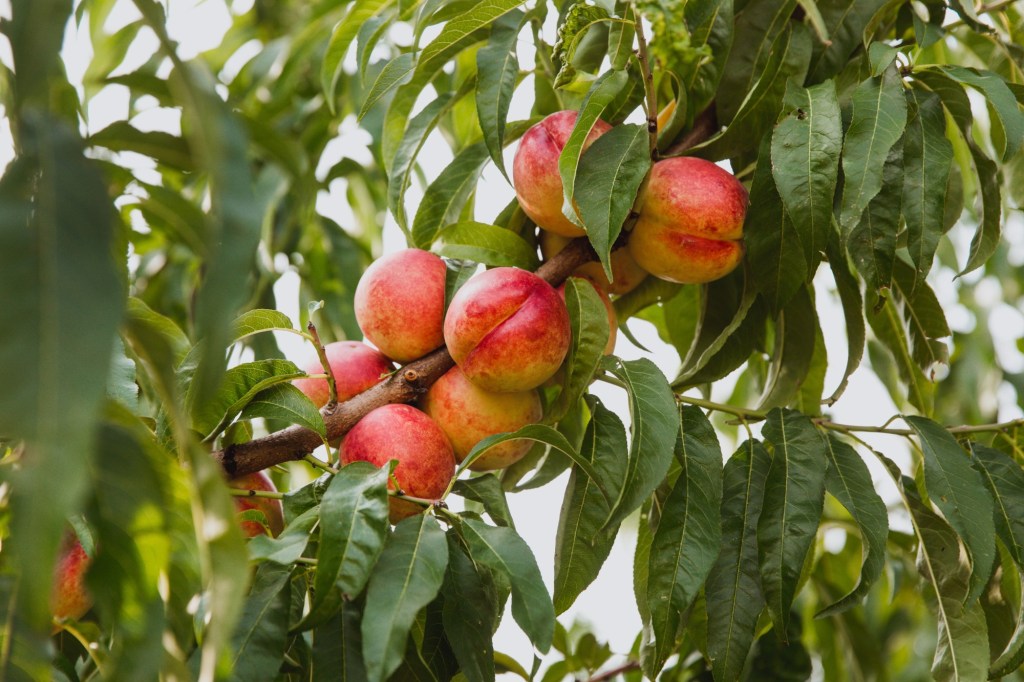
Remove fruits from 1- and 2-year old nectarines, plums and other deciduous fruit trees. Removing fruits allows the trees to concentrate their energy into growing strong roots and leaves instead. That makes for healthy, big trees plants that support bigger crops in the future.
For good-size fruits, thin any marble-size fruits on mature stone fruit, apple and pear trees to just one fruit along every 4 to 6 inches of branch. Compost the fruits you remove.
Feed stone fruits, apples and other deciduous fruit trees with organic fruit tree fertilizer. Feed citrus and avocado with organic citrus and avocado food. Always follow label directions.
Maintain
Turn over potted bromeliads and shake out the standing water in their “tanks.” Turn back upright and sprinkle Mosquito Bits granules into the center when you refill it. Mosquito Bits contain the biological pesticide Bt, which kills worms, caterpillars (so don’t use it around pollinator plants) and mosquito larvae.
Weed, weed, weed. Use a Cobrahead hoe or hand pull weeds by the root. Don’t bother spraying. By the time sprayed weeds die, they will have flowered and released seeds that will sprout next year. And besides, sprays aren’t good for the environment.
Spread a 3-to-4-inch layer of coarse, woody mulch over almost all garden areas to keep dormant weed seeds from sprouting. Leave some patches of empty ground for docile, ground-dwelling bees that are important pollinators. It’s better to use coarse, aged wood mulch than freshly ground-up wood chips; fresh wood chips may come from borer-infested trees. When you bring those onto your property, the deadly borers can infest and kill your trees, too.
Get a head start on heading off mosquitoes. Empty all bowls, dishes, buckets and anything else that holds standing water. Decommission old fountains and plant them with succulents instead.
Irrigate responsibly
The goal of irrigation is to wet plant roots, not leaves.
The best and most efficient irrigation for all plants is inline drip irrigation. Inline drip looks like long, narrow hoses with holes every six or 12 inches. Inside the lines, however, each hole connects to a very sophisticated emitter that releases water one drop at a time.
Since inline drip releases water very slowly, it has to run a long time — 45 minutes, an hour, two hours or more, depending on your soil, the plants, and how long it takes for water to penetrate down to plant roots.
To keep vegetable bed soils damp (not wet) at all times, you may need to run the irrigation two or three times a week through the early fall.
Water ornamental beds no more than once every week to 10 days, allowing the soil to dry out in between. For mature drought-resilient plants, natives and succulents, water just once every few weeks or even once a month. Always water deeply but infrequently.
Figure out how often to water each garden bed by using my Canary Test. Find the directions here: tinyurl.com/2p8bf7e6.
Mulch all garden beds with a 3-inch-thick layer of mulch. Match the mulch to the type of plant: straw mulch for vegetables. Stone or rock mulch for cacti and other succulents. Wood-based mulch (not bark chunks) for all other plants.
No matter how you irrigate your garden, always water until the water penetrates deep into the soil to reach plant roots. After the irrigation runs, test how deep the water has gone by digging into the soil, using a soil probe or sticking your finger as deep as it will go. Is it wet all the way down? If not, water more.
Sterman is a garden designer, journalist and the host of “A Growing Passion” on public television. She runs Nan Sterman’s Garden School at waterwisegardener.com.