
Read Mission Local often?
Help grow our newsroom, joining the 3,250 readers who support us by giving below.
My Excelsior is a series of interviews with a diverse group of people in the Excelsior. Read a piece of the Excelsior history through their lens.
This interview has been edited for readability and flow.

Want the latest on the Mission and San Francisco? Sign up for our free daily newsletter below.
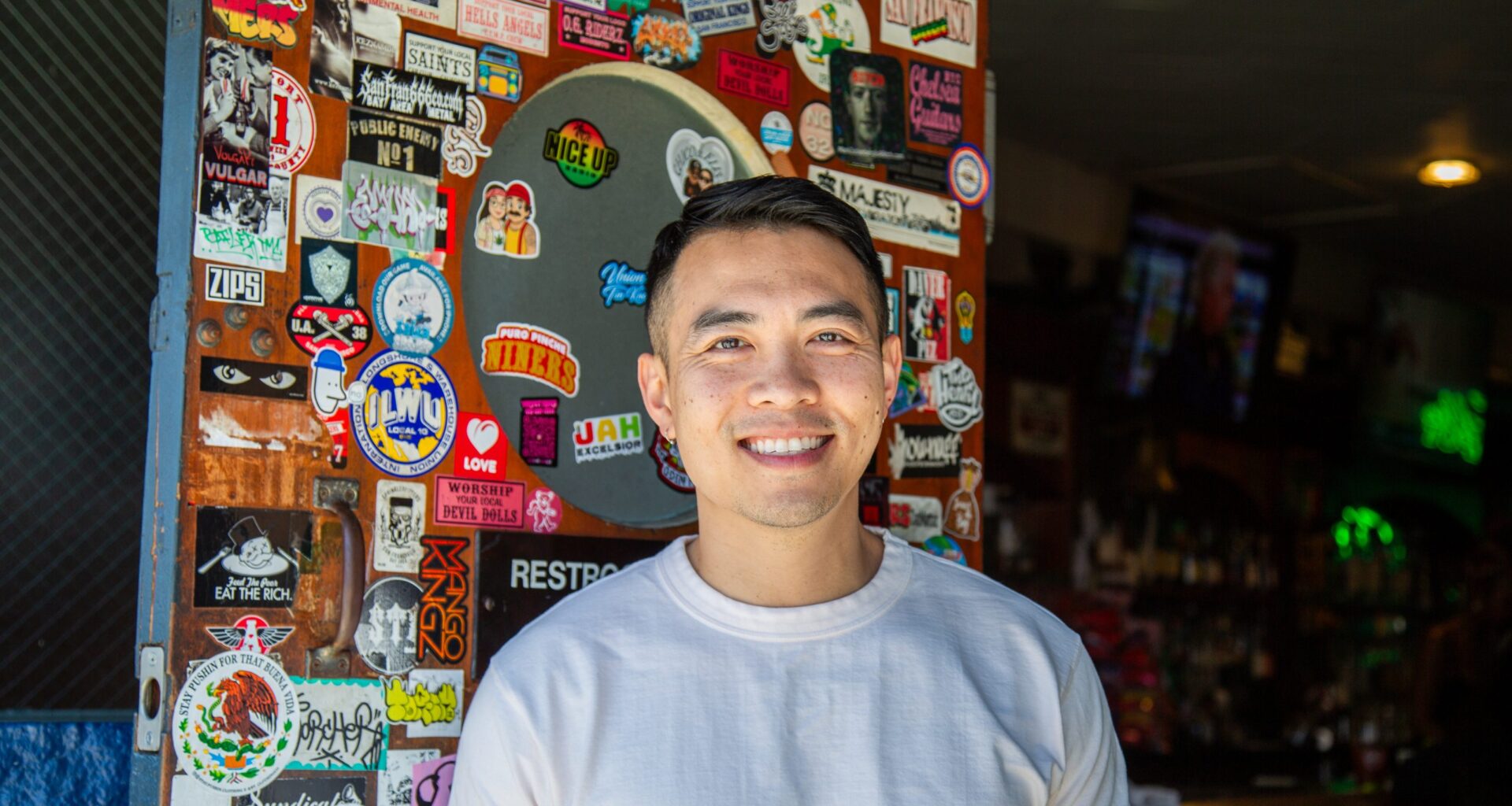
When Jay Pham finds something he likes, he sticks with it.
He came to San Francisco from Hanoi, Vietnam at the age of ten, and saw no reason to move anywhere else. He started bartending when he was a student at San Francisco State, and is now the owner of two bars the Recovery Room at 4528 Mission St. and The Four Deuces at 2319 Taraval.
Pham has lived all over S.F. but, he says, he likes the Excelsior — the first neighborhood he ever lived in when he moved to S.F. — best of all. On a recent sunny Friday morning, Mission Local met up with Pham at The Recovery Room, where he was saying hi to all his regulars, and sipping an iced black coffee from Excelsior Coffee across the street. We talked about everything Excelsior — from where to go learn about the history of the neighborhood, to where to go get the best late-night burrito.
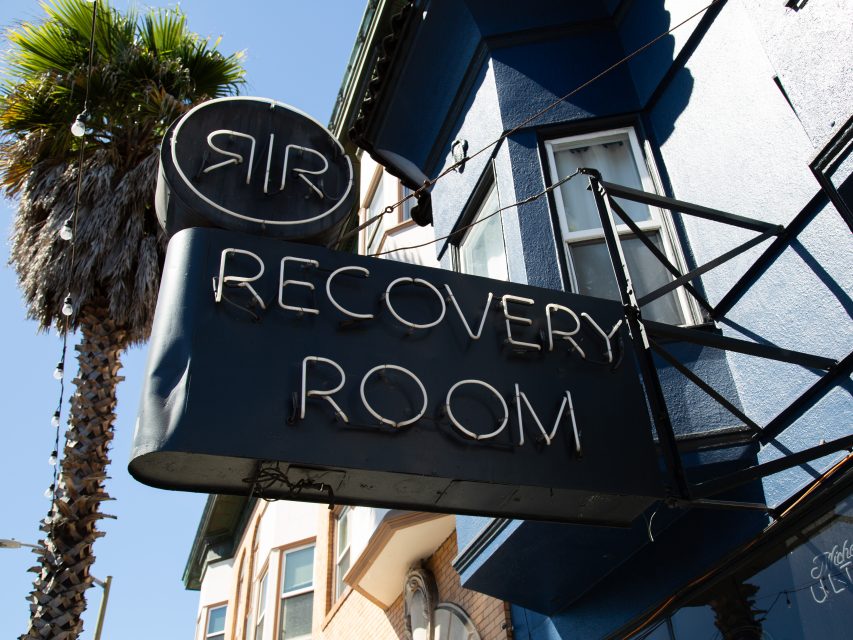 The sign of The Recovery Room on April 3, 2026. Photo by Xueer Lu.
Mission Local: When did you move to San Francisco?
Jay Pham: I moved to San Francisco in December 2001, and I never left. Elementary school, up the block. Middle school up the block. High school in the Sunset. And I went to SF State.
ML: What did you study in college?
JP: My emphasis was western civilization post-1500s. So anything after the Renaissance. I was a history major.
ML: What makes you interested in that?
JP: I was that kid that watched the history channel for fun. Growing up, my favorite thing was anything World War One and World War Two. It’s shaped how the world looks and behaves today.
I think it’s because I’m an immigrant. I feel like learning about western civilization at the time was helping me ingratiate myself into American culture a little bit easier. I guess it helps because now I get to have fun conversations with people about history.
ML: And why did you move here? And from where?
JP: I’m from Hanoi, Vietnam. My grandfather was a refugee, so he came here in the ’80s. Eventually my mom came over in 2000. I came over shortly afterwards.
ML: How old were you?
JP: Ten.
ML: Did you speak English before that?
JP: Not a word.
ML: So you had to learn English. Was it hard?
JP: Not really. I was in ESL for like six months back in middle school. We’re kids, so we pick things up really quick.
When I came to San Francisco, the Vietnamese community wasn’t huge. It is really large in Oakland and San Jose. There are small pockets of Vietnamese people here and there in the city, but not a huge community. So either you speak English or you don’t communicate at all.
There is a Little Saigon in the Tenderloin. But Vietnamese don’t really live there. They just had to stay there when they immigrated here because the rent was cheap. That’s why there’s so much Thai, Vietnamese and Cambodians in Section 8 housing in the Tenderloin. Not because they like the place — out of necessity.
ML: Do you remember if you were more excited or more nervous on your way to the U.S.?
JP: Excited. I didn’t realize how much of a difference it was until I came to the States. Most of the roads around my house weren’t paved. I came over here and it was an insane culture shock.
I’d ridden in a car maybe like a handful of times, and then, I flew in an airplane for the first time ever, going to a completely different country. That was absolutely insane.
My grandfather owned a house in Excelsior. So that was the first house that I went to.
And then we moved around a lot. Any time rent stopped making sense, we just moved. I lived near Glen Park for a long time. I lived in the Richmond District, Daly City. When I went to SF State, I lived on Oceanview.
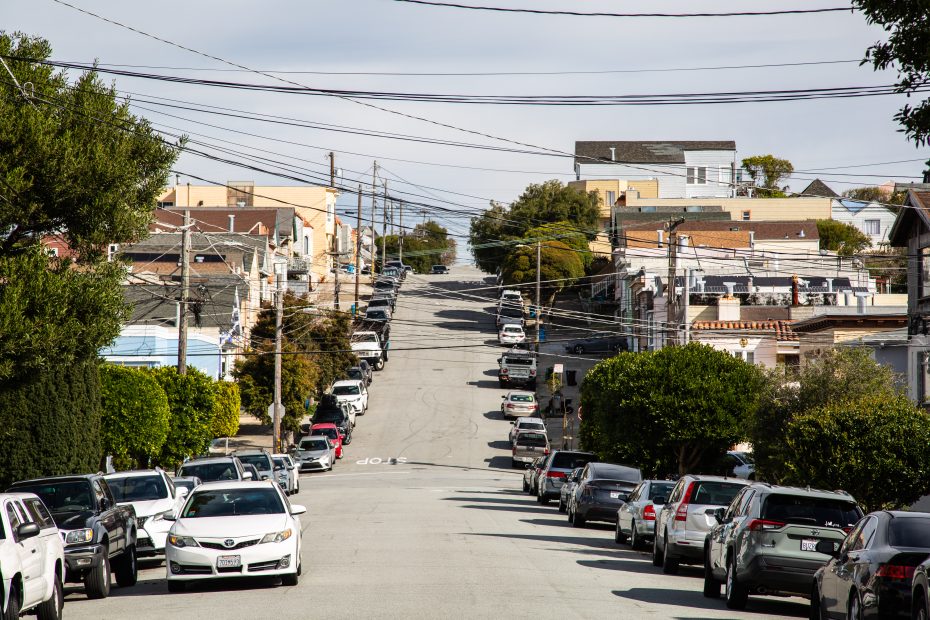 The view of the hills in the Excelsior District on Feb. 20, 2026. Photo by Mariana Garcia.
ML: What was the Excelsior like when you first got here?
JP: I really believe this neighborhood is special. It’s still quintessentially San Francisco. It is still blue collar. A lot of construction guys. A lot of people that work in the service industry. Everyone that I’ve met has just such deep roots and ties. A lot of generations going back.
There’s a lot of people that have come to this specific place since the ’70s. This has been a bar for a very, very, very long time. The downstairs was actually a speakeasy to avoid the cops. Now the area is just a storage space to keep our junk.
San Francisco is kind of a basement town. It’s a very basement-centric city. In Chinatown, there are a bunch of tunnels that just connect buildings to buildings. It’s legitimately an underground city.
ML: For our readers who have never experienced a neighborhood like the Excelsior. What’s it like to be part of this community?
JP: People are so proud to be from the Excelsior. It’s a neighborhood that has remained unchanged for the last 20 years.
Gentrification hasn’t hit yet. The restaurants that people grew up eating in the 80s, the 90s, the early 2000s are still there. It never felt as if I didn’t belong in the Excelsior. I feel like everyone’s welcome. You’re never an outsider, which I love.
ML: When you first got here as a kid, did it take a while for you to fully appreciate it?
JP: I think it took me a while. We moved around a lot.
When I got back into the area, in my 20s and 30s., that’s when I really started to appreciate the neighborhood — the diversity and how well people get along. When you go to my bar, you will see different people sitting next to me having a conversation and sharing a moment — being human together.
ML: Where did you hang out around the city when you were in elementary school, middle school, and high school?
JP: I feel like a lot of people that are from San Francisco share the same experience. We’re city kids. We’re all over the city. You just hop on the bus. One weekend you could be in the Sunset. One weekend it could be the Mission District. One weekend you’re hanging out downtown watching a movie at Metreon. And then another weekend, you can take BART to Daly City and watch a movie there.
Everyone lived in different pockets of the city. So we just go everywhere.
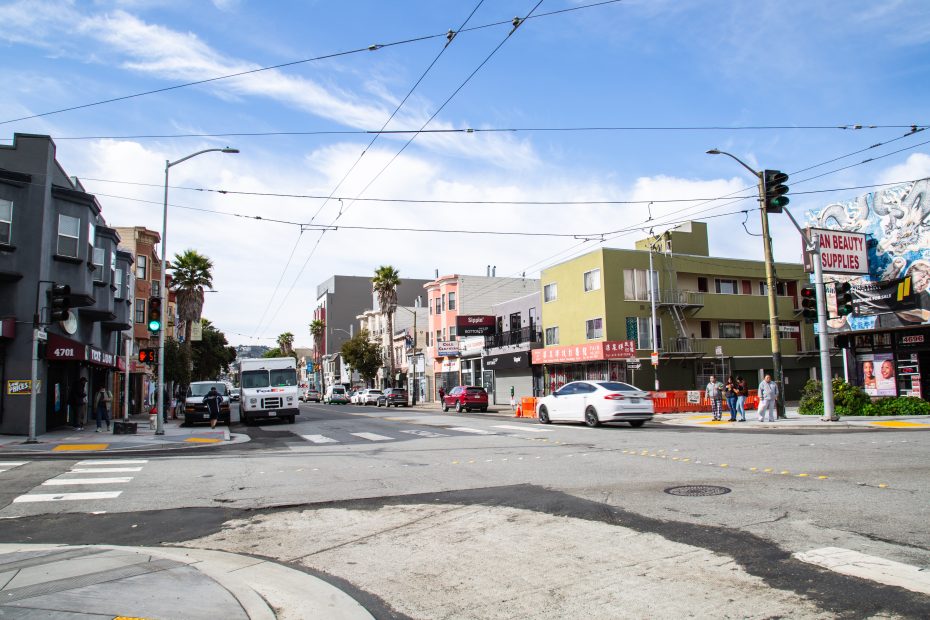 The intersection at Mission and Persia streets. Photo by Mariana Garcia.
ML: Do you remember what were your favorite things to do when you first got to the Excelsior?
JP: I mean, I was ten. My favorite thing to do was whatever mom had time to take me to. Trying out different cuisines in San Francisco, for sure.
ML: Do you remember what blew your mind?
JP: I’m going to be honest with you. Everything blew my mind. Getting dim sum — I remember the baskets coming out, the steam rising out of the basket.
Mexican food. I’m from Southeast Asia — and there’s a lot of crossovers in terms of flavors for Mexican food and Southeast Asian food. It’s very spice-forward with a lot of robust, aggressive flavors in terms of limes and saltiness and tomatoes and cilantro. It felt so foreign but very familiar.
ML: What was your mom’s favorite thing to do?
JP: I’m gonna be honest with you. It’s a very classic tale of a first-generation immigrant family. You’re just buried in work and trying to survive and trying to navigate a foreign country. You don’t really have that much time to do family things.
ML: What did your mom do for a living?
JP: She studied nursing full time at USF. She graduated the same year I graduated high school. She also was working in nail salons and nail salons and, and sometimes restaurants.
When she first got here, she was also learning how to speak English. So she was going to school to learn the language.
ML: Was there any place in San Francisco that was or is a place that you guys would go to when you were missing Vietnamese culture or food?
JP: Yeah, of course. The Tenderloin is a very historically Vietnamese area in San Francisco.
ML: What are some of the spots that you would go to a lot?
JP: Turtle Tower. They’re on California Street now. Another place I would say is Anh Hong. It’s on Clement Street now. I still go to this restaurant to this day.
ML: What’s your favorite thing to order from them?
JP: The seven-course beef. It’s just beef made seven ways. It’s super straightforward. It’s kind of like a Vietnamese omakase. Trust the chef. He’ll bring things out for you.
ML: What are your favorite spots to go to now? And what do you order?
JP: Oh, dude. So [Taqueria] Guadalajara [at 4798 Mission St.] and Taqueria El Farolito [4817 Mission St.]. I leave work late, and they stay open until 2 or 3 in the morning. And I appreciate that so much.
[Taqueria Guadalajara opens daily at 10 a.m. and closes between 1 and 2:30 a.m. depending on the day. Taqueria El Farolito opens 9 to 10 a.m. daily and closes between 1:45 and 3:45 a.m. The two restaurants are across the street from each other at the intersection of Mission Street and Onondaga Avenue.]
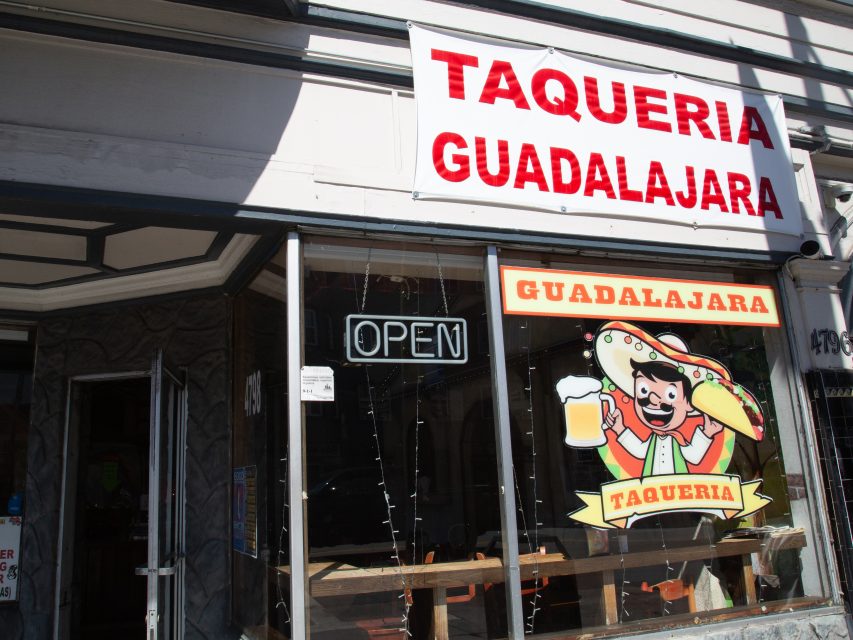 Taqueria Guadalajara, one of Jay Pham’s favorite restaurants in the Excelsior, on April 3, 2026. Photo by Xueer Lu
At Guadalajara, they have the best al pastor in the city. I get their al pastor quesadillas. El Farolito — their carne asada burrito is my jam.
JJamPPong [at 5249 Mission St.] is fantastic. They do a lot of jajangmyeon [a type of thick wheat noodles topped with a rich black bean sauce] and kimchi [a traditional Korean fermented vegetable dish]. They are Korean and Chinese fare. I like jajangmyeon and raw crab.
They’re affiliated with San Tung in the Sunset [which specializes in Northern Chinese cuisine and is known for its famous dry-fried chicken wings]. They’re Chinese people from the Shandong region so it’s very close to Korea.
The Salad Place [at 400 London St.] is really good as well. They have an incredible grilled chicken panini. It’s a local mom and pop.
ML: Are there restaurants or any spots that are no longer here, that you wish people would know about?
JP: There was this place called Chopsticks. We always compared the owner who worked there every single day to the Soup Nazi in “Seinfeld,” who’s mean, but his soup is so good that you have to deal with it? It was kind of like a rite of passage to get yelled at by the owner of Chopsticks.
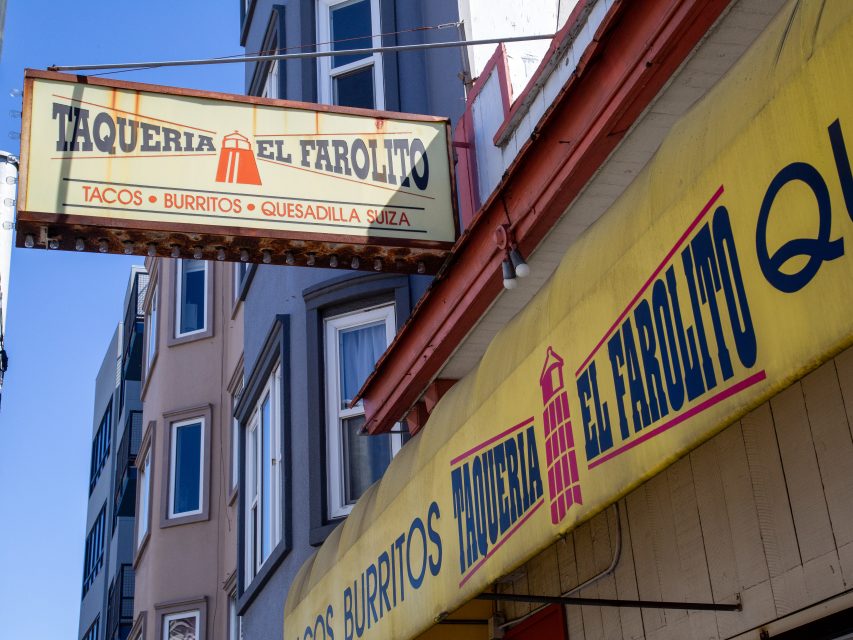 Taqueria El Farolito, one of Jay Pham’s favorite restaurants in the Excelsior, on April 3, 2026. Photo by Xueer Lu
ML: When people visit the Excelsior, where would you take them?
JP: To give them a taste of what the Excelsior has been — or probably will be — the Italian American Social Club. That place is so historic. Those guys there, they will tell you… oh they will tell you. If you get on their good side, you’re on the good side forever.
Leila — she’s one of my favorite bartenders and she works there. She’s kind of like the mayor of the Excelsior. She’s so well loved and so knowledgeable and is supportive of all the businesses in the neighborhood. Everyone knows her by name.
ML: What will these guys at the Club tell you?
JP: If you want a deep dive, like a historical sense of the Excelsior District, the people there are full of knowledge. They got a PhD in the Excelsior.
ML: Is there anywhere else that you love to go to?
JP: I’m a tennis player. They just redid all the courts at McLaren Park. It’s beautiful, absolutely gorgeous.
ML: When did you start bartending and where did you start? What was that like when you first started?
JP: I was bartending my way through college, so I started in about 2012. I started at a bar called the Fire Fly [The bar is called Fire Fly Sports Bar located at 2457 Noriega St.]
I was 21 years old, and you know…you get paid to be drunk. That’s kind of a dream job, you know?
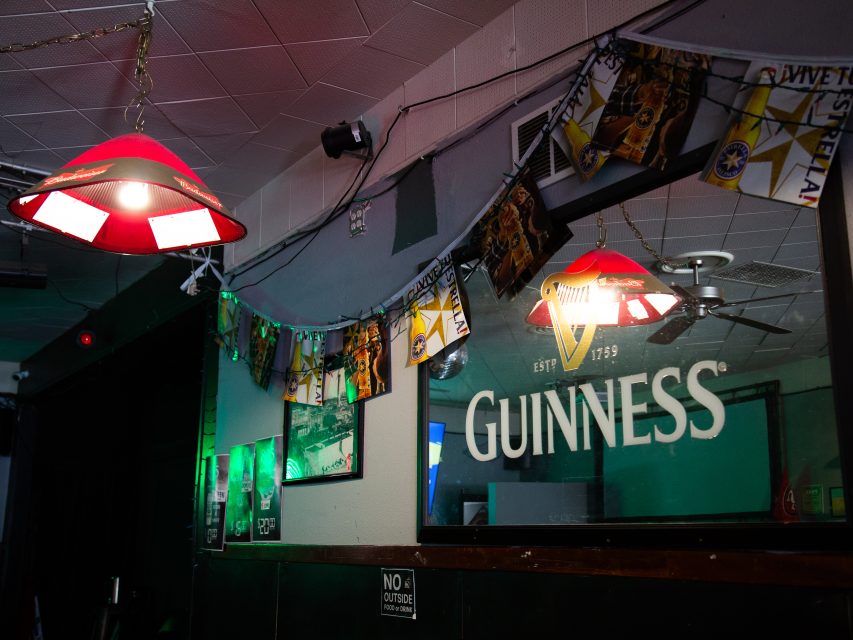 Inside The Recovery Room on April 3, 2026. Photo by Xueer Lu.
ML: Was it hard to pick up a job like that? Was there a big learning curve?
JP: I just treated it as a gig, you know? And then the more I worked on it, the more I fell in love with the business. It’s not just the alcohol. I feel like it’s more the people. I guess that coincides with my interest in history — which is my interest in people. I love a good conversation and I love connecting with people.
It was not hard at all. It’s a neighborhood local bar — very similar to the bar that I own now. So it was very chill — just shots and beers. The most important thing was being able to hold a conversation and to treat people well. And that came to me easily.
ML: Did you have to make cocktails back in the day?
JP: Absolutely. But cocktails back in the day were very simple. It’s not like how it is now. Right now, it’s insane — there could be ten ingredients in one cocktail. Back in the day, whatever you got at the bar, you put it together and you make something palatable.
ML: Do you remember what was the first cocktail you’ve ever made?
JP: Definitely. The first cocktail I learned how to make was a Long Island iced tea.
ML: Was that for your first job ever?
JP: I’ve worked at restaurants and bars basically my entire life, but the first job I’ve ever had was really weird. I had an uncle that worked at a tanning salon. So I was helping him clean tanning beds.
I was probably in my junior year in high school, and the salon was around the corner from Wallenberg High School. So it was the perfect after school job. I’ll get off at school and just walk to work.
ML: What was that like?
JP: It’s just something that I never thought could be a business. I didn’t understand why people pay to get roasted. But it was a fun experience because it was my first time earning money outside of the house.
ML: What made you decide to take over the Recovery Room in the first place? Were you a patron before when it was Pissed-Off Pete’s?
JP: Yes, I was a patron, on and off, ever since I started I turned 21. Because I’m a bartender, I go see other bars and you just stumble into places.
ML: Was there ever a pissed-off Pete? Do you know anything about that?
JP: Yeah. The owner was Pete.
ML: So he was pissed off?
JP: That is something you should ask him.
ML: What about the Recovery Room? How did you come up with that name?
JP: It’s kind of a little bit of an inside joke with my business partner, Emily and Victor. Like after a night of drinking, the way you recover is to have another drink…. I don’t recommend it.
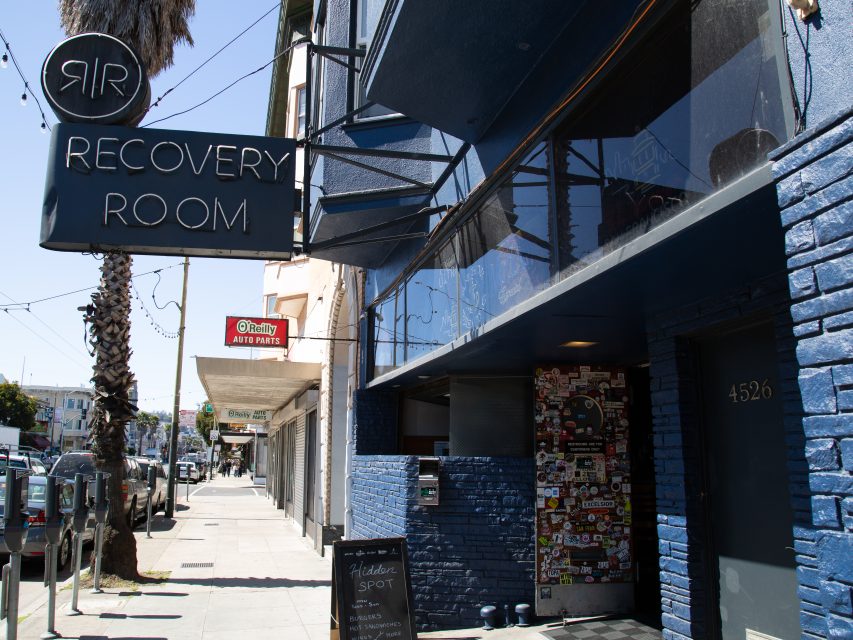 The Recovery Room on a sunny Friday on April 3, 2026. Photo by Xueer Lu.
ML: Was it hard to win over the regulars from the Pissed-off Pete’s?
JP: It just took a little bit of time. Everyone’s worried about their local business and who’s taking over.
I just focused on being a good person and running a decent bar and treating people like they matter. Treat people the way that you want to be treated. And I think you’ll do okay.
ML: When you took over, did you change anything about the place?
JP: Not much. I have a consistent kitchen now. It had a kitchen— It was just a little spotty. I modernized things a little bit. I kept it a simple bar.
ML: You said you were in the middle of opening a new bar in the Sunset. How’s that going?
JP: We’ve been open for maybe a month now. It’s called The Four Deuces. I took it over and kept the name and the staff.
ML: Is it a similar bar to the Recovery Room?
JP: Oh my God, almost like a carbon copy. We only buy bars if we come in and we love the bar. One of the main criteria for us is that we would drink there ourselves.
3,300 readers keep Mission Local free. Will you join them?
There are no paywalls at Mission Local. We believe San Francisco deserves critical, high-impact reporting that belongs to all its residents, not just those who can afford it.
But free to read doesn’t mean free to produce. We’re a small, independent newsroom rooted in San Francisco’s communities that only exists because people like you invest in the reporting that our city relies on all year round.
Keep Mission Local free for all by becoming a donor today.