
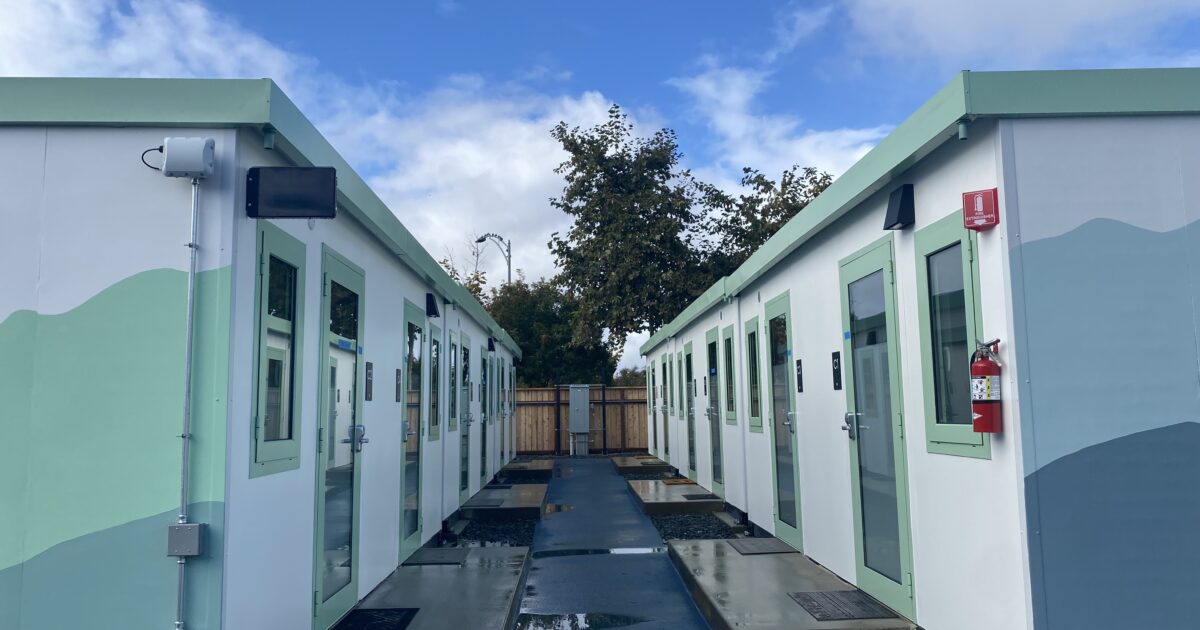
San Jose has doubled the number of homeless shelters it operates over the past year and a half — and with that comes staggering operational costs that will require creative cuts.
The city is projecting its shelters will rack up $94 million in maintenance and operating costs in the upcoming fiscal year. This eye-popping figure means San Jose needs to find a way to rein in spending on 23 temporary housing sites in its portfolio — 10 tiny home villages, two safe parking sites, a safe sleeping site and 10 motels converted to shelters — as the city tackles a $56 million budget shortfall.
Mayor Matt Mahan wants to rebid service contracts, utilize CalAIM reimbursements for case management, standardize shelter operations and get Santa Clara County to pay for more services. The city estimates it could reduce operating costs at tiny home villages by about 15% by standardizing security, food and property management across multiple sites.
“Thanks to our investments in interim housing and prevention, San Jose is on track to reach a milestone where half of our unhoused neighbors are indoors for the first time in recent history,” Mahan told San José Spotlight. “The next phase is making that progress last by lowering operating costs, including exploring whether modest fees for participants could help the system serve more people for years to come.”
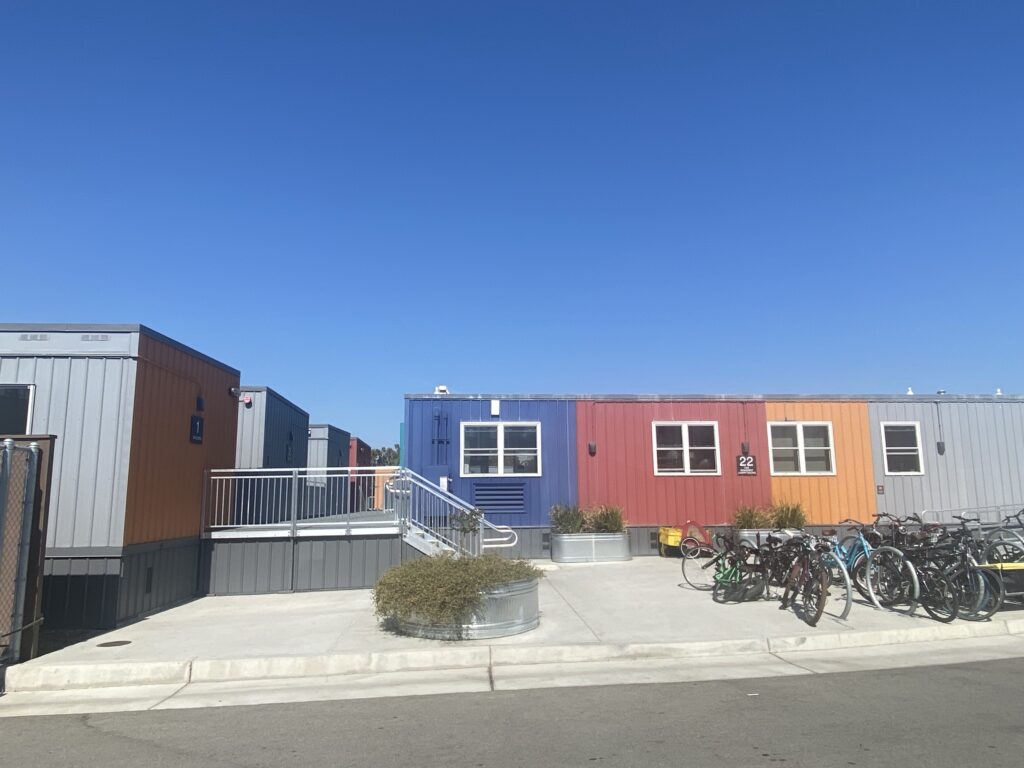 The Guadalupe tiny home village is one of several sites in San Jose that provides temporary housing to homeless residents. Photo by Joyce Chu.
The mayor is also exploring a rarely-practiced approach to ask homeless people for a shelter fee, a model pioneered by Sacramento.
Last year, Sacramento city leaders approved charging up to 30% of a person’s income — which can also come from disability or Social Security checks — for new temporary housing sites called “mirco-communities.” These micro-communities are tiny homes with shared bathrooms, showers, laundry and kitchens. The first one is set to open later this year. Homeless residents in these micro-communities would also have certain tenant rights, such as no time limit on stays.
Elizabeth Funk, founder of nonprofit DignityMoves which builds tiny homes statewide, said it’s smart for Mahan to consider creative ways to offset costs. Funk used to oppose charging a fee for homeless people to stay in shelters, but has since shifted her position. She hasn’t encountered a resident who didn’t want to pay rent, and said it encourages them to take ownership of their lives.
“They would love to feel like they were participating in their well-being,” Funk told San José Spotlight. “The city should not just wildly get everybody indoors without a responsible path and vision for how to offset those costs.”
CalAIM reimbursements — California’s expansion of Medi-Cal services — could also have a significant impact on cost reductions, Funk said. Providers need to bill for their services, but the process can be complicated and there is a long lag time for payments.
“When I look at our operating budgets, at least half, if not more, of those operating budgets should be reimbursed by CalAIM. And nobody’s doing it right,” she said. “I do think it’s possible to get San Jose’s sites up and running on CalAIM.”
Mahan has also been calling on Santa Clara County to shoulder more of its share of homeless services, despite the county already spending some $470 million a year on solutions. Last year, the city and county announced a partnership to bring behavioral health and medical services to two tiny home sites, expanding to more locations this year. The city is looking into which temporary housing sites it can push off on the county.
San Jose Housing Commissioner Daniel Finn said it’s not that simple, with the county in a financial bind due to all the federal and state cuts. The county is facing a $470 million budget shortfall for fiscal year 2026-27.
“(Mahan) has to realize that the county is in just as bad a shape as the city is,” Finn told San José Spotlight.
Finn said homeless solutions can only get San Jose so far without addressing the major causes of homelessness, which is the lack of affordable housing and rising cost of building homes.

Since 2023, San Jose’s homeless population increased by 237 people to more than 6,500, according to the latest homeless census conducted last year. The census, conducted before the new temporary housing sites came online, estimated about 60% of the city’s homeless people are unsheltered in a region where renters pay the second-highest rent in the U.S. San Jose was also ranked No. 1 for the least affordable city in the world for first-time homebuyers in a global study, underscoring how far housing costs have outpaced wages in the heart of Silicon Valley.
“As a state, we’ve thrown billions of dollars at the homeless problem,” Finn said. “But it hasn’t decreased homelessness at all, because it’s not affecting the root cause of homelessness.”
Contact Joyce Chu at [email protected] or @joyce_speaks on X.