
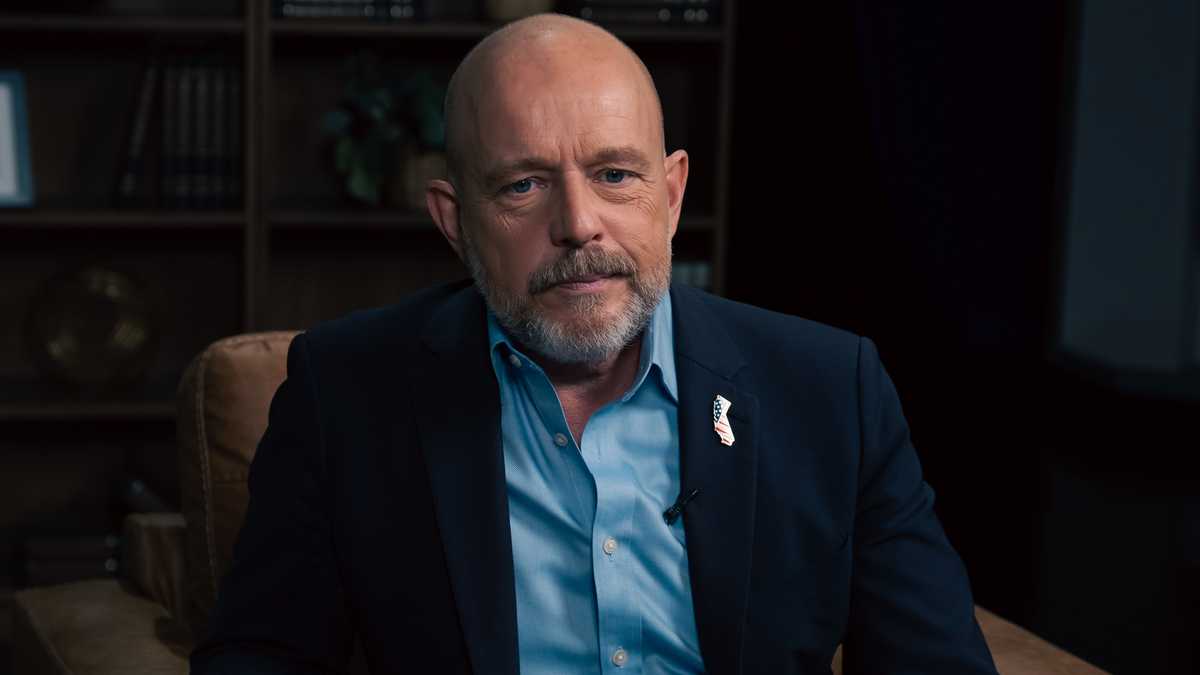
Steve Hilton explains why he should be California’s next governor | California Politics 360
Steve Hilton, thank you so much for being with us. Of course, great to be with you. This is *** hard time and *** hard job. Why do you want to be California governor now? Now, well, I think everyone can see that this state needs change. I mean, even my Democrat opponents in the governor’s race, they all talk about how much we need change. There’s no dispute about that. Um, I love this state. I moved here in 2012 with my wife and my two sons, made my life here, raised my family here, taught at Stanford, started *** business. This is the best place in the world, but it’s being run in *** way that makes it really hard for people to live here. And, and the, and the more that the years went on, you know, Ashley, as you know, you know, people know, *** lot of people know me in California from my career in media. I hosted *** show on, on Fox News, but actually most of my career has been in business. Um, working in business all around the world, starting my own companies, running *** small business, and. Increasingly when I was talking about politics and policy on my show, I just felt more and more I, I wanted to get back to doing things, to actually making change happen. And so it really was *** gradual process. I started *** policy organization *** few years ago, Golden Together, I was that that had me traveling the state, listening to Californians, developing solutions, and really through that process, I thought, yeah, I’ve got, I’ve got the. Ideas I’ve got the energy. I’ve got the experience of making change happen. Let’s do it. The main part of this job is figuring out how to use taxpayer dollars. California right now is in *** budget situation. I mean, facing these multi-year money problems that will require the next governor to likely have the options. Of cutting taxes or excuse me, cutting programs or raising taxes, which of those options do you see yourself choosing? I think the real imperative for the next governor is cutting spending. So that I understand that that’s often how the choice is seen. You’ve got to cut the programs or or or or or um or increase taxes to pay for them, and that’s what all the Democrats are saying. Uh, if you listen to Eric Swalwell, for example, I’ve heard him say many times now in these debates that we have, my number 1 priority or my top 3 priorities, revenue, revenue, revenue. We need more revenue, do we? You know what’s happened to the budget in the last 5 years? They’ve nearly doubled the budget. Like 5 years ago, the budget was $180 billion. The one that Gavin Newsom just submitted, $350 billion. Everything’s worse. Homelessness is worse, we have the highest poverty rate in the country, the highest unemployment rate, the schools are *** disaster, fewer than half the kids in in our public schools can read at grade level for math, it’s *** third. I mean, they’ve nearly doubled the budget and everything’s worse. It’s obvious that just spending more and more money isn’t working. And the first thing I would look at is, before you start talking about cutting programs, you’ve got to cut the fraud and the waste of public money. And one of the things that I’ve been doing in this campaign is not just talking about things, but doing things for real. I set up what, what we called CALDOSH, the California Department of Government Efficiency, 2 months ago now, nearly, we are already. Doing the investigating, my team of volunteers to find fraud. what are you finding? Well, I’ll give you 3 we’ve published 3 reports, so I’ll, I’ll go through them very quickly, but the overall our estimate of the total amount of fraud in the last 5 years is over 400. $130 billion and waste and abuse. $430 billion that isn’t going to more than *** year of spending, you’re saying over there has been fraud specifically in California fraud, fraud, waste, abuse, money that’s not going to where it should be going. And we’ve gotta be precise about that, it’s not necessarily all criminal activity. Some of it is, and you’re seeing prosecutions, for example, on some of the homeless spending. But uh I’ll give you the three examples that we found, number 1, the cannabis tax. So Prop 64 set up. *** system for regulating cannabis in California where money from the tax was supposed to go to substance abuse prevention. We found over $350 million actually going to Democrat political organizations doing things like voter registration. The second one, pretty similar structure over the last 10 years, $1 billion from the state’s greenhouse gas fund. That was supposed to be spent installing solar panels on low income apartment buildings, of that $1 billion it’s supposed to be $100 million every year. Of that total $1 billion only $72 million was actually spent on solar panels, $928 million on all these activist groups and nonprofits and, and no one can trace where the money went. And then the third one we just published, going back to homelessness, Project Home Key, $3.8 billion that was supposed to be spent on um buying properties and then having homeless people provided shelter through them. The uh the occupancy rate is, is just, um, 55% unoccupied, whereas for other properties in that it’s 5%, so homeless people aren’t getting the accommodation, and in the process of spending all that money, *** whole bunch of real estate developers, cronies of Gavin Newsom and Karen Bass, have got themselves enriched by the value going up because the state bought the properties that inflated. Values, and that’s just the start. I mean, as I said, we’re volunteers, we don’t have yet access to the books. And then when, when you add to that the money that is being identified as fraud and and improper spending in Me, for example, I mean that’s *** huge budget where you see massive examples of money that isn’t going to where it’s supposed to be, which is helping people. I wanna help people. Well that one, all these fake. Fake billing through Medical where you’ve got doctors writing unheard of numbers of prescriptions and it’s obviously *** scam. Now if you don’t have access to the books, how do you know for sure? Well that one was that particular example you’ve had two reports now digging into that and of course the other connected part of that is the hospices, particularly in LA. You had Dr. Oz from the Federal Administration. In looking into that, and you had CBS News looking into that. So what’s, I think what’s really happening here, and it’s *** very interesting moment, is that for 16 years we’ve had one party rule in California. Democrats have run everything. They’ve run all they’ve had all the statewide elected offices, supermajority in the legislature, obviously the governor, they’ve they’ve run all the big cities and the counties, and there really hasn’t been scrutiny of what’s been going on. We’ve paid more and more in taxes. Everything’s got worse, and it’s only in the recent few months actually that suddenly we’re seeing *** huge range of investigations. We’re doing our part, other organizations too, starting to dig into this and saying, well, where did the money go? Circling back to cutting spending or raising taxes, would you cut Me for undocumented people? Yes, we, we shouldn’t be, look. It’s outrageous that you’ve got Californians who can barely afford to pay healthcare. The bills just keep going up and up, and then those exact people are taxpayers. And you’re going to take their tax money and hand it over in free healthcare. With coverage that’s often higher and better than than California taxpayers can. Some say these people are, are paying taxes, especially if they’re working in the state. Well, some of them are, but they, they’re here illegally. I remember I’m, I say this as *** legal immigrant, um, and I hear most often, the people who are most offended actually by all these things being done, it’s not just healthcare. I mean you look at um some of the, some of the places in our state, um, for example, Los Angeles, East Los Angeles, I remember *** round table with. Um, uh, families of all ages there, Mexican heritage, Mexican Americans, and some of them were people whose grandparents came and they’re all different stories, but they were united with what, and I asked them in *** very open way. I didn’t try and steer them in one direction or other. I said, look, we’ve got all this conversation going on about immigration, deportation, ICE, all those things. What do you think? And it was incredible to hear the. The real anger actually at what they perceived as unfairness. We came here the right way, we did it the right way, we’ve worked really hard, we didn’t get anything handed to us on the plate. Now you go down to the grocery store, you see illegal immigrants who shouldn’t be here, they’ve they’ve got EBT cards given to them. Um, for free, they have free cell phones now they’re getting their rent paid. How do you define that they shouldn’t be here? Well, they’re illegally. I mean there are issues with our, I mean our country’s immigration system. I think both parties have acknowledged that. So how are you determining who should, I mean for undocumented people who are working and contributing to at least the state society, how are you determining? Well, the, well, if you, if you’re not here, if you’re not on *** visa or *** work permit or *** green card or *** citizen, you’re not here legally. So there’s *** legal definition, um, so it’s not my determination, it’s the federal immigration law that determines that. Um, but I think you’re completely right. Everyone can see, and it’s, it goes back *** long way, at least 50 years, people would agree, we’ve had *** completely broken immigration system. And we’ve ended up, especially in California, with *** situation where you’ve got millions of people here illegally. Living and working in the shadows, as some people describe it, and I think the idea that you’ve got mass law breaking, that’s what it is, it’s breaking the law, I mean, the, the, the clue is in the name, illegal immigration, that’s against the law. And the fact that we’ve, in *** way, tolerated mass law breaking on this scale, and it’s become integrated. Into our economy and our society in this way, I think that’s really corrosive of *** society’s basic values. We just can’t have that. And, and, and we’ve gotta have *** reckoning, I think, with the fact that this system has been, been moving in the wrong direction for so long. Now, part of it is stopping the problem getting worse, controlling the border, and that’s already. To *** certain extent happened pretty, pretty strongly with the, with this new Trump administration, um, where the numbers of illegal crossings are, are just barely existent, the lowest we’ve seen for decades. So that part of it’s not, at least in some senses the problem’s not getting worse, but we do have *** problem here at home as well. So just to circle back to the original question, I mean there are more than. 1 million undocumented people on Medi-Cal right now. Yes, they lose their health insurance under *** Governor Steve Hilton. Is it cheaper for the state to just have more than 1 million of those people go to the ER? Well, other states do. I mean, what the offer. For those people that Gavin Newsom brags about, by the way, it’s important to note, this is something that at the national level, Democrats are against and actually say can’t even happen, because it’s illegal. You saw that with the conversation around the government shutdown, the last one, last year, where at the, at the, in the uh in the Congress, Republicans were saying. The government’s being shut down because Democrats object to us making sure that Medicaid money across the country isn’t spent on illegal immigrants. You had Hakeem Jeffries, Chuck Schumer, all the leaders saying that’s not true, that would never happen, it can’t happen, it’s illegal, we’re completely against Medicaid funding healthcare for illegal immigrants, that’s national Democrats. So here, Gavin Newsom. Brags about it, he says it’s great, he’s proud that he’s extended it, of course he had to rein it in because there was an outcry at the scale of the spending, way, way bigger than than he anticipated. But you know, I think in in this instance, the Democrats at the national level are right, it’s, we shouldn’t be doing that. Other states deal with this problem in *** different way. They don’t offer what’s called full scope Medicaid. So there’s *** limited version of Medicaid. That is offered in other states, and I think that’s what we should do here. OK, so you would consider *** limited scope for undocumented people? Well, it’s *** limited, it’s, it’s not the full scope Medicaid, exactly, you, other states do it that way, so you’re not, so you, you wouldn’t have the expansion that happened in, I would reverse, to be really clear, yes, I would reverse all of the expansion that Gavin Newsom has put in over the last, was it 6 or 7 years in stages. OK. Switching gears to education, you mentioned this earlier. I mean, nearly half of the state’s budget goes toward education, but we’re seeing these teacher strikes. You men you mentioned the classroom performance issues in terms of students and their inability or they’re struggling to read, do math and science. How will you manage that as governor? So we’ve got to focus on. The practical aspects of this, and again, I think it’s really important to learn from other places that are doing *** better job. Um, and most places are doing *** better job than California. I mean, look at the amount that’s spent, we spent about 20, I think the latest number is $27,000 *** year per student in California public schools. The average private school fee in California is $19,000. So when you hear the teacher unions and others say, oh, we need more money. We’ve got *** lot of money in the system, but it’s not delivering the results. *** lot of the time, I think that the conversation around schools gets *** little distant from the immediate needs of kids and students in our classrooms today, and people talk about long-term changes like school choice, which I’m. Very much in favor of, but we gotta do something about what’s happening today. So, one state that has done *** really good job, and it’s got *** lot of attention, is Mississippi. Mississippi has shot up to the top of the, of the, of the rankings on schools by doing some simple practical things. Number one, everyone agrees that you can’t learn if you can’t read. And the plan that I put out actually before the attention um Mississippi got in recent months, I did this last summer. Um, is making sure that every student learns to read by the end of grade 3. If you can’t read by the end of 3rd grade, you’re, you’re not, you’ve not got the opportunity to learn properly in the rest of your education. And so we’ve got to make sure that happens. If it doesn’t happen, if it doesn’t happen, then this is what Mississippi does. They, if you, if you, by the end of 3rd grade, you don’t read to, to the basic standards, they give you help over the summer. Um, and if, and test you again, and if you still can’t read by the end of that extra help, you repeat the grade. You, and, and I saw Gavin Newsom asked about this recently, and he was very against it, he said well that’s holding kids back. It’s holding them back so they can learn to read and benefit from their education. And so that is *** very simple change that we could and should make. Another one is making sure we’re using the right techniques to teach kids to read. This is *** debate that was going on in policy circles decades ago. What’s the best way to teach kids to read, and there’s *** method. called phonics, it’s literally *** way of teaching kids to read, that’s been widely adopted in most places in the world. In California, most public schools don’t use it. They use other systems that don’t work and you can see the results. So that’s another change we can make, make sure that phonics is the method we use to teach kids to read. Another thing is the importance of clarity and transparency and accountability about what’s going on in the schools. The teacher unions over the years, have tried to obscure the performance of individual schools, schools and individual teachers. I think that’s ridiculous. It’s so important that we make sure that we’ve got the good teachers who are, who are there, are rewarded and encouraged, and we wanna have. More of them, but teachers who are not doing the job, they need to be removed from the system. We can’t have them in front of, of, of kids year after year, if they, if they’re not up to the job. And so one, another specific thing we can do with the information we already have available is give that, get that information out there, *** grade, *** letter grade, *** simple letter grade for every school and every teacher. And if we see that *** school is is, you know. Years in *** row, getting an F grade, failing, then we’ve got to make changes. Maybe replace the principal, maybe convert to *** charter school. There’s lots of things we could do, but you can’t do any of that if you don’t have the proper information about what’s actually happening in the classroom. You have *** lot of ideas on this as governor. There’s *** proposal right now from Governor Gavin Newsom to essentially. Strip the Department of Education from the elected position of superintendent, which California voters will choose. Is that something you’re in favor of with essentially getting more power under the governor’s office for Education? Well, we’ve got *** really great candidate, um, for Superintendent of Education, Sonia Shaw, and I agree with her on many things, um, and so I’d love to see her in that role. And, and what, you know, my, my attitude is, in *** way I, I, I just wanna make sure the changes happen, whether that’s through the governor’s office, Department of Education. The state superintendent’s office, we’ve got to get the changes happening, so I’m more focused on the outcomes than the kind of how it’s structured and organized in Sacramento. Switching gears, I think what everyone wants to know is how would *** Governor Steve Hilton lower costs for Californians. Well, that is the focus of my entire campaign. So we’re doing these town halls up and down the state. You’ve got hundreds of people coming each time. We’ve got *** really great energy there, and the theme of it is. Well, one word actually, Calfordable. My plan to make our state Calffordable. And the headlines um are very simple. We can dive into the details if you like, but number one, we have to um end the climate extremism on fossil fuels that have given us the gas prices at the highest in the country. So stop the climate goals. Yeah, like completely get rid of them. No, you need common sense climate goals, not the extreme and totally insane climate goals. I’ll give you an example right now which is that in the name of climate they’ve shut down or shutting down our California oil and gas production. So it’s now about, you know, we’re now importing about 80% of the oil and gas that we use, even though we have abundant reserves here in California. That actually makes it more expensive. It means that because we’re shipping it halfway around the world. For our number one provider of oil right now, it used to be California, used to be in state. I’ve been to the oil fields down in, in Kern County, now it’s Iraq. We are buying. We’re the number one buyer of oil from the Amazon rainforest. How does that help the climate? We’re actually increasing carbon emissions because of this policy, cos the supertankers that are shipping the oil, they run on the dirtiest fuel that we have, bunker fuel it’s called. So number one, we’re gonna get rid of all of that. Um, and, and, and the changes that I can make as governor include changes to the regulatory agency that regulates oil and gas production. So we open that. Up, so we increase our production here. That means the refineries, not all of them, but some of, some of them, it’s too late to keep them open. Others hopefully we can keep open because that will help. And so my goal is $3 gas. That’s the first line. We’re going to $3 gas in California. So if we start drilling for more oil and we don’t have that much refining capacity, and we’ve heard from the oil industry it’s really expensive to try to get these refiners up and going again, how will you? Well, I’m in very close conversation with them. I’m talking to them the whole time. Um, they’re very aware of my plans and, and I’m getting their feedback on the plans, because I wanna make sure that we do, the whole point of this is to lower gas prices by, by reviving California production. There’s *** huge new discovery off the coast, Sable oil, uh, which has been controversial in the last few couple of weeks because the federal government has, has given the. Green light to sending oil through *** pipeline there that Gavin Newsom and the Democrats here are dead against. That’s now the 2nd biggest oil reserve in America. It’s huge for our future in California. Some critics would say Sable broke the law, though, however many years ago that stemmed from the closure. Well, you can argue about what happened in the past, but I’m interested in like how do we get gas prices down, how do we create good jobs and opportunity for us in California, also the tax revenue that comes from that. So we, I don’t think there’s *** choice, it just, here’s *** very simple way of putting it. Surely it makes sense that as long as we are using oil and gas in California, let’s to the maximum extent we can, use California oil and gas before we import it from other countries. I think everyone would agree pretty much that that’s *** common sense position and that would be my position, and that will really help us get gas prices down along with some other changes like um. I mean we’ve gotta make some changes to what they now call the Cap and Invest program, the low carbon fuel Standard, there’s *** whole, there’s *** huge amount of regulations that do nothing for the environment, do nothing for, to lower global temperatures, literally nothing. And yet all they’re doing is causing massive pain, especially for working class Californians, who have to drive their cars and trucks hours *** day. They’re the ones paying for all of this, not the climate warriors, you know, tapping away at their MacBooks, working from home, it’s working class Californians. And so that’s the first point of my plan for making our state affordable, is $3 gas. The second, electric bills. With gas, we have the highest costs in the country. Of any state with electric, we’re the highest everywhere except for Hawaii. Electric bills have more than doubled in the last 10 years, the direct result of Democrat climate policies where they have, again, it flies in the face of common sense. We’ve got gas-fired power stations in California that could run on California natural gas that we produce here. And provide us with affordable, reliable electricity. Instead, they, they’re, they’re dialing that down, so that the gas-fired power stations now only are there to provide backup for wind and solar, all the emphasis is on wind and solar, it’s unreliable, incredibly expensive when you take all the costs into account, and it doesn’t make sense. So if we make that change in *** common sense direction, to to have. I, I don’t want to see any more of these, the, the, the windmill strategy in California is totally insane. But what about these companies that invested in all of that? I mean, under this promise that California was going in this direction, did you just say, sorry, you’re out of luck. I’m governor now. Well, the Democrats have no problem saying to the oil companies that they, they should shut down. I mean, look, we’ve got to do what’s right for the people of California, affordable, reliable electricity. Is, is *** basic that we need for our, it’s not just for people paying their bills at home, but every, all these other prices go up, all the other costs go up when energy costs are really high, because of course that factors into construction costs, groceries, your grocery bill, that we have the highest grocery bills in the country. Energy costs are *** big part of that. So that’s number 2. So number 1 is $3 gas. Number 2, if we do just the common sense thing. On electricity generation that other states do, we can get back to *** more reasonable level. Now, as I said, we’re more than double the national average, so my goal is cut your electric bills in half. The third one we touched on it earlier, which is reducing spending so we can cut taxes. My priority there is again working class Californians who are really being hurt the most. And so my tax plan starts with your 1st $1,000,000 tax free. Then we, the, the fourth point on my plan we also discussed, which is people who make 100,000 would not have taxes, state income tax, state income taxes under Governor Steve Hilton. Correct. OK, well, that’s my proposal. So that would be in my first budget, and that goes to the legislature, and as you know better than anyone. That’s *** whole process, but I’d love to see the Democrats stand against cutting taxes for working people, that would be an interesting one. The 4th 1 we talked about, which is, uh, lowering healthcare costs by um uh stopping illegal immigrants getting full scope Medicaid, and then the 4th 1, uh, I’m sorry, the 5th is *** home you can afford to buy. Now that is *** massive issue, as you know, um, some simple. Um, points on how I will reduce housing costs is number one, the building codes, way too complicated, they get more and more onerous every year, makes the cost of construction much higher in California than in neighboring states, we can reform that. Secondly, ending this war on single family homes. They don’t, right now, all of the policy of the government in California is about um stopping. Any construction from happening outside of where we’ve currently got development going on, and that makes the cost of land that much higher because you’re restricting where you can build and it means that you’ve got endless arguments about that with NIMBYs and NIMBYs and lawsuits. It slows everything down, makes it more expensive. We’ve got so much space in this state that we could build the kind of single family homes that people want to live in, especially when they start *** family. So that’s the fit. Home you can afford to buy. What about on homelessness? What’s your plan there to help Californians feel like people are off the streets? First of all, you’ve just got to acknowledge that this is *** massive scandal. People talk about the homelessness crisis. It’s much worse than that. The fact that this has gone on for so long, it’s shameful. I mean, you notice it when people come here from other states or from other countries and stuff that we’ve almost taken for granted because we see it every day and it’s become part of life, and you see it through the eyes of someone. Who’s seeing it for the first time, and they just can’t believe it. Like, Gavin Newsom goes on about, we’re the 4th biggest economy in the world, everything’s so great. Look at these third world scenes of squalor in our cities, it’s totally unacceptable, all of it. And so he brags about oh we’ve reduced homelessness by 9%, which is *** number that some dispute anyway, we should reduce it by 100%. It’s unacceptable, and the first point in the plan is to enforce the law. Every homeless encampment that anyone watching will see, it’s illegal. It’s against the law to live and camp on the streets, and you’ve got to enforce the law for years you send them to jail. No, not at all, that’s point number 1 is remove the homeless encampments. If you’re still there living in those conditions, you’re never gonna have the chance to get your life back on track. What chance do you have? And, and where do they go? Number 2, we have to get people into treatment for the fact, because the, the data now shows, I’ve spent *** lot of time working with some of the um people who, who are really doing the very, very difficult work of helping homeless people get their lives back on track. Over 80% of people experiencing homelessness either have drug or alcohol addiction. Now, it doesn’t matter in *** sense whether. They became homeless because of their addiction, or they became addicted because of being homeless. The fact is, as long as they’re addicted, they’re not gonna get their lives back on track. Last year, the Democrat supermajority in the legislature passed *** bill called the Sober Housing Act, which would have required that 10% of the state’s homelessness budget be allocated to shelter where being getting. Getting into drug or alcohol addiction treatment is *** condition of the shelter. I want to see that at 100%. We have to get people off drugs and alcohol, and it cannot be optional, it has to be mandatory. Number 3, mental health provision. I saw the governor talking about this, I think it was last week. It’s *** total scam what’s been going on. He, he passed ***, uh, his flagship ballot initiative in March 2024. $6 billion or whatever it was that was supposed to end this problem. It act that that ballot initiative which barely got through, actually cut mental health spending at the county level, you’re talking about proposition one. Yes, exactly, in March 24. So we’ve got to restore. Your county budgets for mental health and increase provision there, and there’s *** very small, it’s not, it’s big but technical change that needs to happen on homelessness when it comes to mental health. I mean right now, again, it’s barbaric what’s going on, you, most, you talk to sheriffs, most county jails, um, I mean, I, sheriff in one of the counties told me that half the people in his jails have severe mental health problems. Someone else told me that there’s *** way, you, if you wanna know what’s the biggest mental institution in the country, LA County Jail. It’s outrageous. And the, and the, the the number of beds just isn’t there. One of the reasons is that we’ve got this Medicaid reimbursement rule, it’s called the IMD rule, Institutions of Mental Disease, which means that it’s been there since the beginning of Medicaid, which means that you don’t get reimbursed for mental healthcare provided in any facility with more than 16 beds, it’s *** very specific limit. The first Trump administration Created *** waiver from that program so that you could have modern large scale mental health facilities which are efficient and compassionate and treat people properly. And imagine if hospitals couldn’t have more than 16 beds, how inefficient that would be. So there’s lots of things we can do to make sure that we increase capacity for people with severe mental health problems. OK, we’re running out of time, so I have *** few quick questions for you. This one’s an important one. How will you represent Californians who are not part of your political party? Oh, I, I’m here for every Californian, I mean, the, I think the most, it takes me back to our very first conversation soon after I um entered the race, and I said it’s, I, my platform is not *** partisan platform, it’s very pragmatic. But do you want Donald Trump to endorse you? I’ve said I’d be very, I’d be honored to have his endorsement, I think he’s got other things on his mind right now than the California Governor’s race. But my, my, no, my, my entire plan is non-ideological. It’s not, it’s about, it’s, it’s $3 gas, cut your electric bills in half, your 1st $1,000,000 tax free, *** home you can afford to buy. These are things that are there for every Californian, and I have experience most of my career. As I mentioned, was in business. I did work for *** while in the government in the UK, senior adviser to the Prime Minister. He was *** Conservative Prime Minister, but it was *** coalition government. And so I’m used to working across the aisle, I shared an office right next to the cabinet Room with my opposite number from *** different party. And so I think that, you know, the, the, the job is to make life better for everybody who lives in this state, and that will be how I. Um, operate as governor. What grade would you give Governor Gavin Newsom for his last two terms? F, the lowest possible. It’s *** total disaster. I mean, let’s just go through it. Highest poverty rate, highest unemployment rate, highest cost of living, just the grid. It’s total failure on every front. Three words for the future of California under *** Governor, Stephen Hilton. Calffordable. Build, we gotta build again. Opportunity. All right, Steve Hilton, thank you so much for your time to be with you thank you.
Steve Hilton explains why he should be California’s next governor | California Politics 360

Updated: 8:25 AM PDT Apr 5, 2026
Steve Hilton sat down for an interview on California Politics 360 for a wide-ranging conversation on his big to be the state’s next governor. The Republican and former Fox News host said he’s running on a platform that focuses on cutting state spending and making government more efficient. “I think everyone can see the state needs change,” Hilton said. “Even my Democrat opponents talk about how we need change; there’s no dispute about that.”Hilton’s campaign, “Califordable,” focuses on lowering costs for Californians. He is proposing $3 a gallon gas, plus a 50% cut in electricity and other energy costs by changing state regulations and state rules around the environment. He is also proposing no state income taxes on Californians making $100,000 or less a year.Hilton emphasized the need to address fraud and waste in government programs before cutting any specific programs. “Before you start talking about cutting programs, you have to talk about cutting fraud and waste in government programs. I set up what we call Cal DOGE—we are already doing the investigating to find fraud,” Hilton said.He estimated that fraud, waste, and abuse in government programs amount to more than $430 billion over a five year period. Hilton pointed to fees collected through the cannabis tax and greenhouse gas funds not going to their intended purposes, instead being diverted to Democratic causes. He also criticized a state homelessness prevention program called Homekey, which he said is enriching politically connected real estate developers.Hilton expressed concerns about healthcare funding, including the state’s health insurance for lower-income people known as Medi-Cal and hospice care facilities. “That’s just the start, we have volunteers we don’t have access to the books,” Hilton said. “All these fake billing through MediCal- all these fake doctors, it’s obviously a scam.”When asked how he knows for sure without access to the books, Hilton pointed to two separate reports that have highlighted issues with the state’s healthcare funds. Hilton criticized the lack of scrutiny in California due to one-party rule by Democrats for the past 16 years. “What’s happening is for 16 years we’ve had one party rule in California, Democrats have run everything. There really hasn’t been scrutiny,” Hilton said.Hilton stated he would cut Medi-Cal for undocumented people, calling it “outrageous” to use taxpayer money for free healthcare for undocumented individuals. He acknowledged that some undocumented people pay taxes but emphasized that they are in the state illegally. Hilton proposed a limited version of Medicaid similar to other states.On education, Hilton said he would push for a model similar to Mississippi that holds students back if they can’t read until they can. He also advocated for transparency and accountability in teacher performance. On housing, Hilton is pushing for more construction of single-family homes. On homelessness, he said he would enforce homeless encampment bans statewide and help set up more mental health treatment facilities.Hilton emphasized that his platform is not partisan. “I’m here for every Californian, my platform is not a partisan one,” Hilton said. When asked if he wants Donald Trump to endorse him, Hilton said, “I’ve said I’d be honored to have his endorsement, I think he has other things on his mind than the California Governor’s race.”California Politics Hilton summarized his vision for California with three words: “Califordable, Build, opportunity.”KCRA 3 Political Director Ashley Zavala reports in-depth coverage of top California politics and policy issues. She is also the host of “California Politics 360.” Get informed each Sunday at 8:30 a.m. on KCRA 3.
Steve Hilton sat down for an interview on California Politics 360 for a wide-ranging conversation on his big to be the state’s next governor.
The Republican and former Fox News host said he’s running on a platform that focuses on cutting state spending and making government more efficient.
“I think everyone can see the state needs change,” Hilton said. “Even my Democrat opponents talk about how we need change; there’s no dispute about that.”
Hilton’s campaign, “Califordable,” focuses on lowering costs for Californians. He is proposing $3 a gallon gas, plus a 50% cut in electricity and other energy costs by changing state regulations and state rules around the environment. He is also proposing no state income taxes on Californians making $100,000 or less a year.
Hilton emphasized the need to address fraud and waste in government programs before cutting any specific programs. “Before you start talking about cutting programs, you have to talk about cutting fraud and waste in government programs. I set up what we call Cal DOGE—we are already doing the investigating to find fraud,” Hilton said.
He estimated that fraud, waste, and abuse in government programs amount to more than $430 billion over a five year period. Hilton pointed to fees collected through the cannabis tax and greenhouse gas funds not going to their intended purposes, instead being diverted to Democratic causes. He also criticized a state homelessness prevention program called Homekey, which he said is enriching politically connected real estate developers.
Hilton expressed concerns about healthcare funding, including the state’s health insurance for lower-income people known as Medi-Cal and hospice care facilities. “That’s just the start, we have volunteers we don’t have access to the books,” Hilton said. “All these fake billing through MediCal- all these fake doctors, it’s obviously a scam.”
When asked how he knows for sure without access to the books, Hilton pointed to two separate reports that have highlighted issues with the state’s healthcare funds.
Hilton criticized the lack of scrutiny in California due to one-party rule by Democrats for the past 16 years. “What’s happening is for 16 years we’ve had one party rule in California, Democrats have run everything. There really hasn’t been scrutiny,” Hilton said.
Hilton stated he would cut Medi-Cal for undocumented people, calling it “outrageous” to use taxpayer money for free healthcare for undocumented individuals. He acknowledged that some undocumented people pay taxes but emphasized that they are in the state illegally. Hilton proposed a limited version of Medicaid similar to other states.
On education, Hilton said he would push for a model similar to Mississippi that holds students back if they can’t read until they can. He also advocated for transparency and accountability in teacher performance.
On housing, Hilton is pushing for more construction of single-family homes. On homelessness, he said he would enforce homeless encampment bans statewide and help set up more mental health treatment facilities.
Hilton emphasized that his platform is not partisan. “I’m here for every Californian, my platform is not a partisan one,” Hilton said. When asked if he wants Donald Trump to endorse him, Hilton said, “I’ve said I’d be honored to have his endorsement, I think he has other things on his mind than the California Governor’s race.”
California Politics
Hilton summarized his vision for California with three words: “Califordable, Build, opportunity.”
KCRA 3 Political Director Ashley Zavala reports in-depth coverage of top California politics and policy issues. She is also the host of “California Politics 360.” Get informed each Sunday at 8:30 a.m. on KCRA 3.